
Unicode “Fonts” Aren’t Fonts, And That Distinction Costs You Real Traffic
Aug 06, 2026
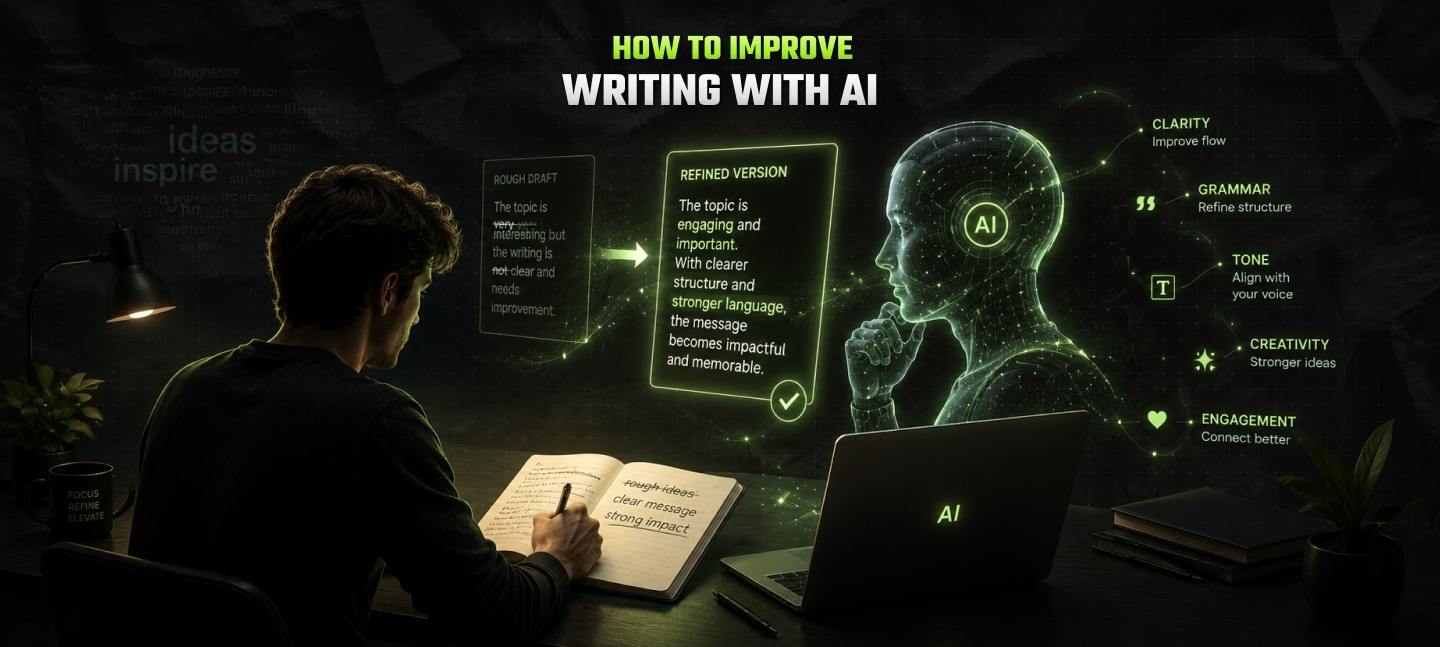

I don’t know why most people still look down on content writers who use AI to give their work an edge!
However, I know that in 2026, answer engines will be as relevant as search engines. So start learning how to rank in AI Overviews.
But let me tell you, I was also one of the above herd a few days back. Until the 2024 Core Google update.
My website, searchenginmagazine.com, took a hit I never expected. A site with more than 75k traffic showed “0” on Ahrefs.
To be honest, I could not take it. For some time, I gave up writing and shut down my laptop. I would spend time watching only reels and shorts.
But one day, I came across a reel that explained how to improve writing with AI. It wasn’t on how you ca make your article more quality-focused or flamboyant.
Instead, the channel simply discussed how AI can help you answer the most common reader queries related to the topic. After all, that’s what Google’s Helpful Content Policy also stands for.
The biggest loss was that traffic fell to 0 and never rose. Before the update, at least 60% of search engine magazine articles would rank on the first 2 pages.
Noticeably. The Google HCU (Helpful Content Update) had already rolled through. On the other hand, another broad core update in early 2025 knocked us down further.
Pages that used to rank on page one flashed on page three. Some of my valuable articles were again barely indexed. I spent years building that site. After that, watching the analytics tank overnight was genuinely painful.
So how did I revive? The fix wasn’t what I expected. It wasn’t disavowing links or rebuilding my sitemap. Instead, my real leverage was helpful AI prompts.
I mastered using AI the right way. Wait, that’s not rocket science. I just figured out how to write better prompts. But using ai prompt generator free tools won’t help you! You need to manually learn what works and what does not!
A prompt is the instruction you give an AI tool like ChatGPT, Claude, or Gemini before it writes anything. Think of it as the brief you’d hand a freelance writer.
In the same vein, I can assure you that a vague brief gets you vague work. However, a specific, detailed brief helps you reach the right direction with your content.
Here’s a bad prompt:
“Write an article about SEO.”
Here’s a better one:
“Write a 1,200-word article for a US-based SEO publication. The audience is small business owners who understand basic Google ranking but have never used AI tools. Use a conversational tone, avoid technical jargon, and open with a real-world example of a site losing traffic after a Google update. Focus keyword: how to improve writing with AI.”
Can you see the difference? The second one gives the AI:
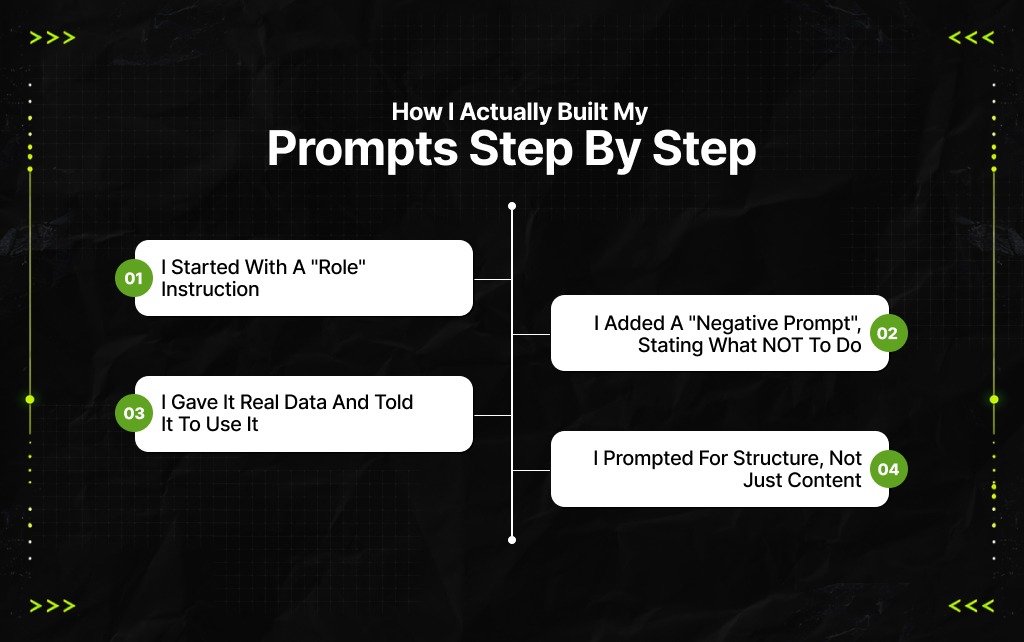
I didn’t figure this out overnight. Here’s the process that I actually followed to recover my website. It took me about six months.
Before asking for any content, I told the AI what role to play. For searchenginemagazine.com, my opener became: “You are a senior SEO content writer with 10 years of experience writing for US digital marketing publications. Your style is direct, example-driven, and avoids fluff.”
This one change alone made the output noticeably sharper. To clarify, the AI stopped producing generic filler paragraphs and started writing as if it actually understood the audience.
I told the AI: “Do not use the phrases ‘In today’s digital landscape,’ ‘It’s important to note,’ or ‘In conclusion.’ Do not use bullet points unless I ask. Write in paragraphs.”
But why? Because AI tools have default habits. They fall back on the same openers and the same transitions.
Again, cutting those habits out of the prompt forces the tool to find different patterns. Simply put, those patterns tend to sound more human.
Generic prompts produce generic content. However, when I started feeding the AI actual stats, the articles got more credible. For example, in my article on “How To Master Google’s Helpful Content”, I used this stat:
“Google’s March 2025 core update impacted approximately 40% of informational content sites, according to tracking data from Semrush.”
Instead of asking for “an article,” I started asking for a specific structure:
“Write an opening paragraph that tells a personal story about losing organic traffic. Then transition into what AI prompts are. Use subheadings every 300 words. End with a practical takeaway the reader can use today.”
That’s the kind of microediting approach that helped me crack what readers really want to know about each topic I write about.
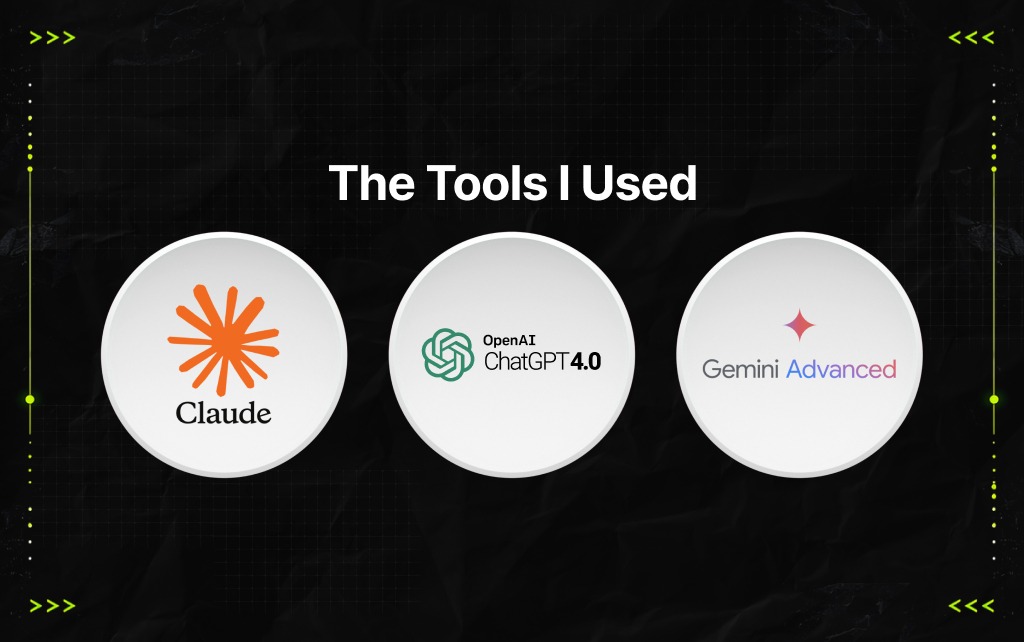
Remember, there are many chatgpt alternative in the market. Simply put, you need a tool with a designated purpose. For most of my content work, I rotated between three tools:
What I discovered was that each has a different personality, which actually matters.
Claude is better for long-form, nuanced writing. To be specific, it holds context across a long document without losing the thread.
On the other hand, ChatGPT is faster for ideation and outlines. Lastly, Gemini is useful when I need something tied to real-time search data.
I also used SurferSEO to check keyword density after drafts were done, but not before. I made the mistake early on of letting SEO tools drive the writing.
Content optimized first and written second reads like it was assembled in a factory. At the same time, you must learn how to avoid ai detection in writing.
Do you know that one underrated tool is ZeroGPT itself? I’d run drafts through it not to “fool” the detector, but to identify which paragraphs were too uniform in sentence rhythm.
High AI scores almost always indicated that the relevant section was too mechanical. Those were the paragraphs I rewrote manually.
The 2024 Helpful Content Update hurt pages that were long on information but short on experience.
Google was specifically targeting content that looked like it had been written by someone who’d never actually done the thing they were writing about. To be specific, that’s the part AI was helping me to fix.
All you need to know is how to improve writing with AI.
For searchenginemagazine.com, that meant dropping the “listicle” style articles. For example, I could no longer write on topics or clusters like “10 Best SEO Tools”. But why? What changed?
They were accurate and well-organized. But they had no voice or story. Most importantly, they gave out no sign that a real person with real experience had made decisions based on that information.
The March 2025 core update doubled down on that signal. Pages with a thin first-person perspective were hit again.
Meanwhile, the long-form, experience-based pieces held steady or recovered. That’s what pushed me to change how I was using AI entirely.
Here’s what I did practically. I identified the 15 pages on searchenginemagazine.com that had dropped the most. For each one, I wrote a detailed prompt that included:
An article on “on-page SEO techniques” was written as a direct how-to piece. I rewrote it using this prompt structure.
Therefore, I updated the role, tone, personal angle, specific data points, and negative instructions.
Moreover, I added a section where I walked through a real page audit I’d done for a client e-commerce site. Guess what, that page recovered from position 18 to position 5 within about 11 weeks.
Key Takeaway For New Content Creators:
Finally, the bar has moved. In 2026, AI tools are everywhere, and Google has gotten better at identifying content that lacks genuine perspective.
As a result, the prompts that work now are the ones that force the AI to work with your experience, not against it. That means your best prompts should include something the AI cannot invent:
Feed it those things. At the same time, let it help you shape them into something readable.
That’s how you can improve writing with AI. Most importantly, you are not outsourcing the thinking. In simple words, you are using the tool to sharpen what you already know.
If your site took hits in 2024 or 2025, the path forward isn’t less AI. It’s smarter AI. And that starts with the prompt.
Barsha is a seasoned digital marketing writer with a focus on SEO, content marketing, and conversion-driven copy. With 8+ years of experience in crafting high-performing content for startups, agencies, and established brands, Barsha brings strategic insight and storytelling together to drive online growth. When not writing, Barsha spends time obsessing over conspiracy theories, the latest Google algorithm changes, and content trends.
View all Posts