How To Get Your Brand Cited In AI Search Results In 2026
Oct 22, 2026

A silent technological shift has started to gain momentum and slowly take over the pre-established market of displays.
Once upon a time, only the monochrome e-readers used E-Ink. However, now it has started to evolve into a sophisticated color platform that enhances clarity, comfort, and efficiency.
Moreover, this evolution completely changes our perception of screens. Furthermore, it has changed the basic format of reading itself. Thus, this evolution goes far beyond a mere technical achievement.
For the longest time, the users had to endure an immense dichotomy. If there were colors, then the eyes would get tired. On the other hand, comfort was only available in the form of shades of gray.
The traditional display gets the eyes tired as they emit light. Thus, this creates a necessity for a constant adjustment.
However, E-Ink reflects the ambient light instead of emitting its own light as the source. Thus, it offered comfort to the eyes in multiple ways. However, the displayed picture was not visually rich. They were only available in the shades of Grey.
The question was not whether E-Ink could support color, but whether it could do so without betraying its core promise of visual comfort.
The E-Link is making a silent revolution with innovation. Now the Elink can even display colors along with only shades of gray. This has made the experience much more visually enhancing. Learn about the different types of E-Ink displays and how they can be helpful.
The answer emerged through technologies with names that sound more like poetry than engineering: Kaleido and Gallery.
These represent two distinct philosophies of how color should exist on a reflective surface.
Kaleido employs a color filter array layered on top of traditional black-and-white microcapsules.
Light passes through these filters, acquiring hue before reflecting back to the eye.
The result feels printed rather than projected, with colors that appear soft and textured.
While saturation is intentionally muted compared to LCD or OLED, readability remains exceptional even in bright environments. This makes Kaleido ideal for readers who turn pages frequently and value responsiveness.
Gallery E-Ink is a more ambitious path. Moreover, it does not filter light through a single layer.
The Gallery E-Ink allows individuals to control multiple pigment particles. The list of colors that can be reflected includes cyan, magenta, yellow, and white.
The trade-off lies in refresh speed; Gallery panels update more slowly, prioritizing color fidelity over responsiveness.
This approach serves those who linger on images, study diagrams, or appreciate the subtleties of illustration.
What makes these color technologies remarkable is how they preserve the qualities that made monochrome E-Ink valuable. Battery life remains measured in weeks rather than hours.
Outdoor readability improves under direct sunlight. The screen surface stays cool, never warming with continuous backlighting.
These benefits are maintained alongside color—a rare instance of technology expanding without significant compromise.
Take the Boox Go 6 Open Box, for example—a device that brings these ideas to life.
Compact yet capable, such devices bridge the gap between traditional e-readers and color-capable tablets.
Users can annotate PDFs in multiple hues, view infographics with proper color-coding, or enjoy digital comics without the eyestrain that comes from hours of backlit screen exposure.
Manufacturers have begun to understand that screens like these deserve thoughtful design.
Modern devices using Kaleido or Gallery panels often feature ultra-thin bezels, matte finishes, and minimal controls.
They are not trying to compete with tablets but to redefine what a tablet can feel like.
The experience of using color on E-Ink feels unique because it avoids the hyperreality of standard screens.
Instead of chasing vibrancy, it captures subtlety—the warmth of aged paper, the muted blues of dusk, the pastel tones of modern design interfaces.
Color becomes intentional, not overwhelming. This makes it particularly effective for technical illustrations, educational materials, and interface elements that benefit from clarity rather than brightness.
The shift from grayscale to color transforms how E-Ink devices are used across industries.
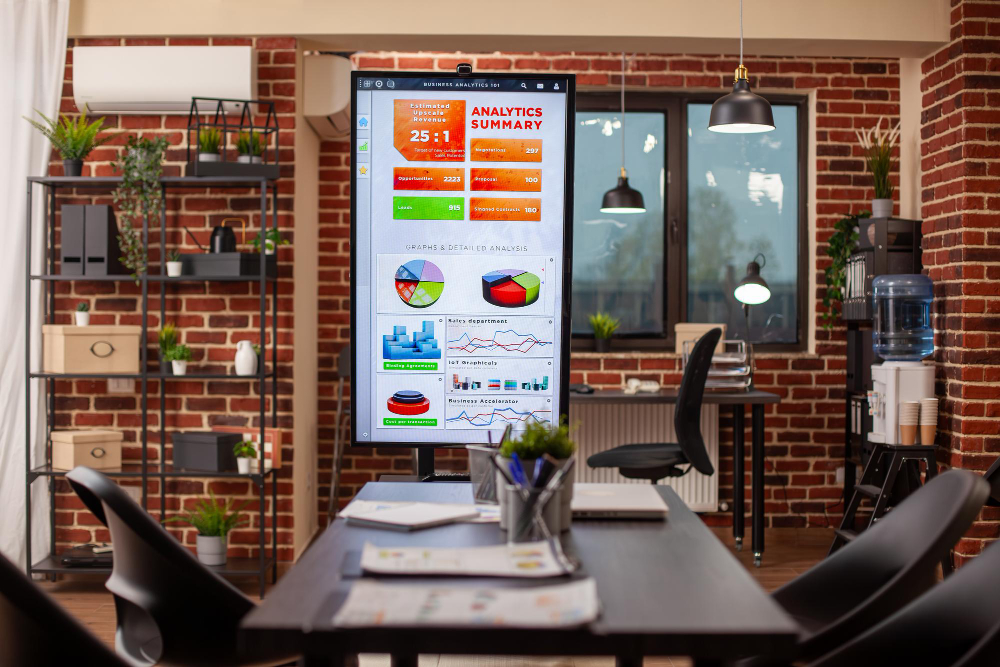
Artists sketch with better visual cues; educators display color-coded lessons; engineers mark up diagrams with precision. Office environments experiment with low-energy E-Ink dashboards for data visualization and status tracking.
Einktab has built its reputation on exactly this approach, offering devices and workflows designed for those who value clarity over constant stimulation.
The tactile delay between stylus and response mimics natural handwriting, grounding digital work in physical sensation.
Readers of digital comics or magazines find renewed joy in viewing art that breathes through reflected light rather than harsh brightness.
As people grow more aware of the effects of constant screen exposure, the appeal of reflection-based technology becomes more powerful. The modern eye craves softness.
Color E-Ink satisfies that craving while keeping the benefits of digital flexibility—connectivity, annotation, and instant updates. It offers balance rather than replacement. When every surface glows, the quiet one stands out.
From an environmental standpoint, these displays also represent progress. Their power consumption remains minimal, aligning with sustainable design principles: less energy, less glare, and longer device lifespan.
Many devices can display a static image indefinitely without draining the battery, turning them into living documents rather than restless screens.
There is growing awareness that not all progress means faster, brighter, or louder. The E-Ink movement—especially with Kaleido and Gallery panels—belongs to a philosophy of deceleration.
It invites people to slow down, read attentively, and reconnect with a tactile sense of color. These devices do not compete for attention; they earn it gently.
Einktab users often describe a particular quality to their experience—a sense of focus that feels easier to maintain, a reduction in the urge to glance away, or close the device.
This is not mysticism but physiology. When the eye does not need to adjust to emitted light continuously, cognitive resources remain available for comprehension rather than compensation. Reading on color E-Ink feels less like operating a device and more like engaging with a digital document.
As Kaleido and Gallery E-Ink mature, their applications are expanding—from compact readers to office dashboards, signage, and hybrid tablets. These devices promise a new era where technology feels more natural, less intrusive, and more human. The boundaries between digital and physical reading continue to blur, but this time, in favor of comfort.
Color without glare is not just a technical achievement—it is a design philosophy.
It proves that progress can mean restraint, that beauty can emerge from subtlety, and that innovation sometimes shines brightest when it stops shining altogether.
The future of E-Ink color belongs to those who understand that the quietest screens often speak the loudest.
Chandrima is a seasoned digital marketing professional who works with multiple brands and agencies to create compelling web content for boosting digital presence. With 3 years of experience in SEO, content marketing, and ROI-driven content, she brings effective strategies to life. Outside blogging, you can find her scrolling Instagram, obsessing over Google's algorithm changes, and keeping up with current content trends.
View all Posts

How To Get Your Brand Cited In AI Search Resu...
Oct 22, 2026
The Ultimate Blueprint For Broken Link Buildi...
Oct 16, 2026
The Ultimate Guide To Stealing Your Competito...
Oct 15, 2026
Beyond The Basics: Master Guest Posting For H...
Oct 15, 2026
Best Generative Engine Optimization (GEO) Com...
Oct 14, 2026