
Structured Data SEO: How Schema Markup Helps Search Engines Understand Your Website
Sep 12, 2026


Over the years, the term ‘link popularity’ has transformed its meaning from a simple metric to a relevant factor for SEO performance.
That is, it is no longer a fancy name for the total number of links used in a page. Rather, it is a metric that counts the number of quality links.
Now, it is no news that Google and other search engines prioritize quality backlinks to determine the relevance, authority, and domain popularity.
So, it has evolved its core meaning with some modern tweaks. And, as a seasoned digital marketer, I have always focused on link popularity over anything.
So, for my fellow marketers and brands, I have brought a complete guide on what a popularity link is and how to use it to improve SEO by focusing on—
Stay tuned!

To explain simply, the popularity link is a key metric in the SEO landscape that helps in measuring the number of backlinks that point to the brand website.
That is, it is similar to the confidence votes. So, the more quality backlinks that directly refer to the brand website, the more credibility and authority the brand has in the niche.
Moreover, this popularity link signals search engines that the site is valuable and relevant in the niche. So, it ranks at the top of the SERPs. Driving more audience engagement.
Even though the popularity link appears not important for SEO, that is not the case. It is a key element for SEO optimization and improved rankings.
That is, it gives confidence to the brand sites, sends credibility signals to the search engines, and helps the website improve its rankings. So, it immensely impacts the SEO performance.
In addition to this, the quality backlinks can help search engines to discover the brand pages from the links. So, it can help in faster indexing of the webpages.
Also, high quality of backlinks from popular websites help bring a direct and targeted audience from other websites. So, the brand site can gain visitors and improve its exposure.

In SEO, quality always matters more than quantity. Similarly, for inbound links or popularity links, quality trumps quantity.
Now, there are many reasons behind this. So, some of these reasons include—
Given the relevance of link popularity in SEO, measuring it is vital. So, here are some common methods and tools to use for measuring the link popularity effectively—
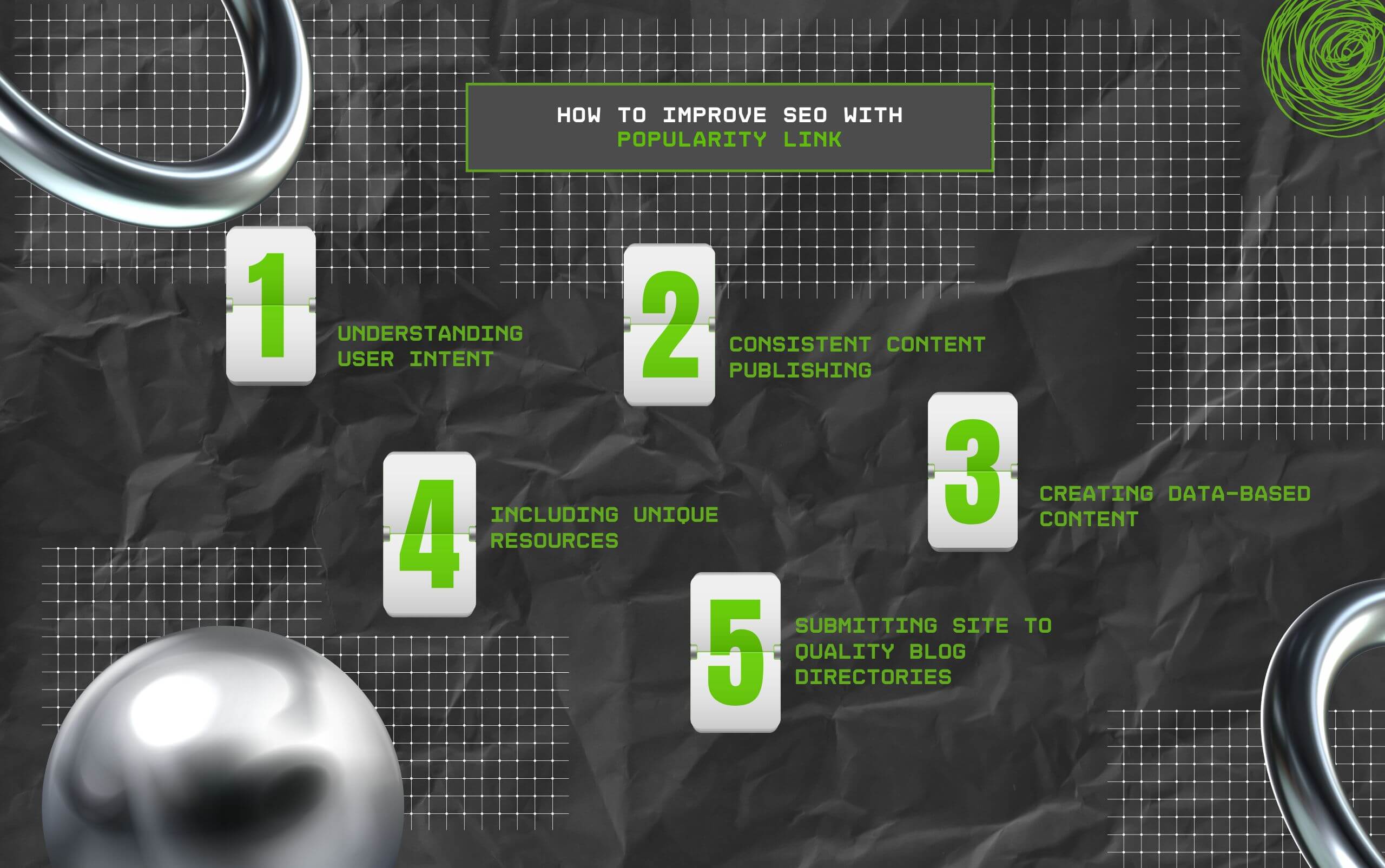
Now, here is the main part of this entire discussion — the methods and ways to improve SEO with popularity link. So, here are some of the ways—
Firstly, brands need to create content by understanding the search intent of the users. That is, the more they address the user intent, the more they will build authority with the content pages.
Moreover, consistently publishing relevant content on the site can improve the indexing and discoverability.
That is, the more diverse content the brand covers, the more chances to get noticed both by the audience and the search engines. So, brands need to focus on content production.
Given that the internet relies on data, creating data-based content makes the pages valuable and improves their linkability.
So, other domains from the niche can link to these data-infomed pages for gathering unique insights. Helping brands to improve their link quality and niche authority.
Similarly, when the brands include unique resources in their content, they become relevant and informative in the niche.
That is, this opens the door to improving the inbound links to the pages. So, the valuable and unique resources can help in building authority in the specific niche.
Finally, creating high-quality content pages and adding them to the blog directories can further improve the inbound backlinks.
That is, adding the pages to a credible blog directory can massively enhance the link popularity of the pages in the niche field. So, helping sites to rank better with high credibility.
Given that popularity links allow brands to improve their credibility, doing it right is crucial. So, here are some common practices that brands need to avoid—
So, link building can immensely help with establishing authority. That is, creating quality content, monitoring the backlinks, and understanding the search intent can improve the SEO rankings and backlinks.
So, take this chance to gain popularity in your niche field with informative and quality content. Ensuring high-quality inbound linking for better ranking on SERPs.
Here, I have curated some of the common questions around link popularity and its impact on SEO performance.
Even though there are a lot of factors influencing the link quality of the backlinks, a few vital factors include—
• Relevance — Backlinks should have a contextual or topical relevance with the content and the niche of the site.
• Authority — Links from high authority and high domain rating sites offer more credibility and help in building trust with the audience.
• Content Quality — The content of the link used in the page should be informative, well-written, and valuable in the niche.
• Anchor Text — Using descriptive, relevant, and keyword-specific anchor texts to backlinks can help provide context and signal to search engines.
• Placement — Placing the links within the content naturally and organically can add more value to the overall content.
• Link Type — The Do-follow links come with more credibility and quality compared to the No-follow links.
Generally, social media links are not considered in link popularity, which affects the SEO rankings. This is because social media links are mostly marked as “no-follow”.
So, they do not offer the credibility like those traditional backlinks from official sites. Making them not a worthy element in directly impacting the SEO authority.
Certain tools and SEO metrics can help in evaluating the link popularity for websites. That is, brands and users can use Ahrefs, Moz, and SEMrush to conduct backlink analysis.
Moreover, they can use the Google Search Console to find top linking sites and evaluate the performance of the backlinks on the SEO of the websites.
Yes, absolutely. Given that too many links from the same site are often perceived as spam, it is better to avoid taking too many from the same domain.
Moreover, low-quality backlinks from the same domain can immensely affect the rankings on search engines. So, using a single authoritative site is not recommended.
Unlike the common belief, improving link popularity is a long-term process. That is, it is bound to show results around 3 to 6 months.
So, if brands need sustainable growth, significant measures, and high-quality popularity of the backlinks, they need to wait at least 6 to 12 months to see the improvement.
Chandrima is a seasoned digital marketing professional who works with multiple brands and agencies to create compelling web content for boosting digital presence. With 3 years of experience in SEO, content marketing, and ROI-driven content, she brings effective strategies to life. Outside blogging, you can find her scrolling Instagram, obsessing over Google's algorithm changes, and keeping up with current content trends.
View all Posts

Structured Data SEO: How Schema Markup Helps ...
Sep 12, 2026
TikTok Downloader For Content Marketing Resea...
Sep 12, 2026
AI Content Optimization: How To Make Your Con...
Sep 11, 2026
AI Citations: How To Get Your Content Referen...
Sep 10, 2026
Top Enterprise AI Cloud Platforms for RAG, AI...
Sep 08, 2026