Agency Guide To YouTube Growth: Wholesale Pricing For Multiple Clients
Sep 15, 2026
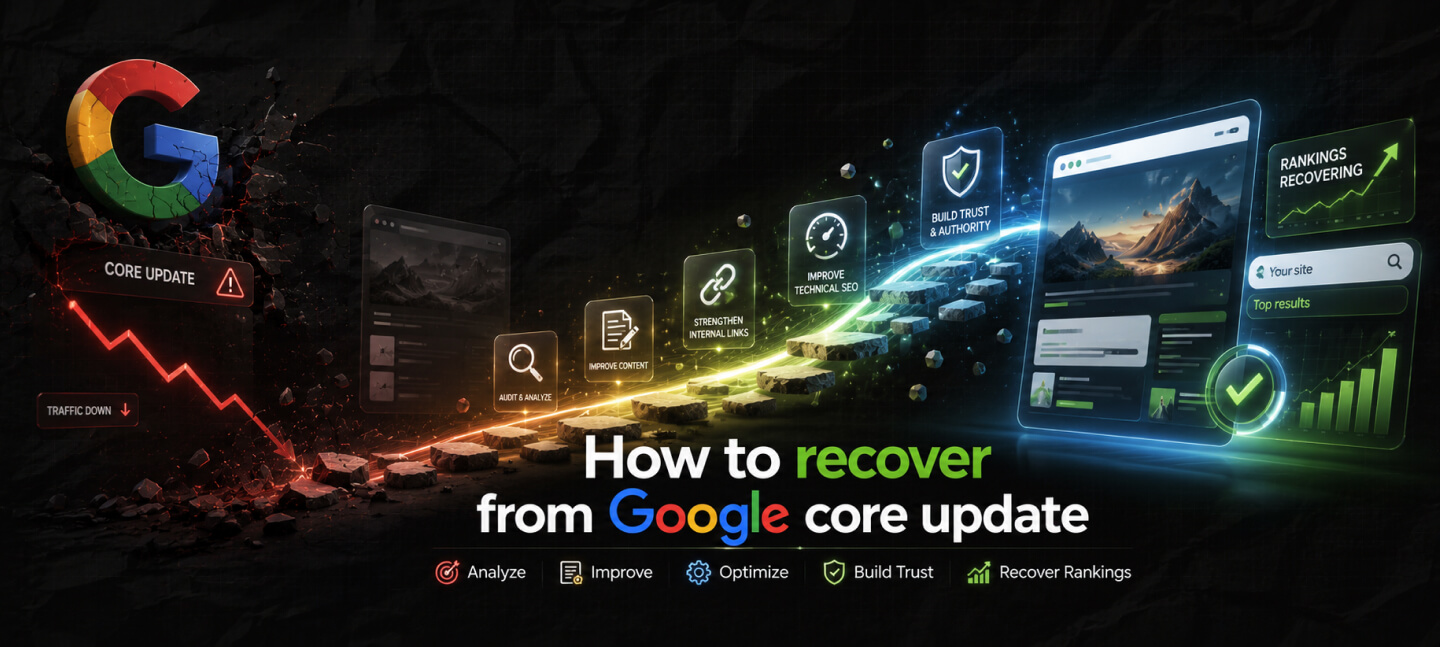

Google’s core algorithm updates introduce broad, system-wide modifications to search engine architecture.
None of these updates is accidental or here without any reason. They are designed to improve the overall quality and relevance of search results.
Additionally, they are nothing like targeted filter rollouts that address isolated problems such as web spam or mobile layout errors.
Core updates change how the search engine evaluates digital content across the entire web index.
Moreover, these adjustments occur multiple times a year without advance notice.
Therefore, a Google penalty can trigger sharp, sudden drops in organic traffic and keyword rankings.
Top-performing SEO agencies mitigate these disruptions by moving away from reactive panic.
Instead, they rely on data-driven tracking, strategic audits, and structured recovery frameworks.
In this article, I will give you all the necessary information that you will need to know how to recover from Google core update.
Stay tuned.
To build a reliable path to recovery, webmasters must understand exactly what the most recent core changes targeted.
The February 2026 core update introduced a notable strategic shift by focusing directly on the Google Discover ecosystem.
As a personalized, feed-based content delivery network found within the mobile app and mobile homepages, Discover operates on different user engagement metrics than standard text search.
This specific update accelerated the adoption of an AI-first algorithmic approach designed to filter out low-value content farms.
| Algorithmic Core Penalties | Targeted Algorithmic Rewards |
|---|---|
| Thin Content: Superficial pages lacking real value or deep answers. | Expert Knowledge: Insights written by verified authors with real credentials. |
| Over-Optimization: Excessive keyword stuffing and artificial link structures. | Local Relevance: Content tailored closely to regional interests and timeliness. |
| Poor User Experience: Slow page loading and invasive ad layouts. | High Feed Engagement: Strong natural interaction patterns from actual mobile users. |
| Unverified AI Copy: Automated text deployed at scale without human oversight. | Visual Appeal: High-quality, original imagery integrated cleanly into articles. |
If you are yet to figure out a strategic answer to how to recover from Google core update, this step is non-negotiable.
You have to track down even the tiniest change post-update and analyze what went wrong. Here’s how you can do it accurately:
| Feature/Tool | What It Does |
|---|---|
| Google Search Console | Used to pinpoint the precise day when impressions and clicks began to fall, identifying exactly which URLs lost ranking positions. |
| Google Analytics | Monitors site-wide user behavior changes, tracking shifts in bounce rates, average session lengths, and conversions. |
| SEMrush And Ahrefs | Tracks wider keyword visibility losses, maps competitive landscape movements, and audits backlink profile health. |
| Volatility Weather Tools And Forums | Webmaster community spaces and algorithm tracking sensors help distinguish site-specific script errors from systemic global updates. |
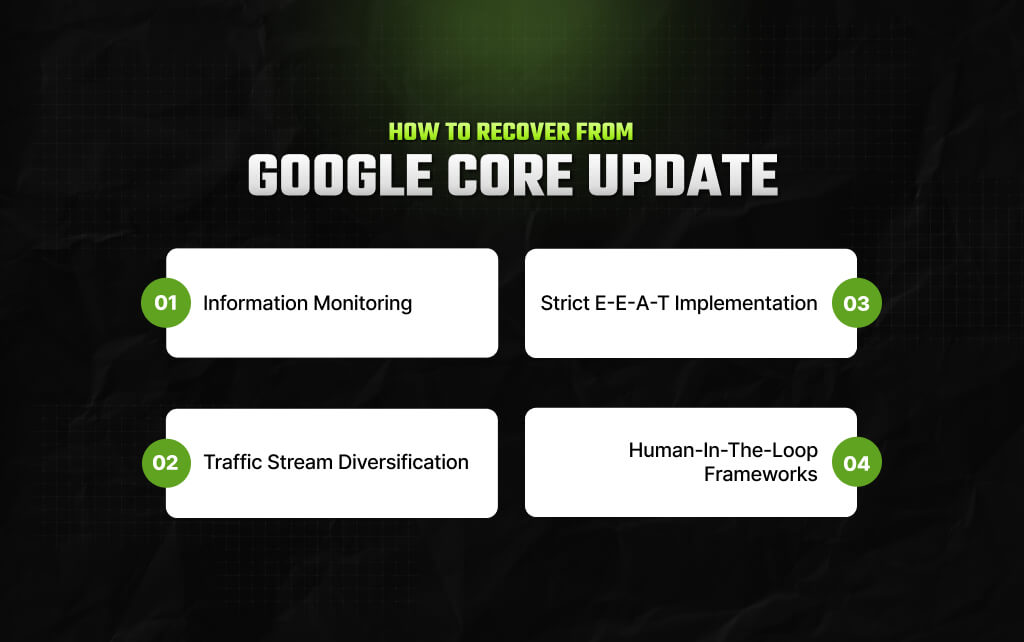
Top SEO firms do not wait for a core Google algorithm update to roll out before adjusting their configurations.
They construct algorithmic safety nets in advance by keeping their search practices aligned with core quality guidelines.
Real-time alerts are tied directly to official channels like the Google Search Central Blog and updates from search representatives.
Leading agencies advise clients to avoid relying solely on a single organic search channel.
They build out secondary communication assets using email newsletters, social video channels, and referral networks.
Content strategy is anchored firmly around Experience, Expertise, Authoritativeness, and Trustworthiness (E-E-A-T).
This means every article features explicit author bios, credential highlights, and outbound links to primary scientific or institutional data sources.
Editorial workflows add human editing oversight to any automated content generation tool to ensure copy matches natural reading styles.
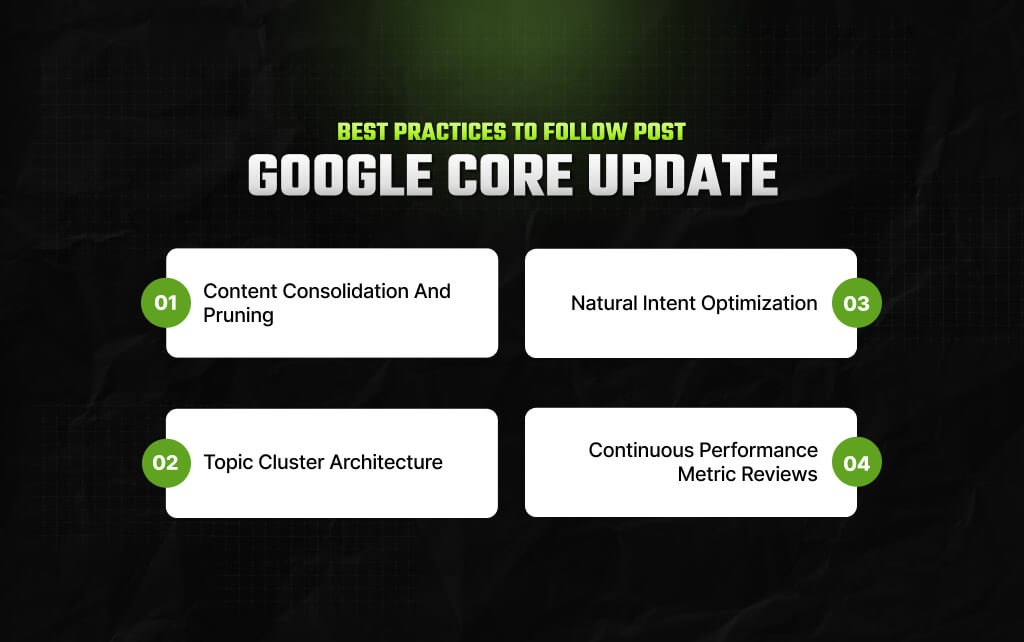
Recovering from an algorithm update requires updating your infrastructure to match Google’s quality signals.
True recovery relies on executing foundational web best practices over a sustained period of time:
Low-value, outdated, or thin pages that fail to generate organic traffic are either combined into comprehensive guides, updated with deep expert text, or removed completely to preserve your crawl budget.
Agencies build internal authority by creating a centralized pillar page linked to supporting sub-topic articles.
This structured internal linking network helps search crawlers index your site topology more efficiently.
Text assets are rewritten to directly address search intent.
Opening sections are adjusted to answer user questions immediately, stripping out unnecessary filler phrases to score better on readability metrics.
Success is measured using a balanced scorecard.
Rankings are weighed alongside user engagement metrics like scroll depth and actual lead conversions to verify real-world value.
Navigating Google’s algorithm updates, including the February 2026 Discover Core Update, demands vigilance, expertise, and agility from top SEO firms.
So, I always ensure that I am preparing proactively. In addition, I always monitor diligently.
Also, I keep on adapting strategically. Also, I am sure an SEO company will approve of these strategies.
Therefore, through these, we can turn potential disruptions into opportunities for growth.
In an AI-driven search era, the focus remains on delivering exceptional value to users. Also, this ensures sustained visibility and success.
Businesses partnering with skilled professionals will not only survive these changes but thrive.
In fact, it will maintain a competitive edge in the ever-evolving digital landscape.
Barsha is a seasoned digital marketing writer with a focus on SEO, content marketing, and conversion-driven copy. With 8+ years of experience in crafting high-performing content for startups, agencies, and established brands, Barsha brings strategic insight and storytelling together to drive online growth. When not writing, Barsha spends time obsessing over conspiracy theories, the latest Google algorithm changes, and content trends.
View all Posts

Agency Guide To YouTube Growth: Wholesale Pri...
Sep 15, 2026
Top 5 Reputed SMM Panels To Buy Social Media ...
Sep 15, 2026
How Is Social Media Marketing Changing The Wa...
Sep 15, 2026
Structured Data SEO: How Schema Markup Helps ...
Sep 12, 2026
TikTok Downloader For Content Marketing Resea...
Sep 12, 2026