The Ultimate Guide To Competitor Backlink Analysis: An Actionable SEO Blueprint To Steal Your Rivals’ Traffic
Oct 23, 2026

A few years ago, SEO felt predictable.
It was about quick tasks – find a keyword, add it to the title, publish a long article, build backlinks, and wait for rankings.
That formula worked for a long time. Also, it flooded the internet with shallow content. But things are different now.
Today, search engines are trying to clean that up.
Google no longer wants pages that simply repeat information already available on ten other websites.
Instead, it wants content created by people who actually know the topic, understand the audience, and bring something useful to the table.
That shift is exactly why EEAT in SEO matters.
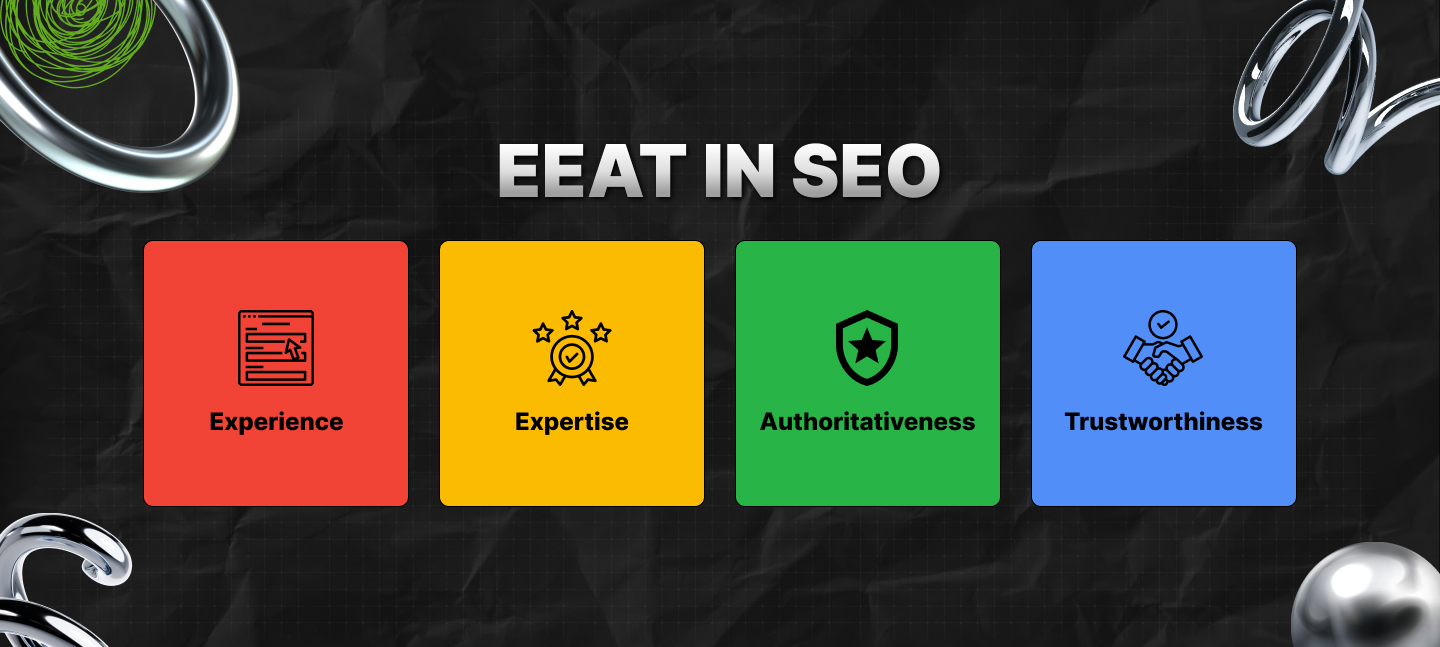
FYI, EEAT stands for experience, expertise, authoritativeness, and trustworthiness. These are the signals Google uses to understand whether your content deserves visibility.
As a content manager in the SEO landscape for the last 8 years, I saw that most articles on the internet explain EEAT in a very mechanical way.
They define each term, add a few bullet points, and stop there. But that approach misses the bigger picture.
EEAT is not just another SEO checklist. Instead, it is Google’s way of filtering out content that feels empty. And honestly, users are doing the same thing.
People are tired of generic articles written only to rank. In my experience, I have seen people want transparency, including:
That is where strong websites are starting to separate themselves. And that is precisely why I am here – to help you understand how EEAT works in SEO.
In my guide, I will break down what EEAT actually means, why it matters for rankings, and how websites can improve it without turning their content into robotic SEO articles.
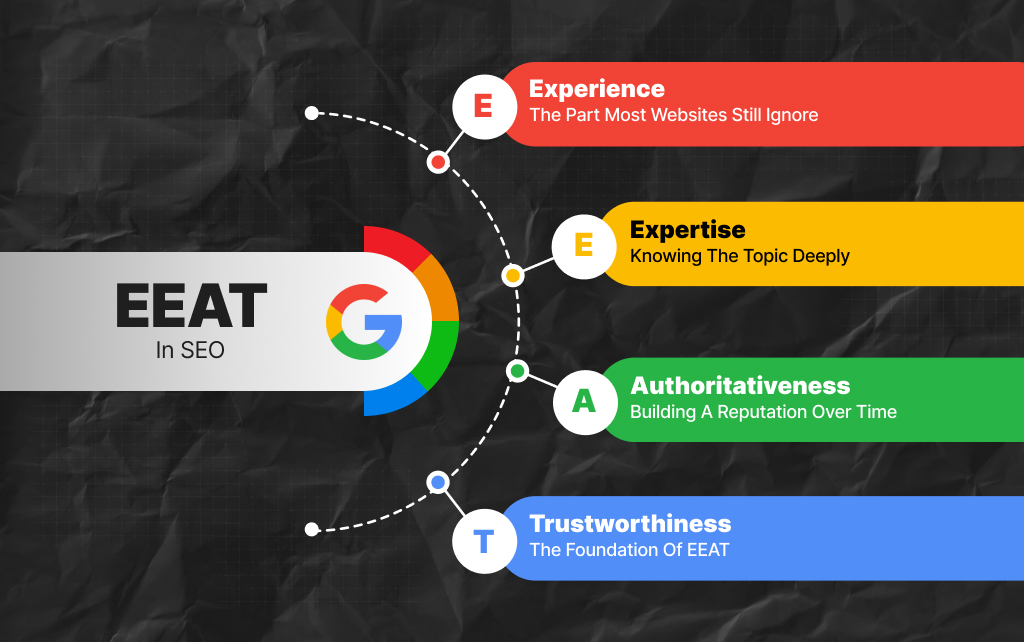
EEAT is part of Google’s Search Quality Evaluator Guidelines.
These guidelines help human evaluators assess the quality of search results. While evaluators do not directly rank websites, their feedback helps Google improve its algorithms over time.
Originally, the framework was called EAT:
Later, Google added another ‘E’ for Experience. That update changed the conversation around content quality.
Moreover, it showed that Google increasingly values first-hand involvement.
For example, a person who has actually used a skincare product can often provide more helpful insight than someone summarizing Amazon reviews.
Similarly, a founder sharing lessons from scaling a business usually offers more value than a generic business article with recycled advice.
Also, an SEO professional explaining how they recovered traffic after a Google update brings more credibility than a basic “how-to” post with no evidence, much like I’m trying to do with content on Search Engine Magazine.
Experience adds texture to content. It makes information feel believable. And more importantly, it makes content useful.
Google has one major problem: The internet is overflowing with content.
Every day, thousands of websites publish articles targeting the same keywords. And most of those articles say nearly identical things.
That creates a terrible experience for users.
Just imagine searching for “best protein powder” and opening five articles that all:
As a result, users quickly lose trust, and Google notices that.
And that is precisely why EEAT exists, because search engines need a better way to identify content that feels genuine.
Moreover, the rise of AI-generated content has made this even more important.
Today, anyone can generate hundreds of articles in a single day. But volume alone does not create value.
In fact, much of the content flooding search results now feels flat, repetitive, and forgettable.
That is why websites with strong EEAT often perform better over time.
Personally, you will know the difference. Genuine content aiming to add value, feel human, sound informed.
More importantly, they answer questions properly. And they usually offer insights that cannot be copied from another article.
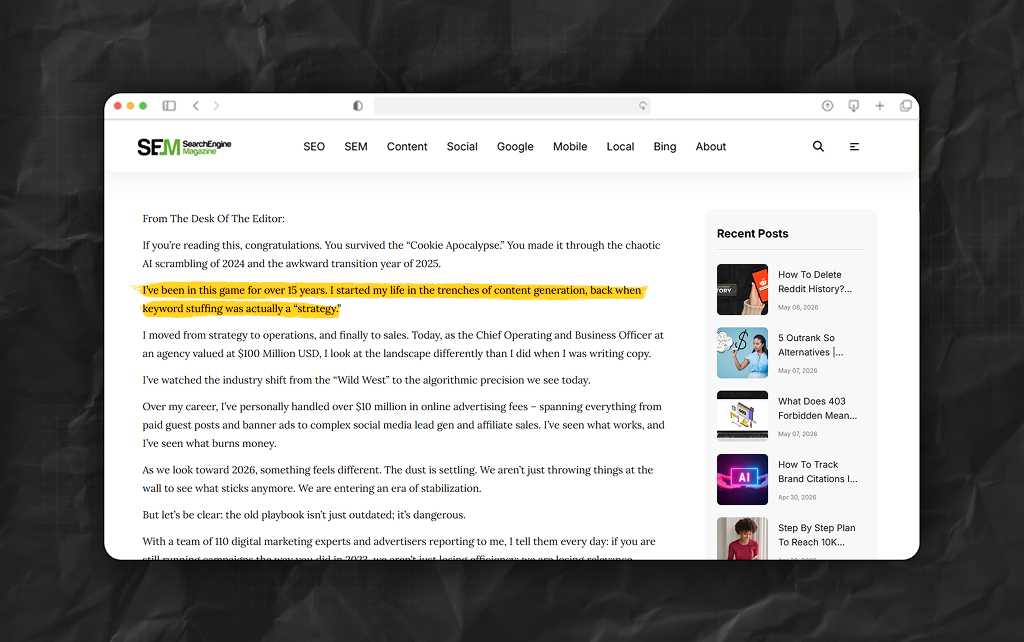
Experience is one of the most misunderstood parts of EEAT.
Many websites focus heavily on word count and keywords but completely ignore first-hand knowledge.
And that is a HUGE mistake!
Google increasingly rewards content created by people who have actually interacted with the topic.
This does not mean every article must contain a personal story. But it should show signs of real involvement.
Let us say two websites write about the best budget smartphones. The first article simply lists specifications copied from brand websites.
However, the second article explains:
The second article immediately feels more trustworthy. Why? Because readers can tell someone actually used the device.
That is experience.
Google cannot ‘see’ experience the way humans do, but it looks for signals.
And these signals ideally include:
Thin content rarely includes these elements. That is why so many generic affiliate blogs struggle today.
Also, they often recommend products the writer has never even touched.
Experience alone is not enough. Someone may have used a product once and still know very little about the broader subject.
That is where expertise matters – expertise reflects depth of knowledge. Moreover, it shows whether the creator truly understands the topic they are discussing.
One mistake people make is assuming expertise only comes from formal education. That is not always true.
For some topics, practical experience matters more.
For example:
But certain industries require higher standards, and these include:
EEAT in SEO matters in these areas more because inaccurate information can genuinely harm people.
Also, that is why Google expects stronger expertise signals.
Expert-level content usually:
Readers can usually tell when a writer truly understands a subject. The article flows differently. Moreover, it just feels more confident.
And most importantly, it actually teaches something useful.
Authority is not something you claim. Instead, it is something other people associate with your brand.
In SEO, authority usually develops through reputation and recognition. Google wants to understand whether your website is known and trusted within its niche.
Some common authority signals include:
For example, if several respected marketing websites reference an SEO blog repeatedly, Google begins associating that website with expertise in SEO.
Over time, that strengthens authority.
Many websites make the mistake of covering too many unrelated topics.
One day, they publish about crypto. The next day, they publish about skincare. Then travel and fitness.
This weakens topical relevance. But Google tends to trust websites more when they focus deeply on a subject.
For example, an SEO-focused publication covering technical SEO, link building, Google updates, search trends, site architecture, and SEO case studies is more likely to build authority.
And this is in direct comparison to a general blog publishing random topics for traffic. This is because depth builds trust, while breadth without direction often weakens it.
Trust is the most important part of EEAT in SEO. Without trust, the other signals lose value.
A website may have backlinks and traffic, but if users do not trust it, long-term growth becomes difficult.
Trust comes from many small signals working together, and these include:
The point? People should immediately feel comfortable using your website.
Some websites lose trust quickly because they prioritize clicks over credibility.
In addition, common problems include:
Moreover, users notice these things instantly. And when users lose trust, search engines usually follow.
Google has spent the last few years pushing websites toward people-first content. That means content should exist primarily to help readers, not manipulate rankings.
This is where many websites fail.
Because most websites focus so heavily on SEO optimization that they forget real people are reading.
The result is content that sounds robotic.
You have probably seen articles like this before: “Looking for the best running shoes? In this article, we will discuss the best running shoes for running enthusiasts looking for running shoes.”
Nobody talks like that. And users immediately recognize it as filler. Personally, I have seen that strong EEAT content feels different.
For starters, a ‘good’ piece of content with EEAT will:
Moreover, good SEO content today should not feel SEO written. Instead, it should feel genuinely useful.
EEAT becomes even more important for YMYL content. FYI, YMYL stands for “Your Money or Your Life.”
So, these are topics that can directly affect a person’s:
Also, because the stakes are higher, Google applies stricter quality standards.
YMYL content includes:
Imagine reading incorrect medical advice online and acting on it. The consequences could be serious.
That is why Google prioritizes expertise and trust heavily in these industries. As a result, if you operate in a YMYL niche, weak EEAT in SEO can severely limit rankings.
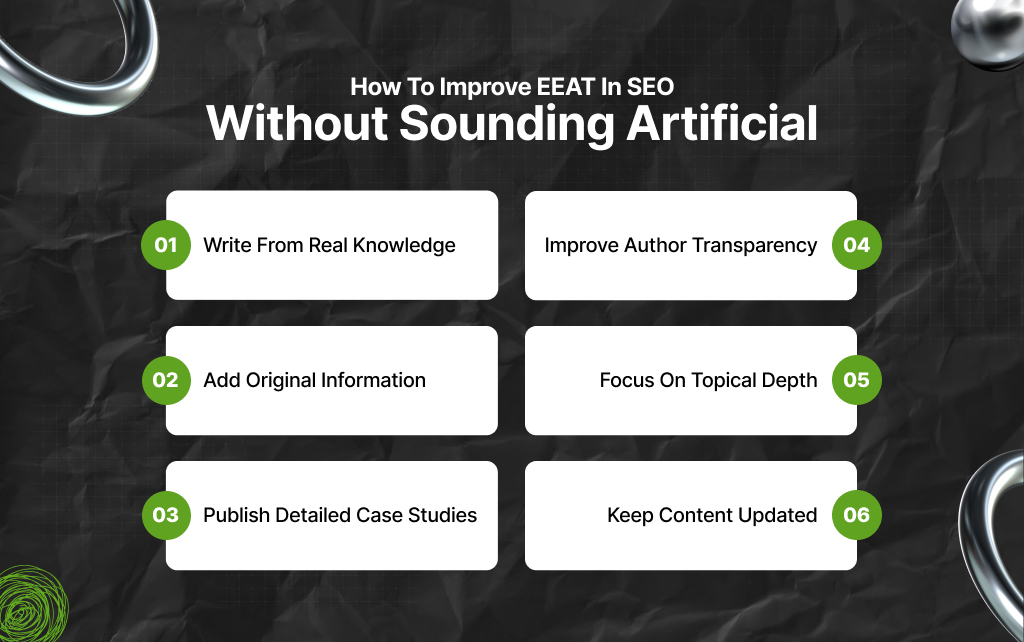
Many websites approach EEAT the wrong way. They add an author box, publish a few bios, and assume the job is done.
EEAT is much deeper than that.
It should influence how content is created from the beginning, and with my help, you will be able to incorporate EEAT in your content strategy.
The easiest way to improve EEAT is surprisingly simple.
So, write about topics you genuinely understand. That sounds obvious, but many websites ignore it.
They chase keywords instead of expertise. And the result? Shallow content with no original thinking.
Writers who actually know a topic naturally produce stronger insights. That difference becomes visible very quickly.
Originality is becoming one of the strongest differentiators in SEO.
This can include:
Also, original content creates value that competitors cannot easily duplicate.
Case studies are powerful because they combine experience and expertise.
For example, an SEO case study explaining traffic growth, ranking changes, strategy adjustments, failed experiments, and lessons learned feels far more credible than generic advice.
Readers trust evidence. And Google does too.
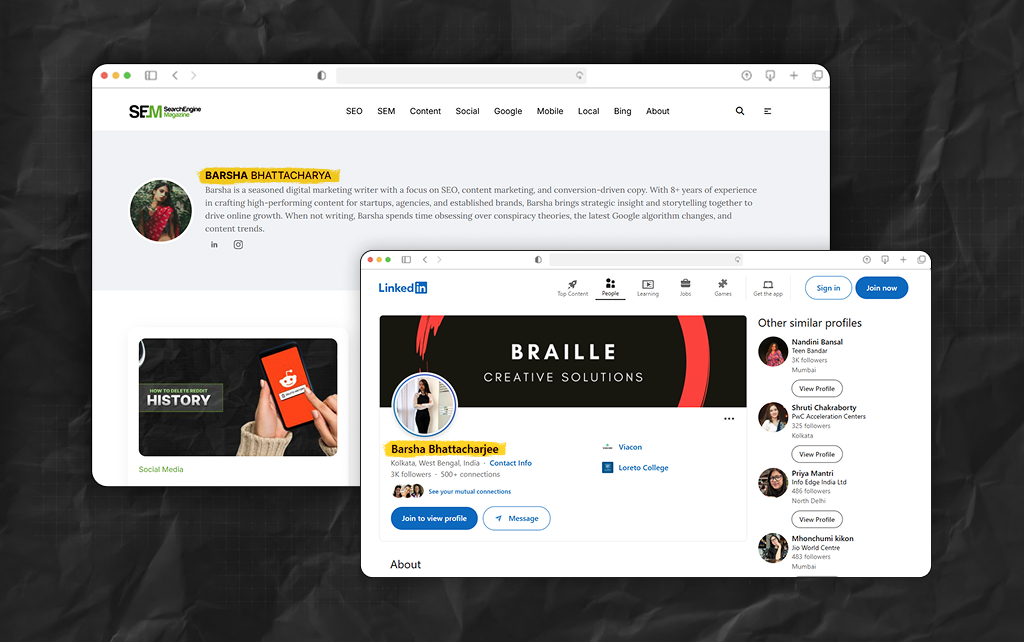
Users should know who created the content, and for that, you need a strong author bio. So, what does a strong author page even include?
Ideally, a good author bio often includes:
This helps build credibility over time.
Publishing random content weakens positioning. Instead, build strong topic clusters.
As a result, if your website covers SEO, create depth around:
This helps search engines understand your niche authority.
Old information damages trust.
Readers want current insights. Moreover, updating articles regularly helps maintain credibility and relevance.
This is especially important in industries where information changes quickly.
AI content is now everywhere.
Some websites publish hundreds of AI-generated articles every week. The problem is not AI itself.
The real issue is low-effort publishing.
Most AI-written content lacks:
That is why so much of it feels forgettable. Moreover, AI can assist with outlining, research, and workflow.
But human input still matters heavily.
TBH, the strongest content usually combines:
People do not remember perfectly optimized content. They remember content that taught them something meaningful.
SEO is becoming less about gaming algorithms and more about proving value. That shift will continue.
Moreover, search engines are getting better at identifying:
At the same time, they are rewarding websites that:
This is why branding and SEO are becoming closely connected. A trusted brand naturally builds stronger EEAT.
And stronger EEAT usually improves long-term visibility.
Honestly, EEAT in SEO is not a trend. Instead, it reflects the direction modern search is moving toward.
Google wants to rank content created by people who know what they are talking about. Users want the same thing.
That means successful websites need to focus on more than rankings. Instead, they need to focus on credibility.
The strongest content today is not necessarily the longest. Instead, it is the most useful – It answers questions properly, sounds human, and provides insight.
Also, it gives readers a reason to trust the person behind it. That is what EEAT is really about.
Barsha is a seasoned digital marketing writer with a focus on SEO, content marketing, and conversion-driven copy. With 8+ years of experience in crafting high-performing content for startups, agencies, and established brands, Barsha brings strategic insight and storytelling together to drive online growth. When not writing, Barsha spends time obsessing over conspiracy theories, the latest Google algorithm changes, and content trends.
View all Posts

The Ultimate Guide To Competitor Backlink Ana...
Oct 23, 2026
How To Land High-Authority Editorial Backlink...
Oct 23, 2026
Why Your Website Traffic Dropped Suddenly And...
Oct 23, 2026
How Do The Physical Google Review Tools Redef...
Oct 23, 2026
How To Get Your Brand Cited In AI Search Resu...
Oct 22, 2026