
The Ultimate Guide To Competitor Backlink Analysis: An Actionable SEO Blueprint To Steal Your Rivals’ Traffic
Oct 23, 2026
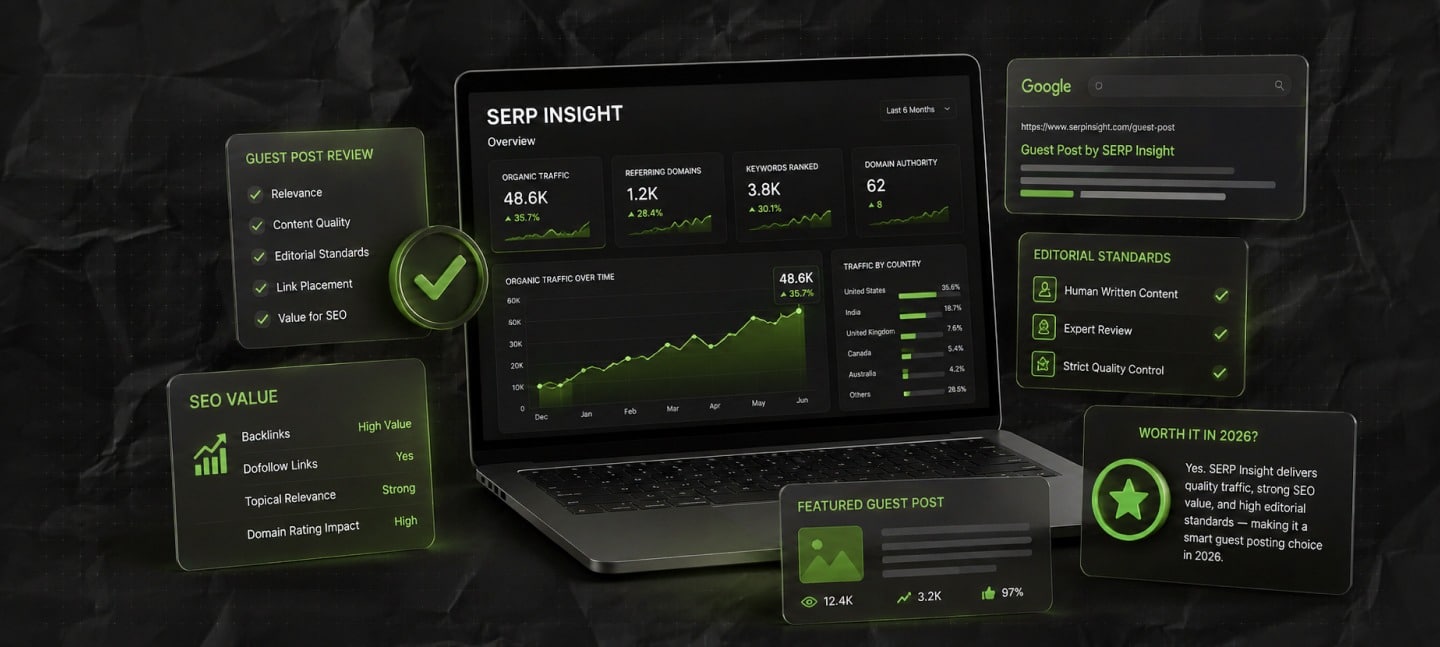

Guest posting has changed dramatically over the last few years.
There was a time when marketers treated every backlink as a win. It didn’t matter where the link came from. If it pointed back to a website, it was considered valuable.
Those days are long gone.
Today, the conversation is very different. SEOs care about topical relevance. Brands care about visibility. Publishers care about quality.
And Google has become much better at understanding the difference between genuine editorial contributions and content that exists purely for link building.
That shift has forced marketers to become more selective.
Instead of asking, “Can I get a link from this site?” the better question is, “Is this publication actually worth contributing to?”
That’s exactly why so many people search for SERP Insight guest post opportunities.
Before spending time pitching ideas, writing content, or pursuing a placement, marketers want to know whether the site offers meaningful value.
Does it attract the right audience? Can it help build authority? Is it respected within the SEO community?
And perhaps most importantly, is it worth the effort in 2026?
Let’s take a closer look.
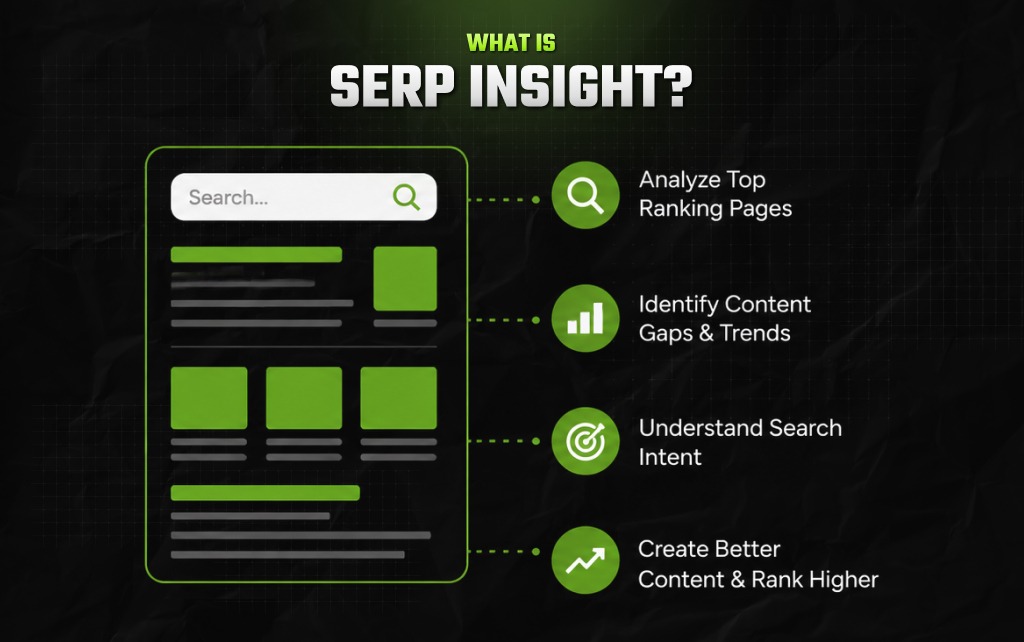
SERP Insight is a digital publication focused on search marketing, SEO, content strategy, artificial intelligence, analytics, and broader digital marketing trends.
Its audience largely consists of:
Unlike general business websites, SERP Insight serves a niche audience. That distinction matters.
Frankly, if you earn a backlink from a relevant and credible site in your niche, then it will become more valuable over time as compared to a link from some unrelated famous site.
When evaluating guest posting opportunities, relevance frequently matters just as much as raw authority metrics.
That’s one reason marketers continue to explore publishing opportunities on industry-focused websites.

Interestingly, most people searching for “SERP Insight guest post” aren’t looking for writing advice.
In reality, these people are just trying to answer a standard – not to mention highly practical – question in the SEO-dominated digital marketing business.
I have been solely working in the guestposting industry for nearly five years, and I can tell you that guestposts have always been a controversial topic.
Every time there’s a Google update, we fear guest posts will disappear forever. But somehow they always come back, though with stricter guidelines.
Most people who are starting out in the SEO industry spend years researching whether such content contribution is worth their time and energy.
For agencies and SEO professionals, guest posting usually serves several goals:
| Objective | Why Does It Matter? |
|---|---|
| Brand Visibility | Reach a targeted audience |
| Authority Building | Establish expertise |
| Referral traffic | Drive relevant visitors |
| Relationship building | Connect with industry professionals |
| Link acquisition | Earn contextual backlinks |
The challenge is that not every guest posting opportunity delivers on those promises. While some sites publish almost anything, others maintain strict editorial standards.
Also, the difference often determines whether a guest post creates long-term value or simply becomes another forgotten article on the internet.
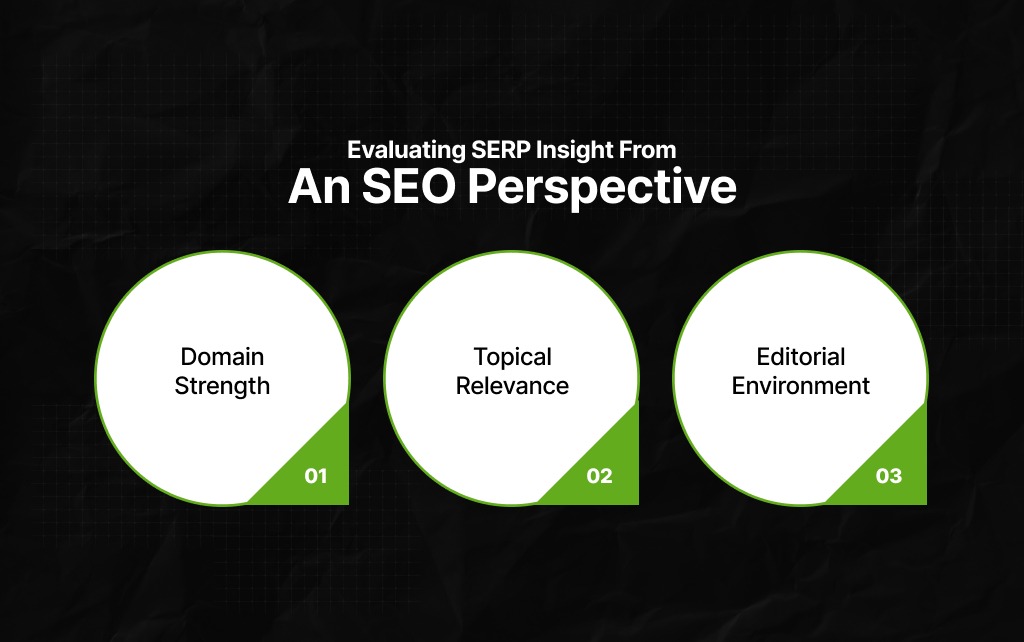
Whenever marketers evaluate a publication, they usually start with SEO metrics. That makes sense. Metrics provide a quick snapshot of a site’s strength.
Having said that, it is poor judgment on a professional’s part to only focus on site metrics – you can’t make actual decisions based on that.
I mean, a site can look really nice when you open it – everything can seem aesthetic, but then on a closer look, it is possible that you find the site doesn’t add any actual value.
Similarly, it is possible that a niche website with average traffic can give you better results – sometimes, it is about the quality of visitors on your site.
This is why experienced SEOs evaluate several factors together.
Domain-level metrics can provide a useful starting point.
They help estimate:
Having said that, you should never view your metrics in silos. This is because Google does not necessarily rank websites exclusively on the basis of third-party authority scores.
Instead, it ranks pages based on usefulness, quality, and relevance. Of course, a strong domain can help, but that is not the complete story.
This is where many marketers make mistakes.
Imagine earning a backlink from a massive website about home improvement. Now compare that to earning a backlink from a respected SEO publication.
Which one is likely to carry more contextual value for a digital marketing business?
In most cases, the industry publication wins.
SERP Insight’s focus on search and marketing makes it relevant for professionals operating in those industries.
That relevance can strengthen the overall value of a guest contribution.
Google increasingly rewards websites that demonstrate expertise and trust. Publications that maintain editorial standards tend to perform better over time.
As a result, while evaluating guest posting opportunities, it’s worth examining:
Strong editorial environments generally create stronger long-term opportunities.
One of the smartest things a contributor can do is study existing content before pitching.
Many guest authors skip this step. And this is why you will see so many people submitting guest posts that fail to match your site’s niche.
On that note, I’ve discussed the content formats that usually perform well on websites in the marketing niche.
Readers love real-world results.
A case study that explains how a website increased organic traffic or improved rankings can attract significant attention.
The key is specificity.
General advice is everywhere. But actual results are harder to find.
Marketers are naturally curious. And they want evidence.
Articles documenting ranking tests, AI search experiments, or content updates often generate strong engagement.
Search changes constantly. Publications covering SEO benefit from thoughtful analysis rather than surface-level reporting.
Plus, readers appreciate perspectives that help them understand what changes actually mean.
Few things attract attention like original data.
So, if you can create detailed case studies, industry reports, or even a survey, you can earn shares and backlinks easily, considering how much these contribute to conversation.
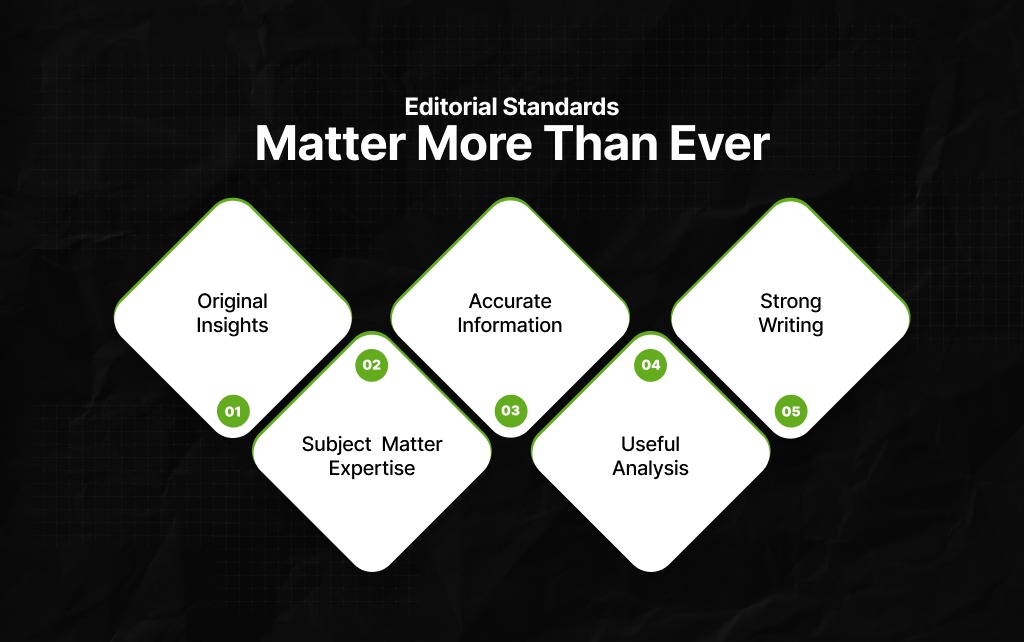
Guest posting became popular because it was easy. Then many publishers realized that easy often leads to low-quality content.
The result was predictable.
Editorial standards became stricter. Today, publications increasingly prioritize:
This shift benefits both readers and contributors. Also, to be fair, a well-edited publication creates more trust.
That trust can increase the value of every article published on the site.
As a result, when assessing SERP Insight as a guest posting opportunity, editorial quality should be one of the primary considerations.
A publication that protects its standards often becomes more valuable over time.
Since the 2024 Google March update, I’ve been asking this question, considering the kind of content updates the search engine giant has been coming up with.
It took me close to two years to figure out that there is no objective answer. In fact, honestly, it depends on your business goals.
As a result, if your goal is to earn a few backlinks, then there are easier ways of accomplishing that.
But modern SEO is no longer just about links.
Visibility matters. Brand recognition matters. More importantly, audience relevance matters. A guest post on a niche industry publication can support all three.
| Benefit | Potential Impact |
|---|---|
| Contextual backlink | Supports authority building |
| Brand mentions | Improves visibility |
| Referral traffic | Generates relevant visitors |
| Topical association | Reinforces expertise |
| Relationship opportunities | Creates future collaborations |
In my experience in the guest post industry, I’ve seen how the strongest results occur mostly when guest posting is done as a branding activity, and not as a link-building strategy.
Having such a mindset will help you create better content and achieve better outcomes.
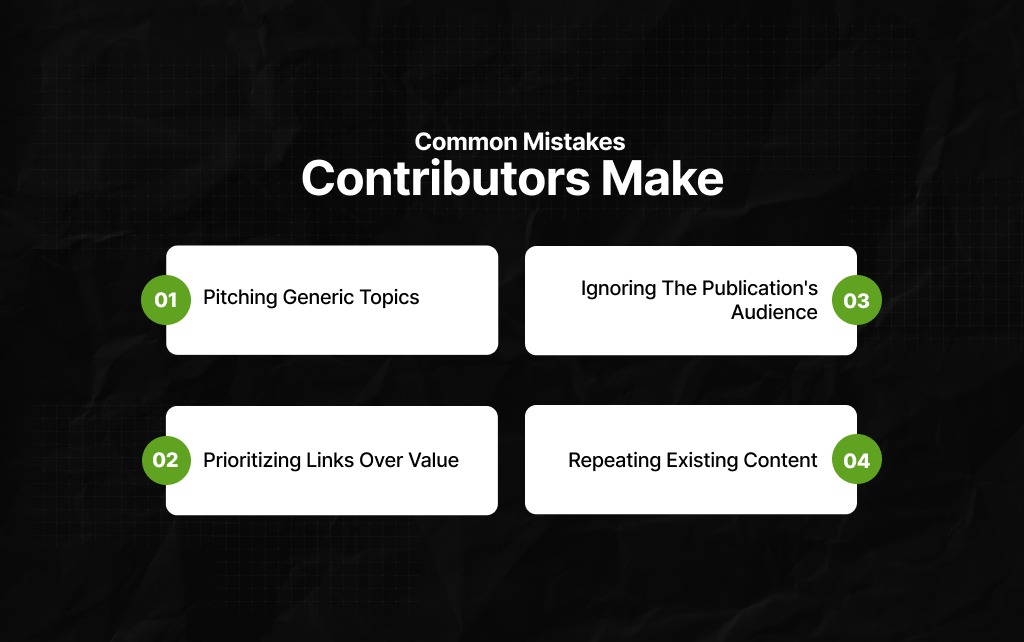
Not every guest post succeeds. Some fail before they’re even submitted. On that note, here are several common mistakes.
Editors see the same ideas repeatedly.
Articles such as ‘SEO Tips For Beginners,’ ‘Why Content Marketing Matters?’, and ‘Link-building strategies’ have been covered countless times.
Unique angles stand out, while generic topics blend into the background.
The biggest mistake I’ve made in my content writing career is to think I can disguise promotional content as commercial content.
Just know this: your readers will always know. Editors can too. More importantly, the best guest posts focus on helping the audience first.
Links should support the content, not dominate it.
Every website serves a specific readership. A successful contribution understands the audience and addresses their needs directly.
This is really important because we usually don’t make this mistake consciously – it only happens because we didn’t pay enough attention.
And you can easily do that by just being a little cautious. Finding something unique and freshing will dramatically improve your chances of getting accepted.

Publishing an article is only the first step. The real value comes from what happens afterward.
As a result, you need to consider:
Many marketers stop after publication.
However, the strongest contributors treat guest posting as the beginning of a conversation rather than the end of a task.
Guest posting should never rely on a single publication. A diversified strategy is usually stronger.
So, you need to look for opportunities on websites that share similar characteristics:
The goal isn’t to accumulate placements. Rather, the goal is to build authority within your niche. That requires quality over quantity.
For marketers, SEO professionals, agencies, and content creators operating within the search industry, SERP Insight appears to offer several qualities worth considering.
The publication serves a relevant audience.
Its focus aligns with search and digital marketing topics. And its niche positioning creates opportunities that broader websites may not provide.
That said, the value of any guest post ultimately depends on the quality of the contribution.
Moreover, a thoughtful case study, original research piece, or data-backed analysis is far more likely to generate meaningful results than a generic marketing article.
The most successful contributors understand this. They don’t approach guest posting as a shortcut.
Rather, they treat it as an opportunity to demonstrate expertise, share insights, and reach the right audience.
In 2026, that approach remains far more valuable than chasing links alone. And for many marketers evaluating SERP Insight, that’s probably the most important insight of all.
Barsha is a seasoned digital marketing writer with a focus on SEO, content marketing, and conversion-driven copy. With 8+ years of experience in crafting high-performing content for startups, agencies, and established brands, Barsha brings strategic insight and storytelling together to drive online growth. When not writing, Barsha spends time obsessing over conspiracy theories, the latest Google algorithm changes, and content trends.
View all Posts

The Ultimate Guide To Competitor Backlink Ana...
Oct 23, 2026
How To Land High-Authority Editorial Backlink...
Oct 23, 2026
Why Your Website Traffic Dropped Suddenly And...
Oct 23, 2026
How Do The Physical Google Review Tools Redef...
Oct 23, 2026
How To Get Your Brand Cited In AI Search Resu...
Oct 22, 2026