
The Ultimate Guide To Stealing Your Competitors’ Backlinks Using Curated Resource Lists
Oct 15, 2026
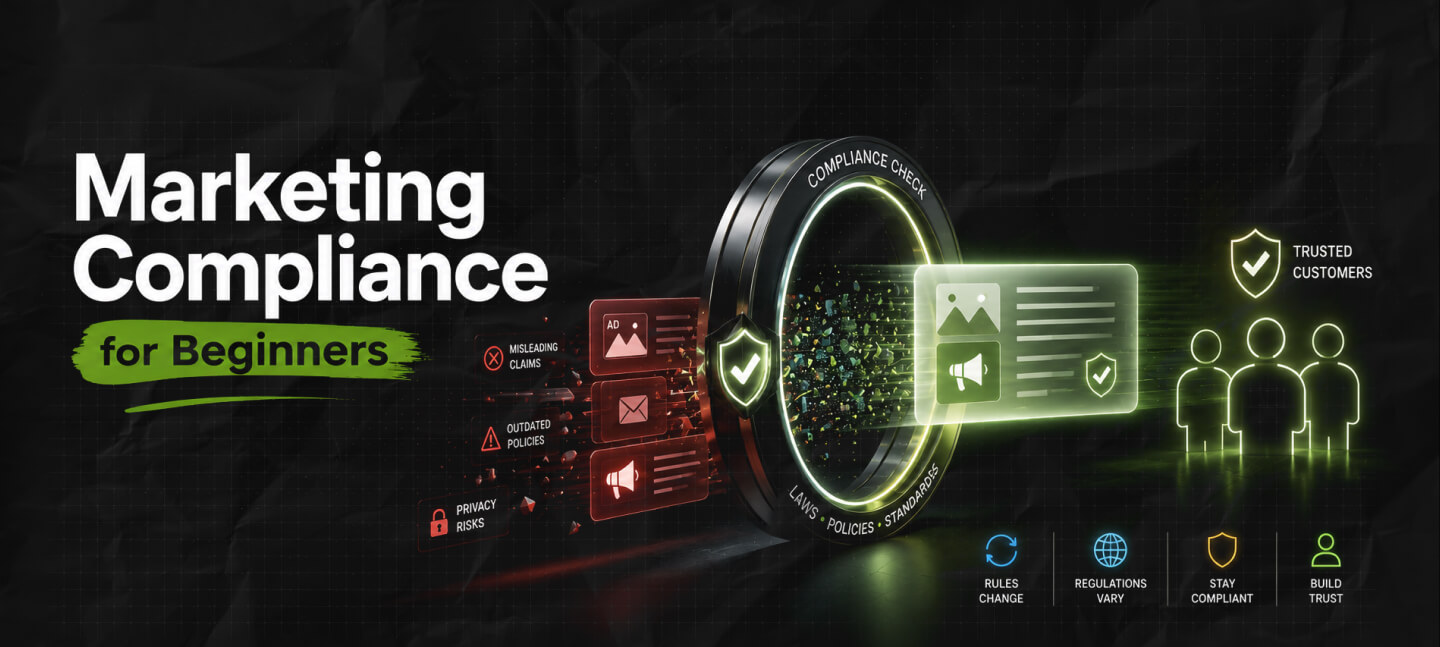

Most small businesses overlook legal issues at the beginning! Instead, their main focus remains sales, ads, and strategizing for quick growth.
They brainstorm about which campaigns flopped and why! However, missed legal compliance is the last thing on their mind. But that kind of approach might backfire later!
Then one day a letter shows up, or your ad account gets suspended out of nowhere. After that, you suddenly start googling “marketing compliance” at 11 pm, wondering what you did wrong.
Here’s the thing: you probably didn’t do anything malicious. Most marketing compliance problems come from not knowing a rule existed, not from trying to break it.
And you don’t need a law degree to fix that. You just need to know where the traps usually are.
Quick note before we get into it: if your business touches Canadian customers, or you’re expanding north of the border, it’s worth having a marketing lawyer based in Canada look over your campaigns before they go live.
I’ve seen one thirty-minute review catch problems that would’ve taken weeks to untangle after the fact.
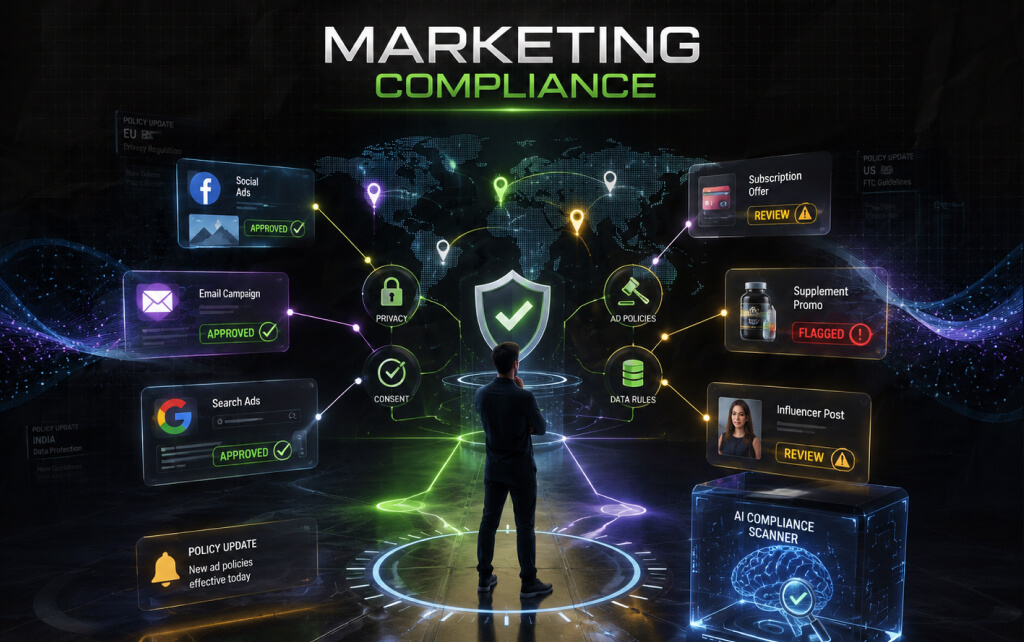
Marketing compliance, boiled down, means your ads, emails, and promotions comply with the laws that apply to your industry and your audience’s location. Simple enough on paper.
However, in practice, it gets messy fast. To clarify, the rules aren’t the same everywhere. A supplement company answers to different marketing compliance rules than a SaaS business selling monthly subscriptions.
Here’s what confuses people the most: they treat marketing compliance like a box to check once and forget. It isn’t. Platforms constantly update ad policies. Laws shift.
An email tactic that was fine two years ago might get you flagged today. Meanwhile, you have to keep a half-eye on it, always.
I don’t think small business owners ignore marketing compliance on purpose. In reality, I think they don’t have the legal expertise and experience. Again, that’s what compels them to make errors.
Simply put, you’re managing inventory, replying to customers, trying to hit a revenue number. That said, reading advertising regulations is not exactly where anyone wants to spend a tuesday afternoon.
There’s also this idea floating around that flying under the radar keeps you safe. “I’m too small for anyone to care.” Except that’s not really true anymore.
To clarify, the ad platforms use automated systems that flag questionable claims regardless of company size. For instance,
In short, being small doesn’t buy you much protection these days.
A handful of marketing compliance mistakes show up again and again, especially with newer brands still finding their footing.
| Mistake | Why It Matters | What Fixes It |
|---|---|---|
| Saying “guaranteed” with nothing to back it up | Regulators can treat it as a false claim | Only guarantee what you can actually document |
| Burying subscription terms in fine print | Reads as deceptive under most consumer laws | Put pricing and renewal terms front and center |
| Reusing a competitor’s ad language | Risks both compliance and copyright trouble | Write your own copy, reviewed internally |
| Skipping proper email opt-ins | Breaks anti-spam rules in a lot of regions | Use double opt-in, keep your consent records |
| Not disclosing paid partnerships clearly | Violates influencer disclosure guidelines | Say “ad” or “sponsored” plainly, not buried in tags |
None of this happens because someone’s trying to cheat the system. Usually it’s because nobody was thinking about marketing compliance while the copy was being written. Once you build the habit, most of these fix themselves.

You don’t need an in-house legal team to stay on top of marketing compliance. A few habits go a long way.
That last one matters more than people give it credit for. A short paid consultation with someone who actually understands marketing compliance across different jurisdictions usually costs less than one fine, or one shut-down ad account.
I’ve watched both happen to businesses that skipped the call. During your brand asset management, do take care of the legal protocols as well!
Google, Meta, and TikTok all run their own advertising policies on top of whatever government regulations already apply. That means two layers of marketing compliance running at once, and you kind of have to track both.
Google Ads, for instance, restricts health and finance claims more tightly than the law technically demands. Meta reviews anything that touches on alcohol, politics, or gambling with extra scrutiny.
TikTok’s disclosure rules for influencers seem to shift every few months. That’s why they are hard to keep up with, honestly. Staying aware of both the legal side and the platform side keeps your campaigns from getting paused without warning.
Most businesses don’t need a lawyer on retainer. But certain moments really do call for outside help.
For instance, launching in a new country, running a sweepstakes, making health or financial claims, or collecting customer data at any real scale. These are the situations where marketing compliance stops being simple.
This is usually where a marketing lawyer based in Canada, or someone equivalent in your own region, earns their fee. They’ll review your language before launch, spot gaps in your privacy policy, and tell you plainly which rules actually apply instead of leaving you to guess and hope.
Businesses that handle marketing compliance well don’t treat it as some separate task bolted onto marketing. Treat this as one of your marketing fundamentals.
They build it into the regular workflow. For example, a quick review step before anything launches, a shared doc listing what to avoid, whatever fits how the team already works.
Small habits add up here. Once your team starts thinking about marketing compliance while they’re writing, instead of after a complaint lands in someone’s inbox, the whole thing stops feeling like a fire drill.
Marketing compliance isn’t something you master in a weekend. And honestly, nobody expects you to.
So, start with the basics. For instance, honest claims, clear consent, and disclosures that don’t hide anything.
Build from there as your campaigns get more complicated. And when you’re not sure, a quick check with someone who actually knows the legal side can save you a very expensive mistake later.
Barsha is a seasoned digital marketing writer with a focus on SEO, content marketing, and conversion-driven copy. With 8+ years of experience in crafting high-performing content for startups, agencies, and established brands, Barsha brings strategic insight and storytelling together to drive online growth. When not writing, Barsha spends time obsessing over conspiracy theories, the latest Google algorithm changes, and content trends.
View all Posts

The Ultimate Guide To Stealing Your Competito...
Oct 15, 2026
Beyond The Basics: Master Guest Posting For H...
Oct 15, 2026
Best Generative Engine Optimization (GEO) Com...
Oct 14, 2026
Digital PR for Link Building: How To Earn Hig...
Oct 13, 2026
Cracking The Code Of The Social Media Saga Si...
Oct 13, 2026