KeywordStat Review: Keyword Research, Clustering & SEO Data Compared
Oct 03, 2026


With the massive shift from desktop searches to mobile searches, rankings have also transformed. Prioritizing mobile-optimized content pages over the non-optimized ones.
Moreover, mobile rankings for a keyword are completely different compared to its desktop rankings. So, simply relying on the desktop rankings is so not 2026.
Rather, understanding how the rankings change with a swift change in device can help brands improve their SERP positions in a jiffy.
That’s why mobile rank tracking has become the game-changer in SEO performance.
With its precise and accurate rank tracking features, it helps brands to track trends in real-time. So, they can modify the strategies to improve their SEO performance.
Here, I have brought you a complete guide on mobile rank tracking by highlighting—
Stay tuned!

To put it in simple terms, mobile rank tracking is a process that monitors how the site is ranking on mobile SERPs for specific keyword searches.
Given that search engines mostly rank mobile-optimized sites for mobile searches, the ranks are not the same as the desktop ranks.
So, tracking the ranks on the mobile SERPs helps brands to evaluate the performance. Ensuring that they can modify their strategies and practices to rank on mobile searches.
Now, mobile rank tracking becomes important for SEO due to countless reasons. So, some of these reasons include—
Ranking on mobile is not the same as ranking on desktop. So, here is a clear breakdown of the key differences between these two types of rankings—
| Mobile Rank | Desktop Rank |
|---|---|
| 1. It ranks articles that are optimized for mobile devices. | 1. Ranks both mobile-optimized and non-optimized articles. But prioritizes mobile-optimized ones. |
| 2. Provides results based on the GPS location from the mobile device to ensure the local results are included. | 2. Has fewer local results based on the IP Address, but provides rankings for global articles. |
| 3. Ranks articles that offer concise and straightforward answers to the user queries. | 3. Offers ranked articles for deep research with a longer content format. |
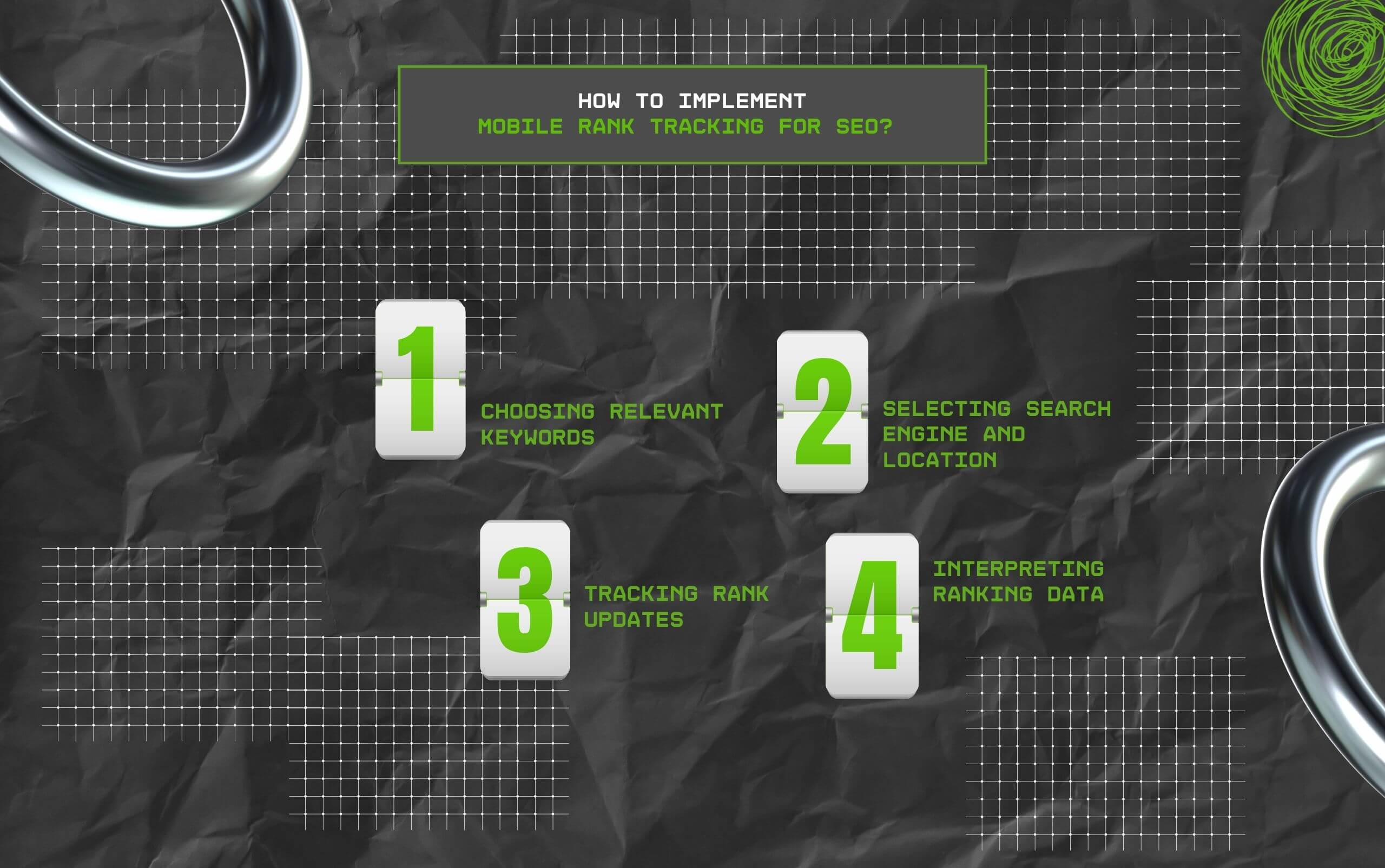
Now, implementing the mobile rank tracking for SEO is not that difficult. So, here are the steps to set it up for your business or brand site—
Given that not all keywords perform the same on desktop and mobile devices, choosing mobile-search-relevant keywords is vital.
That is, focus on using keywords that have a high search volume for mobile SERPs. So, the content pages can rank even on mobile devices.
Moreover, brands need to mention the location, demographic details of the target audience, and the specific search engine to check the rankings.
This way, they can track the ranks on the mobile devices for the specific keywords in the mentioned locale and search engine. So, it becomes easier to track the ranks.
In addition to this, brands can ensure that the rank updates are collected in real-time. So, tracking the ranks provides automated insights into the weekly, monthly, and yearly reports.
Moreover, brands can use syncing tools that combine the desktop ranks and the mobile ranks. So, they can track and modify their strategies or practices based on the rankings.
Finally, brands need to directly interpret the ranking data for both the mobile SERPs and desktop SERPs to collect insights and make decisions about the SEO strategies.
So, they can use systematic metrics to drive actionable insights from the raw data. Then, they can modify the strategies and core practices to improve the SEO rankings.
Even though mobile rank tracking offers countless benefits, it comes with its own set of challenges. So, here is a clear breakdown of the pros and cons of the mobile rank tracking—
| Pros | Cons |
|---|---|
| 1. Provides clear insights into how, where, and when the brand sites rank on mobile devices. | 1. Tools can be quite expensive. |
| 2. Helps accurately identify the low-performing keywords and optimize the site based on the mobile ranks. | 2. Learning curve is high and complex. |
| 3. Offers results for specific localities, so the site can improve its local SEO performance. | 3. Free tools might not provide precise and accurate data. |
Now, knowing about the mobile rank tracking is not enough. Rather, taking the right steps and avoiding mistakes is the key. So, here are some of the common mistakes to avoid—
So, by avoiding these mistakes, you can ensure that you are properly tracking the mobile ranks. Take this chance and start tracking both the rankings to get insights and improve the overall SEO performance.
Here, I have delved into some of the common questions around mobile rank tracking for SEO performance.
Yes, absolutely. The mobile rank tracking helps in improving the local visibility by ensuring the brand site pops up in local SERPs, Google Maps, and mobile searches.
That is, it helps in tracking the SEO performance of the site. So, it can be optimized for both mobiles and location-based searches.
Yes, absolutely. Mobile rank tracking is not only for your own brand website; you can also check the rankings for your competitors.
That is, if you use specialized tools to monitor the daily, weekly, and monthly, you can get clear results on the SEO performance of the competitors.
So, you can track their rankings on mobile devices and compare them with your ranks to improve the strategies and practices.
Generally, the mobile rankings for brand websites and businesses are updated in real-time. So, brands and marketers can modify their strategies and practices to improve the rankings.
That is, with the real-time updated mobile rankings for the website, brands and marketers can make better immediate and on-demand changes to their sites.
Chandrima is a seasoned digital marketing professional who works with multiple brands and agencies to create compelling web content for boosting digital presence. With 3 years of experience in SEO, content marketing, and ROI-driven content, she brings effective strategies to life. Outside blogging, you can find her scrolling Instagram, obsessing over Google's algorithm changes, and keeping up with current content trends.
View all Posts

KeywordStat Review: Keyword Research, Cluster...
Oct 03, 2026
How Corda Turns Authority Data Into Campaigns
Oct 01, 2026
How To Audit Your Search Visibility In 2026: ...
Sep 30, 2026
What Is Google Lighthouse? A Practical Guide ...
Sep 30, 2026
When Can You Save A Public Instagram Story?
Sep 30, 2026