The Keyword With 10 Searches That Sent Ahrefs Thousands Of Visitors
Sep 24, 2026

Being in the digital marketing field, I have come across diverse methods and strategies for improving the brand’s visibility online.
Now, among the countless options, search engine positioning (SEP) is the current method gaining traction.
That is, it offers specific practices and methods to drive organic traffic and improve ranking on SERPs.
But the common confusion starts when people mix up SEP with SEO. Even though both aim at increasing the visibility online, they are not the same.
That is, SEO focuses on the entire website’s SEO performance. But SEP focuses on specific pages of the website to drive organic traffic.
So, implementing the right SEP strategies can help improve ranking at the top of the SERPs. Making it a great method to drive traffic for specific keywords.
Here, in this blog, I have brought you a complete guide on search engine positioning (SEP) by focusing on—
Stay tuned!
To explain in simple terms, search engine positioning (SEP) refers to the methods and practices that help brands to specifically focus on the optimization of specific webpages.
That is, it involves implementing strategies and processes to improve the ranking of the pages on the SERPs. This way, it enhances the brand’s visibility and organic traffic on the pages.
Moreover, it is a known fact that the top results on SERPs get maximum clicks. That is, according to the Backlinko report, the top results get around 54.4% clicks.
So, webpages need to rank in the top positions on Google’s SERPs to help brands gain visibility and drive organic traffic.
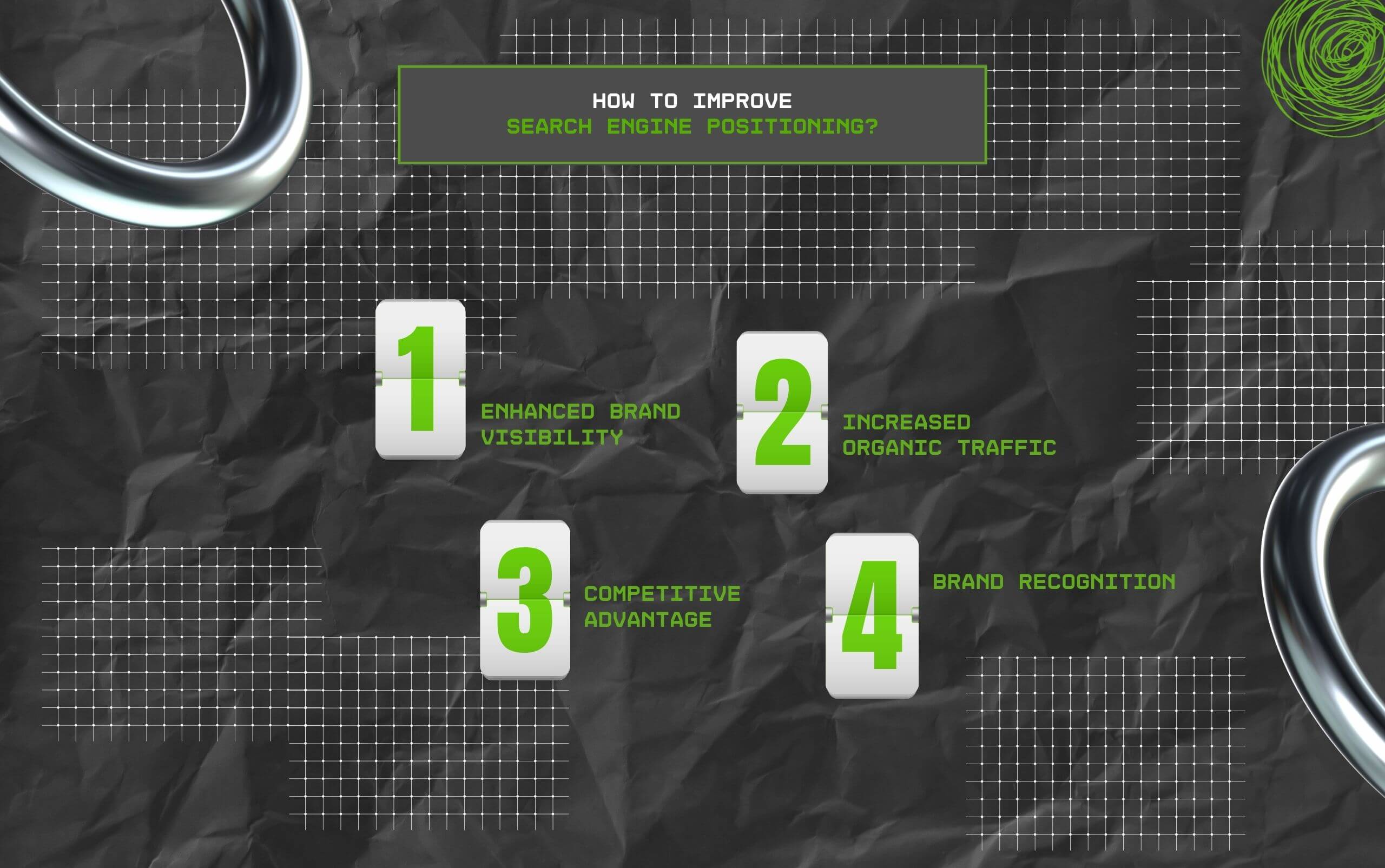
Given that there are massive benefits of SEP in improving the brand visibility online, it is readily adopted by most businesses. So, here are the common benefits of SEP for businesses—
Firstly, it helps in enhancing the brand’s visibility on the internet. That is, the higher the pages rank on the SERPs, the better the discoverability and online visibility will be.
Moreover, with enhanced brand discoverability, the target audience will visit those pages from the SERPs. And, this will drive organic traffic to those specific pages.
Given that there will always be competition in the market for a particular field and target audience, using the SEP can give a competitive edge to brands and help them rank in the top 3 positions of SERPs.
In addition to this, the right strategies and methods of SEP can help in improving brand recognition.
That is, when the content of the specific pages aligns with the search intent, it enhances the brand recognition to ensure that it appears credible to Google’s algorithms.
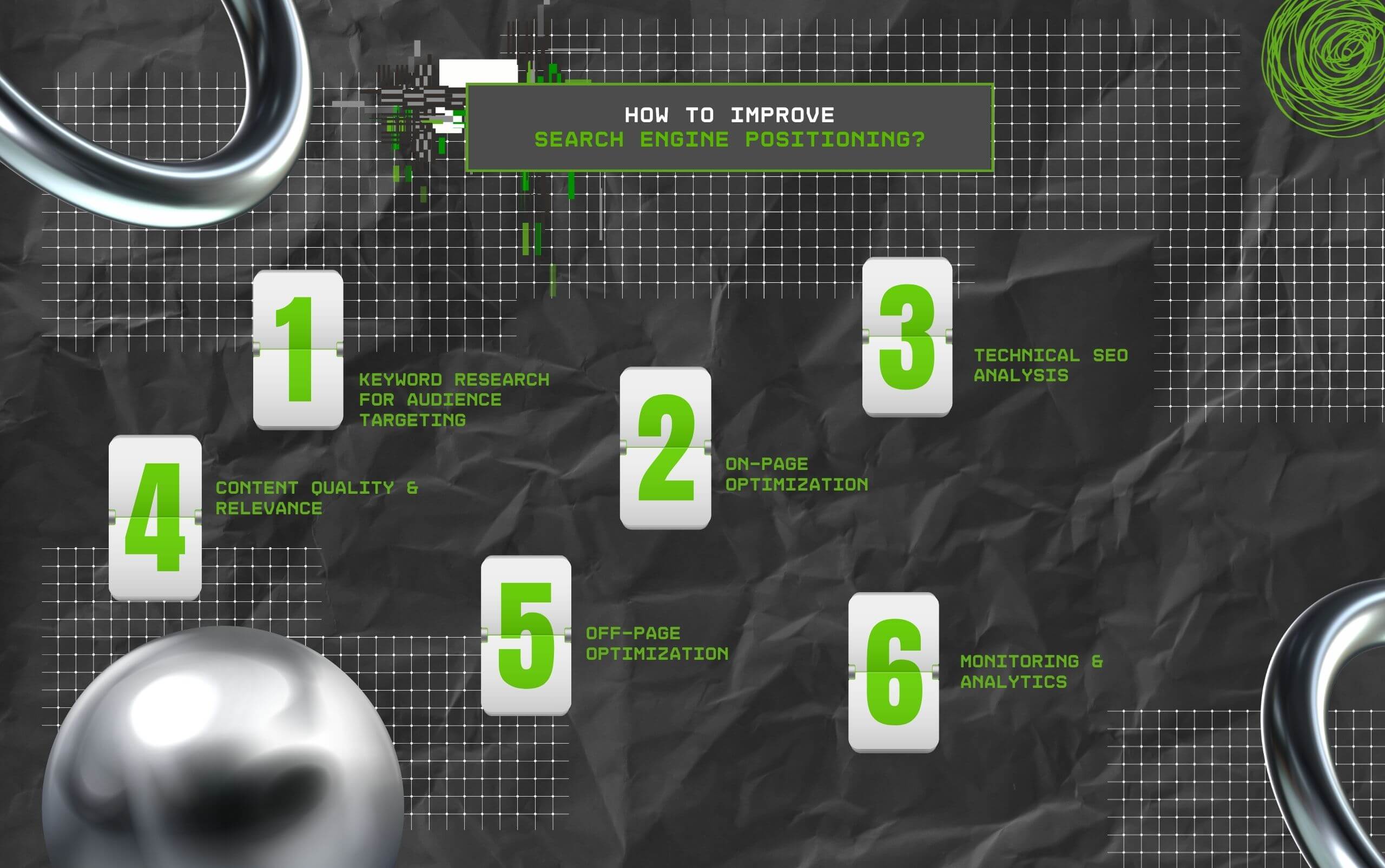
Now, if you are also wondering how to improve the rankings with the search engine positioning, here are some of the steps—
Firstly, brands and marketers need to conduct keyword research to find the high-value keywords based on the user’s search intent.
This way, they can create content pages with informational, navigational, and transactional angles to drive organic traffic.
Moreover, the brands need to identify the content gap on the keywords.
So, they can create content that addresses the gaps and ensures they bring a highly valuable target audience to the pages.
Apart from the keywords, brands and marketers need to optimize the content pages with the right on-page optimization techniques.
That is, they need to ensure that the target keyword appears organically in titles, meta descriptions, headings, and URLs.
Additionally, using the LSI keywords and secondary ranking keywords in the content can further help the pages expand their visibility.
So, the search bots can crawl through the content and index it. This will help the pages rank easily on the SERPs and drive organic traffic.
Only optimizing the on-page SEO is not enough. That is, brands need to ensure that the technical SEO is properly analyzed and optimized for better ranking.
So, brands and marketers need to optimize the technical aspects, like the mobile-friendliness of the webpage design, core web vitals, and page speed.
In addition to this, the site structure, indexing, and the SML sitemaps can be optimized. This will help the bots to better understand the context of the webpage and rank it for the keywords.
Moreover, brands and marketers need to create high-quality content that is relevant to the target audience. So, they can signal the search bots for relevant content on the pages.
In addition to this, they need to update older content and repurpose high-quality content to ensure that the content pages are engaging for the audience.
This can further help the brands and websites to build credibility and authority in the industry. Making it easier to rank on the SERPs for specific keywords.
Along with on-page SEO, brands need to optimize the off-page SEO to ensure that the content ranks for certain keywords.
That is, brands need to optimize the off-page elements, like gaining backlinks and monitoring the domain authority.
So, they need to use high-quality backlinks from outbound websites. Making it easier to earn quality backlinks and position them to build the domain authority of the pages.
Finally, brands and marketers need to regularly monitor the analytics and key metrics to measure how the webpages are performing against the keywords.
So, they can adjust or modify their strategies to improve the SEP strategies and yield the desired results.
Now, implementing a proper SEP strategy or method is not easy. And, many times, brands and marketers can make mistakes that directly impact the SERP rankings.
So, here are some of the common mistakes that brands and marketers need to avoid in search engine positioning—
So, by avoiding these few mistakes, brands can essentially improve their search engine positioning for better results on the SERPs.
Now, if you have been ignoring the SEP, take this as a sign to improve the SEP for better rankings on SERPs and brand visibility.
Here, I have curated some of the common questions around search engine positioning and its importance in brand visibility.
Yes, absolutely. Improving the content of the page can dynamically enhance the search engine positioning. That is, it can help in ranking the articles on SERP based on their informational value.
So, when brands or marketers improve the page content, it automatically helps in improving the ranking on the SERPs. That is, enhancing the SEP of the website.
To ensure that the right SEP strategies are being employed, it is better to conduct a weekly or monthly analysis of the SEP performance.
This way, brands and marketers can assess the exact performance metrics. Making it easier to get an idea of how the strategies are performing and adjusting them as needed.
Yes, absolutely. Given that the SEP strategies and methods allow brands and marketers to improve the website rankings on the SERPs, it can help in featuring the content on snippets.
Even though the final SERP position is decided by Google’s algorithm, the right Search Engine Positioning strategies and methods can help in getting featured or other rich results.
Generally, user intent refers to the search purpose behind a common keyword. That is, it highlights the primary reason, purpose, and other objectives behind the user’s query.
So, understanding the user intent helps brands and marketers to make informational content that aligns with the needs of the users. Making the rankings better and driving organic traffic.
Chandrima is a seasoned digital marketing professional who works with multiple brands and agencies to create compelling web content for boosting digital presence. With 3 years of experience in SEO, content marketing, and ROI-driven content, she brings effective strategies to life. Outside blogging, you can find her scrolling Instagram, obsessing over Google's algorithm changes, and keeping up with current content trends.
View all Posts

The Keyword With 10 Searches That Sent Ahrefs...
Sep 24, 2026
Paying Freelance Writers In Ten Countries: An...
Sep 24, 2026
GroomPanel Vs Other SMM Panels: What Makes It...
Sep 24, 2026
The Traffic-to-Revenue Gap: Why More Website ...
Sep 17, 2026
The Volatility Trap: What Crypto Position Siz...
Sep 17, 2026