
The Traffic-to-Revenue Gap: Why More Website Visitors Don’t Always Create More Customers
Sep 17, 2026

Just like their initials, B2B and B2C are not the same. One attracts businesses with long-term investment plans, and the other meets the customers at their favorite spots.
That is, B2B is all about businesses waiting for their clients to approach them with a project. But B2C is promoting business products and attracting high customer engagement with the brands.
Now, in the digital marketing world, B2B and B2C both come with different business styles. So, they require different marketing approaches.
But, in 2026, this gap is narrowing with B2B slowly adopting the key strategies of B2C to attract more businesses.
So, here is what you need to know about these two e-commerce styles. In this blog, I have brought you a comparative guide on B2B vs B2C by highlighting—
Stay tuned!
First things first, B2B is business-to-business, and B2C is business-to-customers. That is, one is designed to serve businesses while the other is focused on customers.
For instance, B2B e-commerce provides a digital space for other businesses to subscribe to their services. So, there are fewer marketing campaigns.
On the other hand, B2C e-commerce is a simple online transaction between a business and its customers. That is, it promotes the brands through ads and campaigns.
So, customers find the businesses to purchase their products and services.
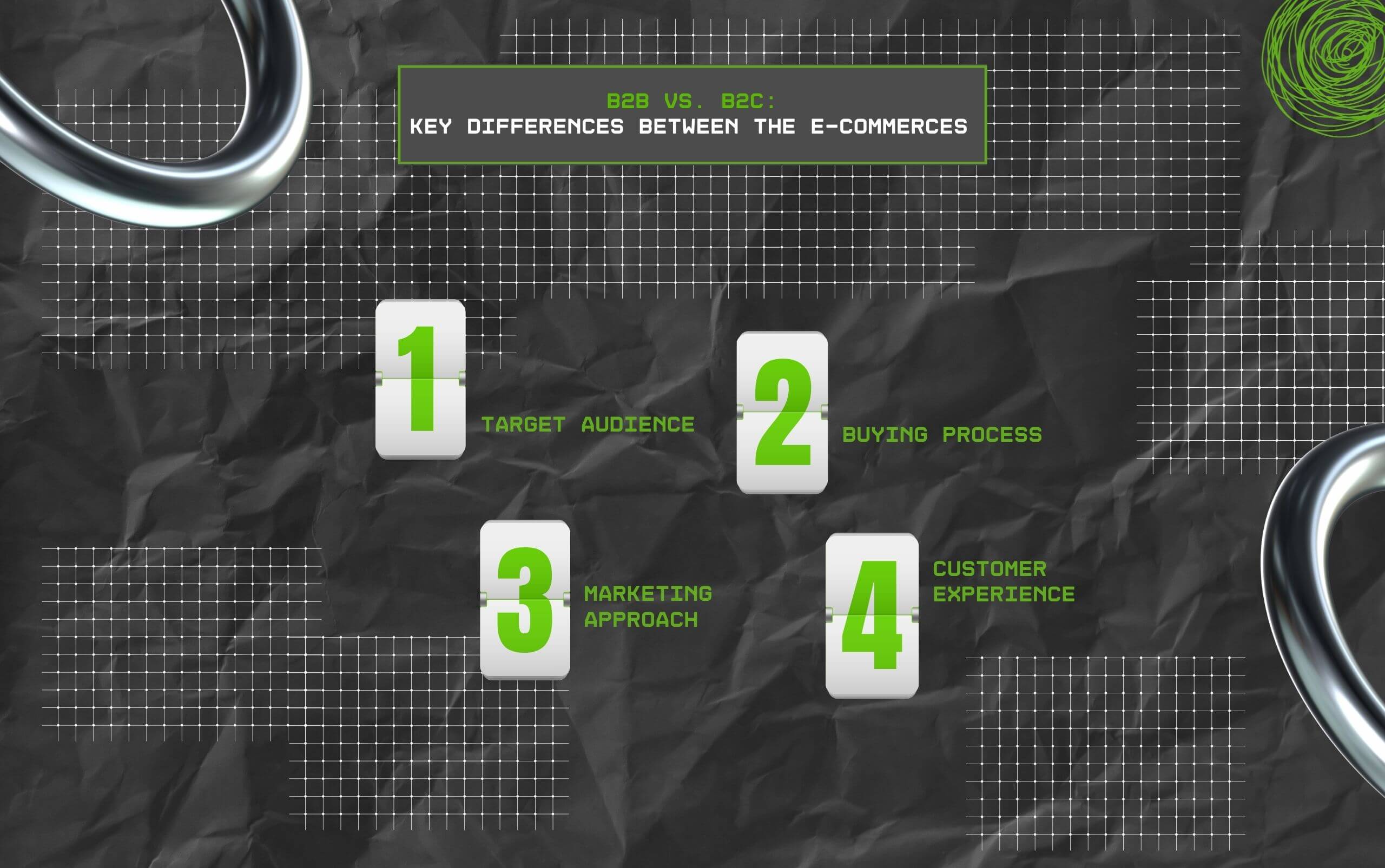
Now, here are some of the key differences between a B2B and a B2C e-commerce—
Firstly, the target audience is different. That is, B2B targets other businesses in diverse industries. So, they attract professionals on the lookout for business operational solutions.
But B2C typically targets the general public. That is, they attract individual consumers with products and services that satisfy their personal needs and wants.
Now, the major complexity in a B2B e-commerce is its buying process. Usually, this buying process involves long sales cycles with multiple stakeholders.
But, on the other hand, B2C offers a straightforward and simple buying process to the customers. So, they can make faster purchases to meet their needs.
Given that B2B targets other businesses, its marketing approach revolves around building long-term partnerships with ROI, trust, and consultative content.
But B2C marketing focuses on delivering the brand message and product details to the customers. So, they can attract customers with heavy promotional stuff to make purchase decisions.
Finally, the customer experience matters for both B2B and B2C e-commerce. That is, the B2B focuses on building and nurturing close relationships. So, their clients can be converted into long-term partners.
On the other hand, B2C provides instant customer services to build brand loyalty, improve user experience, and ensure quick transactions. So, the customers can enjoy a short but engaging experience.
Now, given their differences, B2B is more complex than B2C e-commerce. And knowing the core elements of this complexity can help in strategizing a proper marketing plan.
So, here are some of the reasons behind the complexity of B2B e-commerce—
Since the paradigm of e-commerce is massively transforming, B2B businesses need to improve their approach to gain more visibility and generate leads.
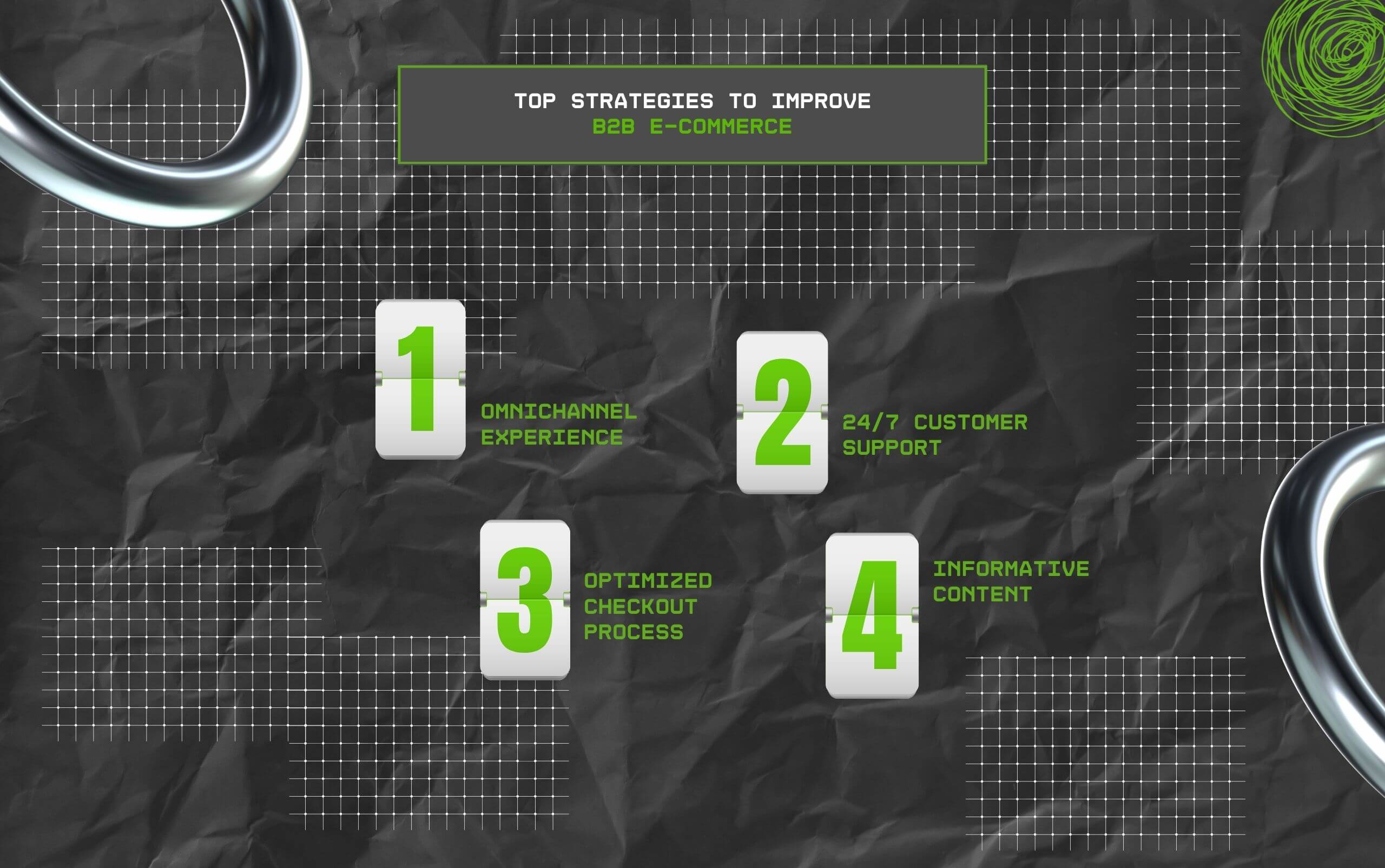
So, here are some of the top strategies that B2B e-commerce is adopting in 2026—
Firstly, B2B needs to provide an omnichannel experience. That is, they need to improve their presence in diverse digital media platforms to attract businesses from various sources.
In addition to this, the B2B businesses need to provide 24/7 high-quality customer service. So, their clients can navigate through the purchase process without facing many complexities.
Moreover, optimizing the checkout process with self-service features can help B2B e-commerce to drive more client deals. So, easy reordering and subscription processes can help in driving sales.
Finally, B2B selling products and services needs to provide detailed descriptions. So, the businesses can make their purchase decision faster after reviewing the descriptions, demo videos, and community interactions.
In 2026, most B2B buyers are expecting a top-notch customer experience with customized processes and persoanlized recommendations, like the B2C.
So, with the right adoption of strategies and modern technology, B2B can have a promising future in the digital space.
Opening the doors of opportunity with an agile, connected, and responsive marketing approach. So, they can get more leads and retain the customers for a longer time.
Now, B2B and B2C have different target audiences, but their expectations are quite similar.
That’s why choosing the right approaches and implementing the right strategies can amp up the game for B2Bs in the future.
So, take this chance to make a proper marketing strategy for your e-commerce based on what your target audience actually expects.
Here, I have brought a complete list of the frequently asked questions around the debate of B2B and B2C e-commerce.
Unlike other metrics, customer experience plays a key role in B2B e-commerce. That is, it acts as the primary differentiator and loyalty driver.
So, it transforms the entire buying journey of the customers by personalizing experiences, providing convenience, and increasing efficiency across all digital platforms.
Yes, absolutely. Given that modern businesses expect the same level of personalization and digital convenience as B2C e-commerce, adopting their strategies can help B2B businesses to meet these expectations.
Moreover, the digital content, social media presence, and omnipresent communication can help in aligning the brands across diverse B2B values. So, they can attract more businesses to their brands.
Usually, B2B buyers are more driven by logic, ROI reports, and efficiency before making a heavy purchase. But B2C buyers are driven by emotions, immediate purchase, and brand value.
So, they prioritize personal gains and speedy delivery over other logical aspects of the purchase. Making short, straightforward, and impulsive purchases from the business.
Yes, absolutely. Similar to B2C e-commerce, B2B can provide self-services. This way, they can enable the clients to independently navigate through the purchase process.
So, B2B e-commerce can offer customized portals, automated features, and 24/7 customer service to enhance the self-service experience.
Chandrima is a seasoned digital marketing professional who works with multiple brands and agencies to create compelling web content for boosting digital presence. With 3 years of experience in SEO, content marketing, and ROI-driven content, she brings effective strategies to life. Outside blogging, you can find her scrolling Instagram, obsessing over Google's algorithm changes, and keeping up with current content trends.
View all Posts

The Traffic-to-Revenue Gap: Why More Website ...
Sep 17, 2026
The Volatility Trap: What Crypto Position Siz...
Sep 17, 2026
Schema Markup: How To Use It Without Turning ...
Sep 17, 2026
Turn A Search Question Into A Watchable Expla...
Sep 16, 2026
Agency Guide To YouTube Growth: Wholesale Pri...
Sep 15, 2026