Can You Screenshot On Instagram Without Them Knowing? The Honest Answer
Nov 04, 2026

Today’s topic: B2B vs. B2C
Just like their initials, B2B and B2C are not the same. One attracts businesses with long-term investment plans, and the other meets customers at their favorite spots.
That is, B2B is all about businesses waiting for their clients to approach them with a project. But B2C is promoting business products and attracting high customer engagement with the brands.
Now, in the digital marketing world, B2B and B2C both come with different business styles. So, they require different marketing approaches.
But in 2026, this gap is narrowing, with B2B slowly adopting the key strategies of B2C to attract more businesses.
So, here is what you need to know about these two e-commerce styles. In this blog, I have brought you a comparative guide on B2B vs. B2C by highlighting:
Stay tuned!
First things first:
That is, one is designed to serve businesses while the other is focused on customers.
For instance, B2B e-commerce provides a digital space for other businesses to subscribe to their services. So, there are fewer marketing campaigns.
On the other hand, B2C e-commerce is a simple online transaction between a business and its customers. That is, it promotes the brand through ads and campaigns.
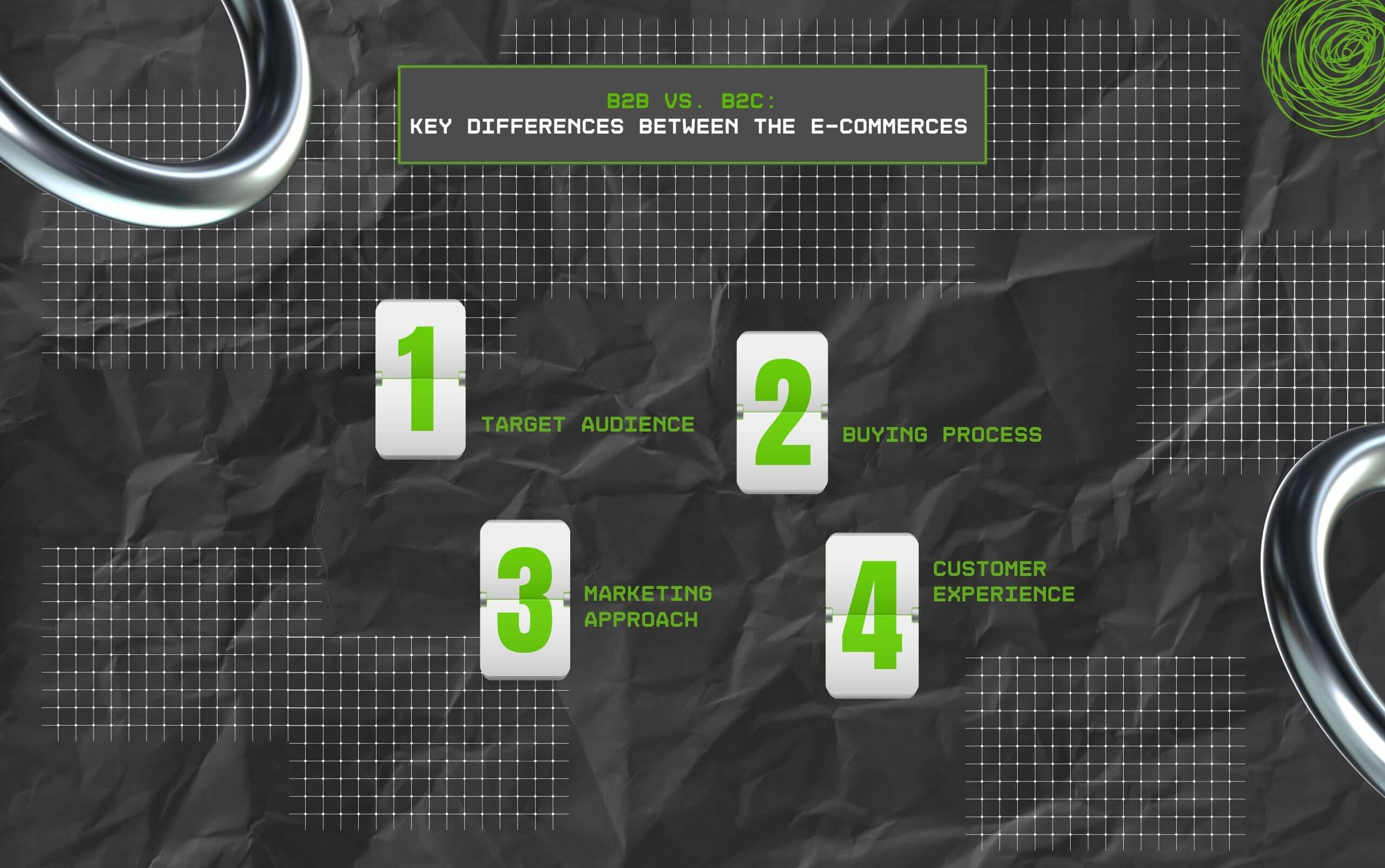
So, customers find the businesses to purchase their products and services. Now, here are some of the key differences between B2B vs. B2C e-commerce:
Firstly, the target audience is different. That is, B2B targets other businesses in diverse industries. So, they attract professionals on the lookout for business operational solutions.
But B2C typically targets the general public. That is, they attract individual consumers with products and services that satisfy their personal needs and wants.
Now, the major complexity in B2B e-commerce is its buying process. Usually, this buying process involves long sales cycles with multiple stakeholders.
But, on the other hand, B2C offers a straightforward and simple buying process to the customers. So, they can make faster purchases to meet their needs.
Given that B2B targets other businesses, its marketing approach revolves around building long-term partnerships with ROI, trust, and consultative content.
But B2C marketing focuses on delivering the brand message and product details to the customers. So, they can attract customers with heavy promotional stuff to make purchase decisions.
Finally, the customer experience matters for both B2B and B2C e-commerce. That is, B2B focuses on building and nurturing close relationships. So, their clients can be converted into long-term partners.
On the other hand, B2C provides instant customer service to build brand loyalty, improve user experience, and ensure quick transactions. So, customers can enjoy a short but engaging experience.
Now, given their differences, B2B is more complex than B2C e-commerce. And knowing the core elements of this complexity can help in strategizing a proper marketing plan.
So, here are some of the reasons behind the complexity of B2B e-commerce:
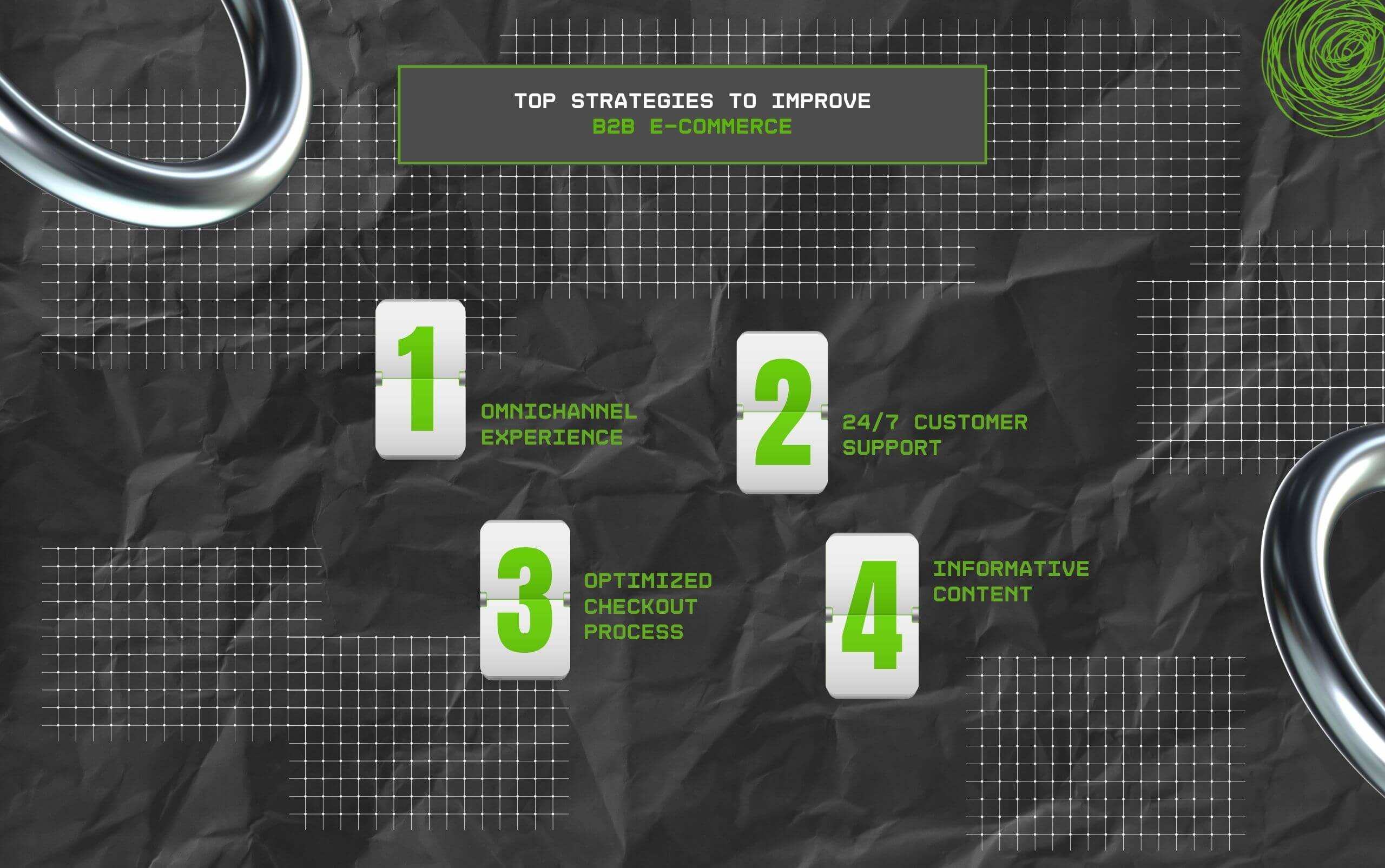
Since the paradigm of e-commerce is massively transforming, B2B businesses need to improve their approach to gain more visibility and generate leads.
So, here are some of the top strategies that B2B e-commerce is adopting in 2026:
Firstly, B2B needs to provide an omnichannel experience. That is, they need to improve their presence in diverse digital media platforms to attract businesses from various sources.
In addition to this, B2B businesses need to provide 24/7 high-quality customer service. So, their clients can navigate through the purchase process without facing many complexities.
Moreover, optimizing the checkout process with self-service features can help B2B e-commerce to drive more client deals. So, easy reordering and subscription processes can help in driving sales.
Finally, B2B selling products and services needs to provide detailed descriptions. So, businesses can make their purchase decision faster after reviewing the descriptions, demo videos, and community interactions.
In 2026, most B2B buyers are expecting a top-notch customer experience with customized processes and personalized recommendations, like B2C.
So, with the right adoption of strategies and modern technology, B2B can have a promising future in the digital space.
Opening the doors of opportunity with an agile, connected, and responsive marketing approach. So, they can get more leads and retain customers for a longer time.
Now, B2B and B2C have different target audiences, but their expectations are quite similar.
That’s why choosing the right approaches and implementing the right strategies can amp up the game for B2Bs in the future.
So, take this chance to make a proper marketing strategy for your e-commerce based on what your target audience actually expects.
Barsha is a seasoned digital marketing writer with a focus on SEO, content marketing, and conversion-driven copy. With 8+ years of experience in crafting high-performing content for startups, agencies, and established brands, Barsha brings strategic insight and storytelling together to drive online growth. When not writing, Barsha spends time obsessing over conspiracy theories, the latest Google algorithm changes, and content trends.
View all Posts

Can You Screenshot On Instagram Without Them ...
Nov 04, 2026
How To Fix Windows Update Error Codes On Wind...
Nov 04, 2026
Enterprise Search Guide: Modern Knowledge Man...
Nov 03, 2026
The Enterprise Framework: How To Measure AI P...
Nov 03, 2026
How To Create A Group on WhatsApp Without Los...
Nov 03, 2026