KeywordStat Review: Keyword Research, Clustering & SEO Data Compared
Oct 03, 2026

It’s 2026, and content creators are no longer posting for the sake of only entertainment.
Instead, they are running an entire business model with their creative directors, social media managers, customer support, business owners, sales teams, and graphic designers, and more.
Moreover, so many creators are transforming their creativity into a full-time job – the point? To build an engaging community and earn a real income from content.
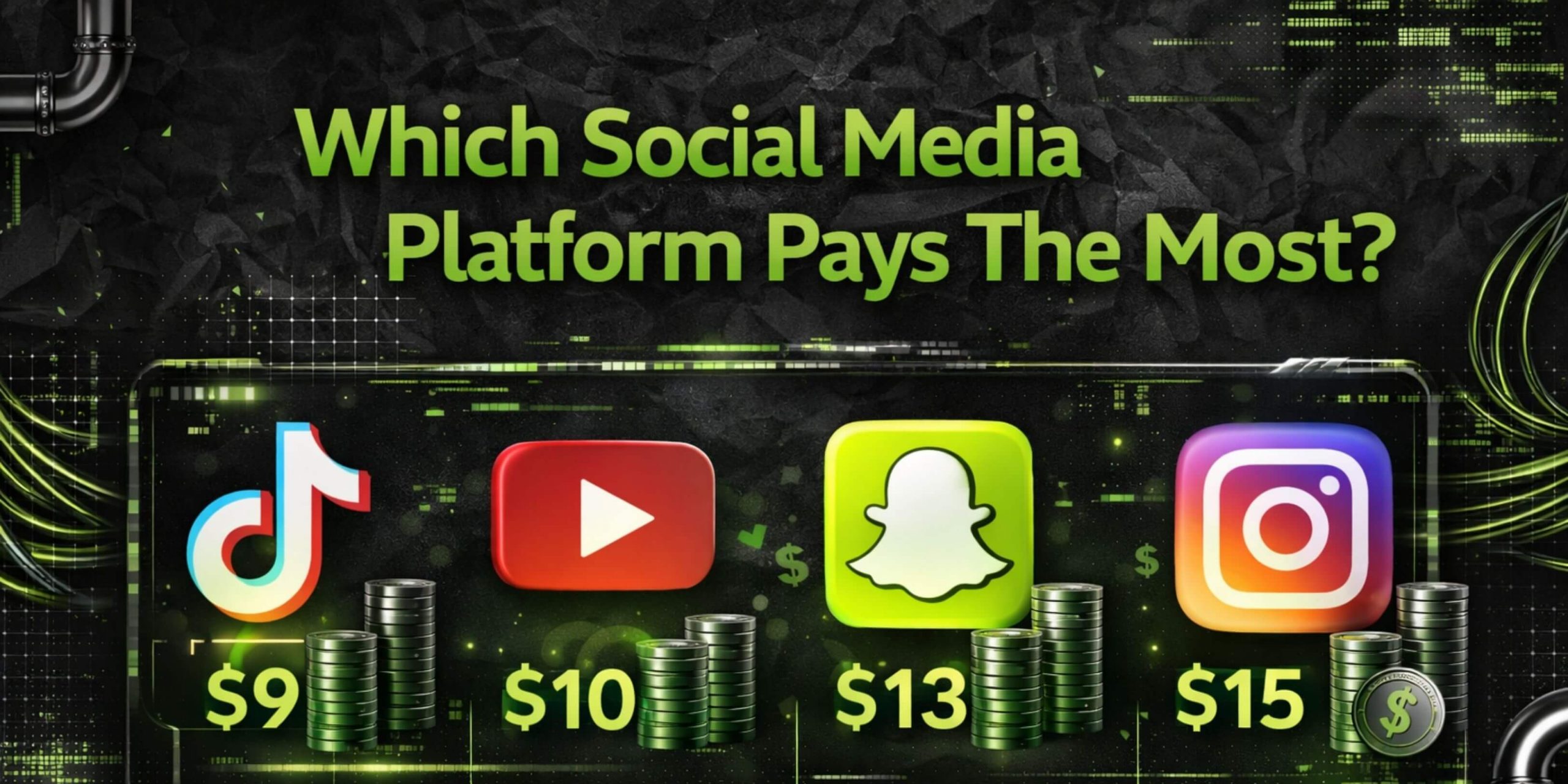
Having said that, for anyone who wants to start their content creation journey and turn it into a real source of income, which social media platform should they choose from?
More importantly, which social media platform pays the most? And that is precisely why I am here!
Today, I’ll discuss the top-paying social media platforms for creators in 2026 – and help you understand how to make money from the content you are already creating.
Stay tuned.
YouTube continues to lead, once you take into account the ad revenue that creators can generate from longer videos.
Of course, you can measure this on a situation-to-situation basis. This means we had to break this query down into small chunks.
However, as per the data published by Epidemic Sound in 2024, YouTube pays the most to date.
Please note that this research featured 1500 creators with monetized accounts, and 28.6% of the participants said YouTube was their primary source of income.
Moreover, TikTok isn’t far behind, thanks to the social media platform’s Creator Rewards Program, with Instagram finishing the race in third place.
Also, X, Facebook, and Snapchat does offer payout to creators – but a majority of creators on these platforms mostly depend on community support and brand collaborations for money.
As per the same research, 18.3% of the participants vouched for TikTok, 16.5% participants opted for Facebook, 11.8% went for Instagram, and X had only 6.3% supporters.
So, despite Instagram and Facebook raking in a lot of revenue, creators still earn more from TikTok and YouTube.
Having said that, how much a creator earns from their content doesn’t depend on one social media platform only.
Instead, it is more about the content you are creating and how well it aligns with the format of the platform you are posting it on. Also, the platform’s audience plays a crucial role in this case.
So, if you have been thinking about earning money from your content, it is vital to consider not only how much each social media platform pays but also your goals, target audience, and the type of content you like creating.
The number of views you have on your content is a factor that people often use for measuring how much money a creator is making on social media.
However, with more options for payouts becoming available, the focus of views has been shifting – creators are also prioritizing subscription models, sponsorships, gifts, and more.
In fact, there is no concrete way to find out which platform pays the most money to creators for views.
Having said that, I have made a table below to show you how the five most popular social media platforms pay their creators for views.
| Platform | Payment For Views |
|---|---|
| YouTube | $0.018 per ad view | $18 for every 1,000 ad views on a video |
| Between $8.75 and $10 per 1,000 views. | |
| TikTok | Between $0.02 and $0.04 for every 1,000 views. |
| $10 and $100 per sponsored post for creators with 1,000 to 10,000 followers. | |
| X | $0.0085 per 1,000 verified impressions. |
So, which social media platform pays the most in 2026? On that note, here’s a complete checklist of the top players:
The moment someone says, ‘content monetization,’ I can only think about YouTube – and I’m sure I am not the only one.
Unlike most social media platforms, creators on YouTube are paid per ad view – and it is all supported by the YouTube Partner Program.
Moreover, the value can change depending on the type of content, but ads are not the sole way to earn money on the platform.
So, a creator can also earn from Super Chat, YouTube Shopping, and Subscriptions to boost their earnings.
Also, YouTube Shorts is one more monetization avenue that has existed for a few years now – it directly competes with other short-form video-friendly social media platforms.
Facebook has been around the longest, and naturally, that does count for some credit. But does it offer good payouts? So, it does offer monetization avenues like ads, Brand Collabs Manager, and subscriptions.
In addition to core monetization avenues, creators can also earn a little extra with affiliate marketing, the Performance Bonus program, and Stars.
Considering that Instagram is under Meta, the parent company that also owns Facebook, the monetization options for both platforms are very similar.
So, it’s more of the same thing with affiliate marketing and sponsored content as big drivers of revenue on Instagram, apart from extra sources like Instagram badges.
X came up with its monetization program only a few years back (in 2023). And currently, you can earn money from X in two ways: Ads Revenue Sharing and Subscriptions.
Moreover, X has locked its monetization programs behind a Premium paywall. And this paywall is actually at odds with all the other social media platforms I’ve mentioned on this list.
Obviously, Snapchat isn’t super bankable when you compare it against giants like Facebook and YouTube.
But that doesn’t mean Snapchat doesn’t have any monetization programs for its creators.
Creators on Snapchat earn via paid partnerships, the Revenue Share Program, and other small rewards.
Surprisingly, TikTok offers a broad range of monetization programs. This includes TikTok Shop, subscriptions, brand partnerships, and more.
Similar to other established social media platforms I have mentioned on this list, creators can also sell their merchandise via Tiktok Shop.
Content creators do make a lot of money from Twitch. And it is less popular.
So that creates more opportunity in a typically crowded scene since creators don’t usually count on Twitch for earning a real income.
But on Twitch, creators can easily earn via subscriptions, sponsorships, and ads.
While Twitch aligns itself mostly with streaming and refuses to identify itself as a social media platform, it does have plenty of things in common with other platforms on this list.
Kick is very similar to Twitch. However, it offers competitive – if not better – payouts.
Having said that, with higher payouts comes a problem – less regulation and compliance. As a result, the industry looks at Kick as the badly behaving sibling of Twitch.
Even though most of us look at Pinterest as a discovery and exploration platform, it still offers monetization opportunities via affiliate links and sponsored pins.
Barsha is a seasoned digital marketing writer with a focus on SEO, content marketing, and conversion-driven copy. With 8+ years of experience in crafting high-performing content for startups, agencies, and established brands, Barsha brings strategic insight and storytelling together to drive online growth. When not writing, Barsha spends time obsessing over conspiracy theories, the latest Google algorithm changes, and content trends.
View all Posts

KeywordStat Review: Keyword Research, Cluster...
Oct 03, 2026
How Corda Turns Authority Data Into Campaigns
Oct 01, 2026
How To Audit Your Search Visibility In 2026: ...
Sep 30, 2026
What Is Google Lighthouse? A Practical Guide ...
Sep 30, 2026
When Can You Save A Public Instagram Story?
Sep 30, 2026