PoE Switch For CCTV: A Complete Guide For Filipino Homes And Businesses
Aug 13, 2026

Any marketing professional works hard with the sole purpose of getting relevant organic traffic on their campaigns.
However, without the right data and insights about your target demographics, is it possible to optimize campaigns? Of course, not.
Without insights into your target audience, your decision-making has to depend entirely on your intuition, not data.
And decision-making cannot be done solely based on hunches. You need hard data to make decisions that count.
After all, nobody wants to waste money, energy, and opportunities, especially with increasing expectations and rising competition.
This is where audience insights enter as an essential game-changer.
On that note, today, I am going to discuss what are audience insights in detail, with primary focus on how you can use such insights to improve your overall digital marketing strategy.
Stay tuned.
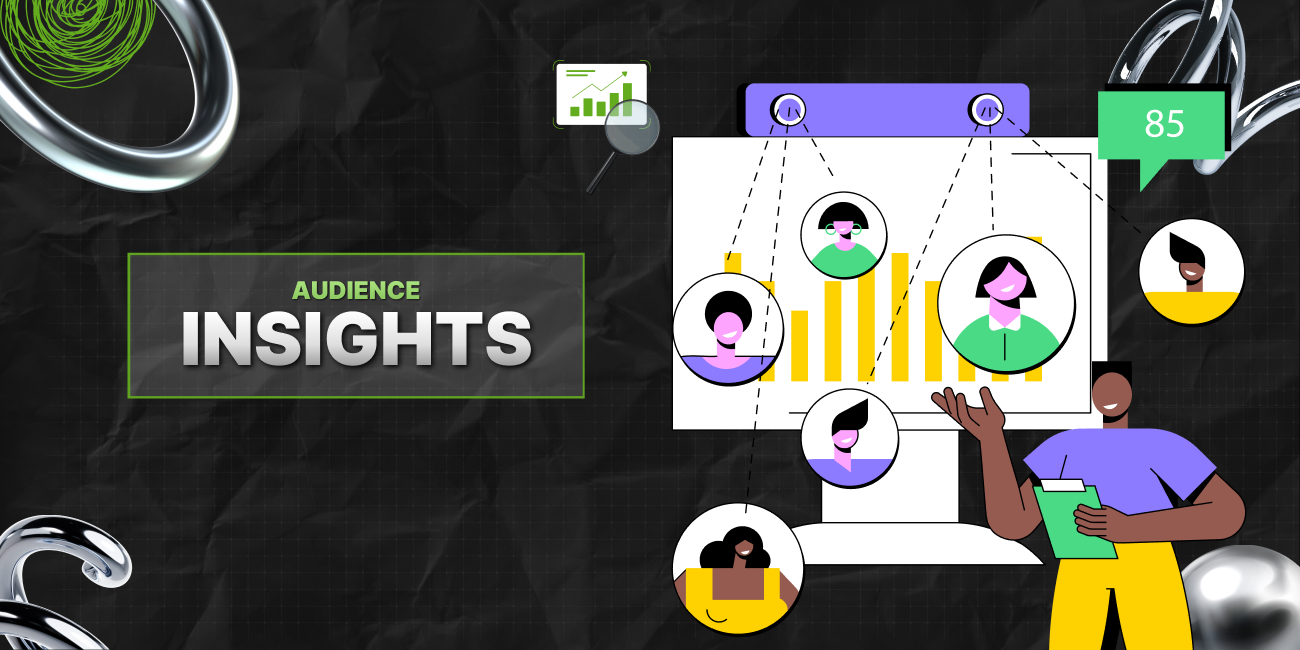
Audience insights are basically different data points, including analytics that you can obtain from ad tools, third-party apps, and social media to find out about your audience demographics.
Moreover, audience insights typically include:
Knowing your target audience usually goes beyond your followers and subscribers.
Instead, audience insights can help you understand three primary aspects of any digital marketing strategy.
As a result, whether you are an influencer pitching campaigns or a brand launching a product, solid insights on your target audience are equivalent to a relatively smaller number of missed opportunities and an increase in ROI.
Audience insights are crucial for creating personalized and targeted marketing campaigns. Here are some key aspects of audience insights in digital marketing:
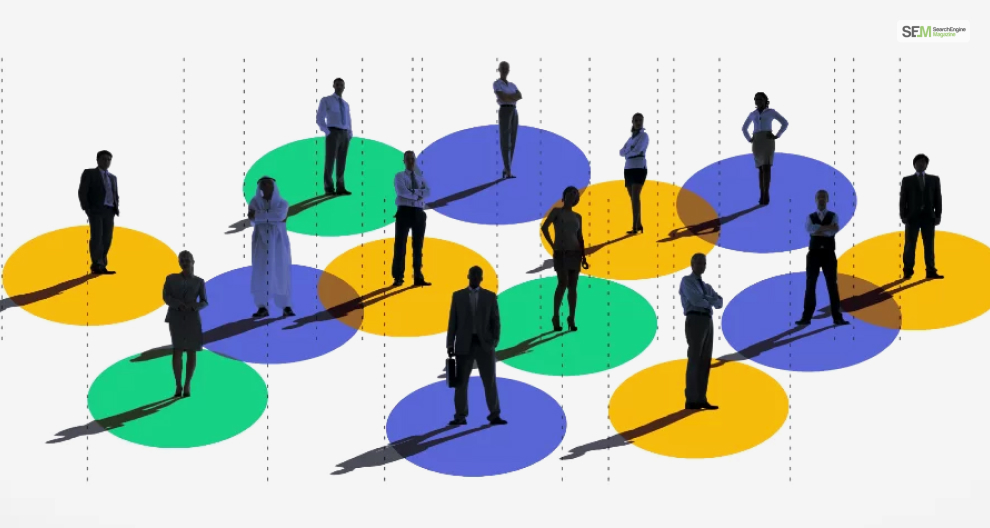
Audience insights often include demographic information such as age, gender, location, income level, education, and marital status.
This data helps marketers create content and campaigns that resonate with specific demographic segments. You can use Google’s Looker Studio Pro to gain demographic insights.
This involves understanding the psychological and lifestyle characteristics of your audience. It includes factors like interests, hobbies, values, attitudes, and beliefs.
Psychographic insights help in crafting messaging that appeals to the audience’s values and interests.
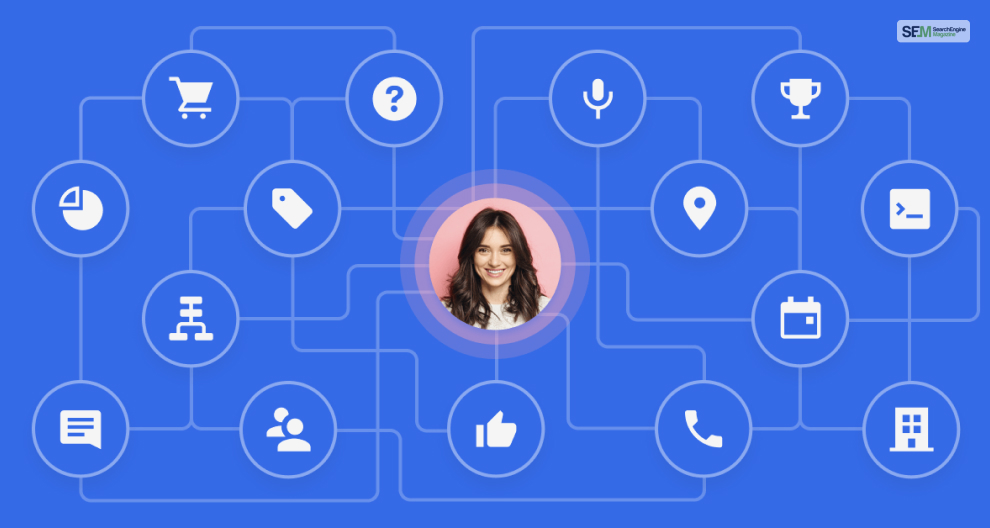
Behavioral insights focus on how your audience interacts with your digital content and platforms.
This includes data on website visits, click-through rates, purchase history, social media engagement, and more.
Marketers use this information to optimize user experiences and create effective conversion strategies.
For B2B marketing, technographic insights provide information about the technology stack and tools businesses use.
This helps tailor marketing messages to align with potential clients’ technology needs and preferences.
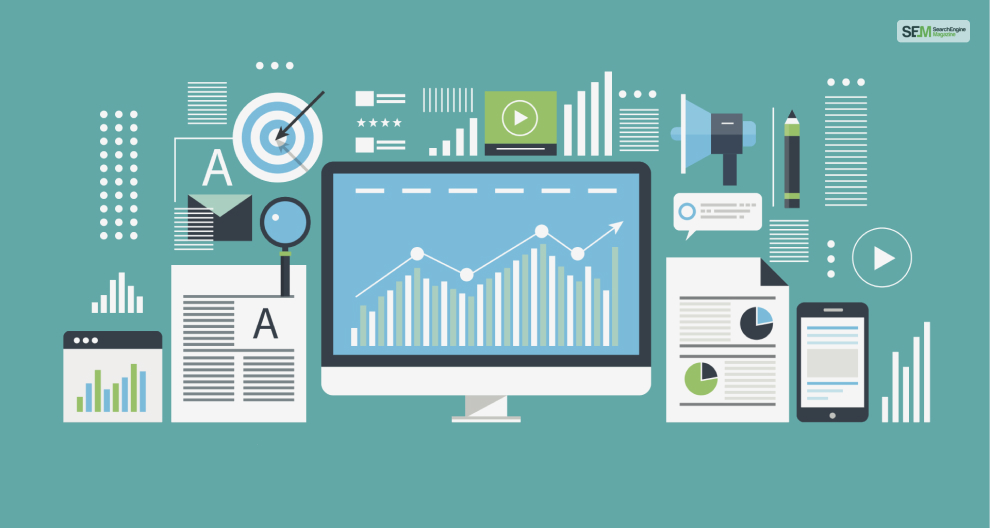
Social media platforms offer extensive audience insights, including data on follower demographics, engagement rates, and content performance.
Marketers use these insights to refine their social media strategies and content.
Marketers often create detailed customer personas based on audience insights.
These personas are fictional. representations of their ideal customers, incorporating demographic, psychographic, and behavioral data.
Personas help in targeting and crafting personalized messaging.
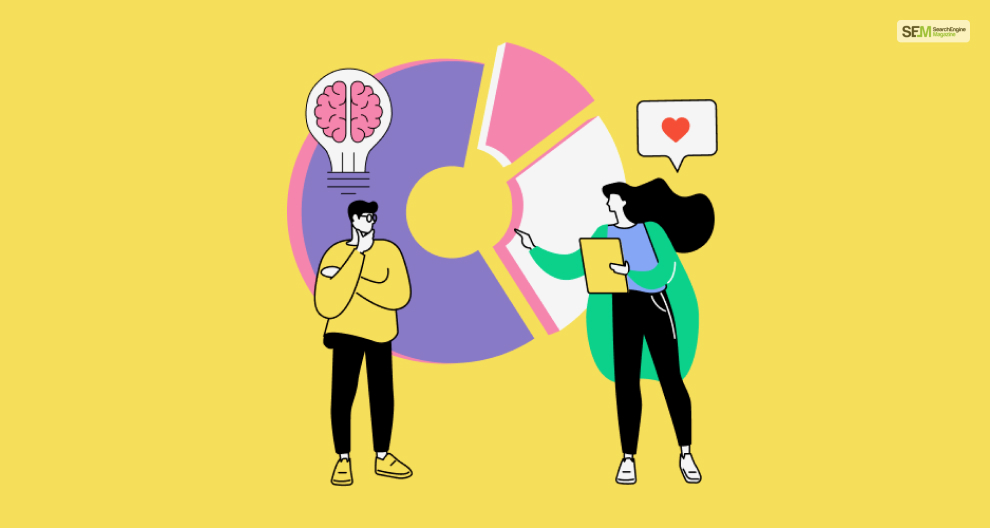
Audience insights allow marketers to segment their audience into smaller, more targeted groups.
This segmentation helps deliver tailored content and offers to different audience segments, improving relevance and engagement.
Marketers also analyze the audiences of their competitors. Understanding the overlap or differences in audience demographics and interests can provide valuable insights for gaining a competitive edge.
You can do so with various SEO API tools, like a Semrush alternative.
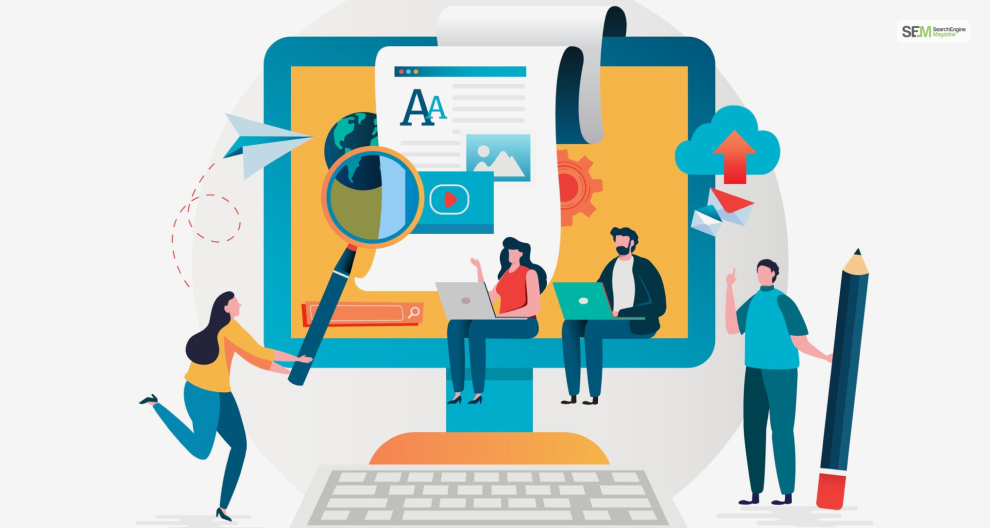
Audience insights guide content creation. Marketers can create content that addresses their audience’s specific pain points, interests, or questions, increasing the likelihood of engagement and conversions.
In digital advertising, audience insights play a critical role in ad targeting.
Marketers use data to define custom audiences and deliver ads to users who are most likely to convert. This is why you should know about the Facebook Ad Library.
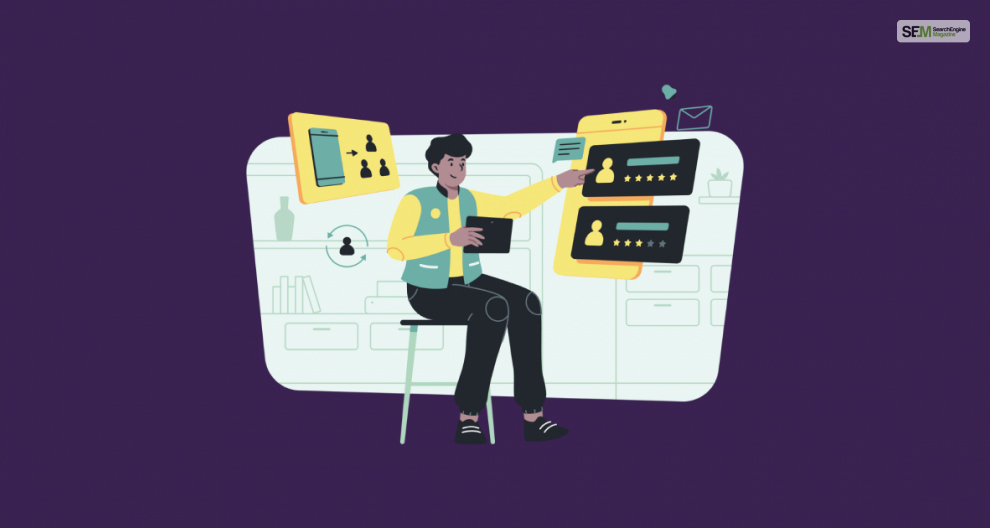
Regularly collecting and analyzing audience feedback and performance data allows marketers to iterate and improve their strategies over time.
So, you already know what are audience insights and the key elements that play an essential role.
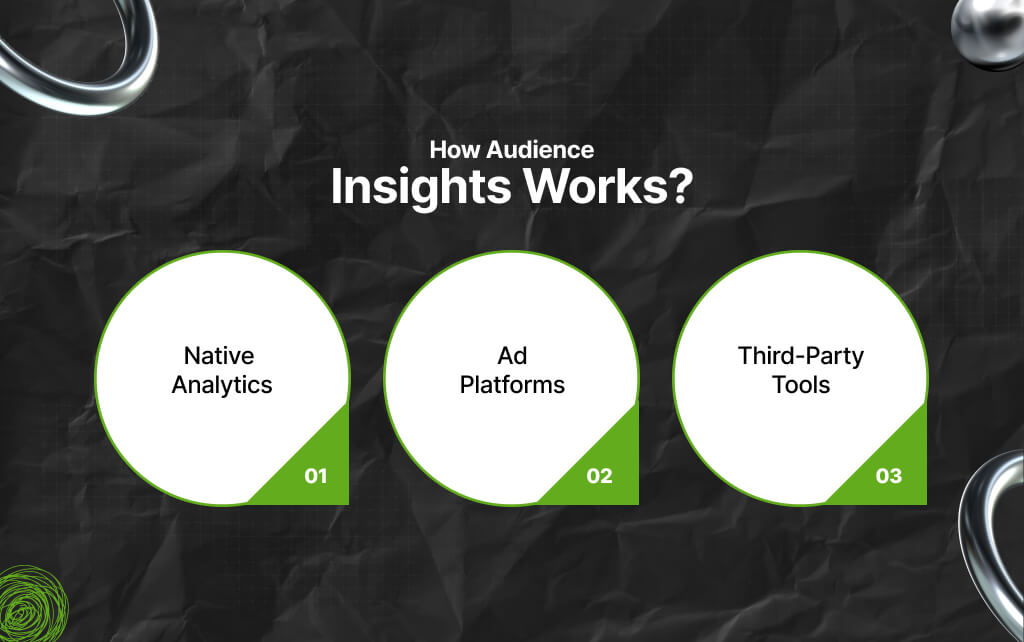
But before I discuss how you can use these insights for improving your overall digital marketing strategy, let’s look at three elements that are essential for understanding how audience insights actually work.
Facebook Audience Insights, Instagram Insights, LinkedIn Page Analytics, and TikTok Analytics offer data for free on post performance and follower count. And it’s very detailed, if you go through them.
Google Ads or Facebook Ads Manager offer a deeper and more detailed dive into purchasing behavior, lookalike audiences, and interests. Also, even such insights are usually accessible for free.
Brandwatch, Hootsuite, or Sprout Social can combine different channels into a single dashboard for you to spot trends – and that too over a period of time.
Of course, for using third-party tools, you won’t be able to access all insights for free.
As an SEO consultant, using audience insights effectively in your social media and digital marketing strategy involves a multi-step approach.
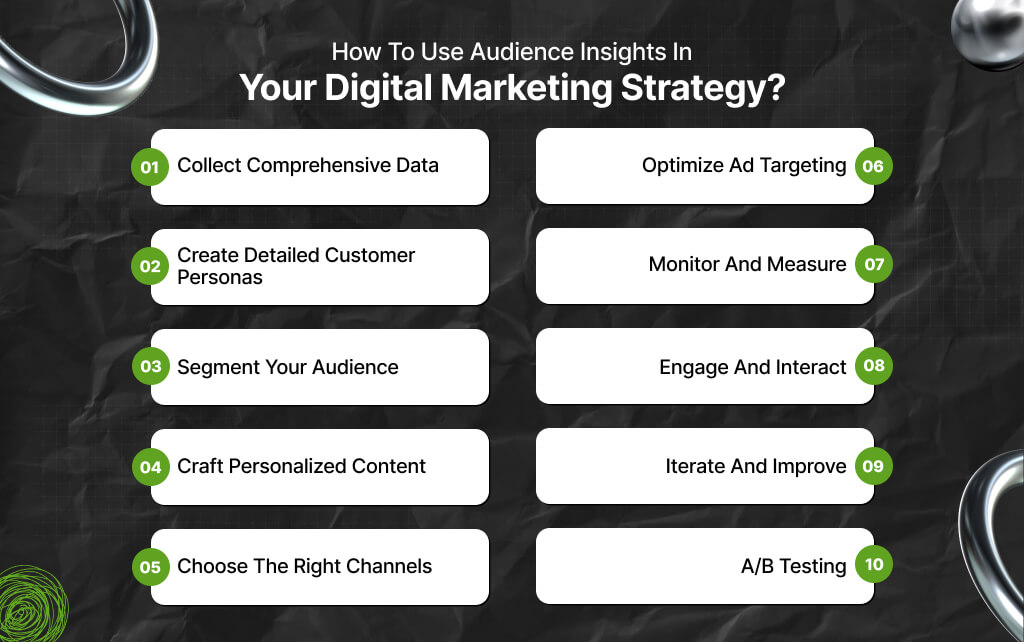
Here’s a detailed guide on using audience insights to enhance your marketing efforts:
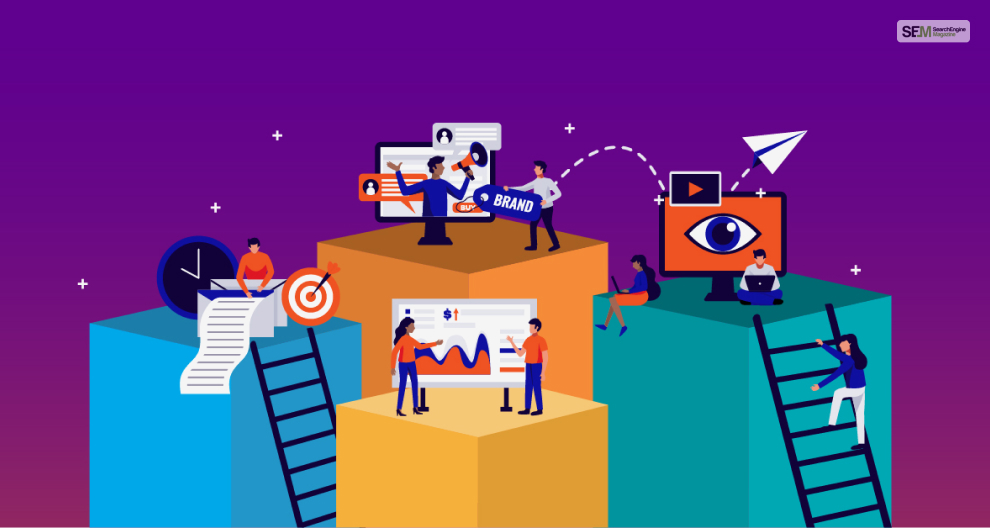
Start by collecting demographic data such as age, gender, location, income, education, and marital status of your audience. Social media platforms and analytics tools can provide this information.
Next, gather psychographic insights by surveying your audience, monitoring social media conversations, or analyzing user-generated content.
Identify interests, values, attitudes, and lifestyle choices. This is a crucial step in fashion marketing.
Finally, use web analytics tools like Google Analytics, social media analytics, and customer relationship management (CRM) software to track user behavior.
This includes website visits, page views, click-through rates, purchase history, and social media engagement. Having a GA4 certification helps a lot here.
Based on the collected data, create detailed customer personas. Each persona should represent a specific segment of your audience.
Include information about demographics, psychographics, behaviors, pain points, and goals.
For example, you might create personas like “Tech-Savvy Millennials,” “Stay-at-Home Parents,” or “Small Business Owners.”
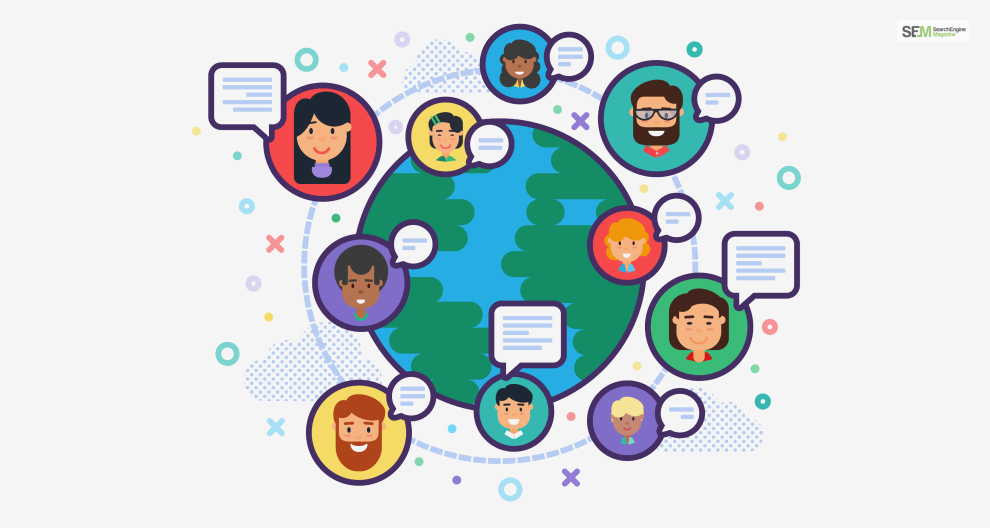
Segment your audience into smaller, more targeted groups based on common characteristics or behaviors. This allows you to tailor your marketing and audience influencer efforts to specific segments.
Segments can be based on demographics (e.g., age, location), behavior (e.g., frequent buyers, abandoned cart users), or interests (e.g., outdoor enthusiasts, food lovers).
Develop content that speaks directly to each audience segment’s needs and interests. Use the language, tone, and messaging that resonate with each group.
Personalized content can include blog posts, social media updates, email campaigns, and product recommendations.
Using the Google Campaign Manager will help you out a lot here.
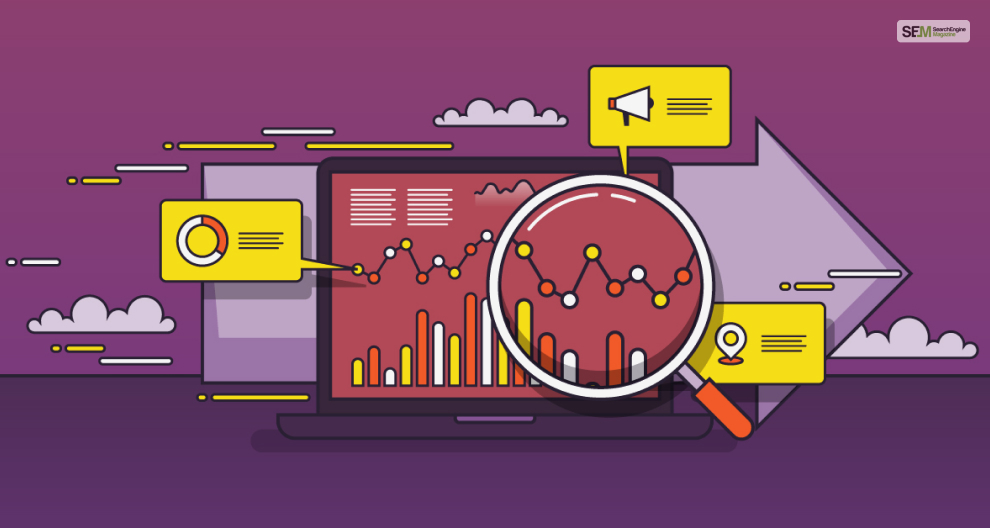
Use audience insights to determine which social media platforms your target audience frequents the most. Focus your efforts on the channels where you’re likely to reach them effectively.
For example, platforms like Instagram and TikTok might be more relevant if you’re targeting a younger audience. In general, you should have the following insights into your digital marketing strategy:
Leverage audience insights for precision ad targeting. Create custom audiences based on demographic and behavioral data. Facebook
Use tools like Facebook Ads Manager, Google Ads, or LinkedIn Ads to target specific segments with relevant ads and promotions.
In addition, knowledge about Google Ad Intelligence will also help you out here a lot.
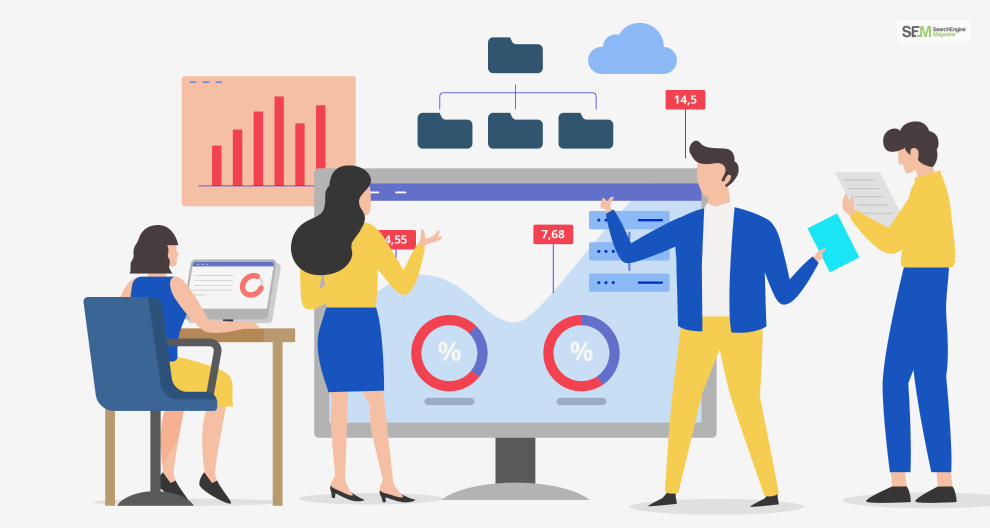
Continuously monitor the performance of your marketing efforts. Use analytics tools to track key metrics such as website traffic, conversion rates, social media engagement, and email open rates.
Assess which strategies and content resonate with different segments and adjust your approach accordingly.
Actively engage with your audience on social media. Respond to comments, answer questions, and participate in conversations relevant to your brand or industry.
This is why many Instagram influencers use Insta stories for better engagement!
Building a strong online community can enhance customer loyalty and trust. This is why you should learn how to use Pinterest for blogging.
Use audience feedback and performance data to iterate and refine your marketing strategy. Be open to change based on what works best for different audience segments.
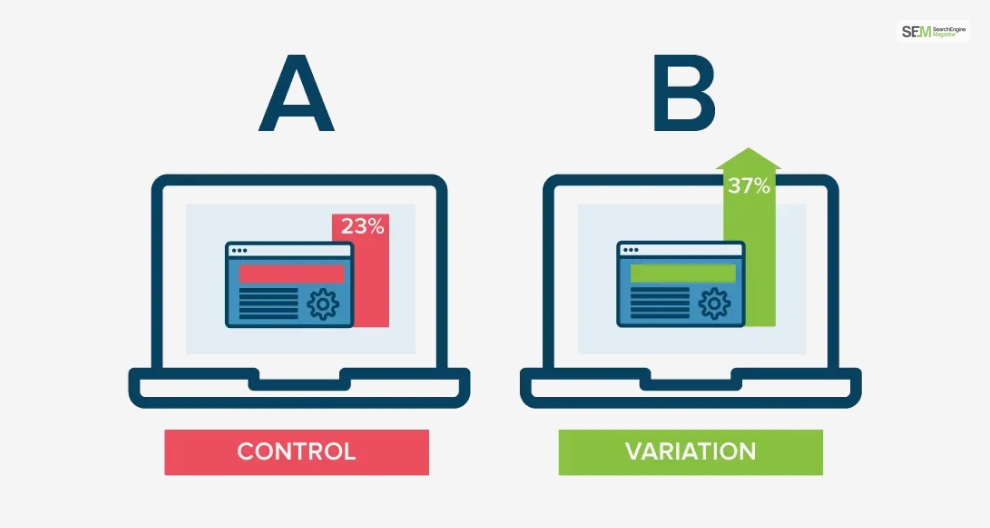
Conduct A/B tests to experiment with different content, messaging, and ad creatives. Audience insights can help you identify which variations resonate with specific segments.
By making the use of audience insights a part of your daily workflow, you will cut costs, save time, and build strong relationships.
And whether you are growing a brand, building a community, or even launching a product, audience insights play an essential role.
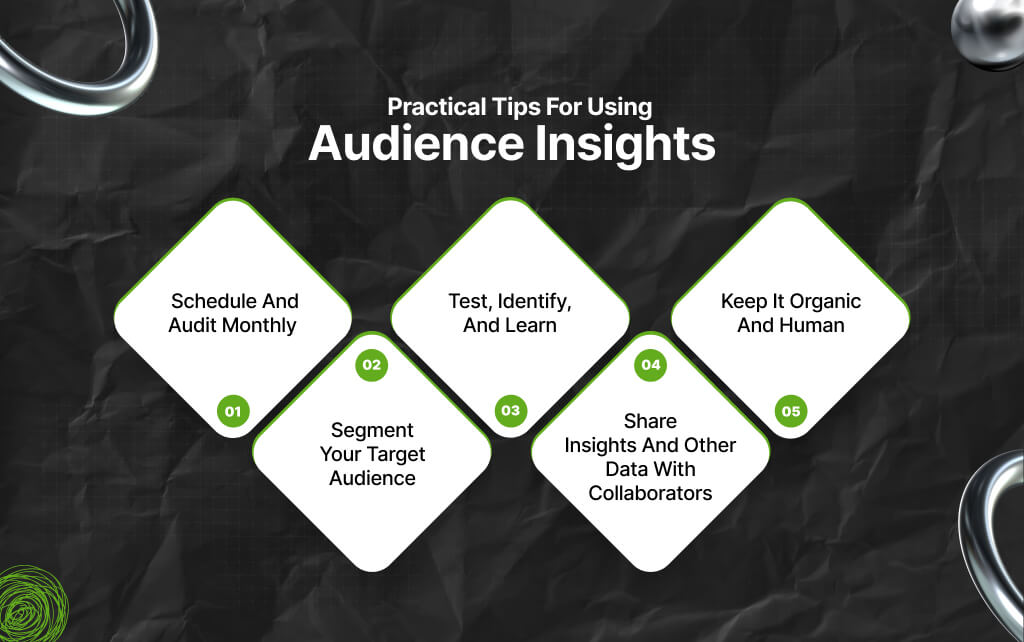
On that note, here are some practical tips for using audience insights properly.
1. Schedule and audit monthly: Review your follower growth, ad performance, and top posts to monitor shifts.
2. Segment your target audience: Create content clusters as per location, interests, age, and other demographics to customize content for each parameter.
3. Test, identify, and learn: Consider running A/B tests on your ad copies and visuals. Also, experiment with posting times to measure which of your segments are responding best.
4. Share insights and other data with collaborators: Influencers and brands should exchange insights to align their campaigns. Also, this can be done to set clear goals.
5. Keep it organic and human: Insight guides you. But at the same time, your creativity and stories are there to build the actual connection.
Audience insights are a powerful tool for crafting a targeted and effective social media and digital marketing strategy.
By understanding your audience’s demographics, psychographics, and behaviors, you can create personalized content, optimize ad targeting, and engage with your audience to drive better results and ultimately lead to increased customer satisfaction and loyalty.
In summary, audience insights are a fundamental component of successful digital marketing.
They enable marketers to understand their audience’s needs, preferences, and behaviors, allowing them to create more effective and personalized marketing campaigns.
These insights help reach the right people with the right message at the right time, ultimately driving better results and ROI.
Remember that it should be an ongoing part of your marketing strategy, as audience preferences and behaviors can change over time. For more information, please comment your questions and thoughts below!
Barsha is a seasoned digital marketing writer with a focus on SEO, content marketing, and conversion-driven copy. With 8+ years of experience in crafting high-performing content for startups, agencies, and established brands, Barsha brings strategic insight and storytelling together to drive online growth. When not writing, Barsha spends time obsessing over conspiracy theories, the latest Google algorithm changes, and content trends.
View all Posts

PoE Switch For CCTV: A Complete Guide For Fil...
Aug 13, 2026
How To Scale To 20,000 Subscribers For $0: My...
Aug 13, 2026
What Is Content Velocity? How To Calculate It...
Aug 12, 2026
How To Index Backlinks Fast (Without Wasting ...
Aug 11, 2026
Top Agencies For AI SEO And Generative Engine...
Aug 10, 2026