The Ultimate Guide To Competitor Backlink Analysis: An Actionable SEO Blueprint To Steal Your Rivals’ Traffic
Oct 23, 2026


The expansion of digital banking and financial inclusion across the Asian market has transformed how businesses and consumers allocate capital.
However, relying heavily on modern Application Programming Interfaces (APIs) and mobile transaction infrastructure inevitably introduces a technical challenge: real-time system interruptions.
In the regional digital banking ecosystem, these system failures are signaled via a specific FintechAsia error code.
These status messages act as communication prompts that tell a user or developer exactly why an operation failed.
Understanding these exact error mappings is essential for fixing stuck payments, keeping your data secure, and ensuring smooth business operations.

A FintechAsia error code is a standardized alphanumeric or numeric message displayed by financial platforms operating within the Asian digital market when an operation is blocked.
These codes trigger during front-end actions like point-of-sale checkout processing, card authorization cycles, multi-factor login checks, or back-end API server-to-server data routing.
Rather than indicating an unfixable system crash, these codes point to a breakdown somewhere along the transaction pathway.
The core triggers behind these errors typically fall into one of five categories:
Even though the exact reason behind the appearance of the error codes is not found, here are a few common reasons.
Here are some specific codes for common errors that you can resolve easily.
| Codes | Meaning | Reason | Solution |
|---|---|---|---|
| 101 | Invalid card details. | Card number, CVV, or expiry date don’t match or are incorrect. | Re-enter the correct card details. |
| 202 | Insufficient balance. | Not enough funds in the account for transactions. | Use a different account for transactions or recharge the main account. |
| 305 | The gateway for the transaction is not available. | Maintenance or technical issues in the platform. | Wait for the gateway to restore before trying the transaction. |
| 401 | Unauthorized account access. | Login details don’t match, or the session has expired. | Either verify your credentials or change your login details. |
| 403 | Account access denied. | Accessing restricted content without permission. | Check the account settings. |
| 429 | Multiple requests. | Multiple actions are taken from a single account or IP address. | Wait for the time. Then, try again to take the actions. |
| 510 | Duplicate transaction. | Same transaction request submitted more than once. | Review the duplicate transaction details and adjust the history. |
| 520 | Transaction failed due to out-of-range amount. | The transaction amount is beyond the limits mentioned in the platform regulations. | Customize the limit for your needs or make multiple transactions. |
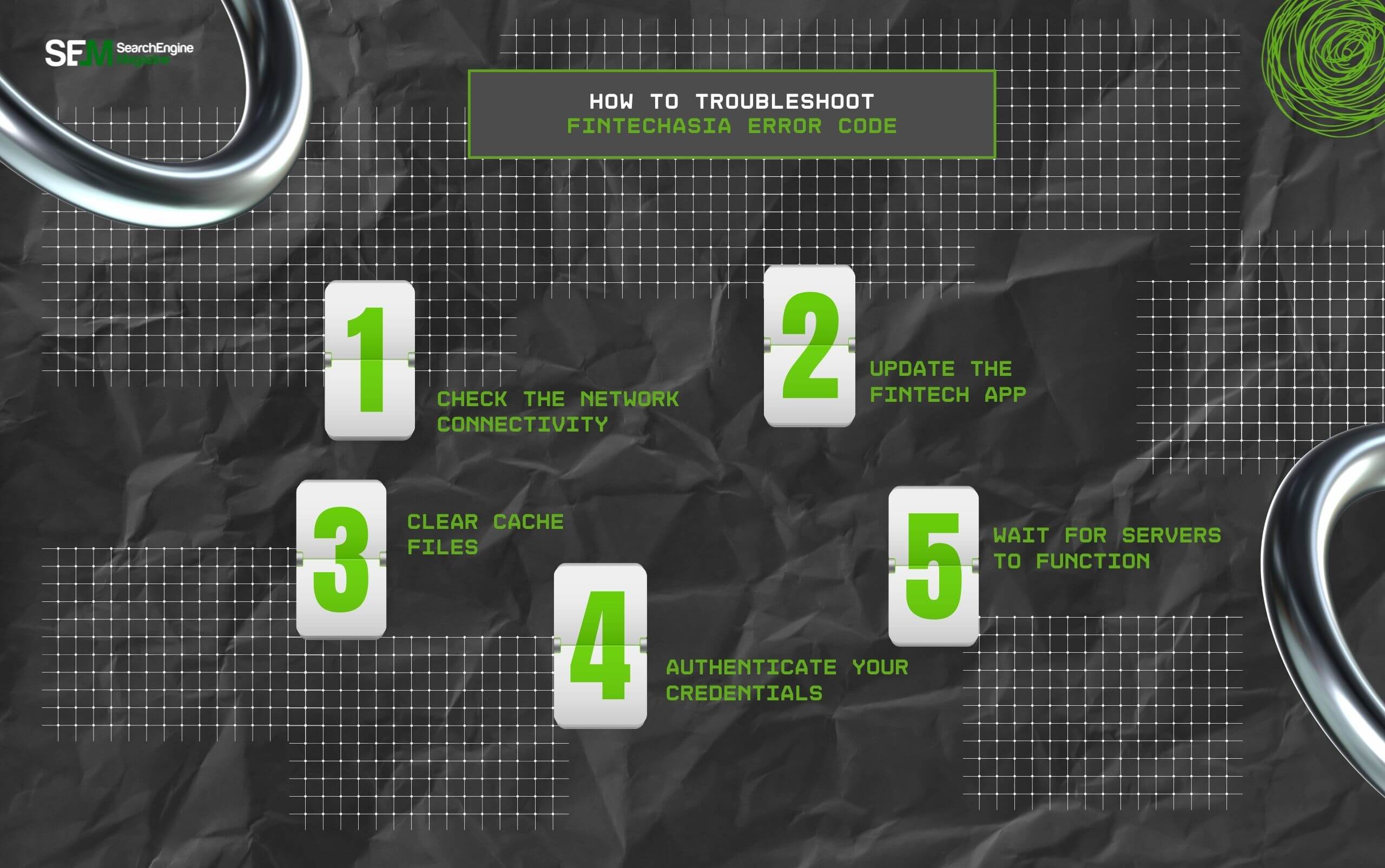
Given that FintechAsia error codes are quite common, you can encounter them anytime. So, follow the steps below to fix the error.
First things first, an unstable and poor network connectivity can affect the fintech services. So, make sure you have access to good, reliable, and stable internet.
Also, if you are regularly facing error codes indicating an unstable network, try restarting your router or switching to a different network provider.
An outdated app cannot function properly. Giving you multiple error codes for basic glitches and bugs. So, keep your app updated with the new version to avoid getting error codes.
If you are using the web version of FintechAsia, you need to clear the cache and website cookies. That is, you can clear out the space for the app to function.
Additionally, removing the cookies and cache can help in smoothing the transaction process and resolving performance-related issues.
If you are getting error codes for account access issues, you can verify your account using multi-factor authentication.
Moreover, changing the password and login ID regularly can help avoid access issues.
In addition to this, with server-down issues, you just have to wait for the platform to fix the backend problems.
However, if the issue persists or regularly happens, try contacting the support team to resolve the server-related problems.
To keep financial platforms reliable and minimize checkout drops, business owners and developers should build long-term resilience right into their systems:
Given that error codes are common for almost all FintechAsia platforms, resolving them by following the step-by-step guide is quite easy.
However, if the issue persists, then it’s better to contact the customer support.
So, when you encounter an unknown error code, regular failed transactions, and have tried all tricks but nothing is working, then you can call in the experts.
Moreover, with their knowledge and technical expertise, they can guide on how to resolve the issue. So, it’s better to seek professional help and fix the problem in seconds.

Even though seeing a FintechAsia error code is frustrating, they are here to help. By indicating the issue, they are helping you understand what is blocking the operations.
And, based on the exact meanings behind the error messages, fixing the exact problem is easier than finding the problem in a haystack. So, instead of fearing them, why not try understanding them?
Moreover, decoding the messages properly can resolve the issues faster and make the app efficient. Making the app useful for managing financial operations.
So, the next time one of them pops up on the screen, just solve it!
Read Also:
Barsha is a seasoned digital marketing writer with a focus on SEO, content marketing, and conversion-driven copy. With 8+ years of experience in crafting high-performing content for startups, agencies, and established brands, Barsha brings strategic insight and storytelling together to drive online growth. When not writing, Barsha spends time obsessing over conspiracy theories, the latest Google algorithm changes, and content trends.
View all Posts

The Ultimate Guide To Competitor Backlink Ana...
Oct 23, 2026
How To Land High-Authority Editorial Backlink...
Oct 23, 2026
Why Your Website Traffic Dropped Suddenly And...
Oct 23, 2026
How Do The Physical Google Review Tools Redef...
Oct 23, 2026
How To Get Your Brand Cited In AI Search Resu...
Oct 22, 2026