The Ultimate Guide To Competitor Backlink Analysis: An Actionable SEO Blueprint To Steal Your Rivals’ Traffic
Oct 23, 2026


Landing backlinks from high-Traffic publications was once an exclusive art known only to agencies that could afford six-figure retainers.
Then came Help a Reporter Out. Now anyone with a link-building budget can reach out to a journalist at a major media house directly.
If you’ve been using HARO link building recently, you know the rules have changed.
Journalists are getting spammed daily with automated AI outreach, platforms have changed their algorithms and monetized the service, and old tactics simply don’t work as well as they used to.
To get past the noise and land that coveted HARO mention, you need a new approach.
Below is a detailed guide on how to build search visibility using modern sourcing techniques.
Speed is critical: Over 70% of chosen pitches are submitted within the first two hours of a query going live.
The landscape has changed: Legacy HARO emails are gone; the strategy now lives inside Cision’s Connectively platform.
AI spam is ruining journalists’ inboxes: Unique, highly specific first-hand experience is your only defense against automated spam filters.
Quality over quantity: One DR 80+ link from a reputable news site outvalues fifty low-tier blog directory placements.
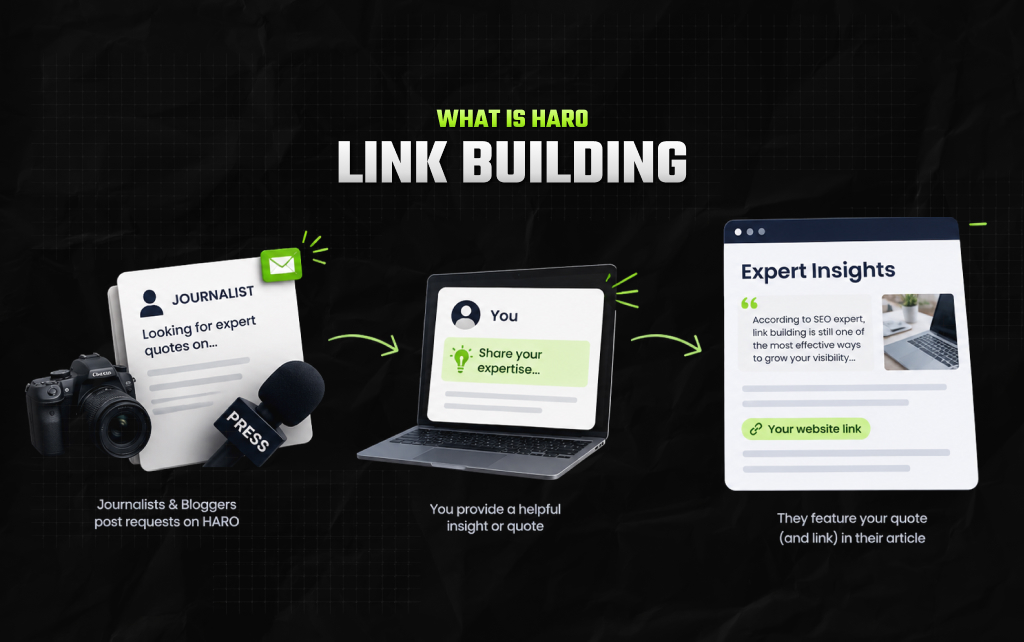
HARO link building is a tactic where you respond to sourcing requests from journalists, bloggers, and reporters in exchange for a link and/or brand mention.
HARO is about contacting the press, not cold outreach prospecting.
Journalists and bloggers are looking for experts to quote in their articles, and they list their criteria on a specific platform.
When a journalist finds you on that platform, offer a valuable snippet of information.
This way, they quote you for their audience and, in most cases, include a link to your media asset.

For over ten years, this type of link building meant sending three emails a day with copy-pasted lists of questions.
But now, Cision officially discontinued the old email-based approach and migrated to their new web-based dashboard called Connectively.
They basically changed the platform but kept the same idea. Now you don’t have to wait for daily email blasts.
Instead, you can use their live feed of pitches and filters to find relevant journalists and pitch them directly in the app.
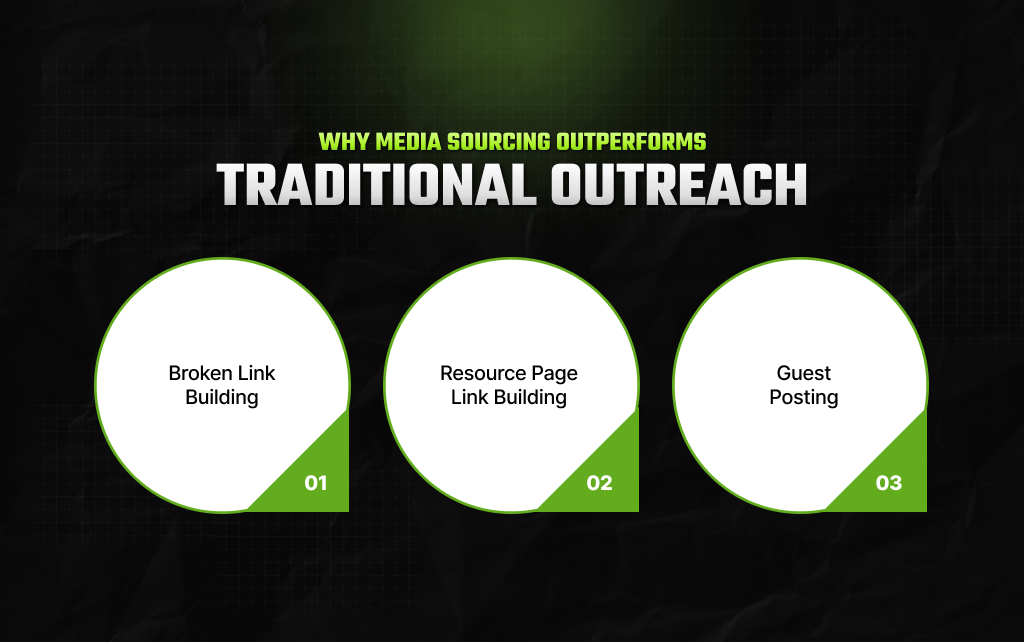
Most link-building approaches create friction. If you look at the closing rate for each standard alternative, the math speaks for itself:
You find a dead link, email the webmaster, and hope they care enough to log into their CMS and replace it. The response rate will rarely exceed 1-2%.
You try to convince the webmaster that your resource is worth including in their list of recommended links/resource pages.
So, if the resource page hasn’t been touched since 2021, your email will most likely go straight to the trash.
You spend hours writing an entire article for someone else’s domain, only to get stuck in their editorial process or pay for a backlink.
By using media sourcing, the dynamic is completely different. The journalist is under time pressure and has a gap in their article.
Moreover, for them, the perfect solution is to simply fill in the gap with the information they sourced from you.
With a perfect outreach workflow, you can expect a conversion rate of between 10% and 15%
While Connectively is the direct successor to HARO, relying on a single platform limits your footprint.
The digital PR landscape has fractured into several powerful alternatives that every SEO professional should monitor.
| Platform | Best Used For | Pricing Structure |
| Connectively | Mainstream news, mid-tier blogs, business sites | Freemium (Pay-per-pitch model above limits) |
| Qwoted | Financial services, tech, enterprise B2B | Free tier, paid plans for advanced filtering |
| SourceBottle | Lifestyle, parenting, Australian/UK markets | Free with optional paid keyword alerts |
| Help a B2B Writer | Niche B2B SaaS, marketing, tech deep-dives | Free for sources |
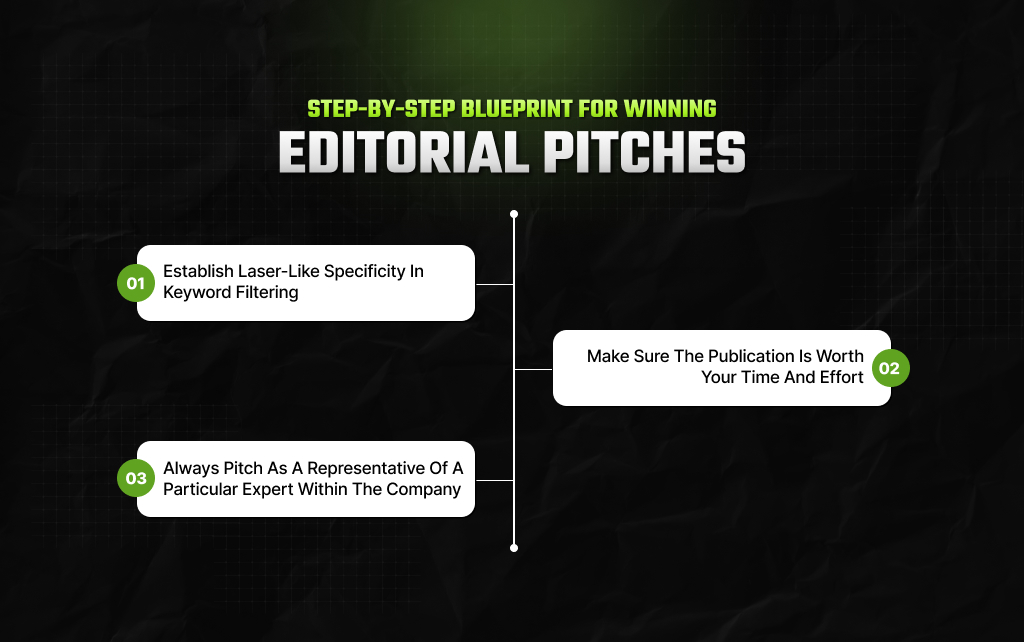
HARO link building succeeds when you systematize the process.
If you treat it as an administrative task, it will yield lackluster results. Treating it as an exclusive editorial service will produce spectacular outcomes.
Don’t waste time on irrelevant lifestyle articles if you represent a cybersecurity company.
The platform offers filtering options to narrow queries to specific industries.
With HARO, users can set preferences so only the desired keywords (e.g., “data breach”) appear in their inbox.
Before engaging in any outreach, evaluate the requesting media source’s reputation.
An experienced eye will spot red flags: publications with masked authors rarely invite quality collaboration.
Moreover, websites with a steady decline in organic traffic are no longer desirable partners.
To confirm your suspicions, double-check the information with an independent SEO tool.
Journalists will never quote an “SEO Specialist” on topics pertaining to corporate taxation or medical devices, for example.
So, pitch as the founder or head of the department with a relevant specialization. Maintaining a database of the company’s experts.
This should include up-to-date photographs, positions, and social media profiles, and it’s mandatory.

A good pitch is brief, to the point, and displays expertise. Journalists read dozens of pitches in a day, and they spend 3 seconds on your pitch deciding if they want to read more.
The Hook (1-2 sentences): Briefly state the expert’s name/title/company and why they’re qualified to speak on this topic/prompt.
The Core Insight (3-4 sentences): Firstly, simply state the quote. Avoid corporate speak. Write it how you want it to appear in the published version of the article.
The Unique Angle (2-3 sentences): Secondly, share an interesting tidbit of information, lesson learned, or surprising insight.
The Sign-off: Thirdly, paste a nice signature block with the expert’s name/title, personal website URL, and headshot image link hosted on Google Drive or Dropbox.

To see this in action, let’s dissect two pitches submitted in response to a query about remote work productivity tools.
Subject: Query Response – Remote Work Tools
Hi there,
I saw your query looking for remote work tools and wanted to reach out. At our company, we believe remote work is essential in today’s fast-paced world. Our team uses several collaboration platforms to unlock our true potential and unleash great results.
We highly recommend project management software like Asana because it boosts transparency and helps teams navigate digital communication seamlessly. It is a total game-changer for businesses.
Let me know if you use this!
Best,
John, Marketing Specialist
Why it failed: It is packed with empty filler phrases, lacks concrete data, offers zero unique insights, and sounds exactly like a generic AI output. The journalist gains absolutely nothing by quoting John.
Subject: Query Response: Remote Tech Stack — 18% Meeting Reduction
Hi [Journalist Name],
I’m Sarah, Co-Founder at [Company Name]. We transitioned our 45-person engineering team to an asynchronous model last year. Here is our direct experience with project tracking tools:
Instead of relying on standard Slack channels, we shifted our entire sprint tracking to Linear. The biggest impact wasn’t just task management; it was communication hygiene. By forcing status updates into nested ticket comments rather than real-time chat, we reduced our mandatory weekly Zoom syncs by 18% over six months.
When everyone can view progress asynchronously without pinging a colleague, you protect deep work blocks.
Sarah’s headshot and full bio are available [Link here]. Let me know if you need any adjustments to the quote!
Why it succeeded: It starts with immediate context, offers a specific quantitative metric (18% reduction), names a tool without being promotional, and presents a clear, conversational point of view that reads naturally.
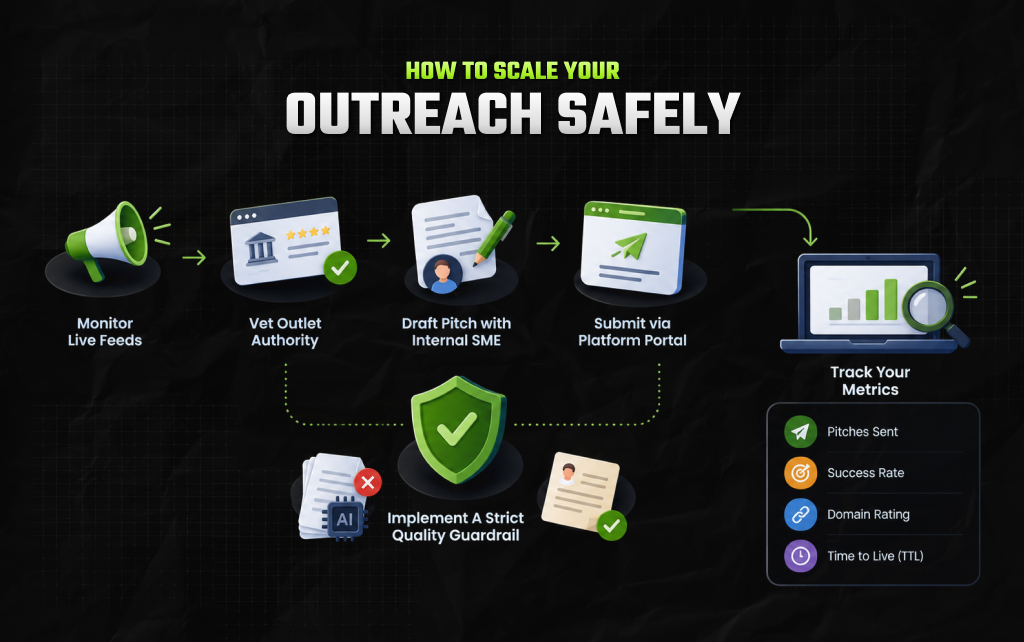
As your agency/team/scalability needs grow, you may be tempted to scale up your outreach. But be careful not to spam HARO, or you’ll get banned and blacklisted.
[Monitor Live Feeds] ➔ [Vet Outlet Authority] ➔ [Draft Pitch with Internal SME] ➔ [Submit via Platform Portal]
If you employ a virtual assistant or junior writers to reply to HARO requests, make sure they don’t just copy-paste from each other.
Enforce a strict policy: any pitch that sounds like it was written by an AI writing tool should be discarded immediately at the internal review stage.
Moreover, ask yourself if you’d take this outreach email from one of your executives. If not, delete it.
Don’t just track how many links you’ve gotten from HARO. Set up a simple spreadsheet to track your general progress as a link-builder.
Set goals for:
Pitches Sent: How much volume can you handle? How many pitches do you need to send to get one published?
Success Rate: What percentage of pitches actually get placed? Try to hit 8-12%.
Domain Rating: What’s the average DR of the sites you’re getting placements on?
Time to Live (TTL): How long does it take from when you send a pitch to when the link is live? This will affect your SERP performance estimates.

While highly effective, HARO link building isn’t a silver bullet for your SEO. Understand its strategic limitations before reallocating your entire budget.
No control over anchor text: Journalists will almost always link to your home page with your brand name or your expert’s name as the anchor text.
Let’s say you need exact-match anchor-text optimization for your specific commercial landing pages.
In that case, you will have to complement this strategy with a highly targeted digital pr for link-building campaigns or editorial collaborations.
Long turnaround times: Major media outlets plan their editorial calendars months in advance.
A pitch winning today may not see the light of day for eight to twelve weeks.
Ghosting is common: You’ll send dozens of pitches that meet all criteria perfectly and get no response. It is a volume game balanced by strict quality controls.
Mastering HARO link building requires modern companies to abandon the obsolete automated approach and focus on response speed, personalization, and the journalist’s benefit from the cooperation.
These three factors help land high-quality backlinks and achieve substantial improvements in organic traffic.
To do that, you need to prioritize the most relevant opportunities, reply briefly but with strong data, and build rapport with journalists using a human-centered approach.
After mastering these techniques, you will be able to regularly publish articles in renowned resources and increase the authority of your website or blog.
Your task: Log in to Connectively and set three keyword filters for your most relevant niche.
You have to reply within 60 minutes of their appearance. Try to find at least two relevant queries daily and focus on the quality of your response.
Use this tracking sheet to monitor your progress during the next 30 days.
Additional Reading: Top 65 Search Engines In The World
Piyasa is a search engine marketing strategist who has spent the last six years decoding Google's ever-changing mind. From corporate giants to neighborhood storefronts, she helps businesses cut through the digital noise and actually get noticed online. When she isn’t building SEO strategies or writing the latest search industry breakdowns for Search Engine Magazine, you can usually find her hanging out with friends - and gently reminding them that no, she cannot personally fix the latest algorithm update for them.
View all Posts

The Ultimate Guide To Competitor Backlink Ana...
Oct 23, 2026
Why Your Website Traffic Dropped Suddenly And...
Oct 23, 2026
How Do The Physical Google Review Tools Redef...
Oct 23, 2026
How To Get Your Brand Cited In AI Search Resu...
Oct 22, 2026
The Ultimate Blueprint For Broken Link Buildi...
Oct 16, 2026