How To Get Your Brand Cited In AI Search Results In 2026
Oct 22, 2026
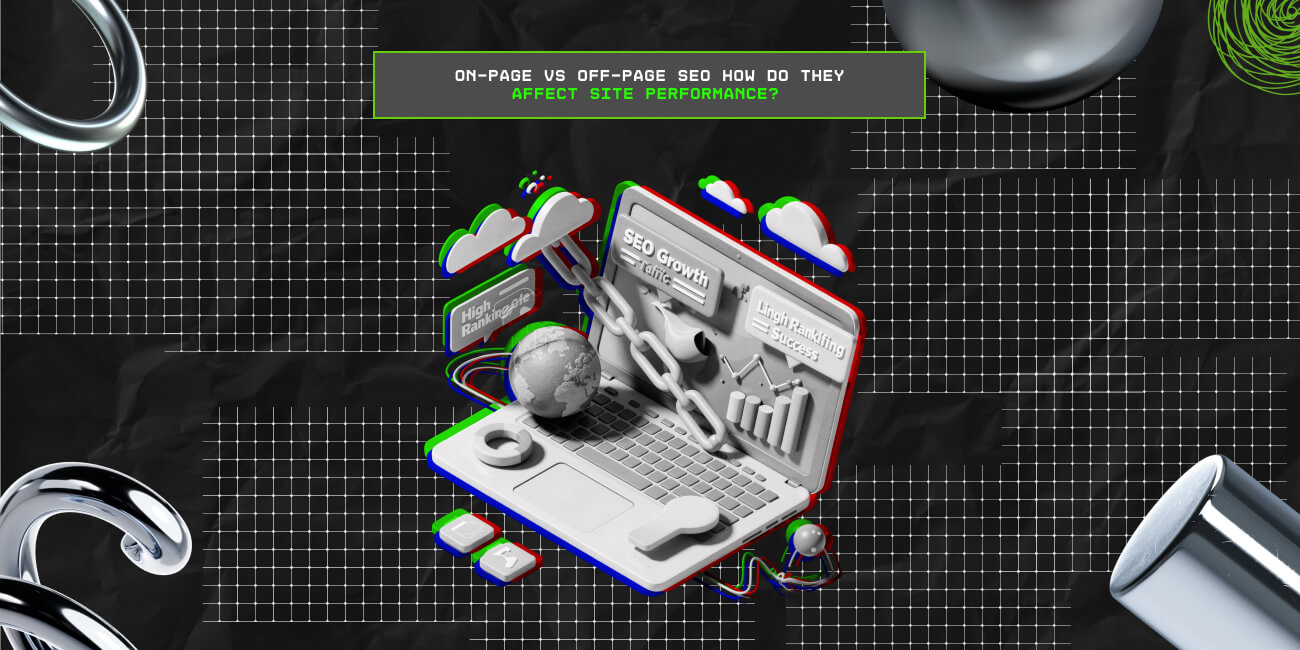

Did you know that 68% of online experiences begin with a search engine?
If you are an e-commerce owner, one of the most important things you can do for your website is optimize it for search engines.
Specifically, you should focus on both on-page and off-page SEO to help your site rank on the first SERP.
But what are on-page and off-page SEO, and how do they differ?
Knowing their key differences can help in employing the right one in your business SEO strategy for maximum growth and organic traffic drive.
So, in this article, I will delve into the on-page vs off-page SEO to focus on their core differences,
Before diving into the key differences of the on-page and off-page SEO, let’s look into what they exactly mean.
Now, On-Page SEO refers to the optimization practices for the on-site aspects of the sites.
That is, it revolves around the optimization of URLs, content pages, HTML structure, and more. So, the content ranks on the SERPs.
Moreover, it includes most of the technical SEO practices. For instance, on-page SEO prioritizes—
Unlike the On-Page SEO, Off-Page SEO focuses more on the external factors of webpage ranking.
That is, it focuses on the outside elements that affect the ranking of the web pages on Google’s SERPs.
So, it helps with optimizing the site for building brand authority, site credibility, and trust on the search engines. Also, improving the other social media platforms.
So, off-page SEO refers to the overall optimization practices for the brand mentions, local listings on Google, and earning backlinks.
Given that both on-page and off-page optimization are vital for improving ranking and online visibility, combining them is not a luxury. It is a necessity.
So, some of the relevance of combining these two diverse techniques include—
Firstly, combining both SEO techniques can provide a comprehensive SEO strategy that improves ranking on SERPs.
That is, when both the on-site aspects and the outside elements are addressed, the strategy can ensure high rankings for the website.
So, they go hand in hand in optimizing the pages.
Additionally, combining these two techniques provides a balanced approach.
That is, the on-page handles the technicalities of the site performance, and the off-page handles external credibility or validation.
So, combining these two can ensure the site attracts the maximum audience and retains readers with high-quality and credible content.
Finally, combining the SEO techniques can help in achieving long-term growth. That is, it can lead to sustainable improvements in search engine rankings
Also, this can further help in improving the business growth for the brands with increased organic traffic. So, they can provide sustainable results.
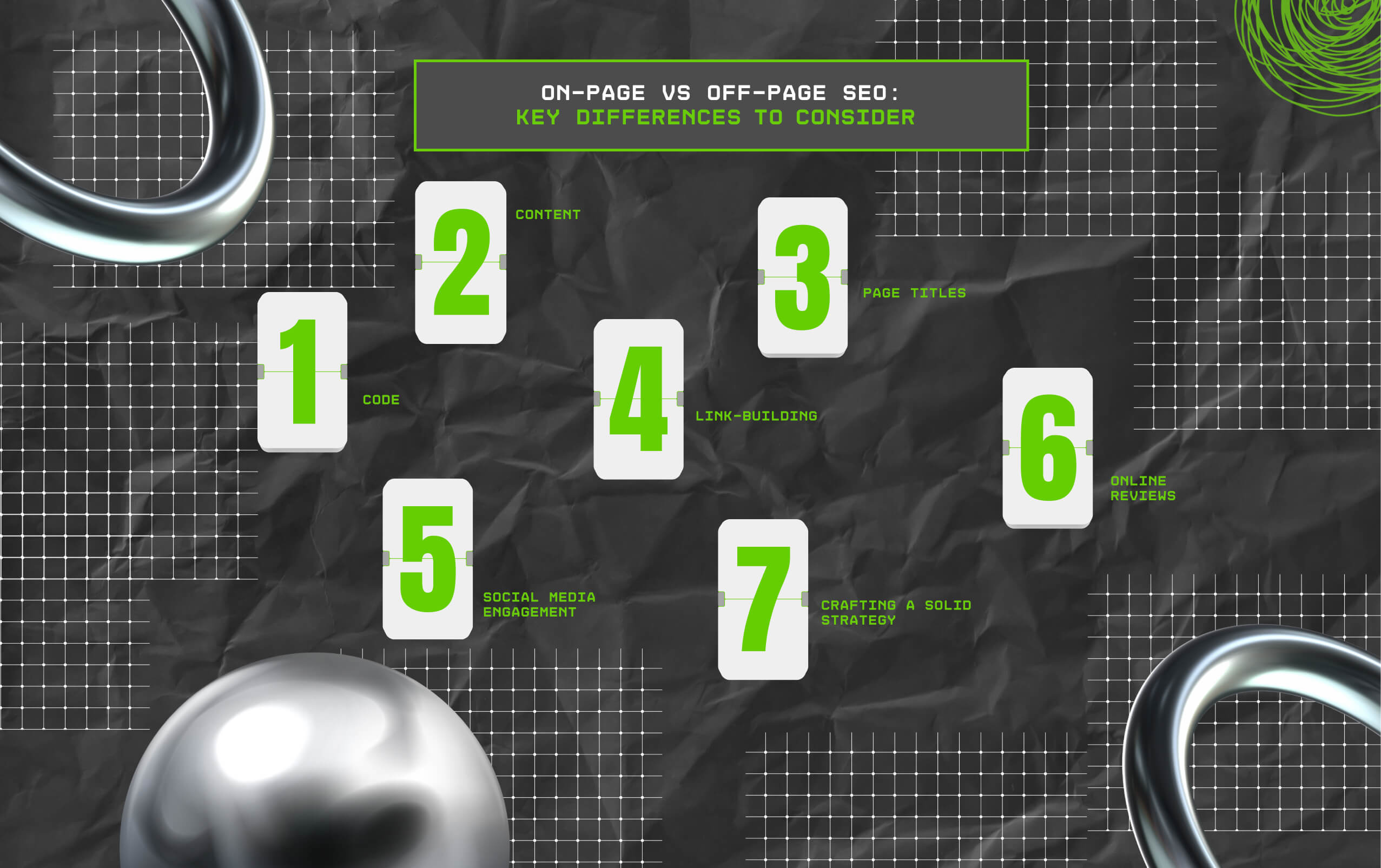
On-page SEO and off-page SEO are two important factors to consider when optimizing your website for search engine visibility.
So, here are some of the key differences between on-page and off-page SEO for any website—
A successful SEO strategy ultimately accounts for both on-page and off-page SEO techniques to maximize visibility and success.
On-page SEO optimizes the code of the website page itself by making it as search-engine-friendly as possible. This includes HTML tags, meta tags, clean coding practices, keyword optimization, and more.
This helps web crawlers understand the page’s relevancy to a search query. Content is an essential part of on-page and off-page optimization.
Web content needs to be optimized with targeted keywords and Phrases.
The more optimized the content, the better the chances search engines will index a web page. This is promoted and shared to get noticed.
Page titles should give an overview of the page content and accurately match the content the user will find.
Also, page titles are essential for off-page SEO.
They link through to the content on the page and allow search engine robots to crawl the content and understand its content.
Off-page SEO includes activities away from your website, such as:
Link building is related to organic search engine marketing and attracts attention from other relevant sources to a website.
Link building can be done in various ways, such as—
Having an active presence on social media helps to build a community of followers. This is usually done by forming relationships with other websites and promoting content on social media platforms.
It plays a vital role in both on-page and off-page SEO.
Social media engagement can be used in creating content. It can increase website authority and improve a website’s SEO ranking.
Good online reviews are an essential off-page SEO tactic, as many rely on user reviews when making decisions.
The high volume of ratings, positive user sentiment, and ratings will help boost the website’s position when people search for terms related to the product or service.
It is essential to understand the distinction between on-page and off-page SEO. On-page SEO refers to optimizing the content on the website itself. Off-page SEO refers to the optimization of content external to the website.
Binary Informatics and its SEO professional can optimize both on-page and off-page SEO. It ensures that the website is seen by users and adequately indexed.
It increases the chance of users clicking through to the website for further information. Both tactics are essential to an SEO strategy. It should be combined to get the maximum benefit.
The benefits of on-page SEO are that it boosts the website’s ranking in SERPs, increases website visibility, and establishes trust among search engine users.
With off-page SEO, websites benefit from greater brand awareness, increased organic traffic, and better customer engagement.
Another main benefit of On-page and Off-Page SEO is that it increases the authority of websites as rated by the various search engine algorithms.
This further increases the chances of ranking higher in SERPs and getting more organic traffic.
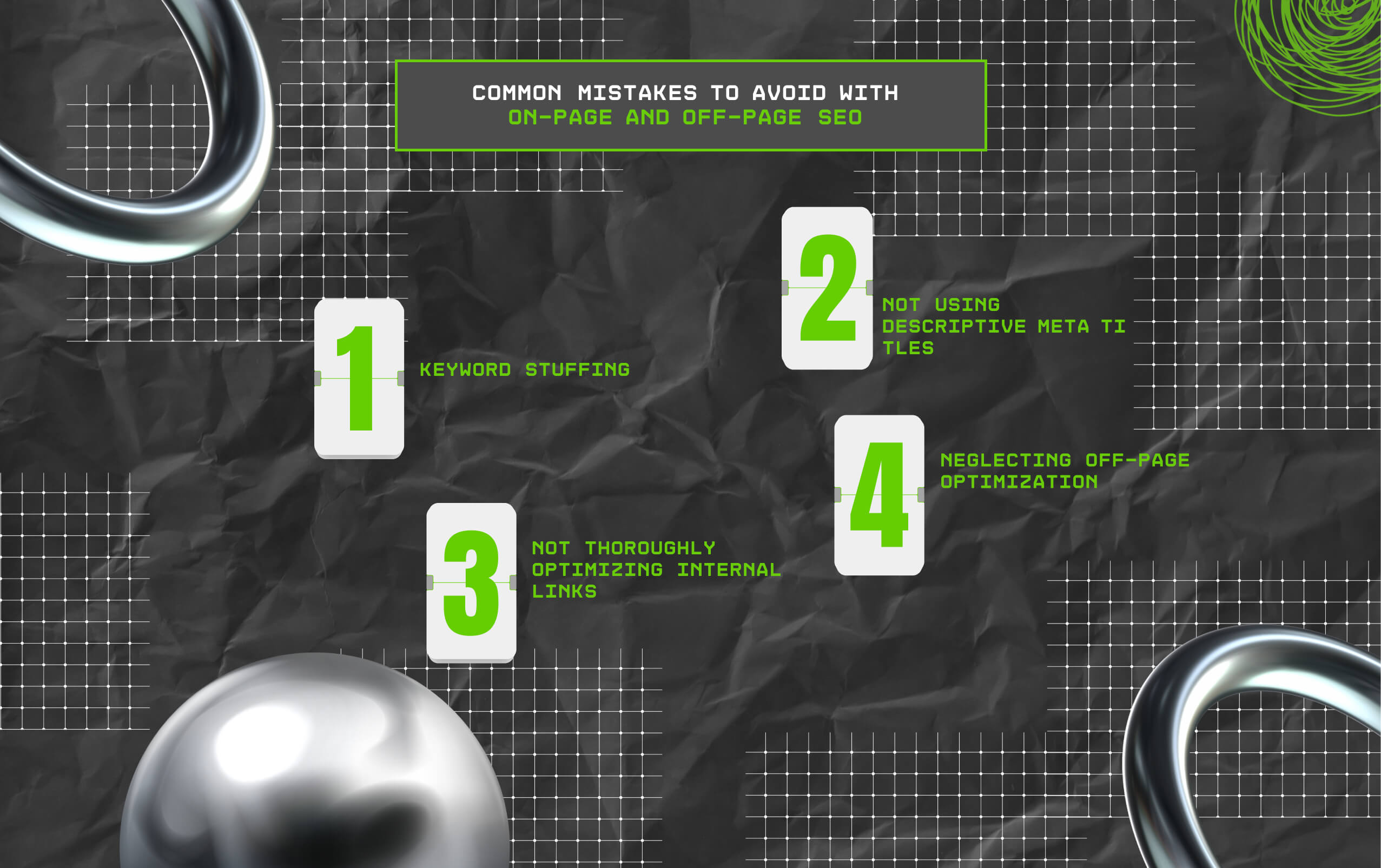
It is essential to ensure SEO implementation is strategic and consistent to avoid damaging your website’s ranking. When done correctly, SEO can be an effective tool to help improve your website’s visibility and credibility.
Common mistakes to avoid when implementing SEO include the following:
It is also essential to use appropriate keyword stuffing to increase page ranking. Keyword stuffing is a method of inserting excessive keywords into the content to appear more frequently in search engine results.
This practice can result in the penalization of the website by search engines.
All of these elements are important for achieving higher search engine rankings. Off-page SEO can be even more important than on-page SEO, depending on the targeted keywords.
Certain activities, like link-building, can have a tremendous impact on the success of the website.
Not using descriptive titles is an example of one of the biggest mistakes in on-page SEO.
For search engine crawlers to accurately identify the contents of a page. It is essential to use descriptive titles that are specific to the content.
Without descriptive titles, search engine crawlers may be unable to understand the content. The page may not be able to rank as well as it would if it had an optimized title.
Internal links are often overlooked despite their significance in website navigation. Internal links facilitate navigation and significantly distribute website authority from one page to another by passing on link juice.
Not thoroughly optimizing internal links is an example of a shortcoming with on-page SEO.
This can be the difference between a page ranking at the top or bottom of a search engine result page. Properly optimizing internal links can ensure that the correct pages get the most link juice and thus rank higher in the search engine results.
Implementing on-page and off-page optimization strategies is essential for the best results. Proper search engine optimization involves optimizing for both on-page and off-page factors.
Neglecting off-page optimization may result in your website failing to attract links or aiming for higher rankings in specific searches, potentially resulting in lost revenue.
To summarize, understanding the differences between on-page and off-page SEO helps marketers create strategies that will go a long way toward boosting a website’s ranking. It is essential to know that both are equally important for SEO success.
To get the most out of your SEO efforts, consider taking a comprehensive approach that includes both on-page and off-page SEO.
Start optimizing today and watch your website climb the search engine rankings!
Chandrima is a seasoned digital marketing professional who works with multiple brands and agencies to create compelling web content for boosting digital presence. With 3 years of experience in SEO, content marketing, and ROI-driven content, she brings effective strategies to life. Outside blogging, you can find her scrolling Instagram, obsessing over Google's algorithm changes, and keeping up with current content trends.
View all Posts

How To Get Your Brand Cited In AI Search Resu...
Oct 22, 2026
The Ultimate Blueprint For Broken Link Buildi...
Oct 16, 2026
The Ultimate Guide To Stealing Your Competito...
Oct 15, 2026
Beyond The Basics: Master Guest Posting For H...
Oct 15, 2026
Best Generative Engine Optimization (GEO) Com...
Oct 14, 2026