

The Ultimate Guide To Stealing Your Competitors’ Backlinks Using Curated Resource Lists
Oct 15, 2026
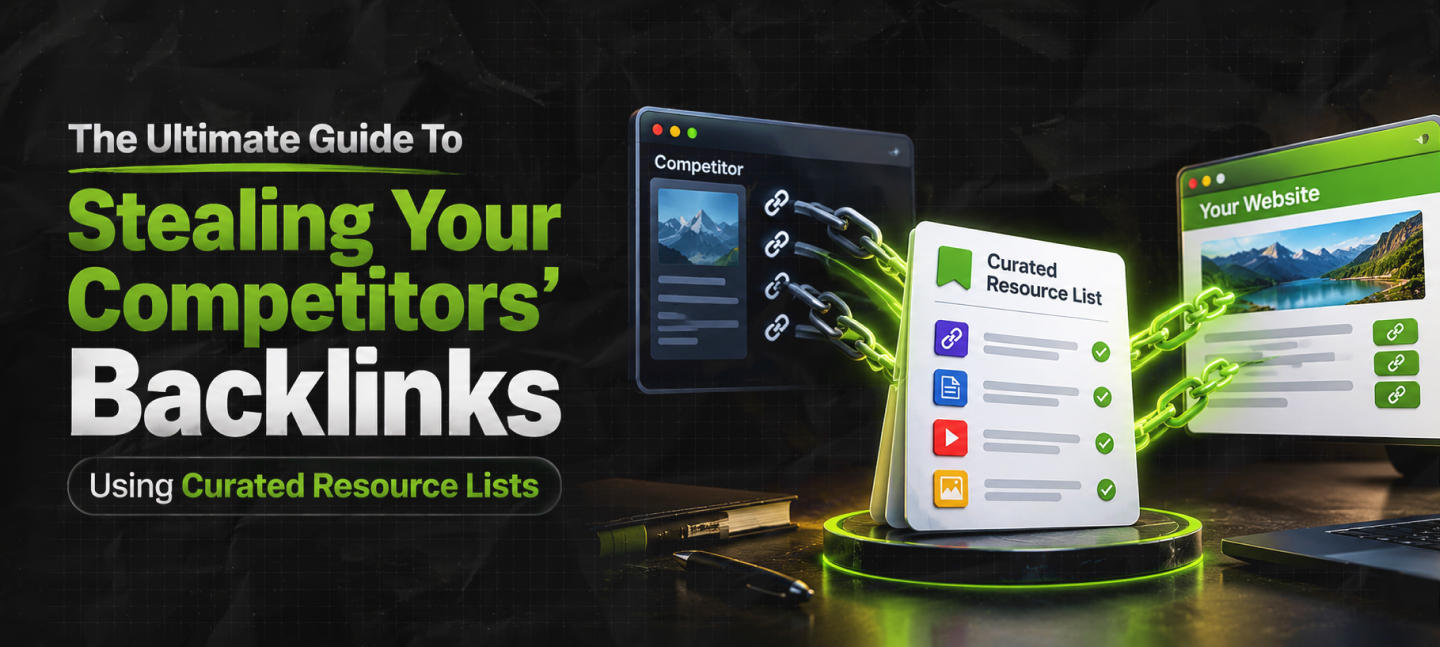

Link building is a losing battle. Countless hours spent crafting incredible content go down the drain if no one discovers it.
If you are tired of spending hundreds of hours on outreach campaigns only to get replies from 15 prospects and an inbox full of low-quality outreach, it is time to revisit a link-building tactic proven to deliver massive ROI when executed correctly: resource page link building.
SEO agencies often dismiss it as a 2012 tactic, using thousands of scraped URLs from a footprint spreadsheet.
Then they toss a generic template into an outreach sequencer, and the question “why is our domain getting marked as spam?” comes up.
You can do better than that. By respecting webmasters’ needs and focusing on quality over quantity, you can get some of the highest ROI per hour of any link-building activity.
Resource page link building can deliver high-quality links when you know what you are doing. Here is everything you need to know.
What it is: The art of getting your content listed on resource page/backlink pages
Why it works: The resource pages are created by people who want to recommend the best external content in their niche. Webmasters are open to outreach
The pitfalls: Generic outreach to irrelevant resource pages will kill your sender reputation
The success factors: Clean footprint spreadsheet with advanced search operators, targeting active websites, and value-first outreach
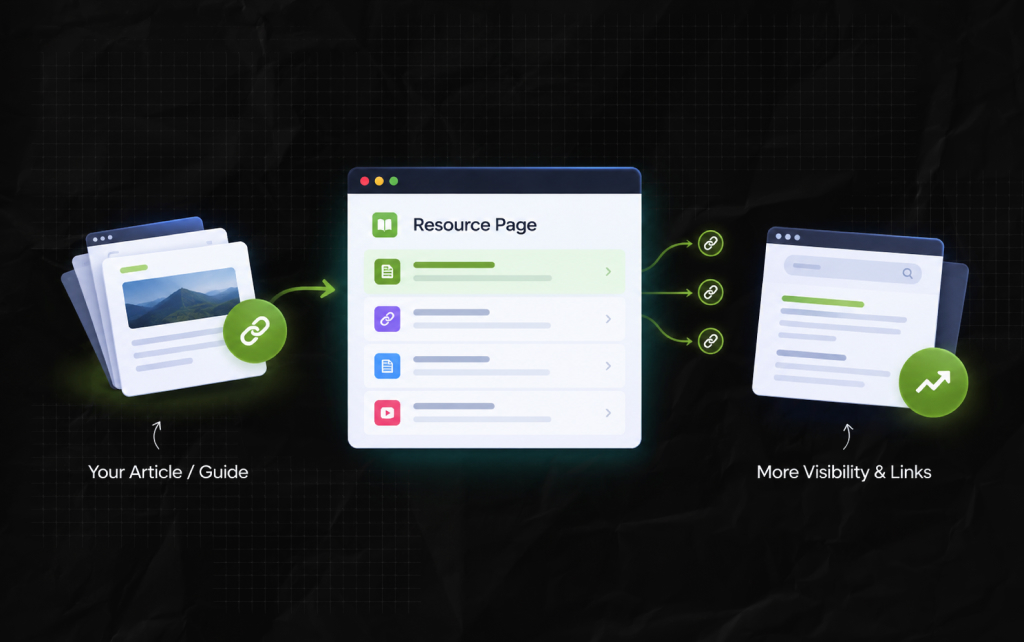
Most agency teams are investing more and more in digital PR for link building.
Digital PR excels at building brand awareness and securing mentions on homepage or domain authority-heavy articles.
However, digital PR is expensive, very time-consuming, and unpredictable.
Resource pages are valuable because they offer predictable relevance.
A resource page exists to point users to the best third-party content on a topic.
You are tapping into the inherent desire of webmasters to help their audience discover the best information on a given topic.
For this, you need to list your article, guide, or page on a resource page,
Resource page link building remains one of the most reliable ways to acquire high-value, topical backlinks while driving referral traffic to your domain.
By leveraging the popularity of lists of recommended links/resources, SEOs can position their content as a helpful addition to an existing list of suggested reads/writing on a particular topic.
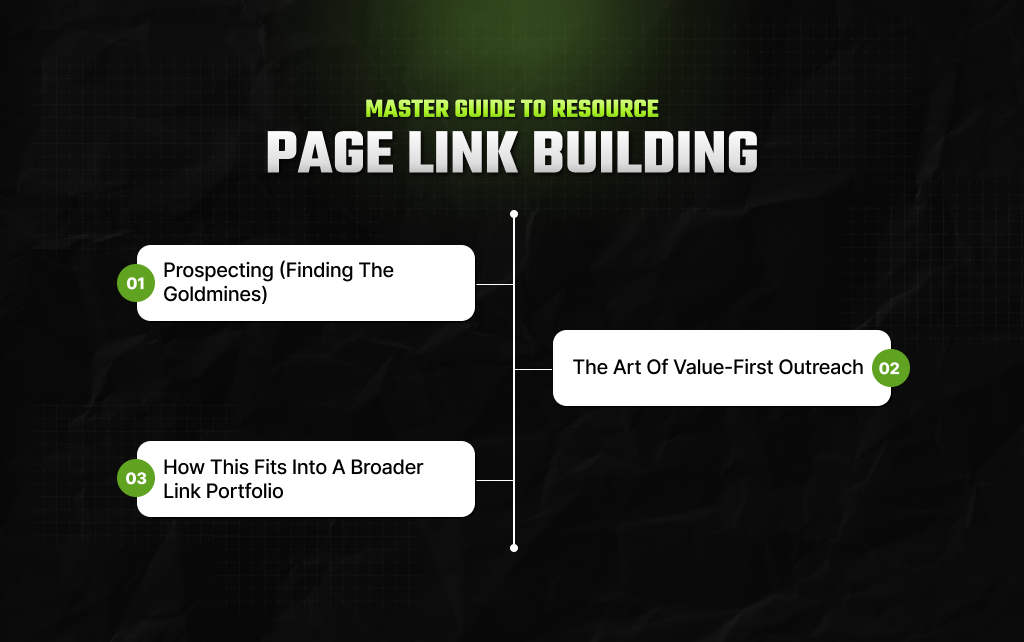
In this master guide, we will review the complete resource page link building process, including:
The number one mistake that novice link builders make is to use a generic search query (e.g., resources + keyword).
This approach will return hundreds of spammy resource pages abused by spammers.
At the same time, tens of thousands of high-authority pages are perfect for resource page outreach.
The trick is to identify them using advanced search operators. Open your favorite search engine and use the following queries:
• “helpful links” B2B marketing
• site:.edu “recommended reading” cybersecurity
• intitle:”resources” “remote work”
• inurl:resources “supply chain”
Before we start compiling the outreach spreadsheet, we need to determine if the resource page is active. We need to use the following three filters to ensure that the website is worth our outreach effort:
1. Cache date – a browser extension will show us how recently Google crawled the website. If the cache date is older than 6 months, we skip the domain
2. Recent design – if the website looks like it was built in the early 2000s, but the copyright states 2020 or newer, it is a dead website. We skip it
3. Broken link checker – a simple broken link audit will show us how many dead links are on a page. 40%+ of dead links = ghost website
Now that we have a clean list of websites to outreach to, it is time to draft a value-first outreach email.
Value-first outreach is a fancy way of saying we will not bother the recipient with our problems; we’ll solve theirs instead.
Webmasters are not interested in your organic keyword.
They care about their users. So our outreach must focus on how our resource can benefit their audience.
Below is an example of a working outreach email we used last quarter for one of our enterprise-level PM tools clients to secure a 12% outreach success rate.
Subject: Link suggestion for your site
Hi Webmaster,
I was looking at your resources page and noticed you have great links. I wrote a comprehensive guide to project management frameworks. Please add it to your page here. It will provide great value to your readers.
Thanks,
An SEO Agency
This email goes straight to the trash. It’s lazy, selfish, and incredibly generic.
Subject: Broken links / update for your remote work resource page
Hey [Name],
I was pulling together some training material for our internal team this morning and ran across your remote work resources page ([Insert URL]). It’s a fantastic collection of tools—thanks for putting it together.
While going through the software section, I noticed that two of the tools you recommended (OldToolA and OldToolB) seem to have shut down completely, leading to 404 errors. Just thought you might want to clean those up for your readers.
If you’re looking for a fresh, up-to-date replacement to fill that gap, we recently published an in-depth breakdown of open-source project trackers for remote teams. It covers five new tools that came out this year, complete with cost breakdowns.
You can check it out here if you think it’s worth adding: [Your URL]
Either way, thanks for keeping such a clean hub online!
Cheers,
[Your Name]
Why will this pitch work? It starts with an act of service
You did the boring work of digging up broken links on their website and saved them time and hassle by providing your valuable link as a relevant substitute.
Even if they do not add your link, they will almost certainly thank you for pointing out the dead links
A successful SEO campaign will rarely rely on a single acquisition tactic.
To build a varied backlink profile, you need to understand how the different methods complement each other.
In many cases, you can use broken link building alongside a resource campaign.
For instance, during prospecting, you will find plenty of broken links to use as angles.
Use the broken links to gain a first foothold on the resource page, as we did in the pitch example above.
This way you do not have to blindly pitch your guide (as is the case with most resource page outreach campaigns),
Also Check: SERP Insight Guest Post Review: Traffic, SEO Value, Editorial Standards, And Whether It’s Worth It In 2026
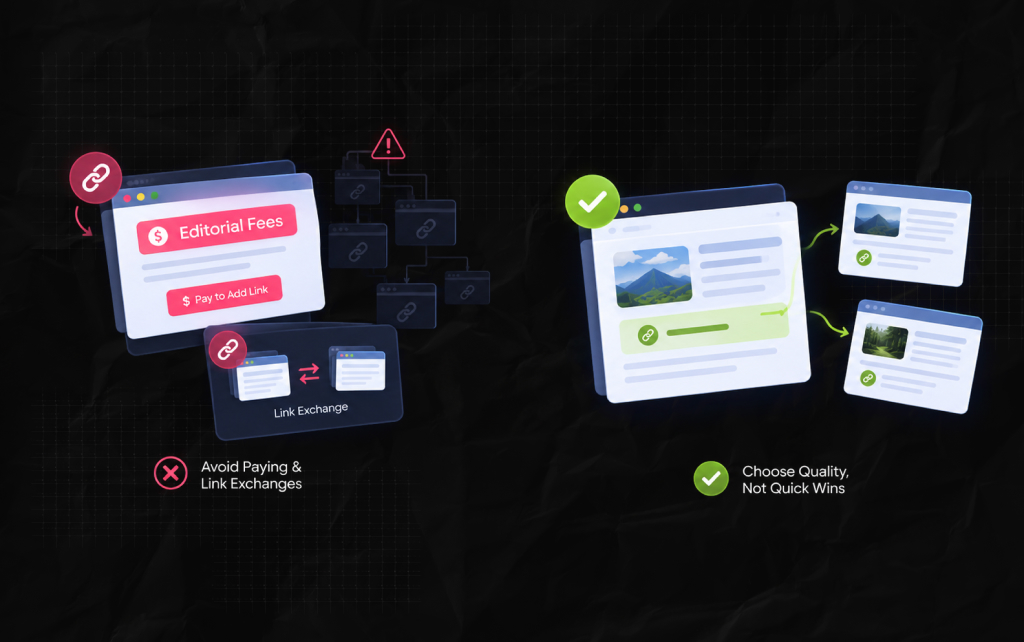
Eventually, if you engage in such outreach tactics regularly, you will encounter websites that will ask you to pay to place a link on their page (“editorial fees”) or ask for link exchanges.
Personally, I advise against paying for backlinks, and here’s why. If the website replies to your personalized outreach email with a price list, it means they don’t distinguish between website visitors and link buyers.
These are most likely link farms, which are actively penalized by search engines
Your link would have significantly greater SEO value if it appeared naturally on a website with high editorial standards
If the website asks you for a link exchange, evaluate the opportunity carefully.
If two different websites with real users (not link farms) want to recommend each other’s useful content, this cooperation is fine.
Avoid multi-tier link networks which only exist to boost PageRank by any means.
A well-structured resource page link-building campaign requires perseverance, thorough list-cleaning and a bit of empathy for the webmasters you are reaching out to. It cannot be fully automated, which is why it is effective as it is –the entry threshold for spammers is significantly higher, making link placements substantially better. Focus on creating high-quality resources that deserve to be recommended, clean your lists of any garbage, and invest enough in each outreach email. This campaign will organically generate high-quality backlinks over time, with a superior effort-to-reward ratio.
Piyasa is a search engine marketing strategist who has spent the last six years decoding Google's ever-changing mind. From corporate giants to neighborhood storefronts, she helps businesses cut through the digital noise and actually get noticed online. When she isn’t building SEO strategies or writing the latest search industry breakdowns for Search Engine Magazine, you can usually find her hanging out with friends - and gently reminding them that no, she cannot personally fix the latest algorithm update for them.
View all Posts

Beyond The Basics: Master Guest Posting For H...
Oct 15, 2026
Best Generative Engine Optimization (GEO) Com...
Oct 14, 2026
Digital PR for Link Building: How To Earn Hig...
Oct 13, 2026
Cracking The Code Of The Social Media Saga Si...
Oct 13, 2026
The Ultimate Guide To Using Automated SEO Sof...
Oct 12, 2026