
Structured Data SEO: How Schema Markup Helps Search Engines Understand Your Website
Sep 12, 2026

In the digital landscape, most SaaS companies aspire to skyrocket its growth. But only a few can achieve it within the blink of an eye.
Lucky, right? Even though it sounds like the God of Fortune favored them, the secret is SMART marketing.
That is, the adoption of a strong SaaS marketing strategy with consistent results brought success to these companies, served on a plate.
So, by simply combining strategy, customer data, creative propositions, and proper execution, cutting through the competition becomes a piece of cake.
Now, if you are also looking forward to scaling your business in 2026, I have brought you the perfect guide on SaaS marketing strategies by highlighting—
Stay tuned!
Before jumping into the benefits and requirements of a SaaS marketing strategy, let’s understand its basics.
Firstly, a SaaS marketing strategy is similar to regular marketing strategies. Just that, it revolves around the promotion of cloud-based software products and services.
So, it basically encourages customers to buy and subscribe to the SaaS companies’ digital products and services. And, a marketing strategy helps to convey their value.
This way, the SaaS companies can persuade the customers to buy and subscribe to these cloud-based products by addressing the real pain points with a solution.
Given that the churn rate is increasing with the evolution in the digital space, a SaaS marketing strategy is the need of the hour.
Now, it is no news that a product will fail if the customers can’t see its value. That’s why a marketing strategy is employed to deliver the value to the target audience.
Additionally, it helps businesses to win market share and convert the audience into loyal customers. Ensuring long-lasting customer retention of the brand.
Moreover, a well-developed marketing strategy can seamlessly convert the online visibility into profitability. Making the business reach success faster than expected.
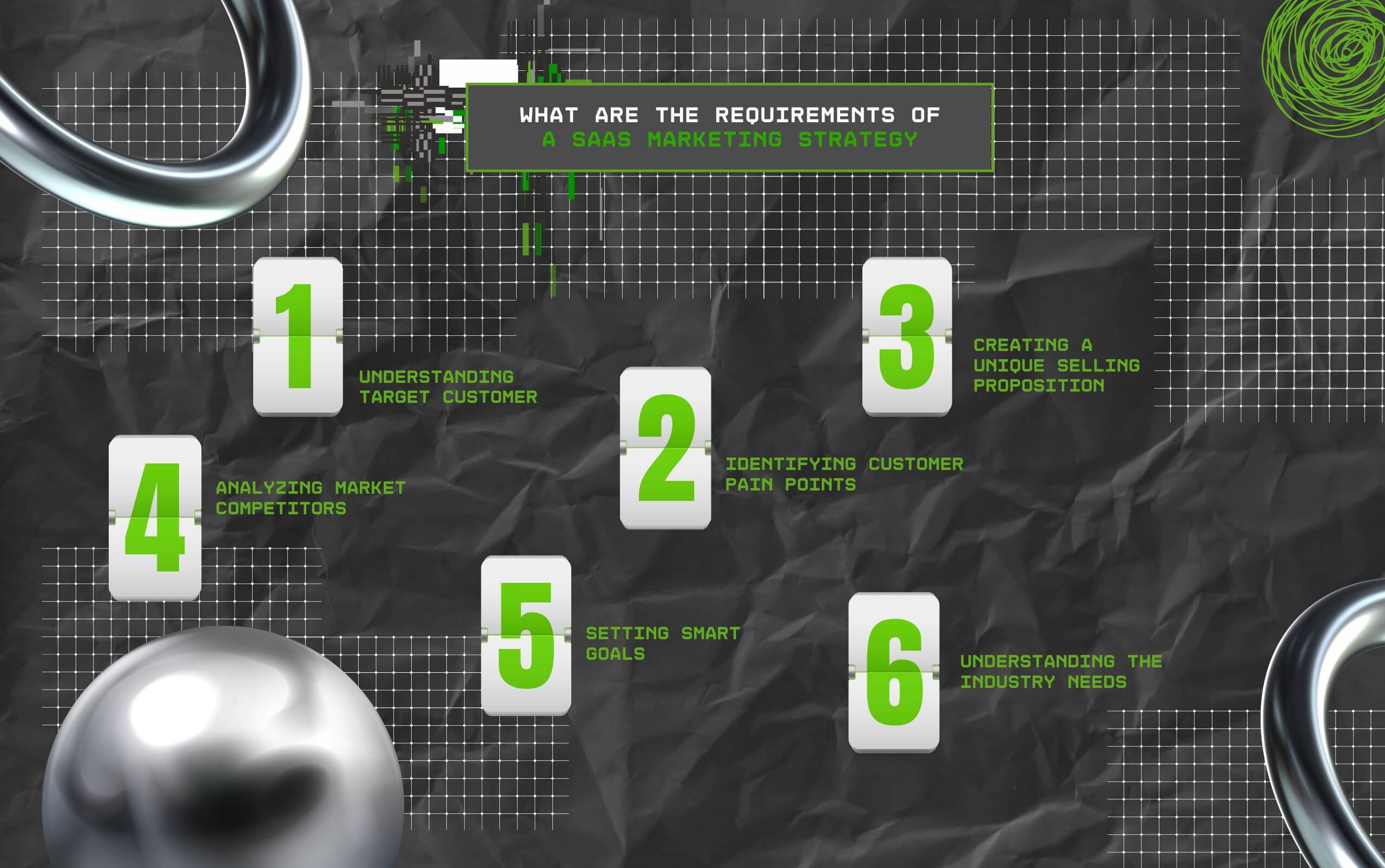
Now, to develop a successful SaaS marketing strategy, brands need to ensure the requirements of the strategy are in place. So, here are some of the prerequisites—
Firstly, you need to conduct deep market research to understand the target customer’s needs and preferences. This understanding of the target customer helps create buyer profiles.
So, these profiles can be used to develop the value propositions, brand experiences, and deliver the value of the products and services through pertinent messages.
Now, conducting market research can help brands pinpoint the customer pain points. That is, the real issues that are making the lives of customers difficult.
So, the SaaS companies can create a product or service that directly addresses the pain points with a solution. Making it easier to build emotional trust with the customers.
In addition to this, the knowledge of the immediate pain points of the customers helps brands develop a solid USP.
That is, they can create a compelling message and promotional campaign to show the value of the products and services by touching on all the pain points with a unique solution.
Now, the real success lies in knowing how you can be different from your competitors. So, brands can analyze the strategies, campaigns, and USPs to evaluate their effectiveness.
So, they can create something that makes them stand out in the industry. Giving them the competitive edge in the niche field.
Since succeeding in marketing a SaaS product is all about clarity, setting clear objectives and goals can help streamline the processes.
So, brands need to set SMART — Specific, Measurable, Achievable, Relevant, and Time-bound — goals. This way, they can direct the marketing plan towards success.
Finally, keeping a tab on industry changes can help brands to stay ahead of their competitors in the market.
So, knowing the trends and predicting long-term evolutions can help devise a strong strategy that brings success faster.
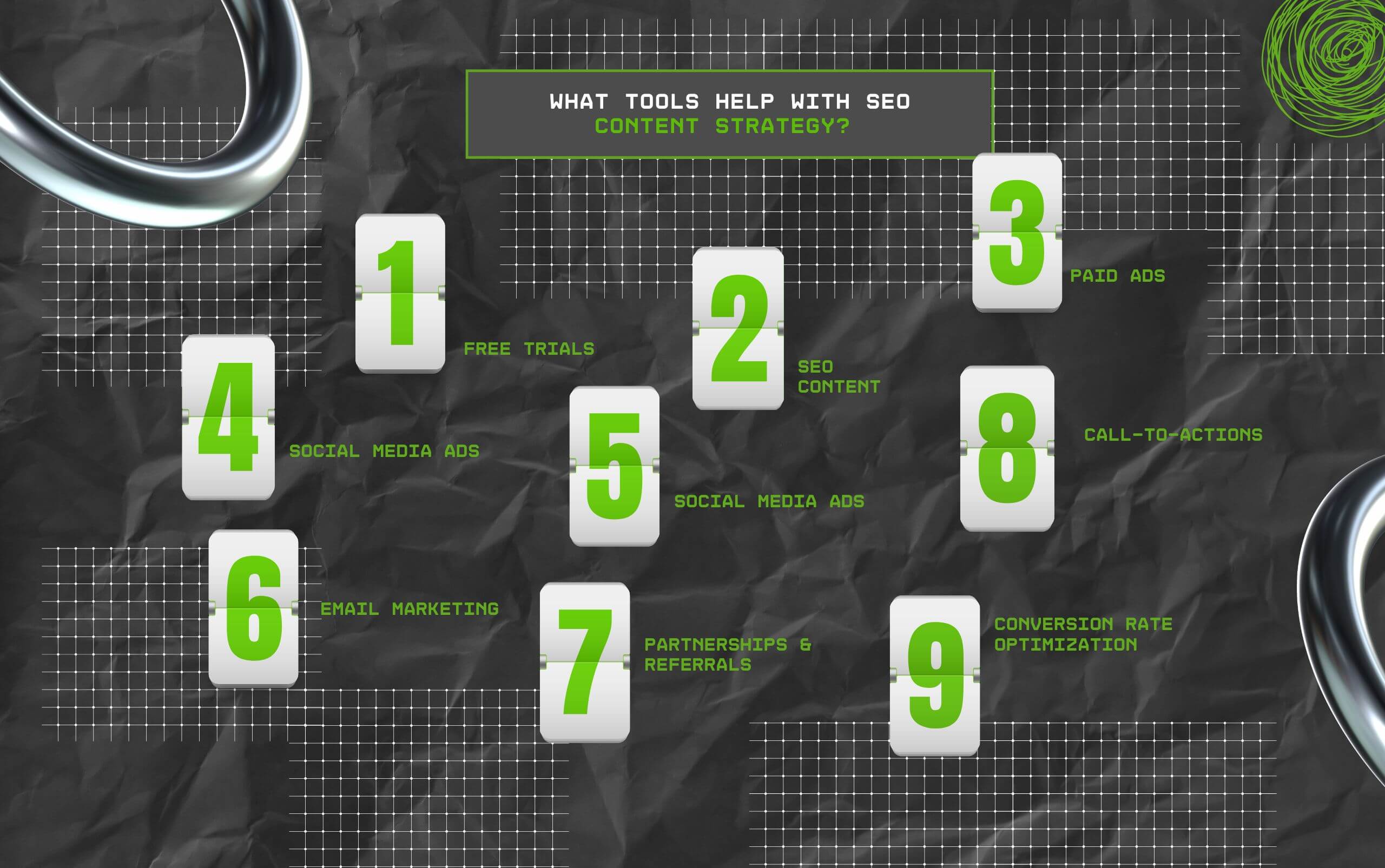
Now, a single tactic or practice is not enough to drive success with a SaaS marketing strategy. So, here are some of the effective tactics that can be combined for greater success—
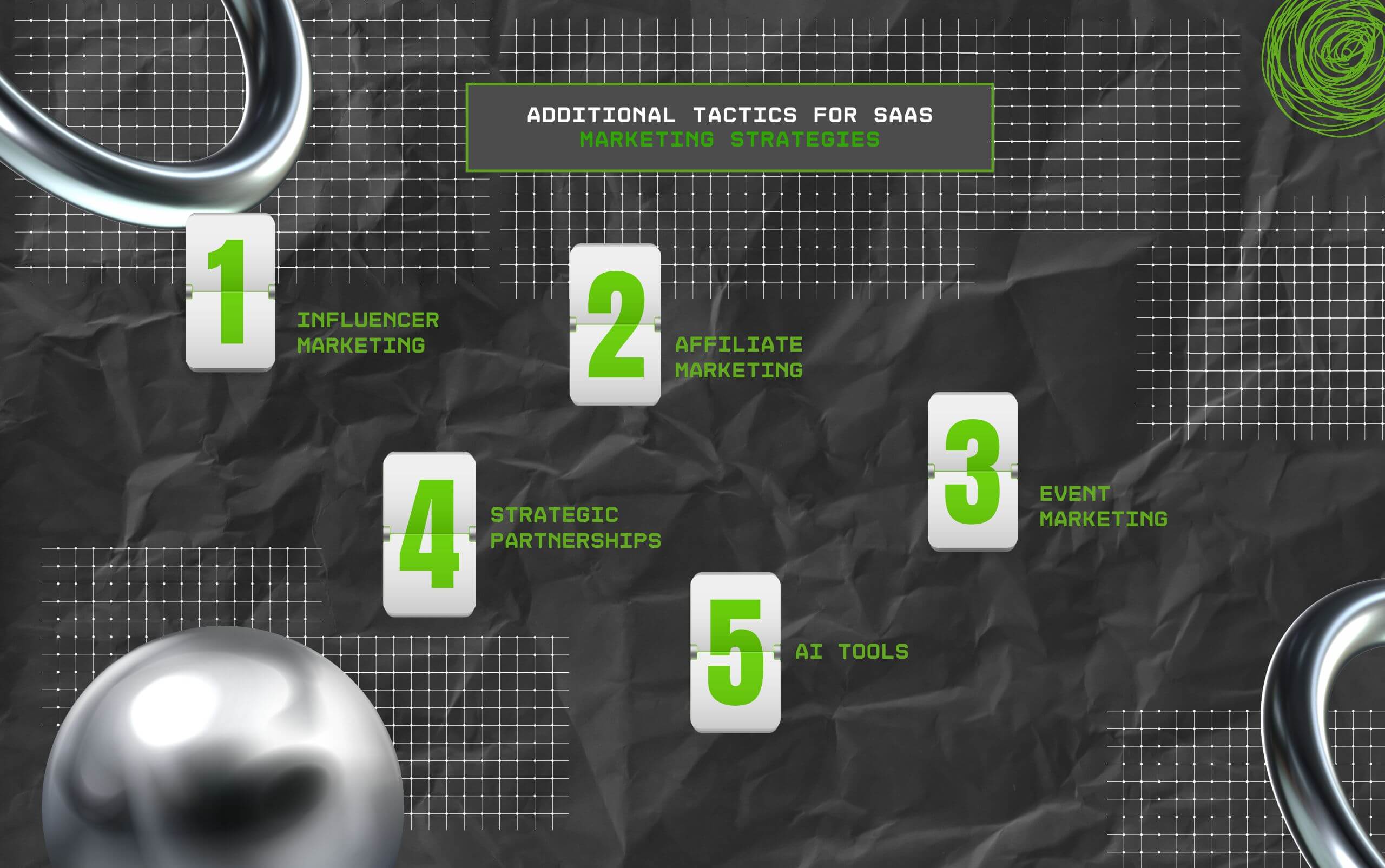
Apart from these, some bonus marketing strategies that SaaS companies can utilize include—
1. Influencer Marketing — Collaborating with social media influencers to promote the products. So, the brands can gain visibility and credibility in the industry.
2. Affiliate Marketing — Partnering with other businesses to attract their audiences to expand the customer base. So, companies can build a large community.
3. Event Marketing — Promoting both online and offline events to meet prospects, drive audience interactions, and build stronger connections.
4. Strategic Partnerships — Collaborating with other SaaS companies to access a joint customer base. So, both companies can grow in the industry.
5. AI Tools — Using AI tools and marketing strategies to personalize the campaigns, predict future analytics, and streamline the marketing processes.
Building a strong SaaS marketing strategy is all about reaching the right audience with the right marketing campaigns.
So, with this guide, take the chance to create the best strategy and watch your business hit success in a jiffy.
Here, I have delved into some of the common questions around SaaS marketing strategies that marketers frequently look for.
Generally, an effective SaaS marketing strategy includes clarity on customer needs, solid objectives, diverse marketing channel knowledge, and continuous optimization.
Given that a SaaS marketing strategy requires both customer and industry knowledge, its success lies in understanding these paradigms with regular optimization processes.
Most of the best marketing channels for B2B SaaS businesses blend the inbound with the outbound ones. So, some of these channels include—
• Content Marketing & SEO — Builds authority and drives organic traffic with expertised blog posts, guides, case studies, and online content.
• LinkedIn Marketing — Helps B2B branding, professional networking, and targeted advertising with organic posts, sponsored content, and direct outreach.
• Email Marketing — Provides the digital space for lead nurturing, targeted campaigns, and loyal customer retention with newsletters and personalized offers.
• Paid Ads — Drives buyers, instant customers, and high-intent traffic with branded and non-branded ads on Google and other channels.
• Review Websites — Encourages buyers to review, rate, and share their experiences through optimized profiles and websites.
• Affiliate Marketing — Utilizes the target audiences of other businesses through referrals, commissions, and partnership marketing.
One of the most effective ways to market a new SaaS product is to adopt a customer-centric approach.
That is, the focus should be more on the building authority and driving organic leads to ensure quick visibility and lead nurturing.
So, marketers must conduct in-depth research to understand customer needs, create a unique selling proposition, and attract customers through diverse marketing channels.
Chandrima is a seasoned digital marketing professional who works with multiple brands and agencies to create compelling web content for boosting digital presence. With 3 years of experience in SEO, content marketing, and ROI-driven content, she brings effective strategies to life. Outside blogging, you can find her scrolling Instagram, obsessing over Google's algorithm changes, and keeping up with current content trends.
View all Posts

Structured Data SEO: How Schema Markup Helps ...
Sep 12, 2026
TikTok Downloader For Content Marketing Resea...
Sep 12, 2026
AI Content Optimization: How To Make Your Con...
Sep 11, 2026
AI Citations: How To Get Your Content Referen...
Sep 10, 2026
Top Enterprise AI Cloud Platforms for RAG, AI...
Sep 08, 2026