
How To Get Your Brand Cited In AI Search Results In 2026
Oct 22, 2026


SEO is a tool-based algorithm. It has ample uses in content moderation. The seo content strategy is the approach of sorting content by topic. Above all, the goal is to drive higher website traffic.
But as a beginner, getting started with SEO can feel overwhelming. And, a guide can help in treading through this SEO territory with ease.
So, in this blog, I am going to provide a complete guide on “How to create an SEO content strategy?” by focusing on—
So, keep reading to know more!
In the US, businesses spend more on content creation than Mr. Beast for his videos. Already, 46% of companies have planned to increase their content creation budget.
As we know, the US business environment is more competitive than ever. In a nutshell, most companies must resort to content marketing to remain relevant in the market.
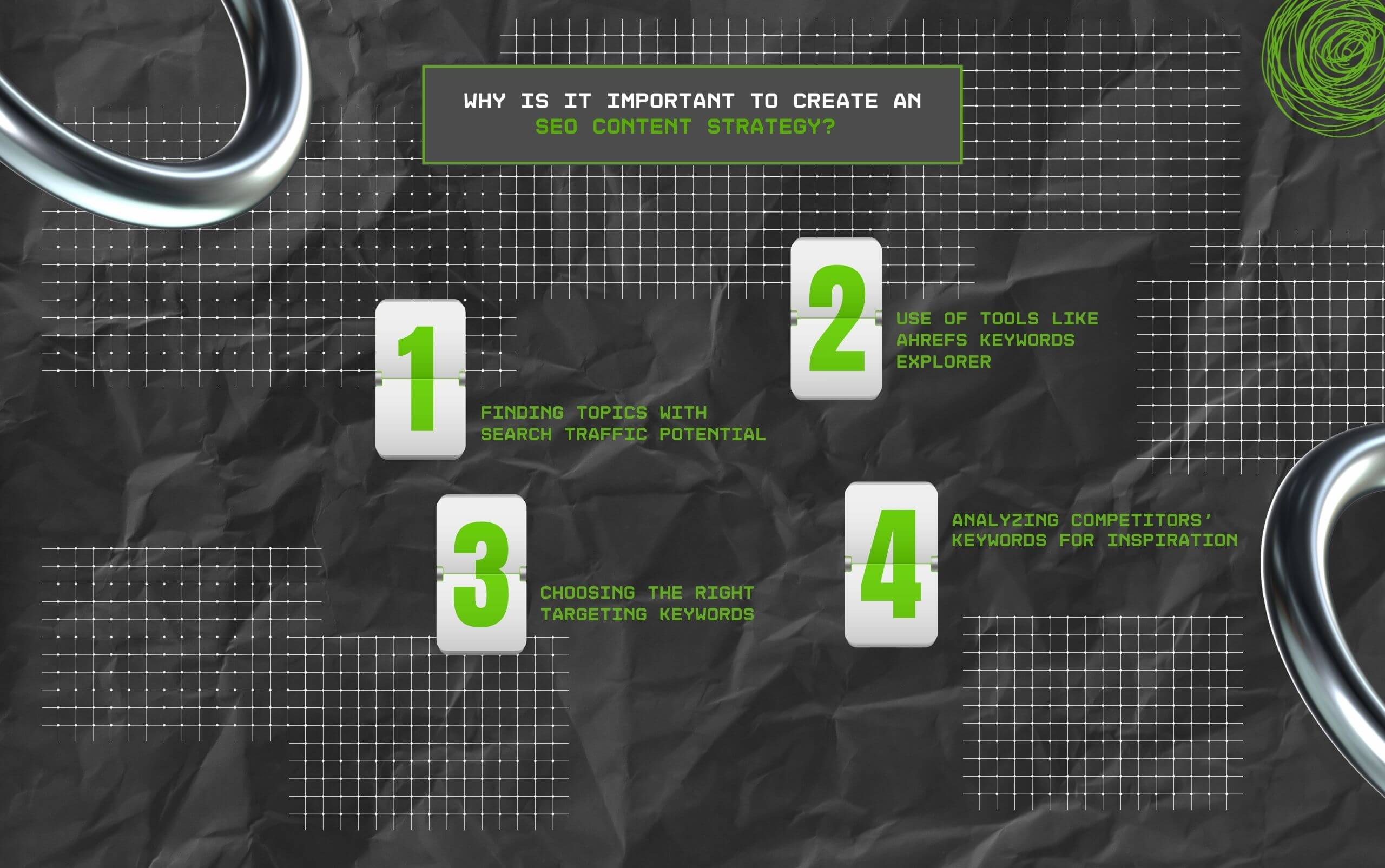
A viable content strategy is crucial for improving website traffic. A content strategy for seo needs is the backbone of your digital marketing approach. You need topics that match the interests and ideas of your prospects in the market.
Ahrefs can analyze the strength of your backlinks, in real time. It can also find ways to improve your web page ranking.
You can also find the best-ranking keywords with tools like Ahrefs. To know more about the best keyword research strategies, read the article on Top 13 B2B SEO Strategies to Boost Your Growth!
Targeting keywords can make your content more relevant. It might improve the ranking of the search engine results pages. As a result, your intended audience can see your content as well.
Sites like Semrush offer templates for searching competitors’ keywords.
You can easily use those to find the relevant keywords that help competitors to gain traffic. To begin with, create a list of your competitors.
As a beginner, you must recognize the keywords gap in your content.
You may use search volume and current competition to list 10 to 15 short-tail keywords. But there are two criteria.
Ensure that the target audience is searched profusely for these keywords. Also, confirm that all keywords align with your business and seo content strategy.
The individual keywords you searched for are called content pillars.
The keywords should lead the way in developing a robust content strategy. In the same vein, you should select topics that match the interests and ideas of the target audience. It must cover their pain points as well.
The main topics formed from the keywords would become your content pillars later.
You can also make a content map by syncing the content pillars.
So, what would happen to the long tail keywords?
Those keywords can be used as short chunks of content.
You may also link back the long tail keywords with a pillar page. To learn more about a pillar page, read the Best Tips on Improving Your International SEO for Better Ranking and Traffic!

Your content is not a keyword-dumping ground. You must render meaning, sense, and flow in the content. Who would bother reading an abstract chunk of words, even if you’re ranking within the top five Google search results?
So, you must understand that a concrete content strategy in seo marketing is much needed.
It’s crucial to link your content type with the readers’ preferences. However, your selected content delivery channel will influence certain content types. For example, Twitter has a 280-character limit.
According to Semrush’s State of Content Marketing: 2023 Global Report, the audience liked videos and short articles the most. So, most seo content strategy use these two content forms.
But it rests upon you. Whether you’ll stick to these two or include long blog posts, case studies, and others in your content repertoire rests on your seo content strategy.
Semrush reports that the following are the most loved content types:
Content mix and match is an excellent skill to have. It lets you convert long blogs into smaller social media posts and infographics.
You can also capture the main takeaways from any content to reframe it into something else. However, you must ensure that your preferred content type is the most engaging.
By optimizing content, you can improve the SEO rankings of your website. When you insert relevant keywords using optimization techniques, customers can easily find the content they desire.
Optimization helps you to expose your content to the broadest possible target market. Moreover, Search Engines understand your content better when it is optimized.
That’s why experts say optimization and backlinking with pillar texts are the two fundamentals of seo content strategy.
If Google finds value in your article, it will be placed on the top page. It will only help you to attract organic web traffic.
It is better to use a content template to keep your content consistent and SEO-friendly.
To make it SEO-friendly, you need to have a specific format. Till your content follows the same template, it will attract organic reach.
A significant part of content optimization is training editors. But you must pick the aspects on which you want to train your editors.
Experts say that most editors need training to sort the best keywords for headers and sub-headers. I feel that editors play a crucial role in shaping the length and quality of meta descriptions.
At the same time, they play a pivotal role in managing links within context. So, that’s another area where you can train your content editors.
Google’s algorithm focuses on making the content more user-intent focused. Experts now say that content should not be only SEO-friendly.
What can you do about it?
As a content strategist, you can try to match the needs and interests of your audience. It is advisable to use those keywords that cover these areas aptly.
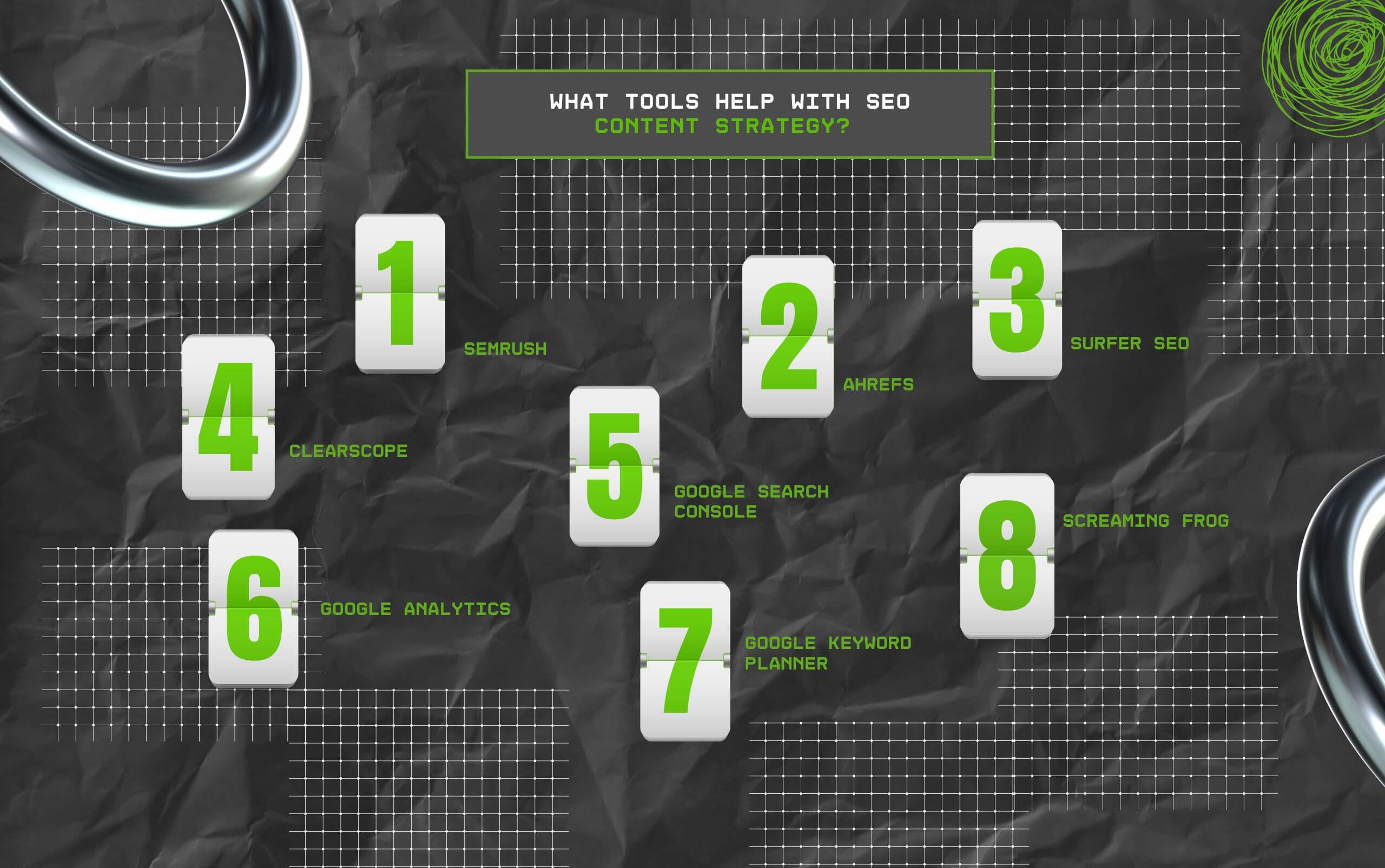
Creating an SEO content strategy is not a simple task. So, here are some tools that help users create a content strategy efficiently—
In conclusion, some key points regarding effective SEO content strategy have been identified. Firstly, your seo and content strategy rests primarily on discovering the right target audience.
Secondly, content seo strategy also depends on conducting keyword research and developing a list of suitable content ideas.
In your content strategy seo plays a significant part no doubt. But, your content should also be optimized, according to the needs and expectations of the customers.
For best results, you can also continuously update user experience, content strategy, and seo.
Before leaving, I would once again pester the need of back linking your pillar content with the canopy of short blogs.
Your final goal should be providing valuable and engaging content to the audience.
Chandrima is a seasoned digital marketing professional who works with multiple brands and agencies to create compelling web content for boosting digital presence. With 3 years of experience in SEO, content marketing, and ROI-driven content, she brings effective strategies to life. Outside blogging, you can find her scrolling Instagram, obsessing over Google's algorithm changes, and keeping up with current content trends.
View all Posts

How To Get Your Brand Cited In AI Search Resu...
Oct 22, 2026
The Ultimate Blueprint For Broken Link Buildi...
Oct 16, 2026
The Ultimate Guide To Stealing Your Competito...
Oct 15, 2026
Beyond The Basics: Master Guest Posting For H...
Oct 15, 2026
Best Generative Engine Optimization (GEO) Com...
Oct 14, 2026