Structured Data SEO: How Schema Markup Helps Search Engines Understand Your Website
Sep 12, 2026


Spend just five minutes in SEO, and you’ll run into metrics that feel more confusing than helpful. Everyone wants to talk about numbers. But behind all the corporate shorthand, search engines are actually just trying to solve a simple problem: how do we know which pieces of content are trustworthy?
When you build a website, you cannot rely entirely on hope. You need to know whether your individual content pieces have enough muscle to reach the top of Google. That is where the concept of what is page authority enters the picture.
It is one of the most widely used concepts in modern search, yet it remains deeply misunderstood by thousands of online creators. Let’s peel back the curtain on how search systems evaluate specific pages and what it truly takes to build an asset that commands search engine respect.
Page Authority (often abbreviated as PA) is a predictive score that estimates how well a specific URL will rank on search engine results pages. This metric operates on a scale from 1 to 100.
A score near 1 means a page is brand new or completely invisible to the web. A score climbing toward 100 means the page is a massive titan in its specific niche.
The single most important detail to remember is this: Page Authority is not an official score used by Google. Google’s actual ranking systems do not look at your website and slap a “PA score” on it.
Instead, Page Authority is a proprietary metric developed by independent software companies to mimic and predict Google’s secretive algorithms.
You now know what is page authority. But why does this specific page score matter so much to the modern web? The answer lies in how the typical seo funnel has evolved over the past few years.
Historically, marketers focused entirely on their homepage. They poured all their energy into making the main brand name look powerful. But search behaviors have shifted.
Today, users don’t just browse homepages; they ask highly specific questions that lead them directly to in-depth internal blog posts and product pages.
If an internal page lacks individual strength, it will collapse under the weight of the competition, regardless of how popular the main brand is. Understanding page-level power allows you to diagnose exactly why a great piece of content is failing to pull traffic through the top of your marketing funnel.
To truly grasp what is page authority, you have to separate it from its sibling metric, Domain Authority (DA). People often use these two terms interchangeably, creating endless confusion for beginners.
Domain Authority measures the collective strength of your entire website. It looks at the big picture. Page Authority, on the other hand, puts on a pair of reading glasses and stares intensely at a single URL.
It doesn’t care if your overall blog is ten years old or has thousands of pages. It only cares about the credibility, link profile, and algorithmic weight pointing directly to that one specific document.
A website can have a massive, hyper-popular domain but still launch a brand-new page that starts with a baseline Page Authority score of 1.
Because various SEO software platforms build their own proprietary link indexes, different tools use different names and datasets to calculate page-level power. Let’s look at the actual landscape of ahrefs vs semrush vs moz to see how they stack up.
| Platform | Core Page Metric Name | Scoring Model | Primary Analytical Focus |
|---|---|---|---|
| Moz | Page Authority (PA) | 1–100 Logarithmic | Predictive ranking probability based purely on link data maps. |
| Ahrefs | URL Rating (UR) | 1–100 Logarithmic | Raw link profile strength and internal link distribution weight. |
| Semrush | Authority Score (AS) | 1–100 Linear/Weighted | Holistic trustworthiness combines backlinks, search traffic, and spam signals. |
While third-party tools are incredibly helpful for tracking progress, there are parts of the ranking puzzle that no third-party platform can perfectly verify. When you stare at a page-level score, remember that the software cannot see these critical invisible variables:
Let’s clear the air by comparing common internet rumors with the reality of search mechanics. That will help us understand what is page authority and how important it actually is.
In the rush to optimize web pages, many creators treat authority tools like video game high scores. They focus solely on increasing the number while ignoring the actual health of their digital ecosystem.
Chasing a raw metric without verifying the quality of the things driving that metric is dangerous. For example, if your page score climbs because a group of irrelevant spam blogs started linking to you, your site’s health is actually in jeopardy.
True search success means verifying that your page’s authority is built on organic, highly relevant content and trusted citations rather than empty digital filler.
Understanding the math behind these metrics changes how you plan your marketing calendar. Page authority metrics are calculated on a logarithmic scale.
This means the scale gets progressively steeper the higher you climb. Moving a brand-new article from a score of 10 to 20 is relatively simple and requires just a few high-quality links.
However, moving a mature resource page from a score of 70 to 80 requires a massive, coordinated wave of premium, high-tier editorial coverage.
If you do not understand this curve, you will waste immense amounts of time wondering why your growth has seemingly plateaued when you are actually doing fine.
If you spend an afternoon reading about SEO, you will quickly realize that hundreds of marketing blogs say the exact same things using the exact same templates.
This happens because content creators often look at what is currently ranking, run it through AI tools, and publish a slightly modified version without adding any new experiments or original insights.
To give you actionable clarity that goes beyond standard textbook definitions, our editorial team tracked the tangible factors that actually move the needle for single URL rankings.
| Dynamic Monitored | Our Practical Assessment | Core Takeaway for Strategy |
|---|---|---|
| Internal Link Distribution | We tracked how link equity flows from homepages to deep blog posts. | Smart internal menus can instantly lift an isolated page’s ranking power. |
| Artificial Content Fatigue | We looked at how search systems evaluate standard generative text blocks. | Sites asking how to improve writing with AI must inject original data, or search engines will ignore the page. |
| Competitor Link Quality | We investigated why low-scoring pages sometimes outrank higher-scoring competitors. | Topical relevance and an accurate search-intent match always beat raw link volume. |
Are other marketing channels verifying if these scores correlate perfectly with real-world financial success?
Rarely. Most platforms focus on traffic volume, but our research confirms that a page with a lower, highly targeted page score often converts far more customers than a generic page boasting a massive, untamed link profile.
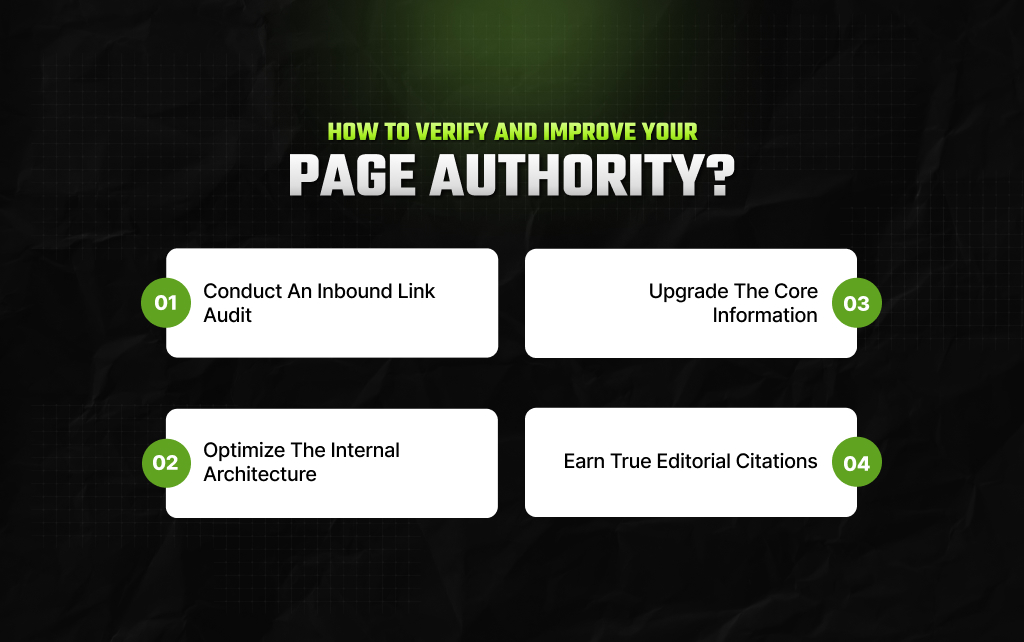
If you want to build genuine, sustainable authority for a specific page without relying on sketchy tricks, use this step-by-step framework:
At the end of the day, a high third-party page score is nothing more than an educated guess made by a software program. We need more discrete data and practical, real-world testing to claim that a specific software metric is a definitive shield for your business rankings.
Do not let yourself get obsessed with chasing a perfect 100 on an external dashboard. Instead, treat these metrics as comparative diagnostic tools to see how your assets measure up against your direct competitors.
Focus on producing flawless user experiences, securing clean editorial links, and answering search queries with absolute clarity. That is the only strategy that consistently wins over both human audiences and search engine crawlers for the long haul.
Barsha is a seasoned digital marketing writer with a focus on SEO, content marketing, and conversion-driven copy. With 8+ years of experience in crafting high-performing content for startups, agencies, and established brands, Barsha brings strategic insight and storytelling together to drive online growth. When not writing, Barsha spends time obsessing over conspiracy theories, the latest Google algorithm changes, and content trends.
View all Posts

Structured Data SEO: How Schema Markup Helps ...
Sep 12, 2026
TikTok Downloader For Content Marketing Resea...
Sep 12, 2026
AI Content Optimization: How To Make Your Con...
Sep 11, 2026
AI Citations: How To Get Your Content Referen...
Sep 10, 2026
Top Enterprise AI Cloud Platforms for RAG, AI...
Sep 08, 2026