Vector Search SEO: What It Means For Search And How To Optimize For It
Aug 21, 2026

What happened when I first started writing about SEO, keywords, Google updates, AEO, backlinks, and marketing on Search Engine Magazine? At first, I thought I had it figured out.
My objective was to publish consistently, cover every topic in the niche, and optimize for keywords, and traffic will follow. And for a while, it did.
We were getting clicks, ranking was rising, and everything looked good on the Google Analytics dashboard. Then Google started rolling out the 2024 update. Within a month, my site gets hit.
My SEO funnel for searchenginemagazine was no longer working! Do you know what I did to recover and how searchenginemagazine.com is doing now?
The March 2024 core update hit us. The August 2024 update made it worse. Then the December 2025 update. After each rollout, rankings dropped fast. At one point, it was below 100.
Once, every Search Engine Magazine content used to rank within the top 5. But in 2025, an article would rarely rank on the 1st page.
What’s worse, the traffic of the most projected articles dropped. Here, many people will assume we were using Black Hat SEO or uploading spam content.
But no! Google did not flag us for anything like that. That means the content was technically correct. However, it was not different enough from everything already published.
You can do everything “right” and still not rank. But why? Google no longer just wants content that covers a topic.
It wants content that owns a topic. There’s a difference between writing about SEO in general and writing based on genuine, demonstrated experience.
So I started asking myself a different set of questions:
I didn’t have a real SEO funnel. I only had content. Therefore, I had to align my articles with a genuine SEO funnel.
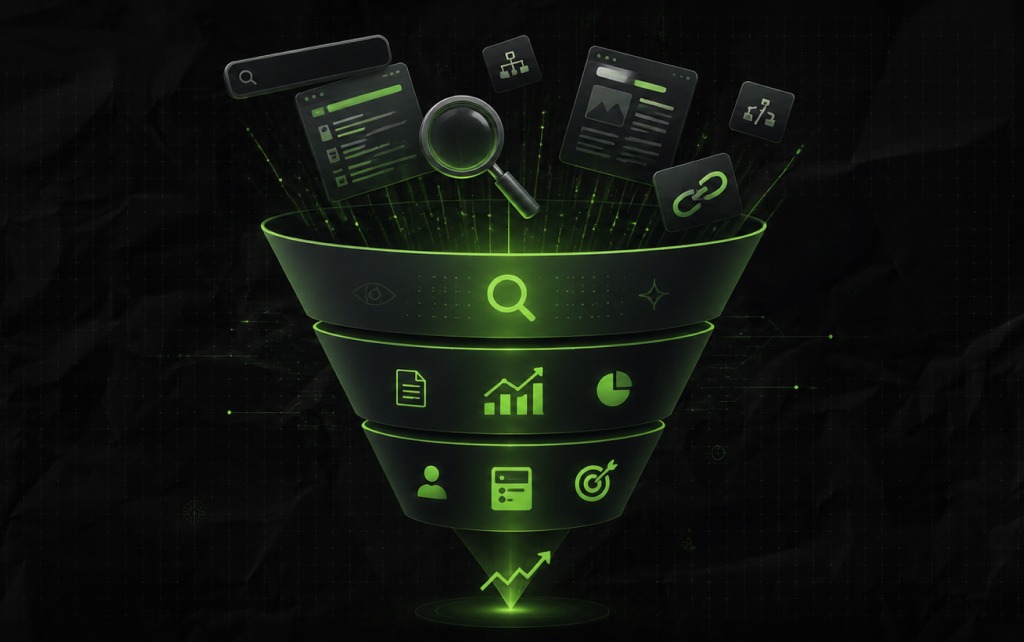
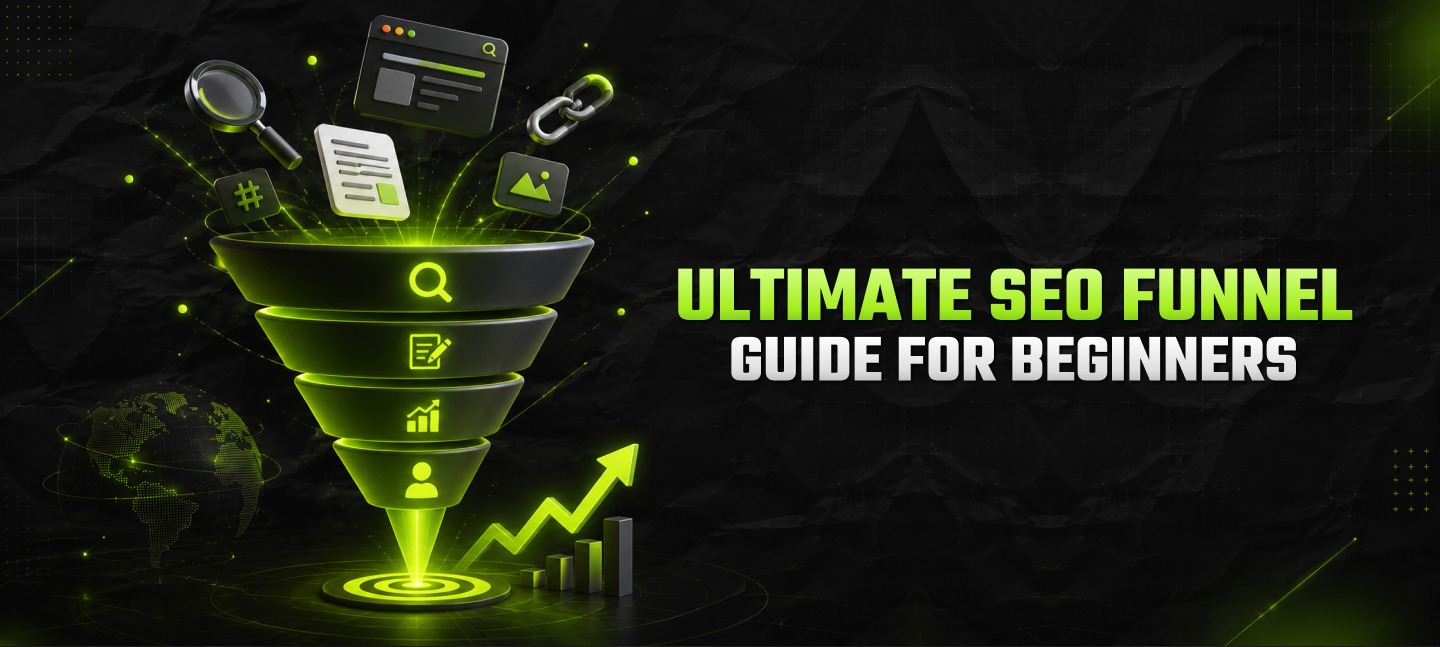
The concept of an SEO funnel mainly describes the journey of taking someone to your website.
Just like the real-life funnel, it starts through a broader part at the top and then narrows down at the bottom.
At the very beginning, people start to notice your website. As the journey continues and the funnel begins to narrow down, you can see some of the visitors leaving, and a few have reached the bottom of the funnel.
This is where you take significant action to turn them into loyal customers, making them purchase your products or subscribe to your services.
In the world of SEO, the entire journey from discovering something to taking action becomes crucial. If you can master the SEO funnel, you can easily increase the number of visitors and sales.
The SEO funnel is more than just attracting visitors to your website. It also plays a huge role in turning your visitors into loyal customers.
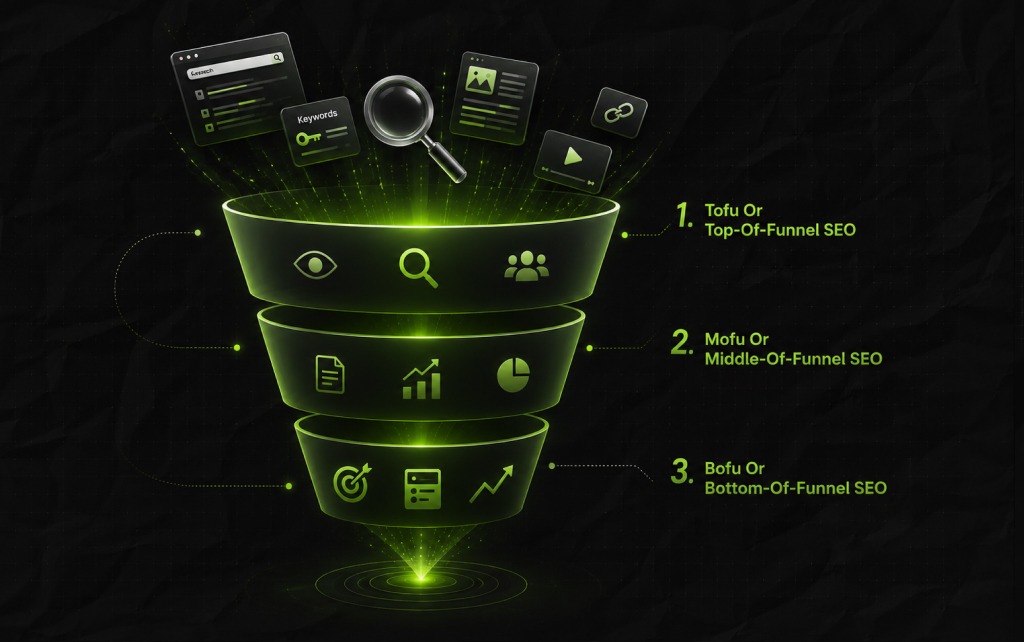
Have you heard about TOFU, MOFU and BOFU? No, these are not some flavorless food products from soybeans or any island.
These are associated with the SEO funnel. This section will discuss these funnel components and explain each layer to help readers better understand it.
The TOFU, or top-of-funnel SEO, is the very first layer of an entire SEO funnel. For some reason, the SEO funnel is always considered a whole, delicious meal, and the TOFU is regarded as the appetizer.
Your main aim here is not to make a sale. But in this layer, you let the customer know about your existence. It’s more like, “Hey there! Just so you know, we are here, and we have something that you might like.”
TOFU is seeing someone you know in a crowd and waving at them to let them know you are in the same room.
Here is something I wish someone had told me before I spent two years writing TOFU content the wrong way. Most of what I was producing at the TOFU stage was what I now call “mirroring content.”
I would look at what the top-ranking articles covered. After that, I would match the structure, add a few extra points, and call it done.
Sure, it ranked. At least for a while. I kept checking every day with a mobile rank checker. Then the March 2024 update arrived, and Google made something very clear:
“Being a slightly better copy of the top results is not a value proposition anymore.”
After the December 2025 update, I watched several of our high-traffic and informational articles drop significantly. These were well-written pieces on core SEO topics. For example, I covered:
At the same time, the articles were clean, accurate, and properly formatted. But those articles stopped ranking completely. When I dug into the Search Console data, I recognized a pattern:
The articles were getting impressions on broader terms, but almost no clicks. Users were seeing us in results, but clicking on others’ articles.
The problem wasn’t the writing. On the contrary, the problem was that the articles gave people no reason to choose Search Engine Magazine specifically.
They could have been published on any of a hundred other SEO blogs and read identically. That’s exactly what the March 2026 update later confirmed as its central logic:
“Content that is easily replaceable is less defensible, regardless of how well it’s technically optimized.”
I stopped treating TOFU as a keyword-coverage exercise and started treating it as a trust-building exercise. For every awareness-stage article I write now, I ask one question before I start:
Now, that comes from my specific observations while tracking algorithm updates over time. To clarify, I noticed a pattern: small publishers get hit differently than large ones.
The search volume that the biggest sites targeted for these angles is low. But the topical authority they build is what sustains rankings across multiple updates.
To sum up, your TOFU content should be the reason someone bookmarks your site, not just the reason they found it once.
Do you know that backlinking and TOFU share a great bond for their friendship? They are like your favorite cousin who will always make sure to support you with a full heart—mostly, famous websites with high authority link back to your site.
As a result, it improves your website’s reputation. Think of it this way! High-authority websites generally indicate that your website is good and authentic. Cool right?
The second layer is MOFU, or middle-of-funnel SEO, which considers consumers’ buying decisions. When customers start to think about whether they really want a specific product or service, they might ask, “Do I really want this?”
That’s it! That’s the exact point where you have to trigger. You start persuading them and convincing them that they really need the products or services.
The MOFU stage is where I made my most expensive mistake. Sadly, it took me longer to spot it because the damage is invisible at first.
My middle-of-funnel content looked fine. I was particularly focusing on:
But our email list wasn’t growing meaningfully. Meanwhile, the users who landed on our comparison-style articles were bouncing fast, too. I realized these were people who had clearly moved past casual curiosity. They were researching.
When the June 2025 core update reshuffled a cluster of our comparison and “best tool” articles, I started auditing them properly for the first time. What I found was embarrassing in hindsight.
Every article was answering the searcher’s literal question while completely ignoring their actual problem. Someone reading “best SEO tools for small blogs” isn’t just shopping.
They’re trying to figure out whether SEO is even worth investing in for their situation. They have anxiety about wasting money on tools they don’t know how to use. In addition, they want someone to speak to about that.
My MOFU articles were product pages dressed up as editorial content. No wonder people left.
The fix I implemented was what I call intent layering. Every MOFU piece I publish now addresses three things:
A guide on choosing between two SEO platforms, for example, now opens by acknowledging why the choice feels confusing. After that, it walks the reader through a decision framework based on where someone actually is in their SEO journey.
Finally, the article closes with a clear recommendation paired with a next step. As a result, the conversion on those pages improved noticeably within two months of the rewrite.
Offer them a genuine email about the discounts and offers. This way, you can notify them about your existence.
Imagine walking into a clothing store and seeing clothes everywhere. Nothing is kept orderly. In short, it’s messy. You immediately lose interest in even buying a single piece of clothing.
Keeping a neat and clean service can help customers feel welcomed. This is where the landing page works like magic. A clean and well-organized landing page can help attract visitors.
It helps make the visitors feel welcome and helps them get a step closer.
This is the step where magic mainly happens. BOFU, or bottom-of-funnel SEO, is like the bottom of the SEO funnel. In this stage, you can turn your potential leads into loyal customers.
It’s more like they are almost ready to purchase or repeat their purchase, and you give them a nudge.
I used to believe that if someone reached the bottom of the funnel on Search Engine Magazine, the work was mostly done. To clarify, I thought:
They have read enough
Now they are hooked to a call to action
That assumption was wrong. The Google updates exposed exactly why.
What Happened After The December 2025 Core Update?
The December 2025 core update hit BOFU content particularly hard across many SEO and digital marketing sites, including ours. In particular, the targets included pages targeting high-intent, decision-stage keywords like:
But why did the drop occur? It happened mainly because Google had become much better at distinguishing between pages that genuinely help someone make a decision and pages that just look like they do.
After detailed analysis, I found that the difference was in sharing or not sharing “authentic evidence.”
Primarily, I focused on real documentation. If I’m writing about why a particular SEO strategy works, I now include specific Search Console screenshots, traffic timelines, and honest context about what did and didn’t work on Search Engine Magazine.
This is what Google means by E-E-A-T. Most importantly, when users see it, they stay longer, they click, and they convert.
The users who reach your BOFU stage have earned your honesty. Give them specifics, not persuasion.
You can consider offering e-books, product descriptions through infographics, and even a cheat sheet. Try to persuade them to say, “Yes! This is what’s missing in my life!”
Once you succeed in guiding them properly, you can easily turn them into loyal customers.
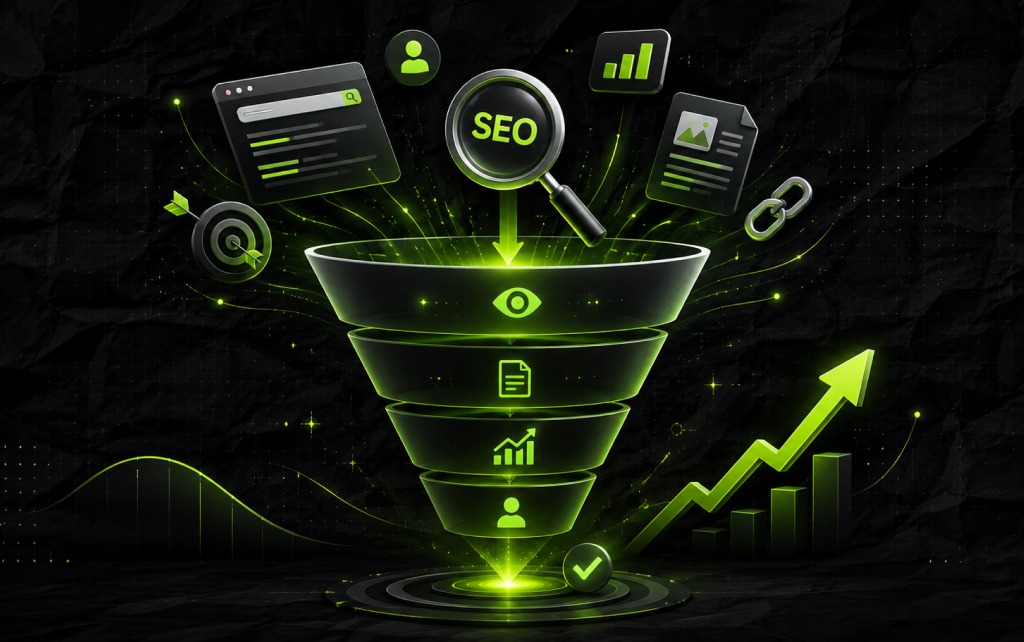
Here are the steps that you can follow to create an SEO funnel for an effective SEO.
So, keep up your SEO research based on each segment. This way, you can easily avoid the subtle differences.
Then, you can categorize the queries under informational, navigational, transactional, and commercial queries and put everything out on a Google sheet.
You can also use SEO tools like SEMrush. These tools help you to understand where you need to take action. You can also create an SEO funnel for your profitability.
Once you have the idea, create your own blueprint for the keywords you are using or the topics you are writing about.
After going through enough Google updates, you start to notice a pattern in who recovers and who doesn’t. It isn’t the sites with the most content.
It isn’t even the sites with the best backlinks, though those help. Rather, it’s the sites that Google has clearly decided to trust on a specific subject.
But what defines trust? For Google, trust is topical authority. Again, building trust changed how I approach the SEO funnel entirely.
What I found out when I looked at which pages on Search Engine Magazine held their rankings through the March 2026 update?
They were part of a web of closely related content. To clarify, that content collectively signaled we understood a topic deeply, not just broadly.
In other words, those articles interlinked with supporting pieces that referenced related concepts we had also covered. As a result, I could see a coherent editorial perspective rather than a collection of disconnected keyword targets.
Almost all of those articles were standalone. Most importantly, they had no surrounding content to reinforce the topic signal.
Google’s systems in 2026 look at your coverage of a subject as a whole, not just the individual page. A single well-written article on the SEO funnel is one data point.
But how does a cluster deliver more value? A cluster of articles covers:
Firstly, it means every piece of content you create should be a node in a network, not a standalone destination. When you map your funnel stages, you should also map the topical clusters surrounding each stage.
Your TOFU content on awareness topics should link to supporting articles that go into more depth. Meanwhile, your MOFU content should reference your TOFU content naturally.
Finally, your BOFU content should be the logical conclusion of a journey you’ve built across multiple pages.
This is also why the SEO funnel and topical authority are not separate strategies. They are the same strategy viewed from different angles.
The funnel describes the user’s journey. Topical authority describes how Google perceives your credibility to guide that journey. When both are built together, you stop chasing algorithm updates and start surviving them.
Barsha is a seasoned digital marketing writer with a focus on SEO, content marketing, and conversion-driven copy. With 8+ years of experience in crafting high-performing content for startups, agencies, and established brands, Barsha brings strategic insight and storytelling together to drive online growth. When not writing, Barsha spends time obsessing over conspiracy theories, the latest Google algorithm changes, and content trends.
View all Posts

Vector Search SEO: What It Means For Search A...
Aug 21, 2026
AI Image Editing Is Becoming A Practical Part...
Aug 21, 2026
From CCTV To AI: How AI Video Analytics Is Be...
Aug 20, 2026
Cornerstone Content: What It Is, How It Works...
Aug 20, 2026
How AI Tools Are Changing The Way Marketers A...
Aug 18, 2026