The Ultimate Guide To Competitor Backlink Analysis: An Actionable SEO Blueprint To Steal Your Rivals’ Traffic
Oct 23, 2026


In the ever-innovative digital marketing environment, staying abreast of the competition entails embracing the avant-garde or the latest.
One such transformative approach is the Programmatic SEO process, which relies on machine learning, a lot of scaled data insights, and automation to optimize several websites at unmatched scales.
Classic SEO concentrates on one-on-one level optimizations. And programmatic SEO optimizes itself. Any business can optimize its SEO faster and more aggressively.
So, in this comprehensive guide, we’ll dive deep into programmatic SEO’s definition, importance, and benefits.
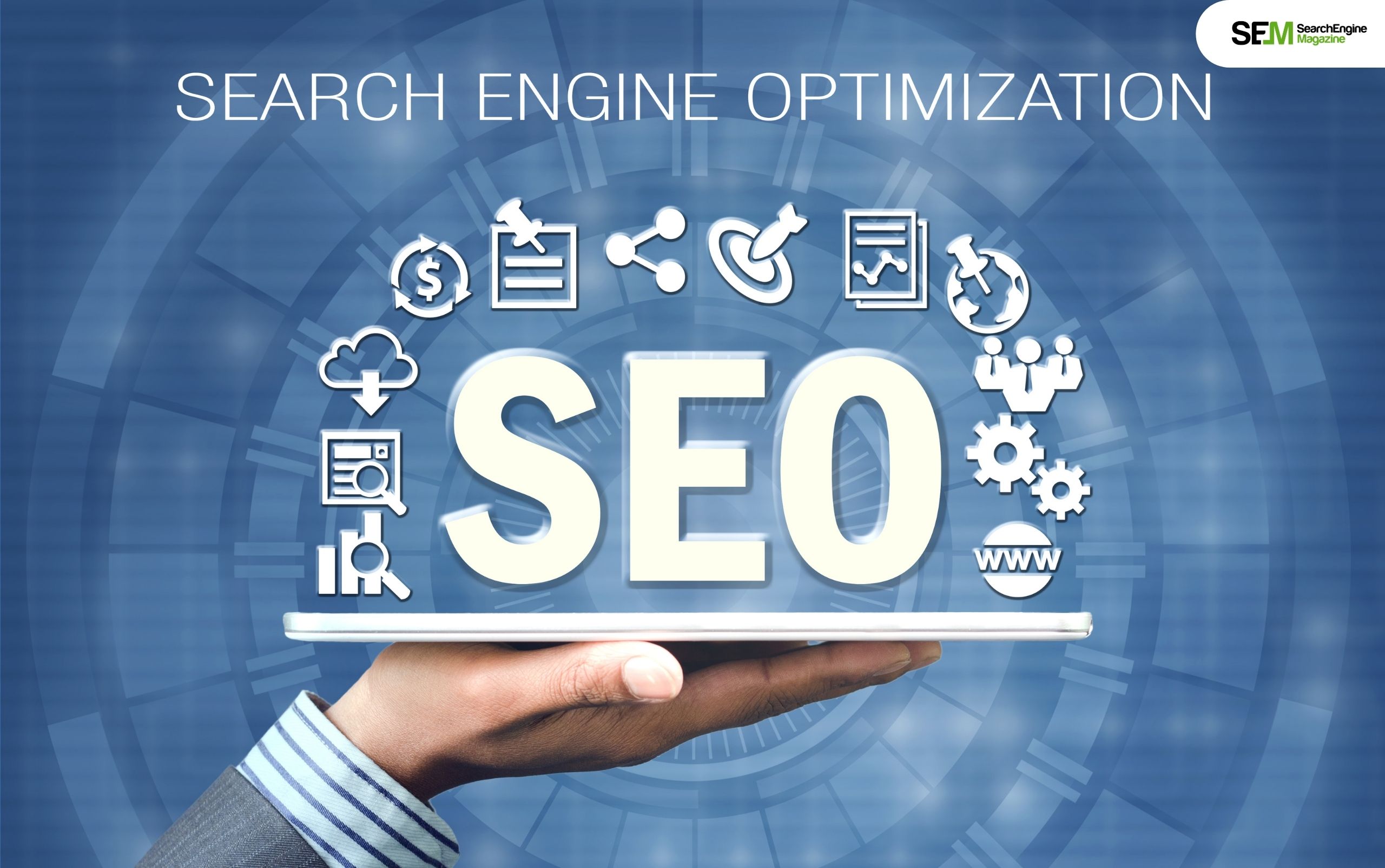
Programmatic SEO uses automated systems, algorithms, and data-driven approaches to optimize large-scale websites or digital content.
Programmatic SEO allows marketers to handle vast amounts of data and large numbers of pages with minimal manual intervention by automating key SEO processes, such as keyword research, content generation, technical SEO, and performance analysis.
It will aim to create more organic visibility, drive traffic, and increase rankings, while automating tasks that traditional SEO specialists typically handle.
Instead of individually optimizing pages, programmatic SEO examines how an automated system could rapidly scale SEO strategies across large-scale websites. Ones with thousands or millions of pages.
Moreover, repetitive, time-consuming work in this space is done on a scale. Whether through generating meta tags or optimizing on-page content. Or conducting a site audit.
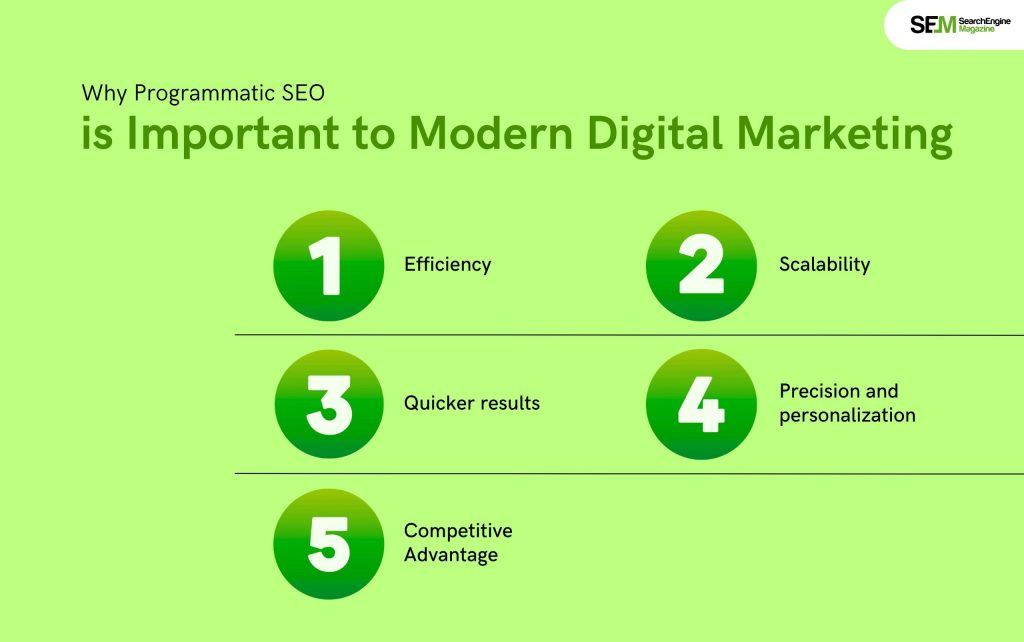
If you are still wondering about whether programmatic SEO is important, let us enlighten you on the same.
Programmatic SEO has rapidly become a key component of the modern digital marketing landscape for the following reasons:
Traditional SEO often involves marketers manually optimizing individual pages.
Programmatic SEO automates most of these tasks, greatly reducing the time and effort of managing SEO across large websites.
Businesses can concentrate on strategy, content quality, and innovation rather than repetitive tasks.
The more a business grows, the more its website grows.
Traditional SEO cannot scale up with the growth of pages and keywords. But programmatic SEO has the tools and processes to make scaling optimization easy.
Automation helps in keyword research and on-page SEO adjustments, where businesses can speed up the entire process of adjustments across their entire site.
With this comes faster organic rankings, traffic, and revenue.
Programmatic SEO uses advanced data analytics to refine SEO strategies. This way, marketers can target specific keywords and user segments to optimize content based on real-time insights and trends.
Companies that apply programmatic SEO are better at keeping ahead, especially in highly competitive industries with a massive volume of content, products, or services.
Automation allows companies to manage SEO at scale. An edge that can be very important in ranking well on search engines.
Both Programmatic SEO and traditional SEO work to improve the performance of organic searches of a website. They go about it in significantly different ways:
Using traditional SEO is a lot of manual labor – from keyword research to writing the content to optimizing every page, including audits.
It is very slow and requires more human resources because each page must be optimized individually.
The above are page-level optimizations:
Automating most of the SEO work, including keyword targeting, content creation, internal linking, meta tags, and reporting. It greatly saves time and resources for optimization.
The difference is based on scale and automation.
Programmatic SEO is much larger, suitable for sites of a hundred, even thousands, of pages; it’s the one for websites, or better to say, optimization projects. Focused rather than bigger ones.
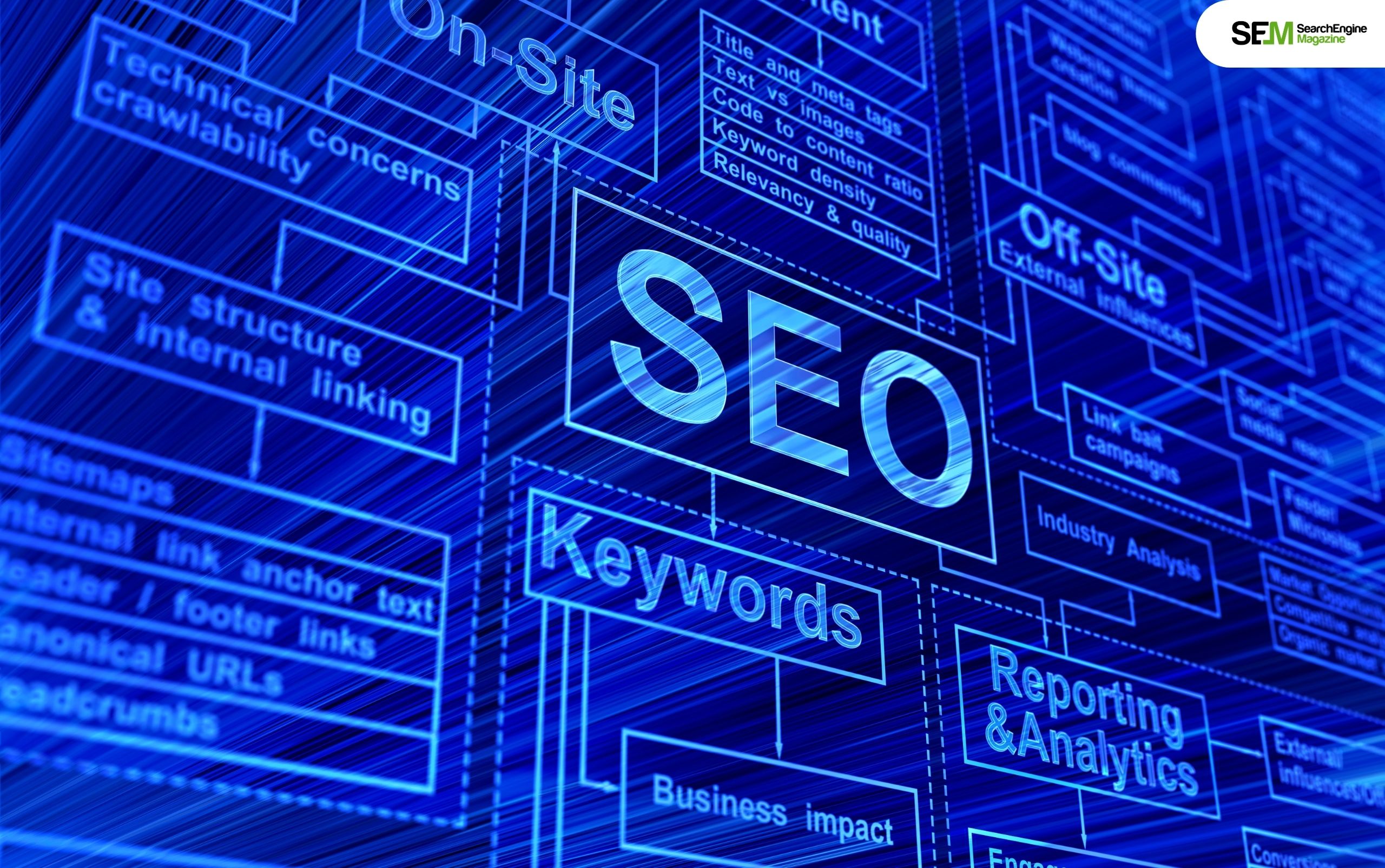
Programmatic SEO combines automation and data science. Linking processes that would otherwise require manual labor in one workflow. Here’s how it works:
Using programmatic SEO tools, one can auto-gather data on high-volume, long-tail keywords relevant to your website’s niche.
The AI and big data are mainly used for identifying keywords based on current search trends, competitor performance, and user intent.
Tools such as Jasper (previously Jarvis), Writesonic, and ContentBot help us use algorithms and natural language processing to create SEO-optimized content.
They help to generate large volumes of blog posts, product descriptions, and landing pages, and keep them keyword-optimized towards the chosen keywords.
Programmatic SEO systems can create meta tags (titles, descriptions), internal links, and content formats to make pages more search engine-friendly.
For tools like SEMrush or Yoast SEO, these programmatic functionalities can optimize many pages simultaneously.
This type of SEO uses big data analytics tools to analyze ranking data for search engines, user behavior, and competitor performance.
This makes continuous optimization in real-time possible, as changes in trends or algorithm updates can be adjusted.
A product catalog-based eCommerce business might be a classic case requiring large numbers of landing pages targeting keywords, categories of products, or demographics.
They could generate vast landing pages optimized for keyword categories or target audiences using programmatic SEO without a single human effort toward new product input.
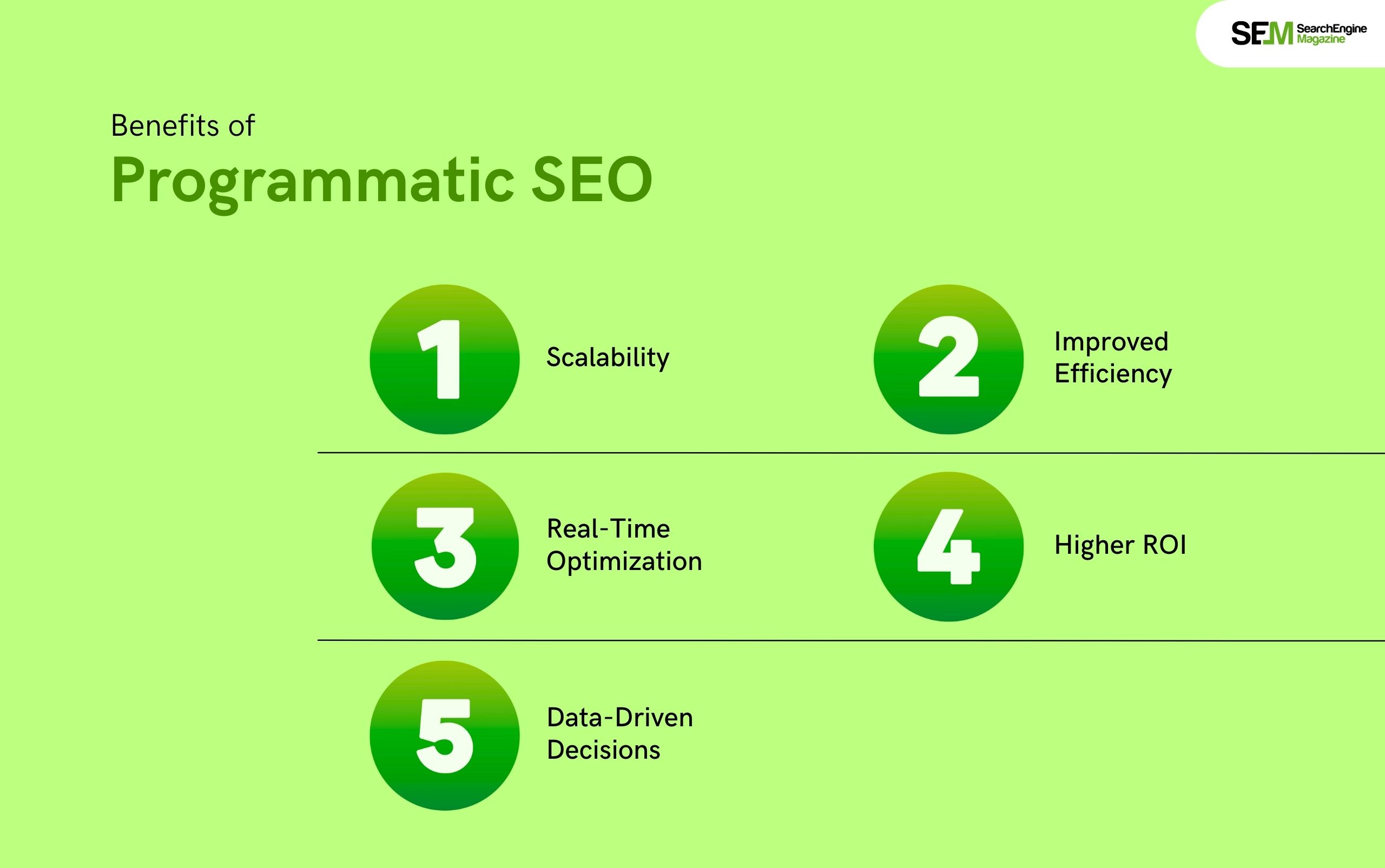
The benefit of programmatic SEO helps in the integration of business along with digitalization. A programmatic SEO strategy brings many advantages to the playing field:
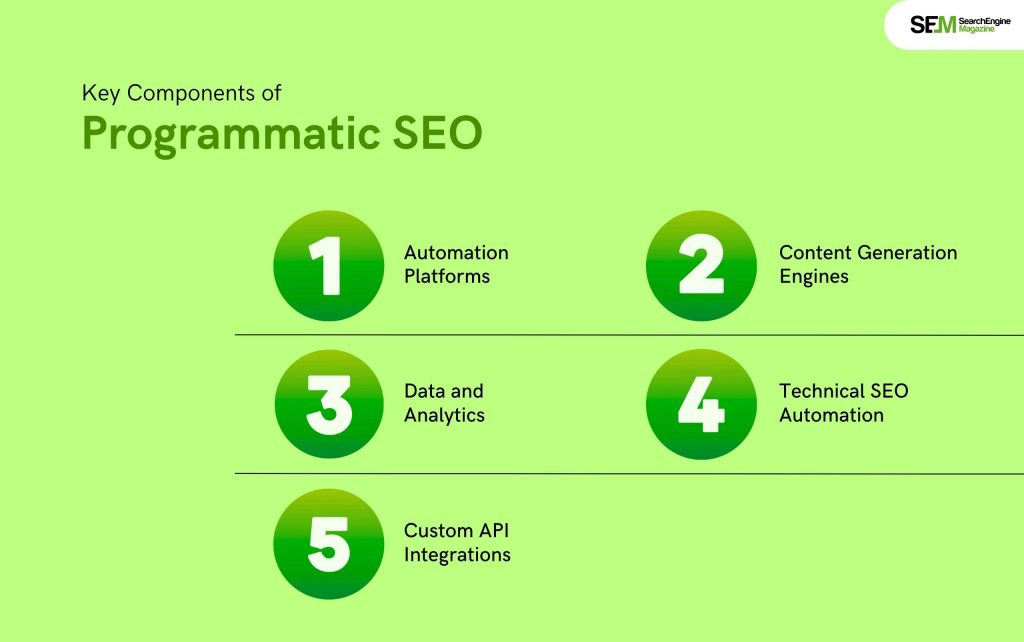
Programmatic SEO thrives with a coming together of these core components towards their success as outlined below:
Tools like Ahrefs, SEMrush, and Screaming Frog auto-audit the keyword research, site tech optimization, and audit websites.
AI-based content-generating platforms, such as ContentBot, Copy.ai, and Jasper, will generate SEO-friendly content in high volume while speeding up the content generation process and scaling with it.
Big data tools like Google Analytics and Supermetrics collect data from different sources and are useful for deciding SEO and tracking performance on various pages or campaigns.
Tools such as Yoast SEO or All in One SEO can automatically optimize on-page SEO by creating meta tags, internal linking, and content analysis.
Most advanced programmatic SEO implementations rely on APIs, including tools such as Google Search Console, Google Analytics, and Bing Webmaster Tools that collect and report real-time data. Also, it automatically tracks the performance of your SEO over time.
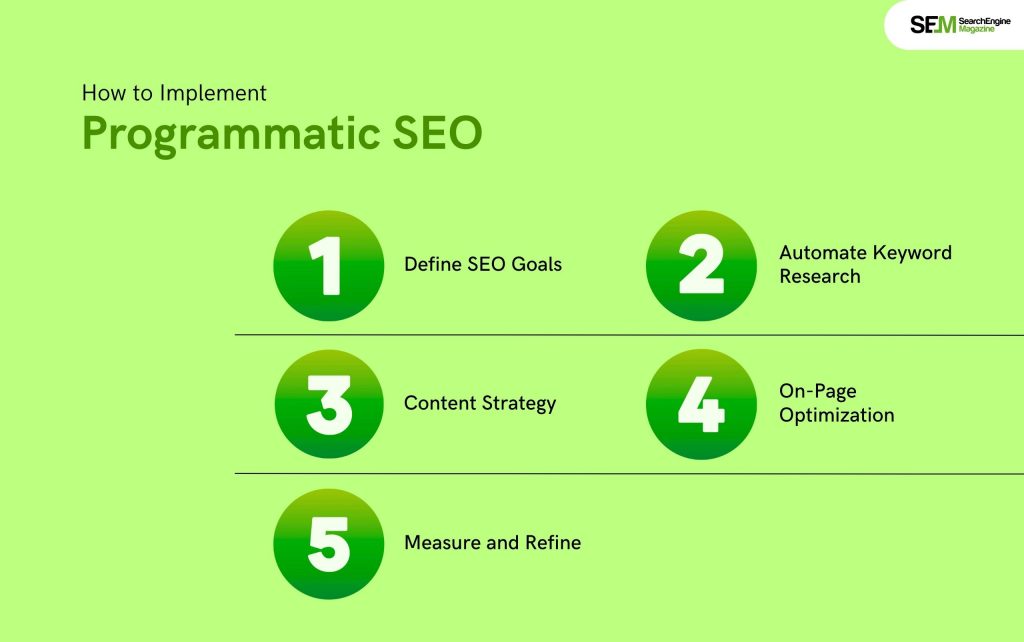
Implementing a successful programmatic SEO strategy involves several steps:
Several technologies can effectively implement programmatic SEO. So, here is the list of all the tools required.
The great benefits notwithstanding, many common problems often surface while using taking this approach to SEO:
So, here are a few case studies and examples of companies using programmatic SEO to their advantage.
Zalando, a giant European online retailer, used programmatic SEO. To scale efforts because it automated thousands of product page optimizations across many regions.
Since content creation and optimization were automated, more people could reach a wider audience and gain increased search visibility without overwhelming their SEO team.
This hotel search engine used a programmatic approach to SEO to provide personalized landing pages for location and user preferences.
Trivago could reach many more targeted keywords and segments of users. And in turn, it increases rankings from location-based searches.
With a huge catalog of products, Home Depot used programmatic SEO to generate optimized landing pages for specific products and local searches.
Thus, it enhances search rankings for a large inventory of home improvement products.
Programmatic SEO is a game-changer in digital marketing, allowing businesses to scale their SEO efforts and optimize at a level impossible with traditional methods.
Moreover, this SEO approach helps to optimize thousands of pages within a few hours by automating repetitive tasks and using data-driven insights along with AI.
Whenever one feels a glitch, it is in aspects like quality control or algorithm adaptability. So, in such cases, the benefits surpass the problems by a long distance. Also, with technology changing daily, programmatic search engine optimization is destined to become an indispensable element of future digital marketing.
Barsha is a seasoned digital marketing writer with a focus on SEO, content marketing, and conversion-driven copy. With 8+ years of experience in crafting high-performing content for startups, agencies, and established brands, Barsha brings strategic insight and storytelling together to drive online growth. When not writing, Barsha spends time obsessing over conspiracy theories, the latest Google algorithm changes, and content trends.
View all Posts

The Ultimate Guide To Competitor Backlink Ana...
Oct 23, 2026
How To Land High-Authority Editorial Backlink...
Oct 23, 2026
Why Your Website Traffic Dropped Suddenly And...
Oct 23, 2026
How Do The Physical Google Review Tools Redef...
Oct 23, 2026
How To Get Your Brand Cited In AI Search Resu...
Oct 22, 2026