Event Pages That Rank And Convert: A Practical SEO Guide For Webinars And Live Events
Oct 06, 2026
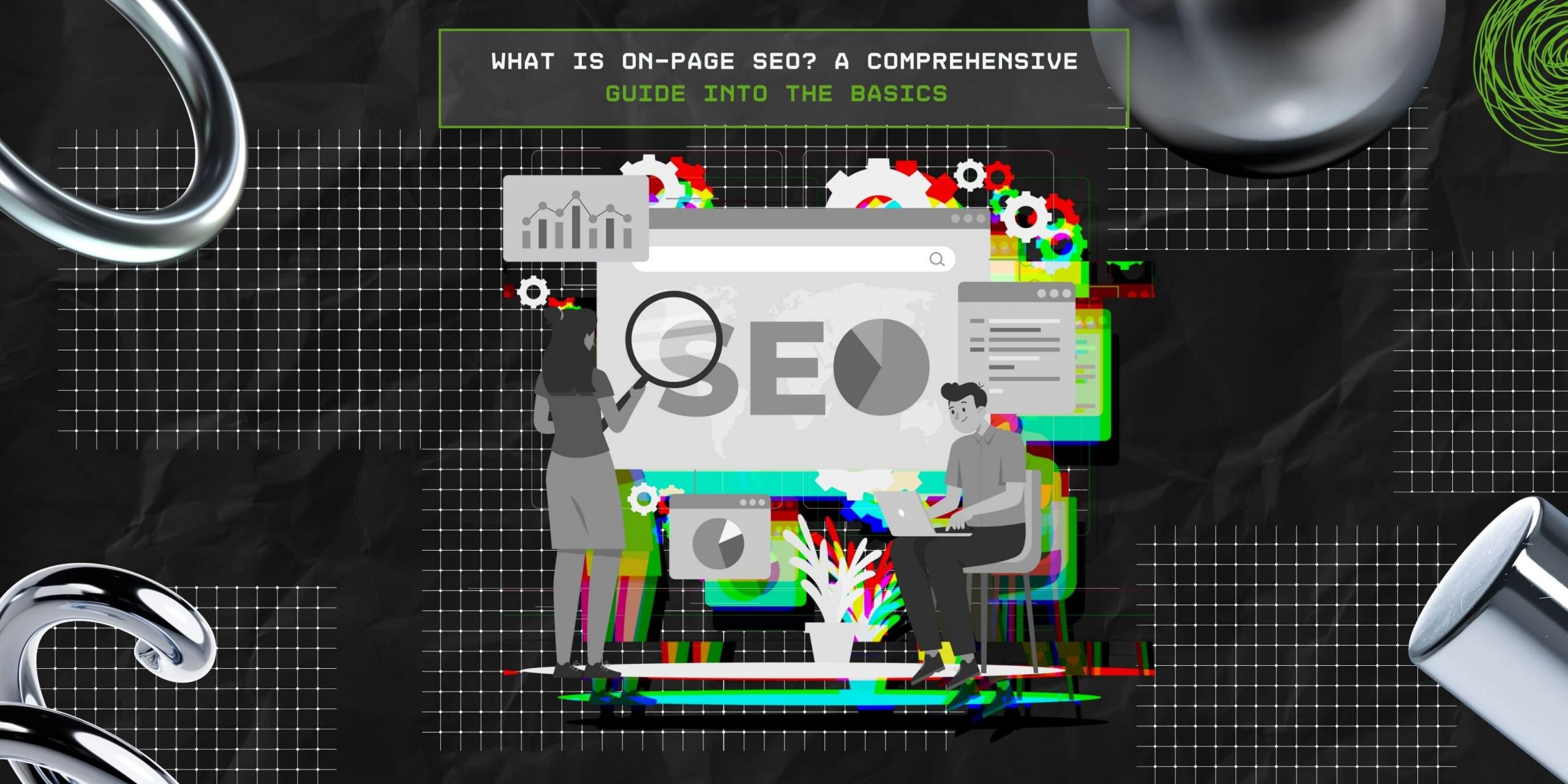

Everyone knows that the most important goal of a business is to generate more sales and revenue. Companies have been doing so for centuries. However, over time, the marketing scenario has changed drastically, since digital techniques have replaced the older and more traditional ways of advertising.
Therefore, a marketer needs to know the importance of on-page SEO. This is important for any marketer in the 21st century since it Therefore, a marketer needs to know the importance of on-page SEO. This is important for any marketer in the 21st century since it allows you to rank your business web pages and generate more traffic and conversions on your website.
Continue reading to find out more about on-page SEO and how to implement it on your website. You to rank your business web pages and generate more traffic and conversion on your website. Continue reading to find out more about on-page SEO and how to implement it on your website.
So what is On-page SEO? It is the act of streamlining individual pages to rank higher and procure more prominent traffic in search engines.
On-page basically covers both the HTML source code and the substantial elements that can be improved. Rather than off-page SEO, which alludes to links and other external signals.
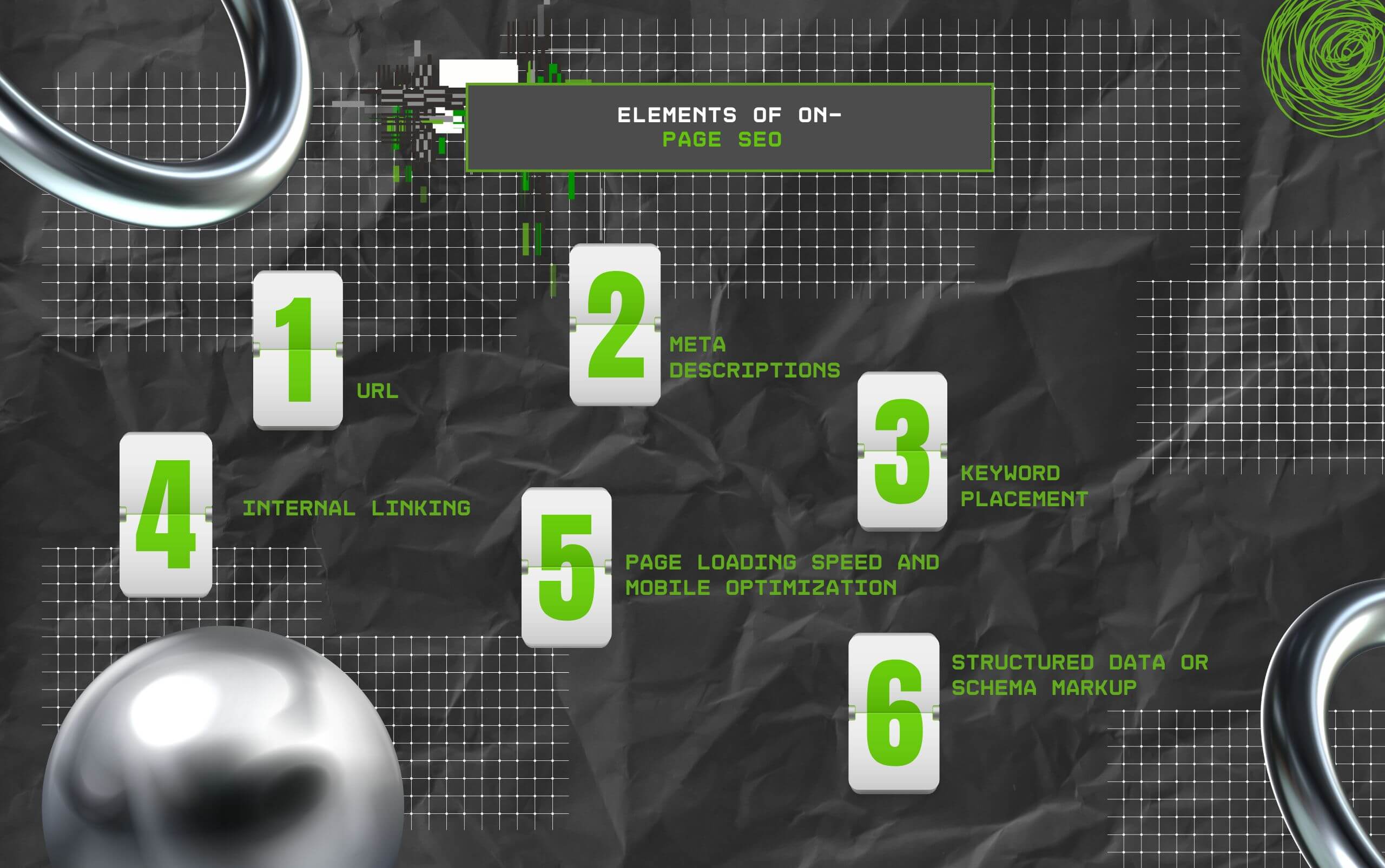
On-page SEO is a part of technical SEO. That is, it has a separate set of elements that focuses on improving the on-page user activity and SEO performance of the sites. So, the key elements of on-page SEO include—
Meta descriptions are the most important on-page SEO factors – especially page headings and titles. Each web page has its own heading title, which is displayed in search rankings. The meta description is a brief rundown of the website that is displayed below the title of indexed lists. Both are vital to assist clients in visiting a page that they have searched for.
Title tags are one of the best on-page SEO ranking factors, while meta descriptions are indirectly responsible for ranking your page.
Both the web page title and the content’s meta descriptions play a huge role in whether a customer clicks on a link in the search results. If both the meta description and the title are catchy and understandable, it increases the Click Through Rate (CTR) – helping you generate more traffic.
However, Google changed its methods of handling titles and keywords in August 2021. Now, Google may or may not rework website titles with respect to other on-page elements, like the headings and anchor texts from link building. Although this change does not affect the rankings of a website that much, it can greatly affect the CTR.
Even though it seems unnecessary, keyword placement plays a crucial role in impacting the on-page SEO performance. That is, the right placement of the keywords helps the search engine bots to clearly understand the context of the content and send ranking signals.
Moreover, when the keywords are strategically placed on headings, titles, and meta tags, it signals better. Leading to an improvement in the overall organic traffic and ranking position of the page on Google SERPs.
Another core element of on-page SEO is internal linking. Unlike keyword placement, internal linking helps connect similar content coverage on the site to form a complete topic cluster.
That is, it creates a site hierarchy where subtopics of the main concept are covered in different webpages and connected using internal links. So, when the search engine bots crawl through the content, they can understand its structure and topical priorities.
Users’ experience on the site matters the most for driving organic traffic. And, this essentially improves the search engine rankings. So, the faster the webpages load, the better the engagement rate will be. That is, it will reduce the bounce rate, increase audience interaction, and improve the conversion rates.
Moreover, most users search for their queries using their mobile devices. So, optimizing the site for mobile devices improves user engagement and consequently the online visibility of the site.
Finally, schema markup helps in explicating the structure of the webpage. Making it easier for both the readers and search engine bots to understand the structure of the content.
Moreover, the schema markup allows the crawlers to understand the context of the pages and categorize them accordingly. So, this leads to higher visibility on the online platform with increased Click-Through-Rates (CTR).
In addition to this, consistent use of schema markup also improves the credibility of the site by enhancing its authority in the niche. That is, it allows the search engine bots to connect the topic clusters across a niche topic that signals expertise and the site’s credibility.
The first part of your on-page SEO content should create a connection between your title and meta description.

You want to view your on-page SEO system seriously, assuming you need web search tools to rank you with page-one understanding. Furthermore, a ton has changed over the most recent twenty years. Even though Google takes a gander at catchphrases in your content, keyword stuffing quit working sometime in the past because it ruins the client experience.
As the Google search calculation gets more refined, the client’s zeroed-in on-page SEO variables will be more significant.
One-page SEO relates directly to ranking for search engines. Optimization in key on-page elements such as title tags, meta description, headers, and URL means that signals are sent to the search engine, which actually gives value towards content relevancy for a specific search.
Properly optimized pages then rank better on SERPs, making the presence more visible to the desired user.
On-page SEO heavily relies on UX. In order for search engines such as Google to rank your website on top, they have to consider the good experience that the visitor will have on the website first.
So, in that regard, by improving the design, usability, navigation, and load speed of a website, on-page SEO enables users to stay on it and enjoy their time. Quickly loading pages that are easy to navigate can help reduce bounce rates and enhance engagement.
On-page SEO factors like title tags, meta descriptions, and URL structure can influence the click-through rate directly.
If people create meaningful and relevant meta descriptions by using keyword-rich titles, it increases the chances that people will click on your link when it appears in the search results.
Hence, the CTR can increase to a much greater extent through an optimized on-page SEO strategy that brings more organic traffic to your site.
Directly related to growing organic traffic is on-page SEO. Optimizing your web pages with specific keywords that your target audience is searching for makes it more probable that your pages will be found.
Clean code, proper meta tags, and optimized images help ensure that your pages rank well and attract constant organic traffic over time-all because they have high-quality content optimized for the right keywords.
On-page SEO can be defined as optimizing content to be more relevant and valuable to the target audience. This involves the appropriate keywords, optimized headings, and ensuring that your content answers the search intent of users.
In this sense, improving the quality of your content and making it more useful to visitors in turn enhances its relevance among both users and search engines.
Simply knowing about the on-page SEO is not enough. Rather, you need to know how to improve the overall SEO performance of your site the right way. So, here are some tips for the SEO best practices that businesses can consider—
Here are some common questions around on-page SEO that businesses mostly look for.
Ans: On the page, SEO refers to using certain keywords to make a page rank. Off-page SEO refers to other actions outside your website that determine its ranking.
Ans: An example of on page SEO would be the incorporation of keywords in your website page title, meta description, and content.
Ans: You can create backlinks by hyperlinking low-ranking pages to high-ranking pages.
Ans: On the page, SEO is important because it helps in generating more traffic and website niche authority.
On the page, SEO is one of the most important tools every marketer should make full use of in the modern marketing scenario.
Since more and more people are using the internet to go and visit several websites to look for content and products that they require, it has become necessary for businesses to do the same too. This helps drastically in boosting the revenue and traffic of the website.
Chandrima is a seasoned digital marketing professional who works with multiple brands and agencies to create compelling web content for boosting digital presence. With 3 years of experience in SEO, content marketing, and ROI-driven content, she brings effective strategies to life. Outside blogging, you can find her scrolling Instagram, obsessing over Google's algorithm changes, and keeping up with current content trends.
View all Posts

Event Pages That Rank And Convert: A Practica...
Oct 06, 2026
KeywordStat Review: Keyword Research, Cluster...
Oct 03, 2026
How Corda Turns Authority Data Into Campaigns
Oct 01, 2026
How To Audit Your Search Visibility In 2026: ...
Sep 30, 2026
What Is Google Lighthouse? A Practical Guide ...
Sep 30, 2026