Event Pages That Rank And Convert: A Practical SEO Guide For Webinars And Live Events
Oct 06, 2026

The reporting in this article is based on information publicly shared through Google’s official communication channels as of May 22, 2026. Insights related to ranking fluctuations and search visibility trends are sourced from analyses and discussions published by members of the SEO community during the initial rollout phase.
After the core update of March 2026, Google rolled out yet another core update only two days ago.
This is the second core update in 2026 since:
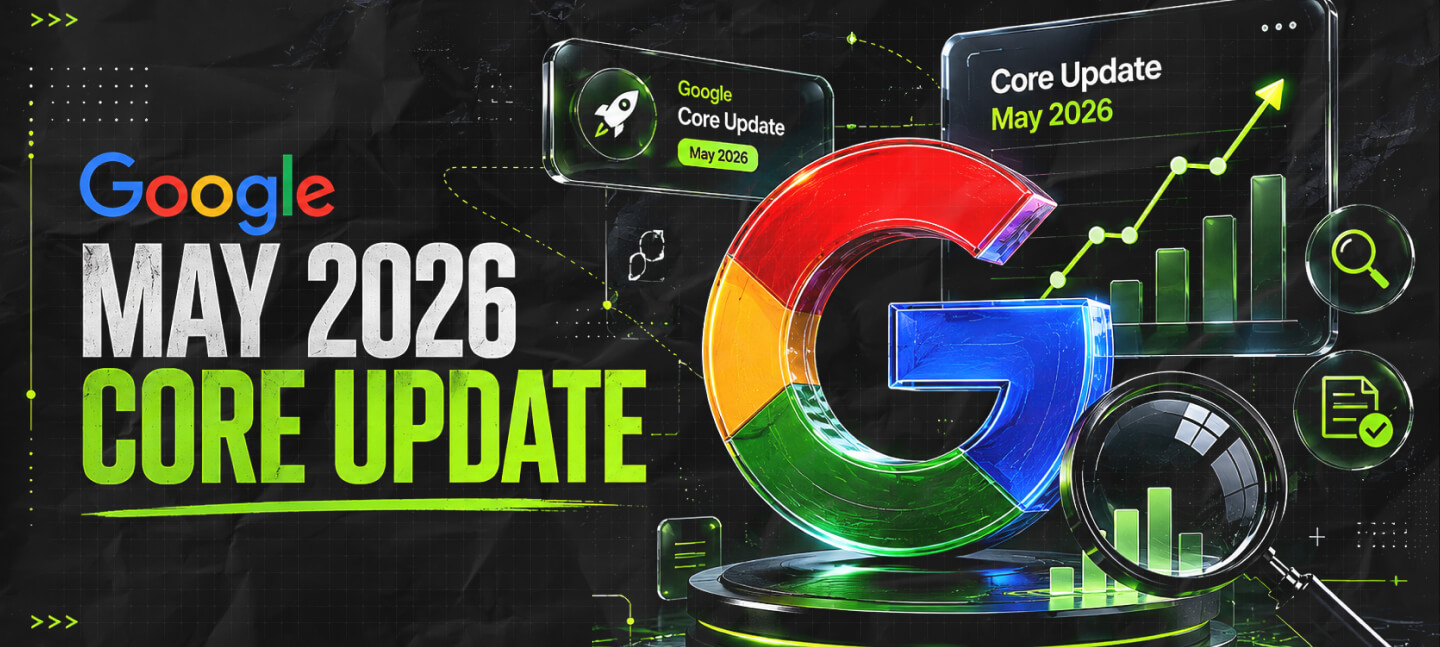
While rolling out the update, the search engine giant updated its Search Status Dashboard, stating, “Released the May 2026 core update. The rollout may take up to 2 weeks to complete.”
Also, in this context, Google said on LinkedIn, “This is a regular update designed to better surface relevant, satisfying content for searchers from all types of sites. The rollout may take up to 2 weeks to complete.”
FYI, core updates usually roll out several times every year, introducing significant and broad changes to the search algorithm of Google. Apart from that the Google also rolls out relatively smaller (and usually unannounced) core updates.
Why do I care? Because with any such update, you will often witness major fluctuations in rankings and search results.
Moreover, it is also possible that these updates might improve your site’s visibility. But at the same time, the chances of decline or fluctuations in organic traffic or ranking are also normal.
Considering this site was hit by the March 2024 core update, I know the struggles in the sheet effort it takes to recover your site.
Since then, I am super scared of Google updates – and I hope that this core update is rewarding for you, driving conversions and traffic.
On that note, I’m going to break down the May 2026 core update, touching up on how Google is signalling a shift towards AI-search.
Stay tuned.
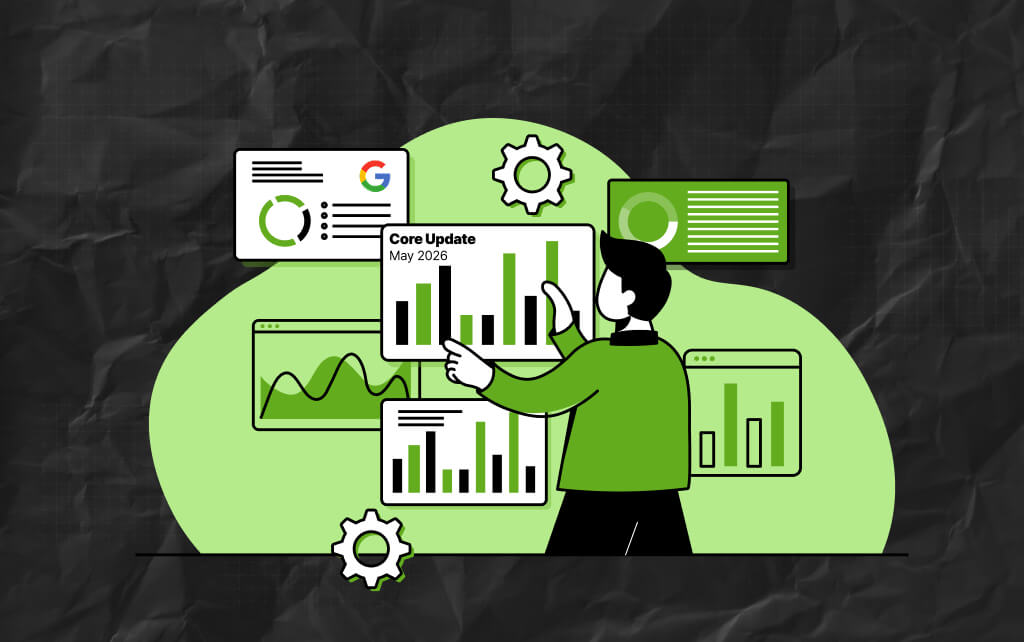
Core updates are common – then, why is the May 2026 core update pulling so much attention? I really think it is about context.
Frankly, search is no longer functioning as it used to a decade ago. In fact, currently, AI Overviews appear for most informational queries across the UK, the USA, India, and multiple European markets.
Moreover, user behavior has shifted, thanks to Gemini’s conversational search.
This is because people ask the search engine layered questions and expect answers in depth instead of multiple blue links.
Also, early observations from different SEO professionals on LinkedIn and X suggest consistency.
While thin content loses visibility quickly, sites that have a solid topical authority and accepted credibility are making the most of these updates.
Plus, content generated with AI without any meaningful human proofreading and editing is taking relatively heavier hits as compared to previous updated.
Some commerce websites are witnessing reshuffled related to brand signals and product page depth.
Of course, Google has not officially confirmed any of these observations. However, the signals are so consistent that experienced SEO professionals are paying close attention.
Google has actually been preparing the entire search ecosystem for a shift towards AI-first search for nearly eighteen months now.
The entire core update actually fits within that entire trajectory cleanly.
On that note, it is crucial to understand that data collected over a few days or even a week can get quite misleading.
In fact, websites that get hit badly in the initial days might also recover days before the update completes rolling out.
Moreover, the opposite can easily happen as well. As a result, there is no point in drawing conclusions so early – it can lead to useless, bad decisions.

Every core Google update creates a distinctive divide between the websites and brands Google gives authority to and the sites it does not.
And this update is no different.
| Potential Winners | Potential Losers |
|---|---|
| Expert-led sites with named author profiles. | Sites with lots of AI-generated content. |
| Brands building topical authority genuinely. | Thin content written to rank, and not to help. |
| AI-assisted content accompanied by meaningful human editing. | Generic SEO-friendly content that is a duplicate of the top search results. |
| Unique visuals and original research. | Mass publishing operations in 2025 & 2025. |
| Long-standing brands that rely on solid citation patterns. | Aggregator pages that lack first-hand experience. |
So, the pattern definitely matched with what SEO teams for enterprises have been saying to clients for more than a year now.
Currently, originality does matter more, depth matters so much more, and the
brand producing the content? Super important.
Also, there’s a quiet trend that is definitely worth flagging.
Some websites that have survived have been updated previously, but seem to be slipping down the search rankings this time around.
That suggests the search engine giant is improving how it looks at trust signals – instead of just adding new signals.
Moreover, publishers in the YMYL categories, such as legal, health, and finance, expect a sharp movement.
Historically, these verticals have witnessed the most significant swigs during updates, especially core updates.
On top of that, AI Overviews have already been leaning heavily on credible sources in these categories.
Similarly, e-commerce is also not immune. No wonder product pages with thin reviews, poor brand presence, and templated copy are experiencing volatility.
As a result, for most websites, the reality is simple – the Google May 2026 core update is here to reward what the search engine giant has already been asking for years.
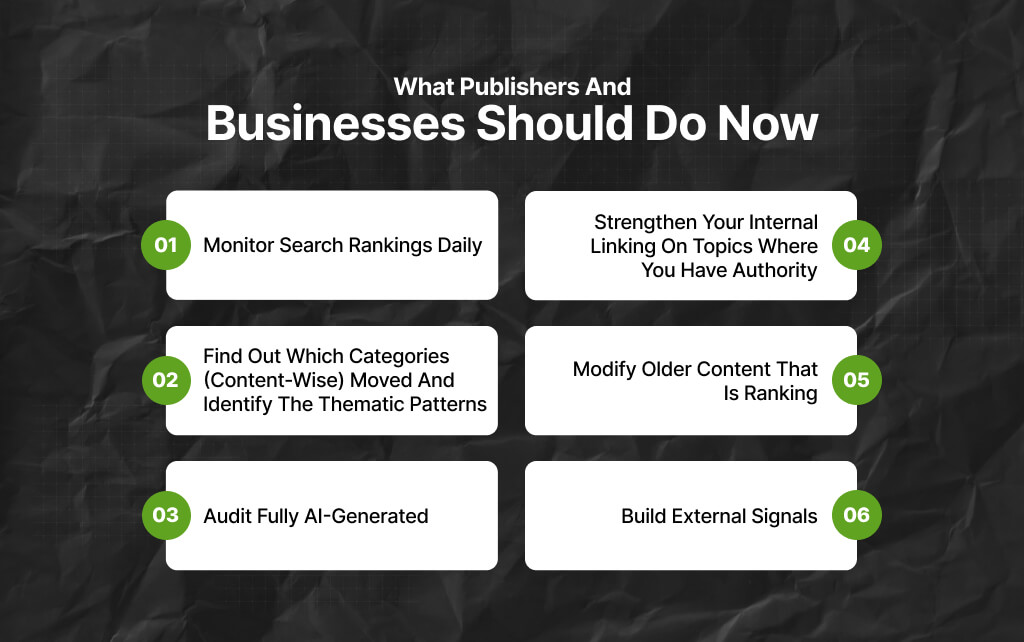
Instinctively, not doing anything is perhaps the most frustrating thing ever – but experience tells me that acting fast during or even right after a core update is generally a mistake.
On that note, here are some practical steps you can take during the Google May 2026 core update:
For SEO teams on an enterprise level, this is the right time to revisit existing content production and publishing workflows.
And if AI has been used, then the human proofreading and editing needs to be better and sharper than it was one year ago.
TBH, Google has obviously raised the standards on what content qualifies as valuable and helpful.
The Google May 2026 core update is not just a regular routine refresh. In fact, it appears to be a part of something broader – a shift towards AI-first search is almost here.
To be fair, the search has become so much harder compared to what it was even five years ago.
And that is not something bad for any business that is serious about its content production. This is because Google updates have always rewarded good work.
As a result, the next few weeks are going to be super important – it will reveal which websites were able to adapt to the new policies.
In this search landscape, one thing is obvious: only brands and websites willing to significantly invest in original thinking, trustworthy content, and real expertise will come as winners!
Sources:
Barsha is a seasoned digital marketing writer with a focus on SEO, content marketing, and conversion-driven copy. With 8+ years of experience in crafting high-performing content for startups, agencies, and established brands, Barsha brings strategic insight and storytelling together to drive online growth. When not writing, Barsha spends time obsessing over conspiracy theories, the latest Google algorithm changes, and content trends.
View all Posts

Event Pages That Rank And Convert: A Practica...
Oct 06, 2026
KeywordStat Review: Keyword Research, Cluster...
Oct 03, 2026
How Corda Turns Authority Data Into Campaigns
Oct 01, 2026
How To Audit Your Search Visibility In 2026: ...
Sep 30, 2026
What Is Google Lighthouse? A Practical Guide ...
Sep 30, 2026