
How To Get Your Brand Cited In AI Search Results In 2026
Oct 22, 2026

Google IO 2026 was packed with AI announcements.
The company introduced new models, expanded its agent ecosystem, and revealed tools aimed at helping users work faster, create more easily, and find information in smarter ways.
For those who want the complete picture, Google has published detailed coverage of the event, including key moments from Sundar Pichai’s presentation.
If you’d rather get the highlights first, here’s a roundup of 100 notable announcements from this year’s conference.
Source: blog.google
1. Google launched Gemini 3.5 Flash, which is the first in the latest range of models blending action with frontier intelligence.
2. Generally, Gemini 3.5 Flash is available currently through the search engine giant’s agent-first development platform, i.e., Google Antigravity. FYI, it is the Gemini API in Android Studio and Google AI Studio.
3. Gemini 3.5 Flash provides intelligence that can become a rival of significant flagship models – and that too at a speed you don’t usually expect from the entire Flash series. Moreover, it manages to outperform Gemini 3.1 Pro in the context of challenging agentic and coding benchmarks like MCP Atlas (83.6%), GDPval-AA (1656 Elo), and Terminal-Bench 2.1 (76.2%).
4. Standing on the Artificial Analysis index’s top-right quadrant, Gemini 3.5 Flash provides frontier-level intelligence – and that too at an exceptional speed. This, in turn, proves that we don’t need to compromise on quality for the sake of latency.
5. Google’s Gemini 3.5 Flash is designed to handle complex, multi-step workflows more efficiently. Tasks that once demanded days of development work or weeks of manual review can now be completed much faster, while also reducing operational costs compared to many other advanced AI systems. The model is capable of planning, refining, and executing tasks across a wide range of practical use cases. Expanding on the multimodal capabilities introduced with Gemini 3, this version also improves the creation of dynamic web interfaces and visual content, making it better suited for interactive UI generation and richer graphical outputs.
6. Also, Google announced that the team is working hard to launch Gemini 3.5 Pro soon. Currently, Google’s internal team is already using it, and by next month, they will be able to roll it out to the public.
7. Google introduced Gemini Omni as a next-generation AI model built to create different types of content from a wide range of inputs, beginning with video generation. The system combines Gemini’s reasoning and language capabilities with advanced generative media technology to deliver stronger multimodal understanding, editing, and content creation. At launch, the focus is on video output, but over time, Google plans to expand Gemini Omni into a fully flexible model.
8. Gemini Omni blends advanced visual generation with a deeper understanding of how the real world works. By combining knowledge across subjects, the model can create content that feels both visually convincing and contextually meaningful. Its stronger grasp of concepts like gravity, motion, kinetic energy, and fluid behavior helps produce scenes that appear more natural and physically accurate.
9. Videos created via Gemini Omni include Google’s undetectable and digital SynthID watermark. Moreover, users can easily verify the content via the Gemini app, Search, and Gemini in Chrome.
10. Users can literally reference anything. This is because Omni can turn any of your reference – audio, video, text, or image – into one cohesive output. In this context, note that currently, voice references are supported only by audio files. However, Google will soon roll out other kinds of audio inputs.
11. Gemini Omni Flash is now rolling out to all global subscribers of Google AI Ultra, Pro, and Plus. Also, it’s available now in the YouTube Create app and YouTube Shorts Remix to users who are above 18 for free.
12. Creating, editing, and remixing videos are so much easier now. With the help of Omni within the Gemini app, users can edit (and create videos from scratch) in a fluid and conversational way. It’s like changing backgrounds and applying a cinematic zoom with one prompt.
13. Users can upload any video or photo from their gallery, use different build-in templates and enjoy the magic without spending any money or time. Also, users can join the action by building a personalized AI avatar that not just looks like them, but sounds like them as well.
14. For creatives who use Google Flow, Gemini Omni will help them to combine generated content with real-world inspiration, iterating conversationally. Also, Gemini Omni refines character consistency – this means voice and identity are both preserved across each scene.
15. Additionally, users can try out this new model for free in the YouTube Shorts Remix. But it only comes with a new upgrade that allows users to directly step into their favorite Shorts. So, they need to just pick any eligible Short, give a prompt on what needs to be changed, and enjoy the new version.

16. Google’s AI Mode is perhaps the company’s most powerful search, and has already surpassed over a billion users monthly. Now, Google has upgraded the overall experience with its Gemini 3.5 Flash model as its latest default model – and that too, globally. Moreover, Google is currently witnessing excellent momentum with queries in AI Mode doubling every three months since its launch.
17. On this occasion, Google launched its largest search box upgrade in the past 25 years and more – meet Google’s brand-new search box, entirely reimagined with artificial intelligence. Also, you can use images, videos, files, and texts to search across different browsers. And the result? You will get different results, much like today.
18. Google wants to make it easy to continue conversations with search, blending AI Mode and AI Overviews into a single, smooth experience. Users can effortlessly move from their queries to a SERP with the help of AI Overview and then follow-up with AI Mode as well.
19. Google’s point is that we are currently stepping into a landscape dotted with search agents, where users can easily create, manage, and customize different AI agents for their tasks – and that too inside Search. Also, they are working on the information agents who operate 24/7 in the background – that way, users can update themselves on different tasks, topics, or projects.
20. An agent will go through all sorts of information available on the internet to track for changes related to a user’s special query. Based on these findings, the agent will share a synthesized and intelligent update with the user for them to take action. Also, users can use different information agents simultaneously in Search to stay updated.
21. Users can take help from information agents and make them work for months, and this feature will now be available to Google AI Ultra and Pro subscribers.
22. With Gemini 3.5 Flash’s agentic coding abilities and Google Antigravity’s power, Search can help users by building a custom format for their specific queries.
23. Users will soon be able to experience custom generative interfaces directly within Google Search. Instead of showing static results alone, Search can dynamically build tailored layouts in real time, including interactive visuals, charts, tables, graphs, and simulations designed around the user’s query. Powered by Antigravity, this new generative UI system aims to make complex subjects easier to explore and understand through more engaging and interactive experiences. Google says the feature will begin rolling out to Search users this summer and will be available free of charge.
24. Certain tasks require more than a single search or quick answer. Projects such as organizing a wedding, coordinating a relocation, or managing long-term plans often involve multiple steps spread over time. To support these kinds of workflows, Google Search is introducing more persistent and personalized experiences. Instead of only delivering information, Search will be able to create custom dashboards, trackers, and interactive workspaces tailored to a user’s specific project.
25. Users will be able to create custom experiences in Search soon – and it will start with subscribers first.
26. Google is expanding AI Mode with personal intelligence, making it available to people in close to 200 countries and across 98 different languages without any subscription.
27. With Google’s AI Mode Search, users can connect apps like Google Photos and Gmail. Soon, users will be able to connect Google Calendar as well. Also, note that personal intelligence’s design depends on a solid foundation of choice, transparency, and control. So, the user is always in control of this development.
28. Google introduced Universal Cart, an intelligent shopping option. With this shopping cart, users can add things directly to their carts while casually browsing Search, watching YouTube, or talking with Gemini. Once a user adds any product, their cart starts working immediately in the background, finding price drops and deals to give relevant insights to the users. Since this cart runs on Google’s Gemini model, it will get smarter with time.
29. The system also applies advanced reasoning capabilities to predict potential issues and assist users before problems occur. For example, it can automatically identify product compatibility concerns and recommend better alternatives during the shopping process. Built on top of Google Wallet infrastructure, the experience can also account for payment preferences, loyalty rewards, and merchant-specific offers. This allows it to provide smarter checkout recommendations, including suggestions on which payment method may offer the best benefits or savings for a particular purchase.
30. Universal Commerce Protocol or UCP ensures a user’s checkout from their cart is seamless. Moreover, for many brands, users can check out directly via Google Pay. Also, users can transfer the products to the retailer’s site and directly purchase from there.
31. Google is in the process of rolling out this card across its Gemini app and Search during the summer. Soon, Gmail and YouTube will follow.
32. Google introduced Gemini Spark as an AI assistant built to handle digital tasks on a user’s behalf. Designed to stay active around the clock, it can assist across connected devices and continue working in the background without constant supervision.
33. The assistant is powered by Gemini 3.5 and runs on Google’s Antigravity platform. Although Spark can complete tasks independently, users remain in control. The system is designed to seek approval before carrying out major actions.
34. Google considers Spark an early-stage product. To reduce risks and gather feedback, the company is initially making it available to a limited group of trusted testers. A beta version is expected to reach Google AI Ultra subscribers in the United States soon.
35. Additional capabilities are already planned. Future updates aim to let users communicate with Spark through text and email, create specialized sub-agents for specific jobs, and approve purchases within defined budgets and merchant preferences.
36. Google also unveiled Daily Brief, a personalized assistant that prepares users for the day ahead. The feature gathers important information and presents it in a concise summary tailored to individual priorities.
37. While users sleep, Gemini reviews connected information sources such as email, calendars, and task lists. It then identifies upcoming commitments, deadlines, and other important items that deserve attention. The goal is not only to summarize information but also to suggest practical next steps. Over time, the system learns user preferences, remembers recurring events, and adapts its recommendations accordingly.
38. Daily Brief is beginning its rollout to eligible Google AI subscribers in the United States through the Gemini app. Users must connect the relevant Google services to access the feature.
39. Google has refreshed the overall Gemini experience with a redesigned interface known as Neural Expressive. The update introduces smoother animations, stronger visual elements, updated typography, and richer feedback throughout the product.
40. Navigation has also been simplified. Tools are easier to locate, and users can create images, videos, and music through a more streamlined workflow. Ready-made templates can be customized and reused with minimal effort.
41. Responses are now presented differently as well. Instead of displaying large blocks of text all at once, Gemini builds answers dynamically. Interactive visuals, timelines, and embedded media can appear alongside responses to make information easier to explore.
42. Gemini Live has received significant upgrades. The experience now launches faster, works directly within the interface, and uses a model designed to deliver quicker responses while handling background noise more effectively.
43. Google also plans to introduce regional voice options, allowing users to choose speaking styles and dialects that feel more natural to them.
44. Google is expanding its vision for agent-based development with major updates to Antigravity, the company’s platform for building and managing AI agents. The goal is simple: make it easier for both technical and non-technical users to create systems that can complete complex tasks with minimal manual effort.
45. A major addition is Antigravity 2.0, a standalone desktop application that serves as a central workspace for AI agents. Users can assign different tasks to multiple agents at the same time. For example, one agent could build a website while another creates visual assets for the same project.
46. For developers who prefer working in a command-line environment, Google is introducing Antigravity CLI. The lightweight tool allows users to create and manage agents directly from the terminal without relying on a graphical interface.
47. The Antigravity SDK extends those capabilities further. It gives developers direct access to the same underlying framework used across Google’s AI products. Teams can customize agent behavior, connect agents to existing systems, and deploy them within their own infrastructure.
48. Google is also adding native voice support for Gemini audio models. New integrations with platforms such as Android, Firebase, and Google AI Studio are intended to make agent development more accessible across different environments.
49. At its core, the updated platform focuses on agent collaboration. Google has strengthened the framework that powers these systems by introducing features such as sub-agents, automated workflows, event hooks, and asynchronous task handling. These additions allow agents to tackle larger and more complex workloads than before.
50. One of the most notable improvements involves teamwork between agents. Tasks that once required days of engineering effort can now be divided among specialized agents and completed much faster. Google is currently offering this capability as an early research preview.
51. The company is also consolidating its ecosystem around Antigravity. Insights gathered from Gemini CLI have been incorporated into the new Antigravity CLI, creating a more consistent experience across Google’s AI development tools. Existing users will be able to migrate their workflows using Google’s transition resources.
52. Enterprise customers are also part of the roadmap. Google plans to allow organizations to connect Antigravity directly with Google Cloud environments while maintaining enterprise-grade controls and governance standards. Existing Gemini Enterprise customers are expected to gain access in the coming months.
53. Google is preparing to launch a redesigned AI Studio application aimed at helping users move from idea to prototype with less friction. The platform is designed for rapid experimentation, whether users are building simple tools or more advanced applications.
54. Workspace integration is becoming a central part of the experience. Developers will be able to work directly with data from Google Sheets, organize files stored in Drive, and create applications that interact with existing documents without leaving AI Studio.
55. Android development is also becoming more accessible. Users can now generate native Android applications through the Build tab by describing what they want in natural language.
56. Google is extending support to the Play Console as well. Developers will be able to test applications through browser-based Android emulators, deploy builds to test devices, and publish directly to Google Play’s internal testing environment with fewer manual steps.
57. To encourage adoption, Google is allowing first-time builders to deploy their initial applications to Google Cloud without payment requirements or a credit card.
58. For teams that prefer local development, projects can be transferred directly into Antigravity. Conversations, project assets, and configuration details move with the project, allowing work to continue without interruption.
59. The platform also offers greater control over application design. AI Studio can generate custom images automatically, helping users create more polished interfaces without relying on external assets. A new visual editing system allows users to annotate designs, adjust components, and refine layouts directly within the preview window.
60. Google is introducing Managed Agents through the Gemini API to simplify the process of building advanced AI systems. With a single API request, developers can launch an isolated Linux environment where an agent can plan tasks, execute code, manage files, access approved tools, and retrieve live information from the web. These capabilities are powered by the Antigravity agent framework and Gemini 3.5 Flash.
61. Customization remains a key focus. Developers can define instructions, workflows, and skills using simple markdown files rather than building complicated orchestration systems from scratch. Once configured, these agents can be registered and reused across projects.
62. Google is also encouraging innovation through the Build with Gemini XPRIZE Hackathon. The global competition offers a $2 million prize pool and challenges developers to create practical applications that address significant real-world problems.
63. Alongside these announcements, Google revealed WebMCP, a proposed open standard designed to help browser-based agents interact with structured web tools more effectively.
64. The company also introduced Modern Web Guidance, a collection of best practices intended to help AI-powered coding tools create faster, safer, and more accessible web experiences.
65. Developers working with AI agents will also gain access to Chrome DevTools integrations. These tools allow agents to inspect applications, identify issues, verify outputs, and optimize code in real time, making development workflows more efficient and reliable.
66. Google is introducing a new AI Ultra subscription priced at $100 per month. The plan targets developers, technical professionals, researchers, and creators who need access to more advanced AI capabilities and higher usage limits.
67. Google is also adding more value to its AI Pro subscription. Members now receive YouTube Premium Lite at no additional cost. The inclusion gives users ad-free viewing across most YouTube and YouTube Kids content, along with support for offline playback and background listening.
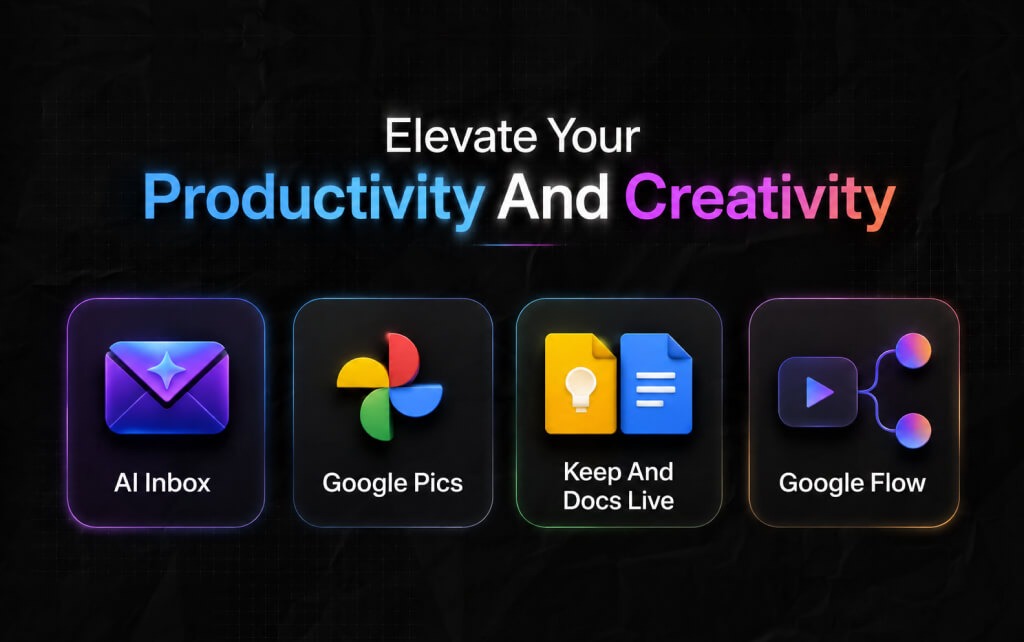
68. Google’s AI Inbox, first introduced earlier this year, is expanding to a wider audience. The feature reorganizes Gmail by identifying important tasks, highlighting priority items, and helping users focus on what needs attention first.
69. A new addition allows AI Inbox to generate personalized draft responses using the context available within a user’s email history and connected services. This reduces the time spent crafting routine replies.
70. Google is also making supporting materials easier to find. If an email-related task involves a document, spreadsheet, or presentation, relevant links can appear directly alongside the action item.
71. Several workflow improvements are arriving as well. Users can mark tasks as completed, dismiss suggestions they do not find useful, or clear entire groups of messages with fewer clicks.
72. Looking ahead, Google plans to launch Gmail Live. The feature will allow users to speak directly with their inbox, ask questions, and retrieve information without manually searching through email threads.
73. Google is preparing to launch Google Pics, a new platform for image creation and editing built on the company’s Nano Banana model. The tool is designed to simplify both design creation and image modification. Users can start from a blank canvas or edit existing visuals without dealing with the complexity often associated with advanced image-generation software.
74. Google is initially releasing Pics to a limited testing group. A broader rollout for Google AI Pro and Ultra subscribers is expected later this year, with business customers receiving preview access through Workspace.
75. Google is introducing Docs Live, a voice-powered feature that turns spoken ideas into structured documents. Rather than simply transcribing speech, Docs Live helps organize thoughts, build outlines, and create polished drafts.
76. The company is bringing a similar experience to Google Keep. Users will be able to speak naturally while Keep converts scattered thoughts into organized notes, checklists, and action items. Both features are expected to arrive first for Google AI Pro and Ultra subscribers, with additional availability planned for Workspace business customers.
77. Google Flow has evolved from a video-generation product into a broader AI-powered creative platform.
78. The company has expanded the service with new image, video, and editing capabilities while making it available across more than 140 countries. Gemini Omni Flash now powers many of Flow’s creative workflows.
79. The model allows creators to combine real-world references with AI-generated content while refining projects through natural conversation. It also improves consistency between scenes, helping maintain visual identity, character appearance, and voice across longer productions.
80. Google is also launching Flow Agent, an AI assistant built specifically for creative work. Previously, Flow handled one instruction at a time. The new agent can manage multi-step creative processes, making it possible to brainstorm ideas, refine concepts, and execute more complex tasks without constant manual guidance.
81. The assistant can support script development, suggest improvements to dialogue, propose story directions, and generate multiple creative variations simultaneously. It can also organize assets automatically and manage large projects more efficiently. Flow Agent is now available to users worldwide.
82. Google is expanding creative flexibility through Flow Tools, a feature that allows users to build custom creative utilities using natural language. Instead of writing code, users can describe the functionality they need. The platform can then generate tools tailored to specific creative tasks, such as image editing, video processing, animation effects, or custom visual treatments.
83. Google Flow Music introduces new ways to create music videos with AI assistance. Users can collaborate with Gemini Omni through conversational prompts and guide the creative process step by step.
84. Pomelli is receiving updates focused on branding and website creation. The platform aims to help businesses produce marketing materials and digital experiences more efficiently.
85. Meanwhile, Stitch is becoming a more interactive design companion. Users can communicate through text or voice while the platform generates layouts and adjusts designs in real time.
86. Google is expanding its AI efforts into scientific research with the launch of Gemini for Science, a collection of experimental tools designed to support researchers throughout the discovery process.
87. One of the flagship additions is Hypothesis Generation. Built on Google’s Co-Scientist framework, the system helps researchers explore potential explanations for scientific problems. It can generate competing ideas, evaluate their strengths, and support conclusions with verifiable references.
88. Google is also introducing Computational Discovery, a research engine that automates large-scale experimentation. By generating and testing thousands of code variations simultaneously, the system can help scientists identify promising models and approaches far more quickly than traditional methods allow.
89. A third tool, Literature Insights, focuses on research review. It searches scientific publications, organizes findings into structured formats, and allows researchers to compare results across multiple studies. Users can also generate reports, presentations, and other research materials from the information collected.
90. Access to these experimental tools is being expanded gradually through Google Labs, where interested researchers can register for participation.
91. Alongside these products, Google is releasing Science Skills, a specialized package that combines data from major life-science databases and research resources. The goal is to simplify complex tasks in areas such as bioinformatics, structural biology, and genomic analysis.
92. Google is also collaborating with major scientific conferences to explore new approaches to peer review and research validation. Experimental projects such as Paper Assistant Tool and ScholarPeer aim to support more efficient evaluation of scientific work.

93. Google is rethinking content discovery on YouTube with a new conversational search experience called Ask YouTube.
Instead of relying solely on keywords, users can ask detailed questions in everyday language. For example, someone looking for advice on teaching a child to ride a bicycle can describe the situation directly rather than searching through multiple terms and filters. The system then gathers relevant videos from across YouTube, including both long-form content and Shorts. Results are organized into a structured response that makes it easier to explore different perspectives and recommendations.
94. Google plans to begin testing Ask YouTube with a limited group of English-speaking users in the United States before expanding availability.
95. Google’s next step in extended reality centers on smart eyewear. The company envisions two distinct categories of devices. The first focuses primarily on audio, delivering spoken information and assistance through discreet wearable glasses. The second incorporates visual displays that can present information directly within the user’s field of view.
96. Several partnerships are helping bring these products to market. Google is working with Gentle Monster, Warby Parker, and Samsung on the first generation of audio-focused smart glasses.
97. Google continues to expand SynthID, its technology for identifying AI-generated content. The system embeds invisible markers into digital media, making it easier to determine whether content was created with AI tools. These markers do not affect the appearance or quality of the final output but can help establish its origin. Verification capabilities are now available across images, video, and audio within the Gemini ecosystem. According to Google, the technology has already been used tens of millions of times worldwide.
98. The company is also extending support across additional products. Users will increasingly be able to verify content through Search, Chrome, Lens, AI Mode, Circle to Search, and Gemini-powered experiences. A simple question such as “Was this created with AI?” can trigger checks that help identify the source of an image or piece of media.
99. Google is further expanding support for C2PA Content Credentials, an industry standard designed to track how digital content has been created or modified. This provides additional transparency by showing whether a file originated from a camera, was edited later, or passed through AI systems during production.
100. Because online content moves across many different platforms, Google believes widespread industry adoption is essential. Several AI companies are already incorporating SynthID into their own products, helping create a broader ecosystem for content verification and authenticity tracking.
As AI-generated media becomes more common, technologies such as SynthID and C2PA are likely to play an increasingly important role in helping users understand where digital content comes from and how it was created.
Barsha is a seasoned digital marketing writer with a focus on SEO, content marketing, and conversion-driven copy. With 8+ years of experience in crafting high-performing content for startups, agencies, and established brands, Barsha brings strategic insight and storytelling together to drive online growth. When not writing, Barsha spends time obsessing over conspiracy theories, the latest Google algorithm changes, and content trends.
View all Posts

How To Get Your Brand Cited In AI Search Resu...
Oct 22, 2026
The Ultimate Blueprint For Broken Link Buildi...
Oct 16, 2026
The Ultimate Guide To Stealing Your Competito...
Oct 15, 2026
Beyond The Basics: Master Guest Posting For H...
Oct 15, 2026
Best Generative Engine Optimization (GEO) Com...
Oct 14, 2026