Copy-Paste ChatGPT Prompts To Write Product Pages That Sell
Nov 25, 2026
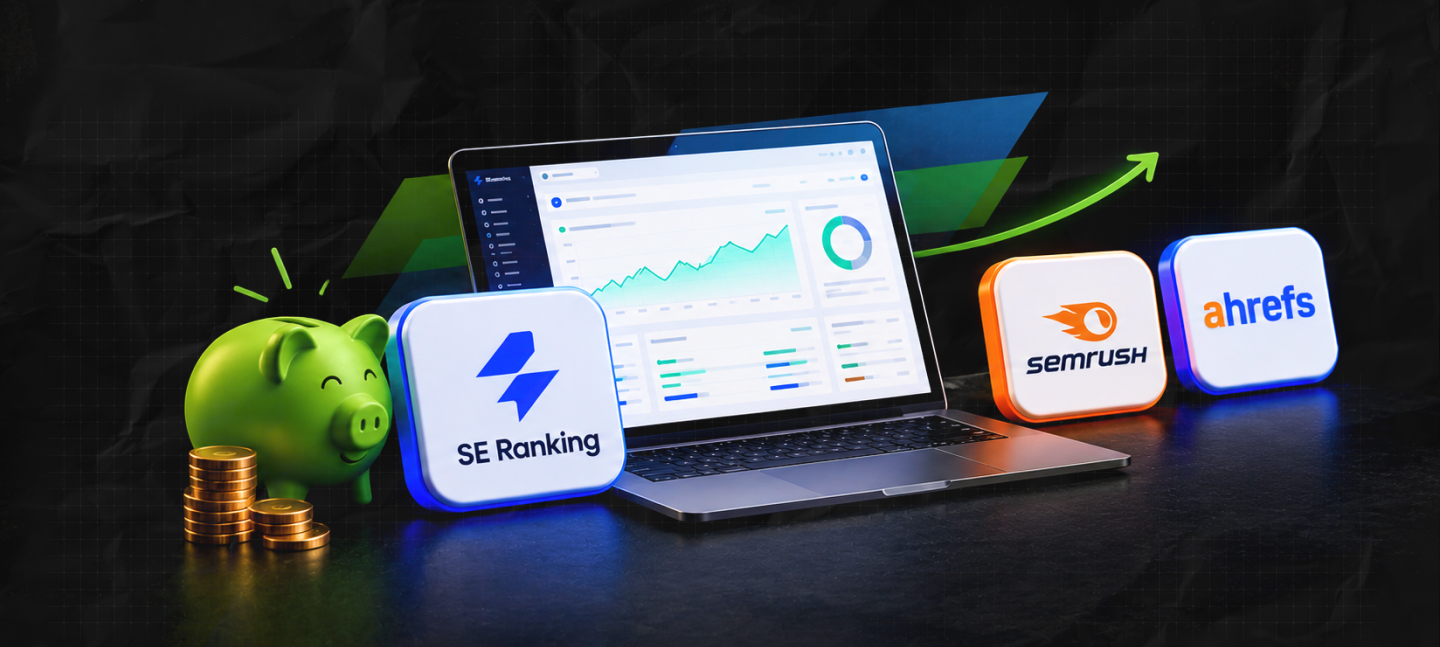

Let’s talk about an annoying situation: constantly updating your knowledge of SEO tool costs.
As a small business owner, freelance SEO, or solo marketer, watching software costs climb is disheartening.
Platforms like Semrush and Ahrefs are creeping toward enterprise-level pricing. For small budgets, this price creep hurts.
You need exact data to optimize your organic SERPs, but you cannot waste money on data that you will barely use.
That is why SE Ranking, a competitive SEO tool marketplace, was created: to offer a less expensive alternative to the industry’s giants.
But with a significant rebranding and pricing shift in 2026, is it still worth considering?
Is SE Ranking actually a viable alternative to Semrush or Ahrefs?
To find out, I closely examined its core features, limitations, and new AI tracking tools.
Here is my unbiased breakdown of its strengths and weaknesses—along with a definitive buying suggestion for smaller budgets.
We compared SE Ranking’s published plans and features with current pricing from Semrush and Ahrefs, and we read user reviews on sites such as Capterra.
We did not run our own lab tests. Some links may be affiliate links, which may earn us a commission at no cost to you.
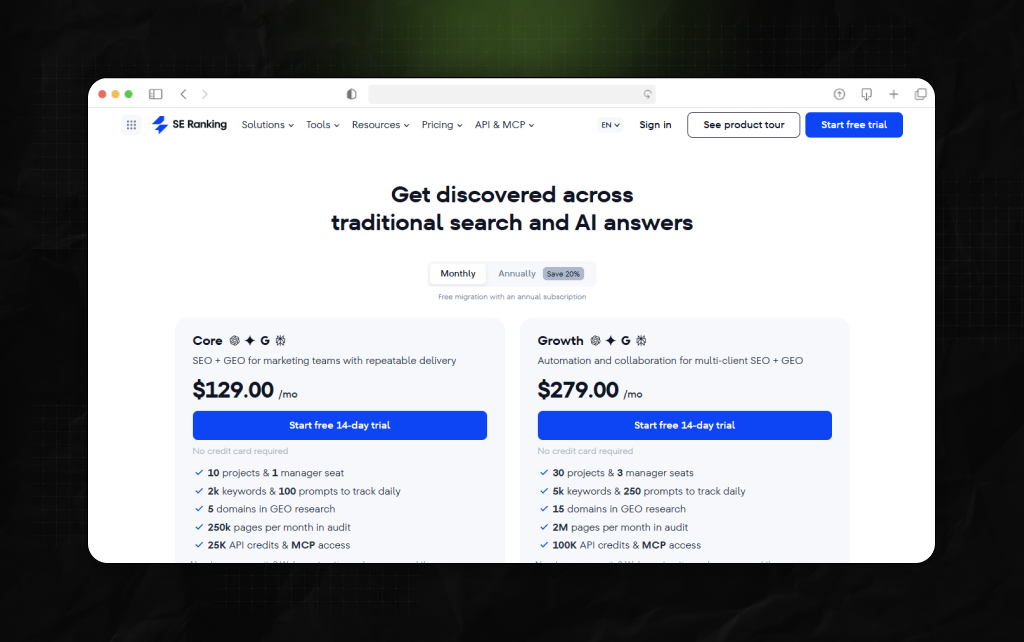
For years, the go-to advice for beginners was to pick up SE Ranking’s entry plan for roughly $65 a month.
That door has officially closed. In mid-2026, the platform streamlined its structural offering into two main public plans.
| Feature / Limit | Core Plan | Growth Plan |
| Monthly Price | $129 / month | $279 / month |
| Annual Price (Equiv.) | $103.20 / month | $223.20 / month |
| Tracked Keywords | 2,000 daily | 5,000 daily |
| Included Seats | 1 user | 3 users |
| Projects Monitored | 10 websites | 30 websites |
| Monthly Audit Pages | 250,000 | 2,000,000 |
Honestly, if you are a solo freelancer or an in-house marketer keeping tabs on a handful of web properties, the Core plan provides more than enough breathing room.
Daily rank tracking for 2,000 keyword targets costs about $103 a month on the annual plan, or $129 monthly. That’s four times the tracked keywords of Semrush’s $139 entry plan, which covers 500.
However, watch the add-ons. If you run a client-facing agency, you will need to bolt on the Agency Pack for $69/month to unlock white-label reports and lead generation widgets.
On Capterra, SE Ranking scores 4.7 out of 5 from 298 reviews, while Semrush scores 4.6 from 2,330.
Reviewers praise rank tracking, audits and reporting, and many call it cheaper than Ahrefs and SEMrush.
Complaints include limits in keyword research, AI features that cost extra, interface changes and difficulty getting refunds.
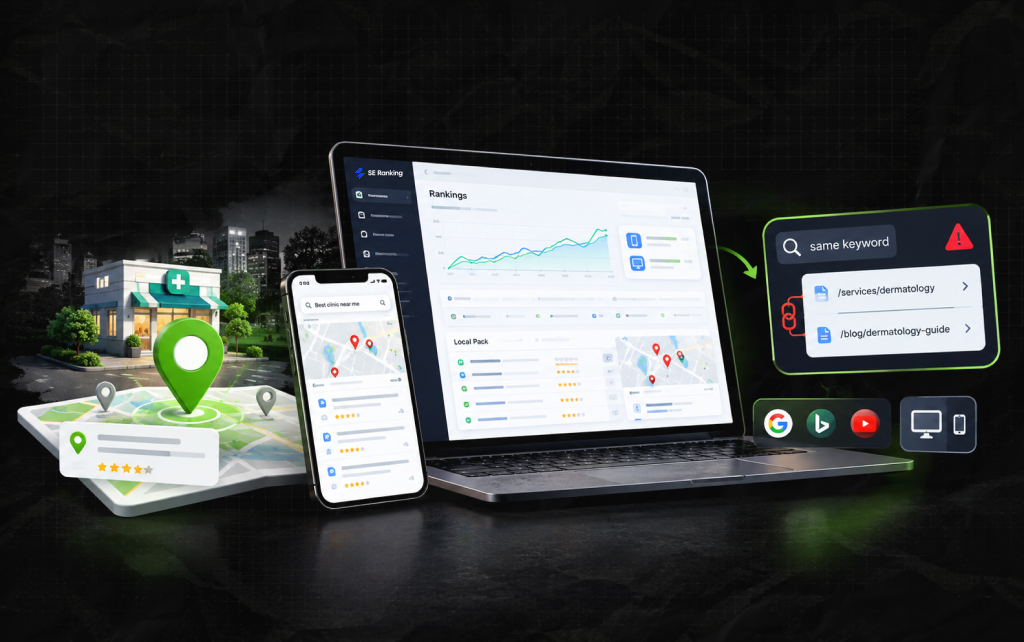
If you ask me why I recommend that people install SE Ranking in their daily work processes, it’s the rank tracker.
Budget alternatives try to reduce server expenses by updating your keyword positions only once a week, if you don’t press the refresh button.
SE Ranking does that on a daily basis with all standard plans.
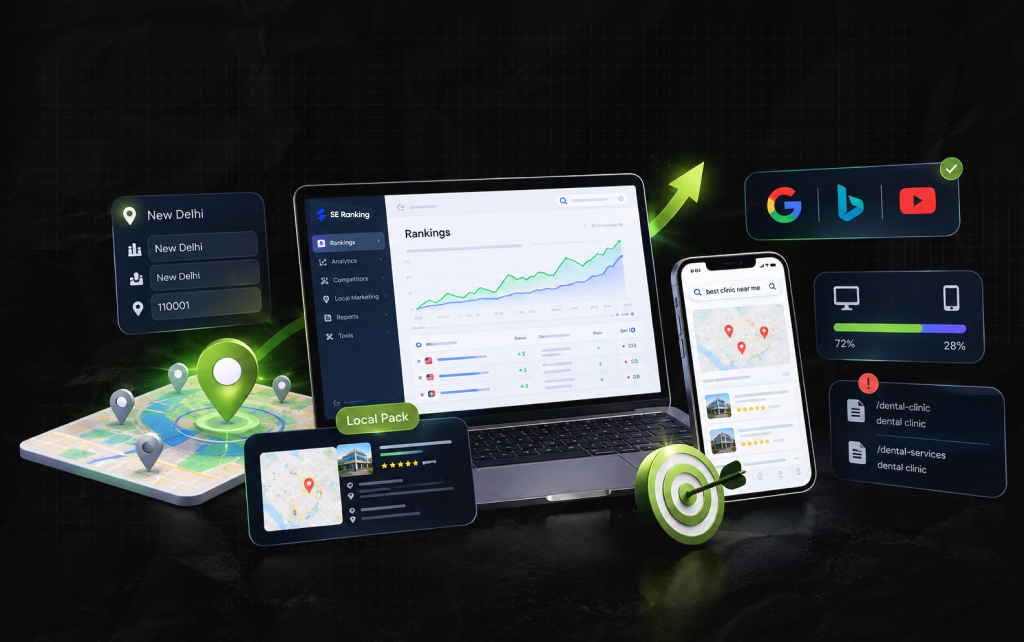
The interface allows you to set a target down to the country, city, and ZIP code.
Imagine that you are optimizing a local clinic in New Delhi or a boutique shop in London.
Local search rankings change block by block.
With this tool, you can see how your local map pack performs for someone browsing just three blocks away, compared to a visitor searching from the opposite side of town.
It tracks desktop and mobile traffic splits with SERP features isolated for Google, Bing, and YouTube, which is not a problem.
The interface is also intuitive and easy to understand.
Imagine a client’s traffic plummets dramatically. Instead of wasting time sifting through messy data to find out why, you can spot the problem immediately.
Just go to that client’s cannibalization report in the rankings tab and spot two landing pages that share the exact same target keyword.
Many generalist SEO tools do a superficial job of analyzing your website’s surface structure, pointing out missing alt text or simply noting broken images.
SE Ranking Website Audit goes much deeper by analyzing more than 110 optimization parameters.
The tool stands out for its ability to render JavaScript.
This lets it correctly read websites built with modern JS frameworks (React, Next.js, etc.) that often appear as blank pages to standard crawlers.
This means that SE Ranking will find more crawl errors, internal link issues, and Core Web Vitals problems that other tools would miss.
The software then organizes all the issues in an easy-to-scan format using a traffic light system.
It marks critical issues with a red cross, warnings in orange, and simple observations in blue.
What I like about this tool is that it doesn’t just tell you there is an issue and leave you to figure it out.
Instead, it gives you a context-sensitive remediation panel that explains the issue and how your web developer should fix it.
Now for the cold water.
If your primary link building strategy is based on aggressive outreach campaigns or historical research, SE Ranking will feel like a mild supplement to your workflow
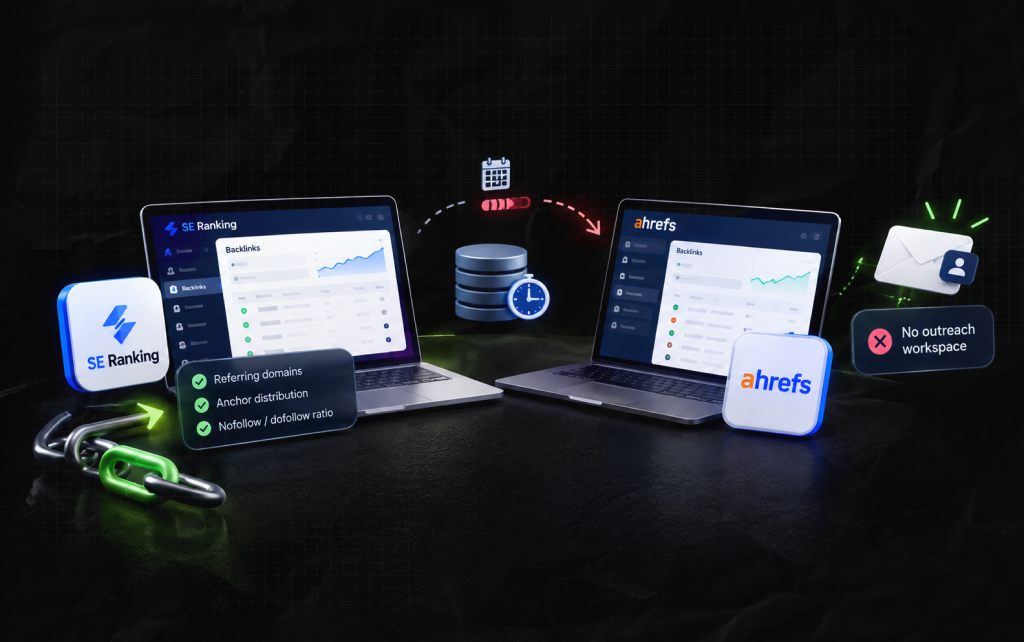
SE Ranking does a decent job with standard backlink auditing, letting you assess:
However, SE Ranking’s backlink database is much smaller than those of Semrush and Ahrefs.
By each company’s own figures, SE Ranking reports 2.7 trillion backlinks versus Semrush’s 43 trillion, so newer or rarer links may be missing.
Another deal-breaker for serious outreach operations is the absence of a proper outreach workspace within SE Ranking.
Moreover, you can’t find an author’s email address and send a polite outreach message from within the tool.
Overall, SE Ranking is great for small-scale link-building projects but not suitable for large-scale, enterprise-level outreach campaigns.
Traditional Search rankings no longer tell the entire story. AI tools are changing how people find information.
Platforms like ChatGPT, Perplexity, and Google AI Overviews now answer queries directly. So, your prospective customers may never click a traditional blue link again.
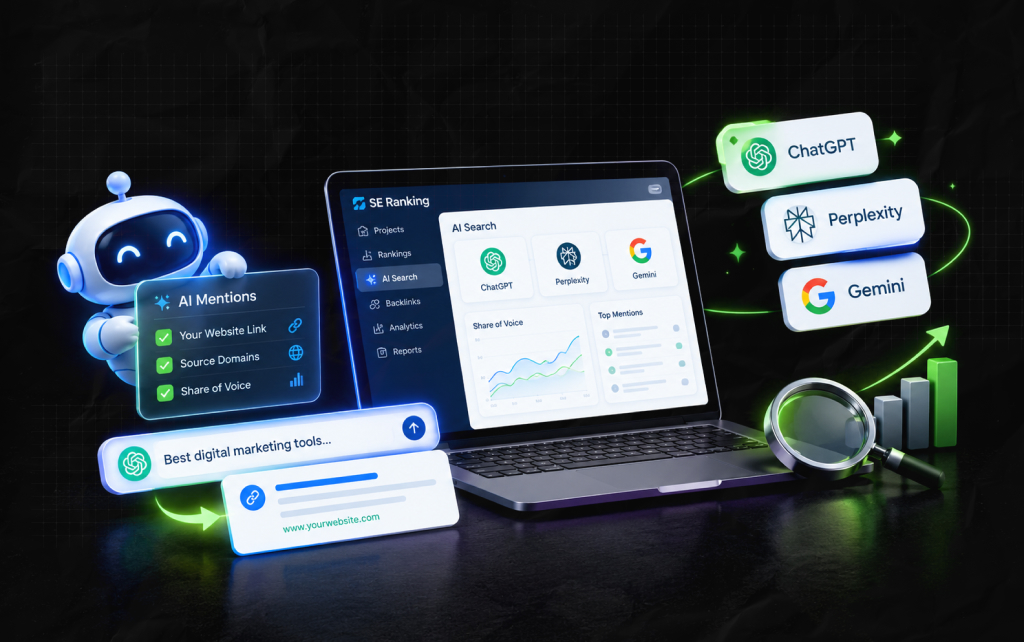
SE Ranking tackles this with AI visibility tracking. Both plans include 25 AI prompts a day in one project, and larger volumes require the SE Visible add-on.
This monitors how often your brand is mentioned in AI-generated responses.
An experimental widget in SE Ranking’s dashboard reveals whether the AI engine explicitly included:
If organic conversions fall while rankings hold steady, AI answers may be one factor. AI visibility data can offer clues, but it doesn’t prove the cause.
This provides a much-needed layer of information on whether an AI bot is correctly citing and passing referral traffic to your content.
Core keeps six months of history, while all-time history needs Growth.
Daily keywords count per search engine, so tracking 1,000 keywords on both Google and Bing uses all 2,000 Core targets.
Extra seats cost $16 a month. Shared logins aren’t allowed, and many add-on prices apply to annual billing.
Payments are non-refundable, so use the trial first.
SE Ranking is an excellent choice for small teams, solo analysts, or cash-strapped agencies that need a daily rank tracker with clean reporting and a focus on technical SEO auditing.
You don’t need heavy lifting like competitive PPC analysis or a live backlink universe index.
For tracking-focused work, it gives you more tracked keywords per dollar than Semrush or Ahrefs entry plans, though with smaller databases.
Avoid spending money on SE Ranking if you need enterprise-grade data depth or email outreach integrations.
Everyone else will find a beautiful interface and a powerful set of prioritized features that won’t break the bank.
It’s simple: if you’re on the fence about subscribing to SE Ranking, take advantage of their 14-day free trial without entering any payment information and evaluate the tool on your own website and custom keyword research requests.
Piyasa is a search engine marketing strategist who has spent the last six years decoding Google's ever-changing mind. From corporate giants to neighborhood storefronts, she helps businesses cut through the digital noise and actually get noticed online. When she isn’t building SEO strategies or writing the latest search industry breakdowns for Search Engine Magazine, you can usually find her hanging out with friends - and gently reminding them that no, she cannot personally fix the latest algorithm update for them.
View all Posts

Copy-Paste ChatGPT Prompts To Write Product P...
Nov 25, 2026
Faceted Navigation SEO: Best Practices, Commo...
Nov 24, 2026
The Growing Role Of Brand Authority In Modern...
Nov 23, 2026
Top 10 SEO Consultants In London For Improvin...
Nov 21, 2026
3-Minute Checklist: How To Get Your Brand Nam...
Nov 20, 2026