How To Get Your Brand Cited In AI Search Results In 2026
Oct 22, 2026
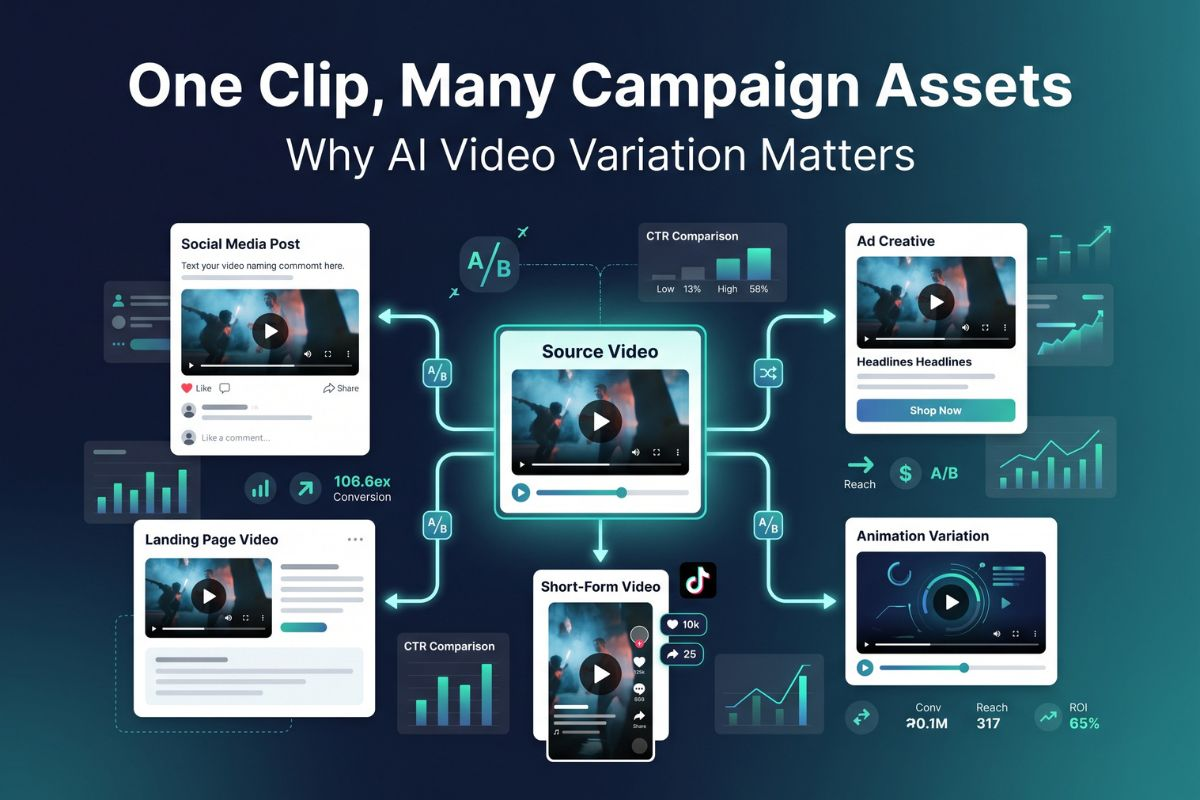

Marketing teams do not need one video – they need many.
When I look at how content teams actually work, the problem is rarely “we need a video.” The real problem is that one video is never enough.
A product clip may need to become a TikTok post, a YouTube Short, an Instagram Reel, a landing page visual, an email asset, and maybe three ad variations by the end of the week.
That is where the pressure begins. A single polished video can be useful, but it often gets exhausted quickly.
Audiences scroll past it, platforms reward fresh creative, and paid campaigns need enough variation to test what is actually working.
A video to animation converter can help marketers turn existing footage into a more scroll-stopping creative variation for social campaigns.
GoEnhance AI is an online image and video generation and editing platform, and it’s relevant here not as a gimmick, but as part of a larger content workflow problem: marketers need more usable versions of the footage they already have.
The smartest teams I have seen do not treat AI Video Variation tools as magic buttons.
They treat them as variation tools. That distinction makes all the difference.
When you talk about the AI video variation cycle, these two are the core components you must know about:
Video production is expensive even when it looks simple.
So, someone has to plan the concept, prepare the script, shoot the footage, edit the clips, adjust the format, add captions, export versions, and review everything before it goes live.
When that entire process produces only one usable asset, the return can feel weak.
This becomes more obvious in content marketing: A blog post can be updated. A graphic can be resized. And a newsletter can be repurposed.
A video, however, often gets treated as a fixed object. Once it is posted, the team moves on.
That habit wastes good material. A customer testimonial, product demo, founder interview, event recap, or tutorial clip may contain more value than one post can capture.
The challenge is turning the original material into new angles without making the audience feel they are seeing the same thing again.
I like to think of video variation as a bridge between production and distribution.
The original footage provides the raw material, but the campaign still needs versions that fit different goals.
A product demo might become a fast-paced ad creative. A talking-head video might become a stylized educational clip.
Similarly, the behind-the-scenes video might become a brand story.
Also, a plain clip might become an animation-style asset that feels more native to social platforms.
| Original Clip | Possible Variation | Marketing Use |
| Product demo | Short animated explainer | Paid social or landing page |
| Founder interview | Quote-led video snippet | LinkedIn or newsletter |
| Tutorial footage | Visual step-by-step clip | SEO article support |
| UGC-style video | Stylized campaign asset | TikTok or Reels testing |
This is not about changing content for the sake of change.
Instead, it is about matching the same idea to different audience behaviors.
A viewer on a search page is not in the same mindset as someone scrolling Reels at night.
The video should respect that.
Animation-style edits can work well because they interrupt visual sameness.
Social feeds are crowded with similar lighting, product shots, talking heads, and captions.
A stylized version of a familiar clip can give the same message a second life.
I have seen this work best when the animation style supports a clear campaign purpose.
A software brand might use it to simplify an abstract idea.
A consumer product might use it to create a more playful mood. Also, a creator brand might use it to build a recognizable visual identity.
There is also a practical benefit. Animation-style treatment can sometimes soften the limitations of imperfect footage.
A clip shot in a basic room may feel more intentional after it is transformed into a graphic or illustrated style.
It will not fix weak messaging, but it can help a usable clip feel more campaign-ready.
The most useful AI workflows are not always about producing the final asset in one step.
Often, they help a team test directions before investing more time.
Does this product look better in a clean futuristic style or a warmer lifestyle style?
Does the campaign need a serious tone or a more playful one? Should the visual feel premium, educational, bold, or creator-led?
A video-to-video generator is especially useful when teams want to test different moods, formats, or visual directions without planning a new shoot every time.
That testing layer matters because marketing is rarely predictable.
A creative director may prefer one version, while the audience responds to another.
AI-generated variations give teams more options to compare before deciding where to spend editing time, ad budget, or design resources.
Search-focused marketers often think first about written content, but video now plays a larger role in how pages feel and perform.
A product page with a helpful video can feel more trustworthy. A blog post with a short visual explanation may keep readers engaged longer.
A tutorial page can become easier to understand when the key idea is shown, not only described.
Video variation also supports distribution. One source clip can feed several channels:
| Channel | Useful Video Format |
| Blog article | Short explainer or embedded demo |
| TikTok / Reels | Fast visual hook with captions |
| YouTube Shorts | Clear single-topic clip |
| Email campaign | Lightweight teaser video |
| Paid ads | Multiple creative variations for testing |
This is where AI can reduce repetitive production work.
It does not replace the strategy behind the content, but it can help marketers get more mileage from a strong idea.
I would not recommend publishing AI-made video variations without review.
The faster the workflow becomes, the more important human judgment becomes.
The review process should check whether the brand still feels consistent, the message is accurate, the subject is represented properly, and the output suits the platform.
Captions, pacing, aspect ratio, and thumbnail framing still matter.
So do permissions, especially if people, customer footage, or UGC clips are involved.
A quick internal checklist helps:
| Review Area | Question to Ask |
| Brand fit | Does this still feel like our brand? |
| Message clarity | Can the viewer understand the point quickly? |
| Platform match | Does the format suit where it will be posted? |
| Rights and consent | Do we have permission to use the footage? |
| Quality control | Are there visual artefacts or awkward motion? |
The value of AI video tools is not that they let marketers avoid creative thinking.
The value is that they make creative testing less slow and less expensive.
A team with one video can guess what might work. A team with five thoughtful variations can learn.
That learning loop is where modern content marketing is heading: more testing, more repurposing, more channel-specific assets, and less dependence on starting from zero every time.
In that sense, AI video variation is not just a production shortcut. It is a way to make marketing teams more responsive to what audiences actually watch.
Read Also:
Barsha is a seasoned digital marketing writer with a focus on SEO, content marketing, and conversion-driven copy. With 8+ years of experience in crafting high-performing content for startups, agencies, and established brands, Barsha brings strategic insight and storytelling together to drive online growth. When not writing, Barsha spends time obsessing over conspiracy theories, the latest Google algorithm changes, and content trends.
View all Posts

How To Get Your Brand Cited In AI Search Resu...
Oct 22, 2026
The Ultimate Blueprint For Broken Link Buildi...
Oct 16, 2026
The Ultimate Guide To Stealing Your Competito...
Oct 15, 2026
Beyond The Basics: Master Guest Posting For H...
Oct 15, 2026
Best Generative Engine Optimization (GEO) Com...
Oct 14, 2026