Structured Data SEO: How Schema Markup Helps Search Engines Understand Your Website
Sep 12, 2026

The SaaS and regular software sales are not the same.
That is, in a SaaS sales, the business promotes the cloud-based software to other businesses, so that they subscribe to the service.
Now, unlike a regular sale, there is no product or software sold to the customer once. Rather, SaaS sales focus on closing subscription deals. So, it is mainly done between B2B.
Moreover, the SaaS has become the heart of the B2B Sales.
That is, its flexibility, market entry, and consistent revenue make the sales cycle beneficial for both the buyer and the seller businesses.
But the real question is— “How to develop a B2B SaaS sales model?”
Well, no need to look any further, I have got the perfect guide for you. In this blog, I will delve into the diverse aspects of SaaS marketing by highlighting—
Stay tuned!
First things first, SaaS stands for software as a service. So, in the B2B sales context, it refers to the marketing and selling of the software service to another business.
That is, the provider of SaaS manages the programs and the functionalities of the software. Whereas the receiver pays a subscription price to use its features.
For instance, in a cloud-based software service, the seller business provides the features, functions, and platform to use the software.
And, the receiver business subscribes to the services. So, they pay monthly or annually for availing the services of the software business.
Unlike regular sales, SaaS sales are quite complex. For instance, in a regular sale, the business sells the product to the customer. And, the one-time purchase is recorded in the system.
But in SaaS sales, another business or customer subscribes to the software service. That is, the team first generates leads, demonstrates the software, and finally closes the deals.
Now, this is not a one-time purchase. That is, the other businesses are subscribed to the service. So, either monthly or annually, the service sale will be billed and recorded.
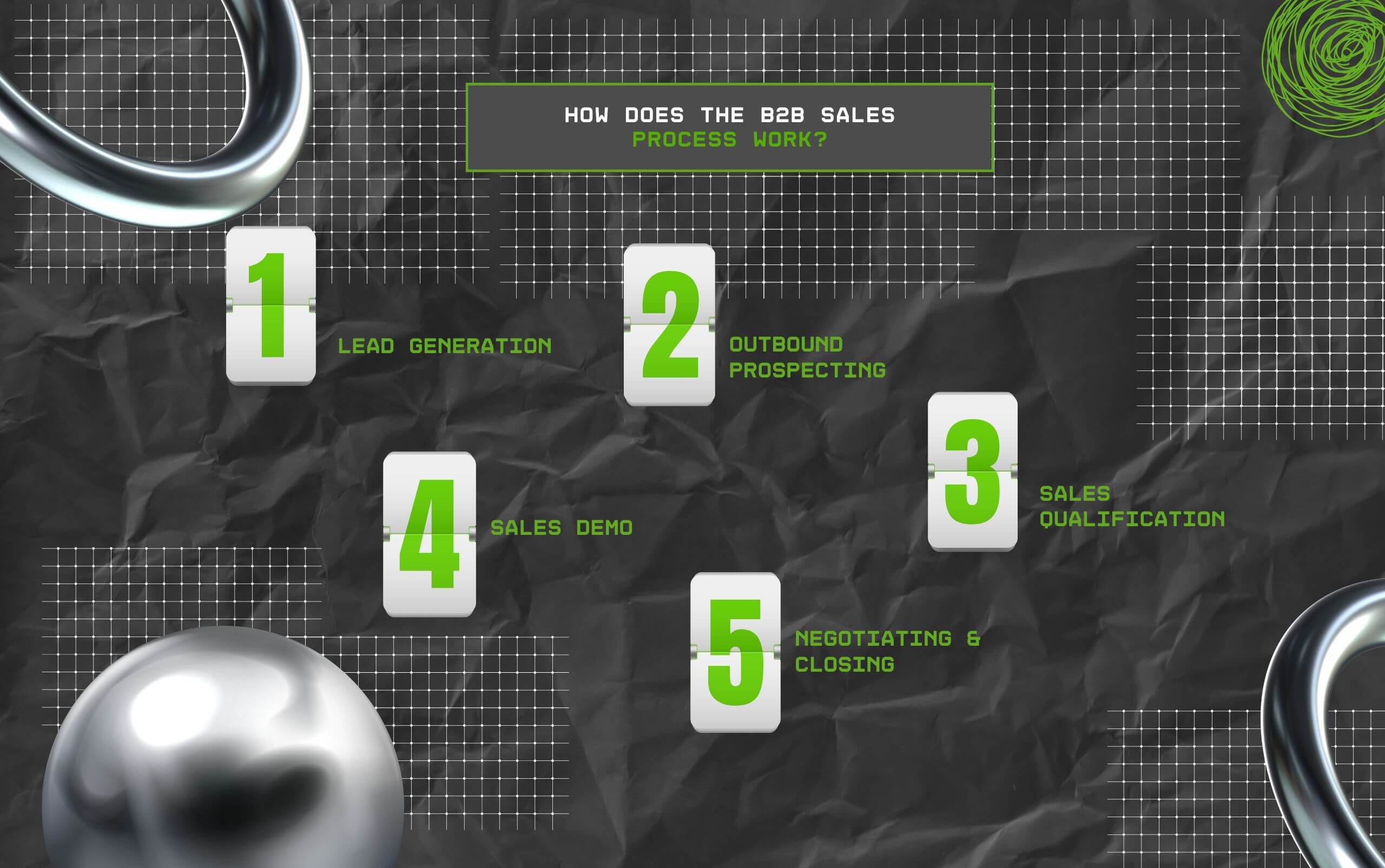
Now, to employ a proper model to improve the SaaS sales in a B2B market, knowing the basics of the process is important. So, here is a breakdown of the sales process—
Firstly, the team members need to generate leads by encouraging buyers to try the B2B SaaS product. So, they can turn into potential customers for the software service.
Then, the prospects for the software service are contacted. Now, this can be done directly through cold calls, outbound emails, or social media DMs.
After that, the receiving business is evaluated to check if it fits into the criteria mentioned in the company’s ICP. So, businesses can convert them into potential customers.
Then, the sales demo revolves around the process of presenting the live sales demo to the prospects to let them know the features, usage, and troubleshooting mechanisms.
So, the leads realize the potential of the software for solving their company’s issues. Making it easier to finalize the deals and sell the service subscriptions.
Finally, the businesses negotiate the terms, payments, and feature availability with the other businesses. So, both businesses can make a profit.
Then, once the negotiation is in place, the deal is finalized and closed. So, the receiving businesses agree to the subscription model and purchase the software’s service.
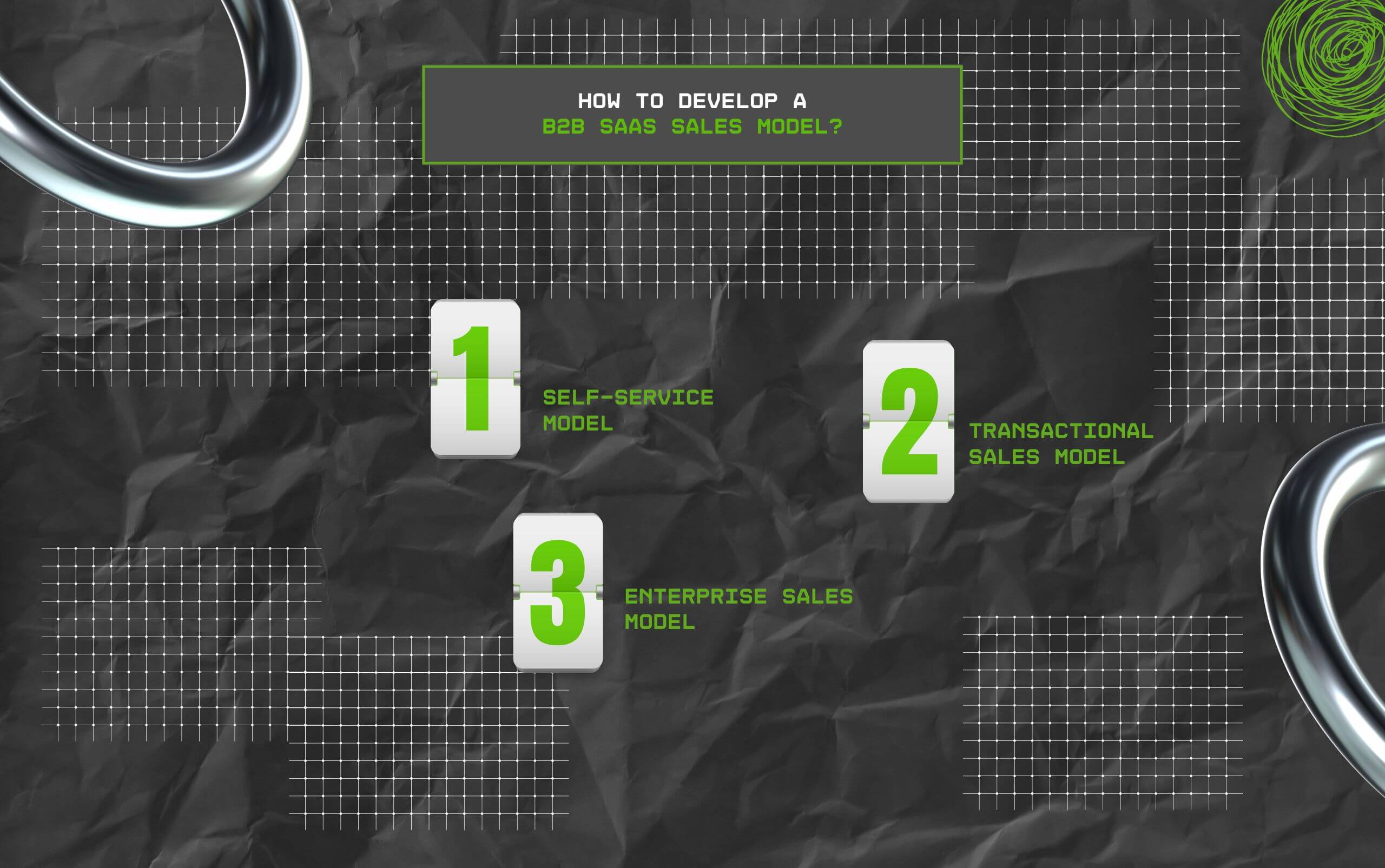
Now, choosing the right B2B SaaS sales model is the key to a successful sales strategy. So, here are the three major types of SaaS sales models—
Firstly, this is best suited for small to medium-sized businesses. That is, it provides free trials to potential leads to try out the software services before subscribing to them.
So, it saves expenses on hiring a separate team to pitch the features and pricing to other businesses. Making it a self-promoting SaaS sales strategy.
Unlike the self-service model, the transactional model is more common for its scalability. That is, it invests in large sales teams to personalize the selling pitch.
So, the business contacts small and medium businesses to encourage them to become a part of the tiered pricing model. Ensuring that the potential leads can be converted into customers.
Finally, the enterprise model is designed for SaaS enterprises to customize and support the sales strategy. So, it includes massive investments for smoothly running the SaaS sales funnel.
Moreover, this focuses on building stronger customer relationships.
So, there can be an increase in the number of contracts signed by the team, invoices generated, and a streamlined selling process.
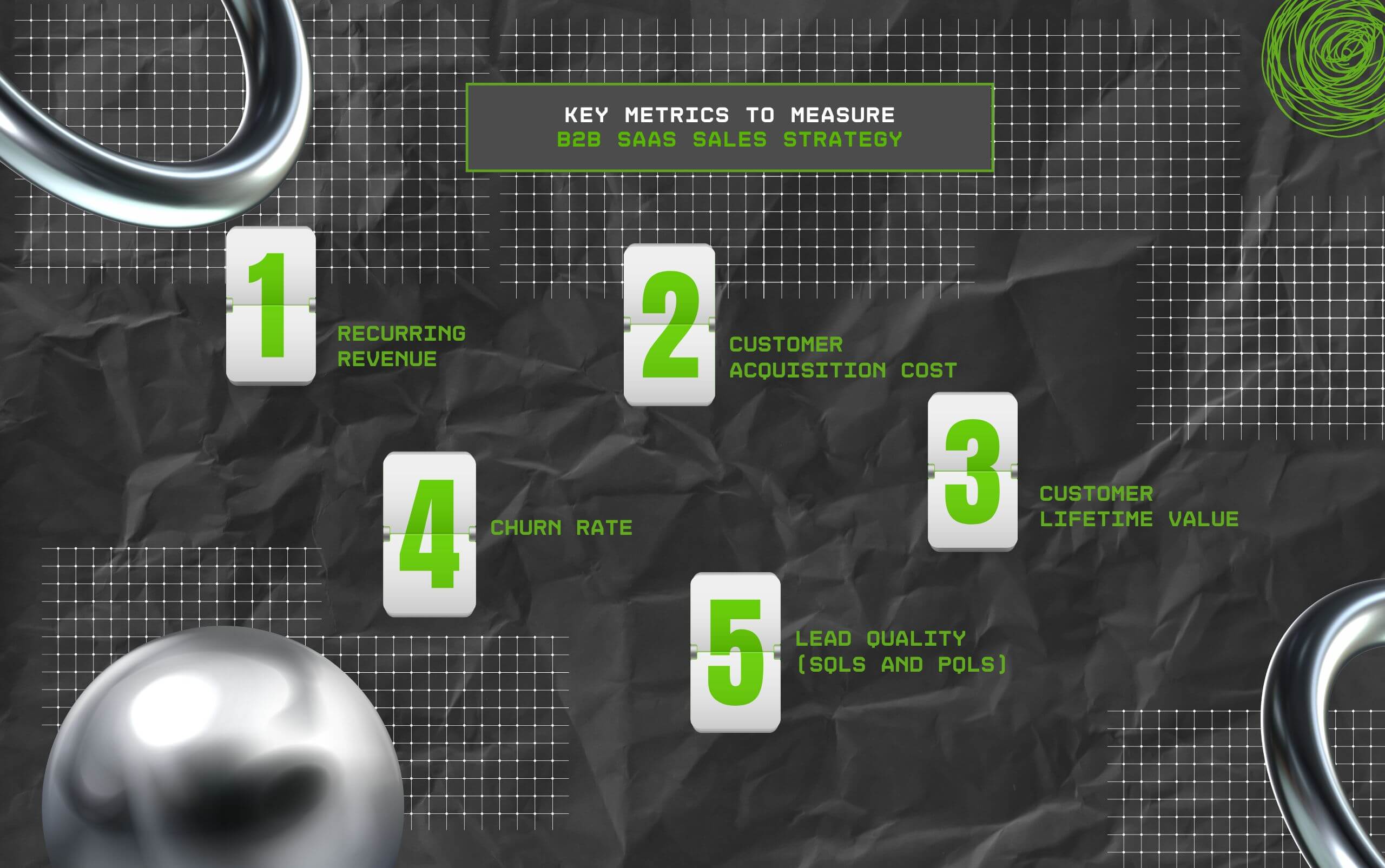
Since a SaaS sales cycle is different from a traditional sales cycle, its key metrics are also different. So, here are the common metrics to measure the SaaS Sales Strategy—
In the B2B market, SaaS sales follow more than a simple selling strategy. They need something concrete and strategic to ensure leads turn into customers easily.
And, with this guide, businesses can build their own B2B SaaS marketing strategies to sell the services to the right customers at the right time!
Here, I have brought you a complete set of all the important frequently asked questions on B2B SaaS sales strategy.
Generally, the SaaS sales team consists of various roles. For instance, the Sales Development Reps (SDRs) are responsible for managing the lead generation.
Then, the Account Executives (AEs) look into the closing of the deals. So, it is easier to manage the entire sales process.
Finally, there are customer success managers (CSMs) to retain the customers and grow the leads from its core operations into sales operations.
Unlike a regular sales cycle, a SaaS sales cycle lasts up to 3 months. That is, it significantly varies in timeline for small, medium, and large enterprises.
For instance, small businesses can employ the SaaS Sales process for 3 months. Whereas medium businesses tend to employ the process for 6 months.
Finally, big enterprises employ the SaaS Sales cycle for 9 to 12 months. So, based on the size and needs of the businesses, the SaaS Sales cycle can differ.
Generally, you need to have skills and qualifications to get into the SaaS Sales cycle.
That is, you need to build relevant skills, have strong networking on LinkedIn, and experience in B2B business to manage the SaaS sales process.
So, you need to learn about the SaaS marketing landscape, build the necessary skills, and have technical knowledge. Making it easier to get into the sales cycle.
Chandrima is a seasoned digital marketing professional who works with multiple brands and agencies to create compelling web content for boosting digital presence. With 3 years of experience in SEO, content marketing, and ROI-driven content, she brings effective strategies to life. Outside blogging, you can find her scrolling Instagram, obsessing over Google's algorithm changes, and keeping up with current content trends.
View all Posts

Structured Data SEO: How Schema Markup Helps ...
Sep 12, 2026
TikTok Downloader For Content Marketing Resea...
Sep 12, 2026
AI Content Optimization: How To Make Your Con...
Sep 11, 2026
AI Citations: How To Get Your Content Referen...
Sep 10, 2026
Top Enterprise AI Cloud Platforms for RAG, AI...
Sep 08, 2026