
The Ultimate Guide To Stealing Your Competitors’ Backlinks Using Curated Resource Lists
Oct 15, 2026


Thailand’s online retail market has already surpassed $10 billion USD in 2024. The growth is still accelerating in the contemporary period.
Shopee processes multiple orders in one day. In addition, the TikTok shop has transitioned into something really serious revenue channel from a mere app of curiosity.
Moreover, all these transitions have occurred over just 2 years. Thus, all these factors make selling online in Thailand highly relevant in the contemporary context.
However, people often think that the market is not very difficult to crack. But in reality, it is much more difficult to penetrate than it looks prima facie.
Several things can easily work in places like Jakarta or Manila. However, the same tactics can not be applied to selling online in Thailand.
You will have to spend carefully before investing. It is important to think carefully before spending a single baht on inventory.
You should be considerate of the specific habits of the Thai consumers. They have preferences that are very different from the rest of the world.
In this article, we will try to properly understand the procedural nuances of selling online in Thailand.
We will also gain a brief overview of the platforms that dominate the Thai market and, most importantly, learn about the behavioral patterns of Thai buyers when making relevant purchasing decisions.
All these considerations will help you to determine the steps to build a strong business that shall last longer than a trend.
It is very important to understand the needs and requirements to deal with the internet. Here are the main things that we will have to consider.
Shopee is the undisputed market leader in Thailand, accounting for the largest share of online transactions across almost every product category.
It’s where price-sensitive Thai buyers go first, and the platform’s native advertising tools make it accessible for sellers at any stage.
Lazada holds second place, with a stronger foothold in electronics and branded goods. The key difference: Lazada’s buyer base tends to skew slightly older and more brand-conscious. TikTok Shop is the fastest-growing channel of 2025–2026.
Product categories that lend themselves to short-form demonstrations, such as skincare, kitchen tools, and food, are seeing extraordinary conversion rates from in-feed video.
If you’re not camera-shy, this is where the open water is right now.
This one surprises many international sellers. Thai consumers use LINE, not WhatsApp, not Messenger, as their primary chat app.
A LINE Official Account is how you build a returning customer base. Sellers who skip LINE are leaving repeat purchase revenue on the table every month.
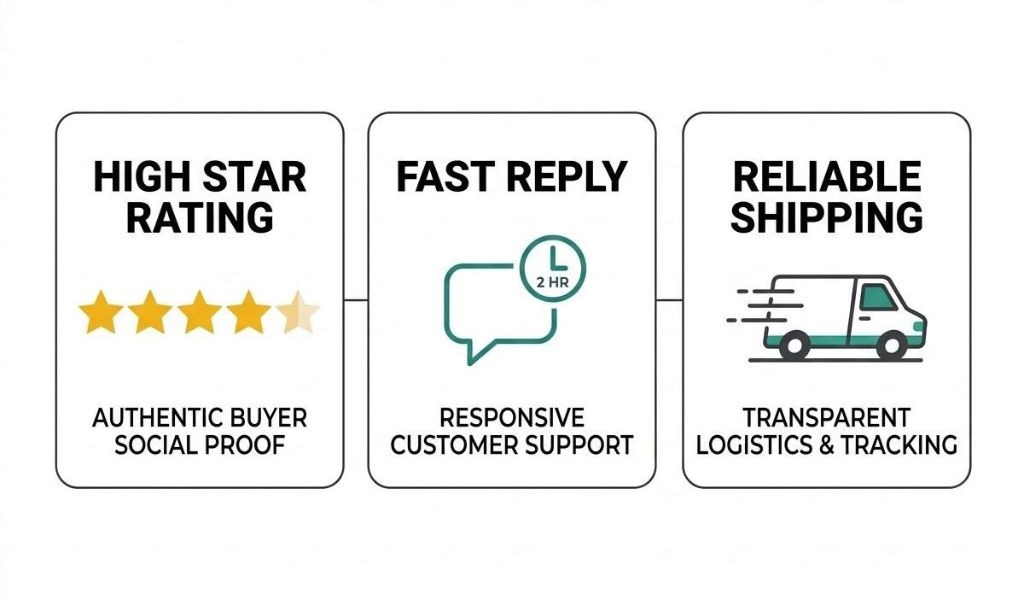
Three things matter most to Thai online shoppers:
The other thing worth knowing is that Thai buyers are highly responsive to promotions and flash sales.
The platform-native voucher systems (Shopee Coins, Lazada vouchers) genuinely move purchase decisions. Build them into your pricing model from the start, not as an afterthought.
The mistake most first-time sellers make is choosing a product they love rather than one the market is actively looking for.
In Thailand, the categories with the clearest online demand are health and beauty, pet products, home organization, and food supplements.
All these things are driven by repeat purchase behavior that makes unit economics work.
Before committing to inventory, run this simple test: search your product keyword on Shopee and look at two numbers. Indulge in keyword mapping.
You should also know how many results appear, and what the sold count looks like on the top three listings.
If the top seller has moved thousands of units, the demand is real. If nobody has more than a few dozen, be cautious.
Running a Thai e-commerce operation solo is possible in the early stages.
As volume grows, the workload splits in directions most sellers aren’t prepared for.
This includes things like content creation, platform advertising management, supplier relationships, accounting, and logistics coordination.
Moreover, all of these factors compound simultaneously.
This is where many promising sellers plateau, not because their product stopped working, but because they ran out of bandwidth to grow all the pieces at once.
Working with an experienced online business consultant in Thailand can significantly shorten that learning curve, particularly for sellers entering the market from outside or scaling beyond their first product line.
One Agency Thailand, for instance, operates as a full-stack partner rather than a traditional agency, handling the marketing, strategy, and operational layers.
Hence, this ensures that the sellers can focus on the product and the customer.
If you’re selling online in Thailand, your visibility doesn’t begin on Google; it begins inside the platforms themselves.
Shopee and TikTok Shop both run on internal ranking systems. Listings that respond faster, get early reviews, and maintain steady sales tend to surface more often. It’s not formally documented, but you can see the pattern when browsing results.
That means search behavior here is tied to activity, not just keywords. A product with ten recent sales often outranks one with better photos but no movement.
So early traction matters more than perfection. Even a few consistent orders can push your listings into places where more buyers actually see them.
Many new sellers try to “launch hard” and then slow down. That approach doesn’t hold up well in Thailand’s ecommerce environment.
Both users and platforms respond better to consistency. Regular uploads, quick replies, updated listings, and other such small things keep your store active in the system.
If activity drops, visibility usually follows. It’s gradual, but noticeable.
This applies outside the platform, too. If you’re using content or ads to drive traffic, delays in response or outdated listings create friction quickly.
It doesn’t require constant effort, just steady presence. The sellers who stay visible are usually the ones who don’t disappear between pushes.
There are certain practical considerations you should keep in mind before selling online in Thailand.
You should always place an order, especially when you are starting from scratch.
If you’re starting from zero, prioritize this order:
This article is intended as general guidance. Platform terms, commission rates, and market conditions change frequently.
Thus, you should verify current figures directly with each platform before launching.
Barsha is a seasoned digital marketing writer with a focus on SEO, content marketing, and conversion-driven copy. With 8+ years of experience in crafting high-performing content for startups, agencies, and established brands, Barsha brings strategic insight and storytelling together to drive online growth. When not writing, Barsha spends time obsessing over conspiracy theories, the latest Google algorithm changes, and content trends.
View all Posts

The Ultimate Guide To Stealing Your Competito...
Oct 15, 2026
Beyond The Basics: Master Guest Posting For H...
Oct 15, 2026
Best Generative Engine Optimization (GEO) Com...
Oct 14, 2026
Digital PR for Link Building: How To Earn Hig...
Oct 13, 2026
Cracking The Code Of The Social Media Saga Si...
Oct 13, 2026