The Ultimate Guide To Competitor Backlink Analysis: An Actionable SEO Blueprint To Steal Your Rivals’ Traffic
Oct 23, 2026


If you are preparing for an SEO interview, you don’t need fancy theory. Instead, you need an SEO glossary for yourself!
Moreover, you need clear definitions, a real understanding, and the ability to explain things simply.
As a digital marketing professional and content writer for eight years, I have had my share of tough interview moments.
In my experience, I have always seen how awareness is super important, especially in the SEO industry that is prone to constant changes and innovations.
So, if you think doing a few courses will help you kickstart your career in the SEO industry, then you are wrong.
You need knowledge and clarity at your disposal to crack an interview – and once you have the job, it’s your space to grow.
TBH, SEO is less about theory and more about practical experiences.
Today, my goal is simple – to make you aware of all the terms you need to know about before you start your journey with practical experiences.
Stay tuned!
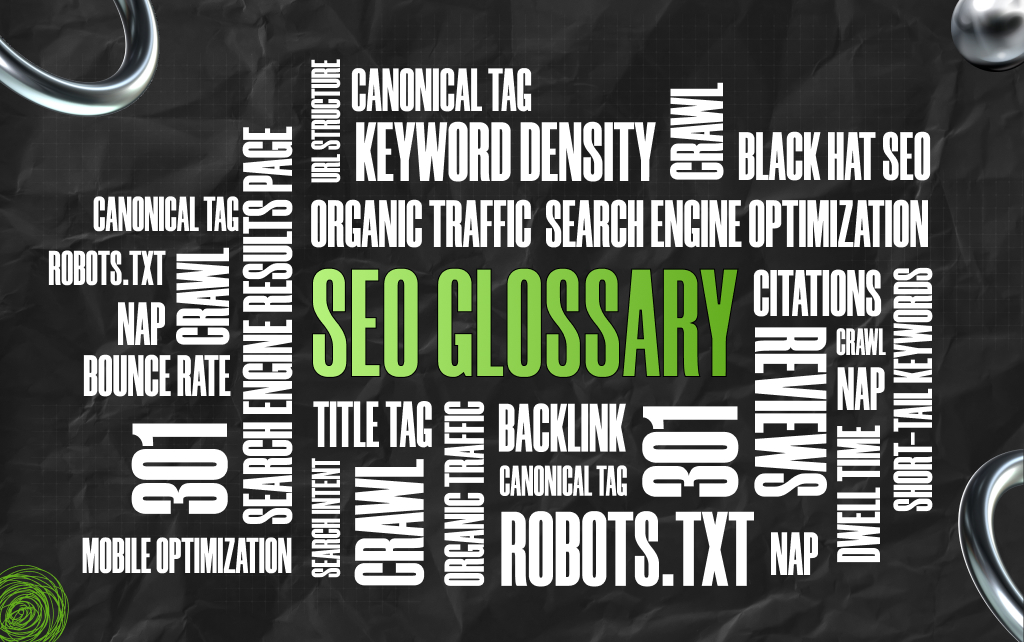
I have created a list of important SEO glossary terms that can help you prepare for your interviews.
Moreover, each term is short, practical, and easy to remember. The point? Awareness and knowledge before you dive into practical experiences.
This is your SEO 101 – not knowing these terms is bad, especially if you are planning to pursue a career in the SEO industry.
1. SEO (Search Engine Optimization): The process of boosting your website so it ranks higher on the search engine result pages.
2. SERP (Search Engine Results Page): The web page that users come across after searching on Google.
3. Keyword: The word or phrase users type into Google and search engines.
4. Search Intent: The reason behind a search, like learning, buying, or comparing.
5. Organic Traffic: Visitors who come from search results, not ads.
So, once you are aware of core SEO basics, it only makes sense to dive into the world of on-page SEO.
FYI, on-page SEO is the process of creating web pages that answer search queries. Moreover, on-page SEO has multiple aspects, extending beyond basic content optimization.
Of course, content optimization is a crucial aspect of on-page SEO. But more importantly, it also includes meta tags and schema, both of which I’ll touch upon later.
For now, let’s check out all the on-page SEO terms that are a crucial part of my SEO glossary, specially tailored for cracking interviews.
6. Title Tag: A clickable headline that appears on search engine result pages.
7. Meta Description: The short summary under the content title on search engine result pages.
8. Header Tags (H1, H2, H3): Headings that structure your content.
9. URL Structure: The format of your page link.
10. Keyword Density: How often a keyword appears in your content.
So, I started my career with content writing – and quality of content is something I have always prioritized.
As someone whose website was penalized by the Google March update of 2024, thanks to the rigid content policies of the search engine giant, I know the consequences of publishing shitty content on your website.
Moreover, it took me nine whole months to bring some traction to this website. Once I saw some traction, I didn’t stop – I kept working on it.
Currently, my website has 40,000 organic traffic as per Ahrefs. Also, it survived two core updates and several smaller updates since then.
So, yes, both content and quality of the content are crucial factors that can make or break your website’s SEO.
11. E-E-A-T: Experience, Expertise, Authority, and Trust. Signals that show content quality.
12. Duplicate Content: Content that appears in more than one place online.
13. Thin Content: Pages with little or no useful information.
14. Content Optimization: Improving content so it ranks better.
15. Evergreen Content: Content that stays relevant over time.
Having a basic knowledge of technical SEO is crucial for anyone seeking a career in the SEO industry.
So, with the help of technical SEO, you can optimize your website for Google and other search engines. Also, it will help you to establish trust with developers.
Of course, you don’t need to know every technical term in the beginning.
So the focus here is on the technical terms that any beginner should be aware of, especially if you are seeking an interview.
16. Crawl: When search engines scan your website.
17. Indexing: When your page is added to Google’s database.
18. Sitemap: A file that lists all pages on your site.
19. Robots.txt: It is a type of file that informs search engines what to avoid or crawl.
20. Canonical Tag: Tells search engines which version of a page is the main one.
Covering a detailed SEO glossary without discussing links and authority would be unfair – I mean, you can’t separate links and authority from SEO.
The entire system depends on links – and there’s more than one kind of link, with each type related to authority-building.
For example, when you create a content pillar covering all related topics to a hero blog, you will link each page to the hero content.
That way, even if one page performs, chances of your ensuring pillar ranking increase by default – and that is known as internal linking.
But there’s more to linking and authority-building – from backlinks to domain authority, here are some of the core terms you need to know.
21. Backlink: A link from another website to yours.
22. Internal Link: A link from one page of your site to another.
23. Anchor Text: The clickable text in a link.
24. Domain Authority (DA): A score that predicts how well a site may rank.
25. Link Building: The process of getting backlinks.
This is an extended section of technical SEO, considering most experts have these terms under technical SEO.
However, I wanted to simplify matters – this is because of how confused I had felt reading those blogs. As a result, it was only fair to keep these terms under performance and overall user experience.
So, if the experience of being on a website is not smooth and helpful, then why will I even spend time on it? Instead, I’ll leave the website without spending any more time and jump to another website.
As a result, your site’s performance and user experience become super important factors for its growth.
26. Bounce Rate: The percentage of users who leave without taking action.
27. Dwell Time: How long a user stays on your page.
28. Page Speed: How fast does your page load?
29. Mobile Optimization: Making your site work well on phones.
30. Core Web Vitals: Metrics that measure loading, interactivity, and visual stability.
Thankfully, I don’t have to explain much here – the name itself makes it obvious.
So, if you want your website to rank for local search queries, as compared to doing so for a global audience, the strategy is going to be different.
Moreover, local SEO is mostly for businesses and brands seeking a digital presence. As a result, I’ve created a separate section for local SEO.
31. Google Business Profile: Your business listing on Google.
32. NAP (Name, Address, Phone): Your business details across platforms.
33. Local Pack: The top map results for local searches.
34. Reviews: Customer feedback that affects ranking and trust.
35. Citations: Mentions of your business on other sites.
While I firmly believe that strengthening your basics is more important for beginners preparing for interviews in the digital marketing industry, it doesn’t make sense to avoid knowing about some advanced terms.
As a result, I did my best to only cover advanced SEO terms that make sense at a beginner level – and not for someone who has spent years in the industry.
36. Schema Markup: Code that helps search engines understand your content.
37. Featured Snippet: A highlighted answer at the top of search results.
38. Alt Text: Text that describes images.
39. Redirect (301): A permanent move from one URL to another.
40. Broken Link: A link that no longer works.
This is perhaps the most significant section of my SEO glossary. Without analytics and tracking, you can’t improve your SEO and content strategy.
So, when you create content for a website, you need insights – is it performing? And if it’s performing, then why so? More importantly, if it’s not performing, then what can we do?
Also, remember that consistent tracking can help you figure out which aspects of your strategy are working and which are failing to perform.
41. Google Analytics: A tool to track website traffic.
42. Google Search Console: A tool to monitor search performance.
43. Impressions: How often your page appears in search results.
44. Click-Through Rate (CTR): The percentage of people who click your link.
45. Conversion Rate: The percentage of users who complete an action.
I did cover 45 terms in my SEO glossary, all of which form the foundation of SEO in 2026.
Now, you just need to find out more about these terms in detail – more importantly, how to do the implementation part of it.
This is because in SEO, practical experience is much more important than theoretical knowledge.
On that note, here are some helpful extras that might come in handy during an interview.
46. Black Hat SEO: Unethical practices that try to trick search engines.
47. White Hat SEO: Ethical practices that follow guidelines.
48. Long-Tail Keywords: Long, specific keyword phrases.
49. Short-Tail Keywords: Broad, high-volume keywords.
50. Algorithm Update: Changes in how search engines rank content.
For starters, do not just memorize. Instead, pick 10–15 terms and practice explaining them out loud.
Moreover, it is best to keep your answers simple. If you can explain a term in one or two clear sentences, you’re ready.
For instance, if they ask, “What is SEO?” don’t give a long answer.
Instead, say this clearly: “SEO is about helping the right people find the right content through search.”
Then expand if needed, and if they ask you about any specific term that a beginner should ideally know about, you can answer that easily, thanks to my SEO glossary.
Don’t forget to save it!
Also, remember that interviews are not about knowing everything. Instead, they are about showing clarity.
As a result, if you understand these terms and can explain them simply, you already stand out.
All the best!
Barsha is a seasoned digital marketing writer with a focus on SEO, content marketing, and conversion-driven copy. With 8+ years of experience in crafting high-performing content for startups, agencies, and established brands, Barsha brings strategic insight and storytelling together to drive online growth. When not writing, Barsha spends time obsessing over conspiracy theories, the latest Google algorithm changes, and content trends.
View all Posts

The Ultimate Guide To Competitor Backlink Ana...
Oct 23, 2026
How To Land High-Authority Editorial Backlink...
Oct 23, 2026
Why Your Website Traffic Dropped Suddenly And...
Oct 23, 2026
How Do The Physical Google Review Tools Redef...
Oct 23, 2026
How To Get Your Brand Cited In AI Search Resu...
Oct 22, 2026