The Keyword With 10 Searches That Sent Ahrefs Thousands Of Visitors
Sep 24, 2026

For years, the relationship between Google and publishers felt simple.
While websites created content, Google ranked it, and users clicked through. That system built entire industries.
Moreover, publishers invested in SEO because rankings meant traffic, and traffic meant revenue. As a result, revenue justified creating more content.
But that relationship has changed.
Today, more searches end without a click. Users search for something, get the answer directly on Google, and leave.
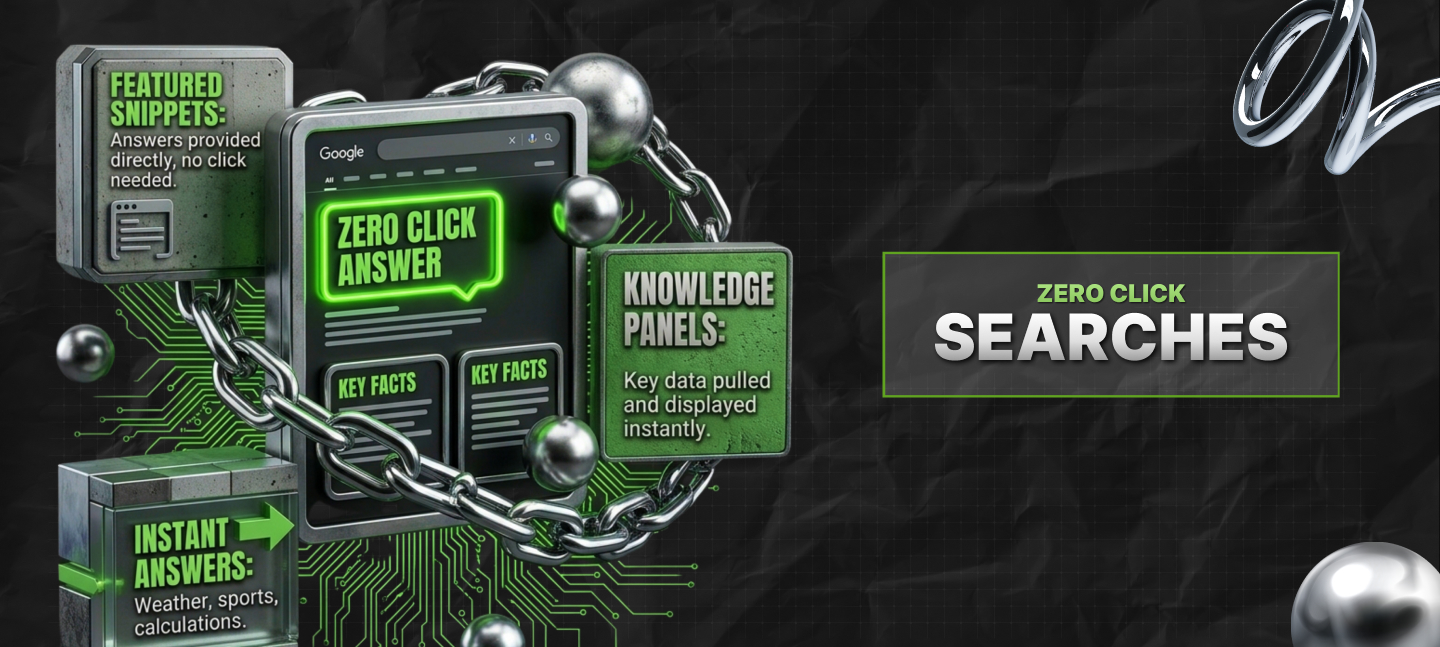
No website visits, sessions, pageviews, or even ad impressions. This is what the industry now calls zero click searches.
And whether publishers like it or not, they are becoming a major part of modern search behavior.
The shift has been gradual for years.
But with AI Overviews, featured snippets, knowledge panels, instant answers, and conversational search experiences growing rapidly, zero-click behavior is accelerating.
For website owners, this creates a difficult question. So, if Google keeps answering queries directly, what happens to organic traffic?
The answer is more complicated than most headlines make it sound.
Because while zero-click searches are reducing clicks for many queries, they are also changing what SEO success actually looks like.
Websites that adapt can still grow. However, websites relying only on informational traffic may struggle badly over the next few years.
This shift is already happening.
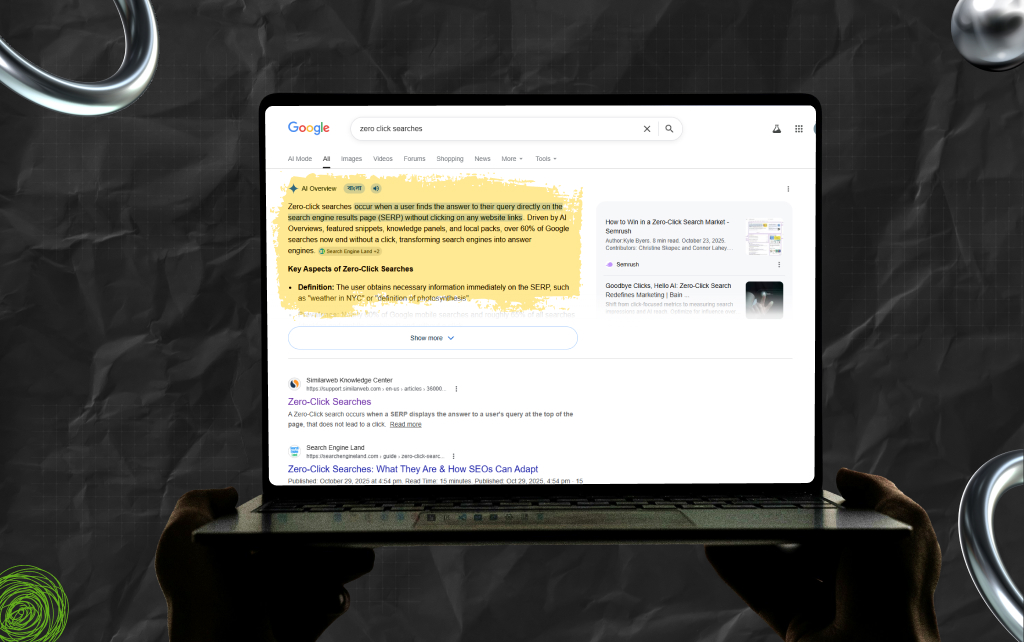
A zero-click search happens when a user gets the information they need directly from the search results page without clicking on any links.
Google now answers many questions instantly. In this context, some examples include:
In these cases, the user often never needs to visit another website. The answer already appears inside the search results.
Moreover, for users, this feels fast and convenient. And for publishers, it changes the economics of search traffic.
Google’s goal has always been user satisfaction. The faster users find answers, the better the search experience becomes.
As a result, from Google’s perspective, reducing friction makes sense.
So, if someone searches “time in Tokyo,” they should not need to open a website just to see the current time.
Also, the same applies to:
Over time, Google has steadily expanded these direct-answer experiences. But the biggest acceleration is happening because of AI.
AI-generated summaries now allow search engines to answer broader and more complex questions directly inside the results page.
This changes user behavior dramatically.
People no longer need to visit five articles to understand a topic.
Also, in many cases, Google now attempts to summarize everything immediately.
That creates a major challenge for publishers whose content depends heavily on informational search traffic.
Zero click searches did not suddenly appear overnight. Instead, Google has been moving in this direction for years.
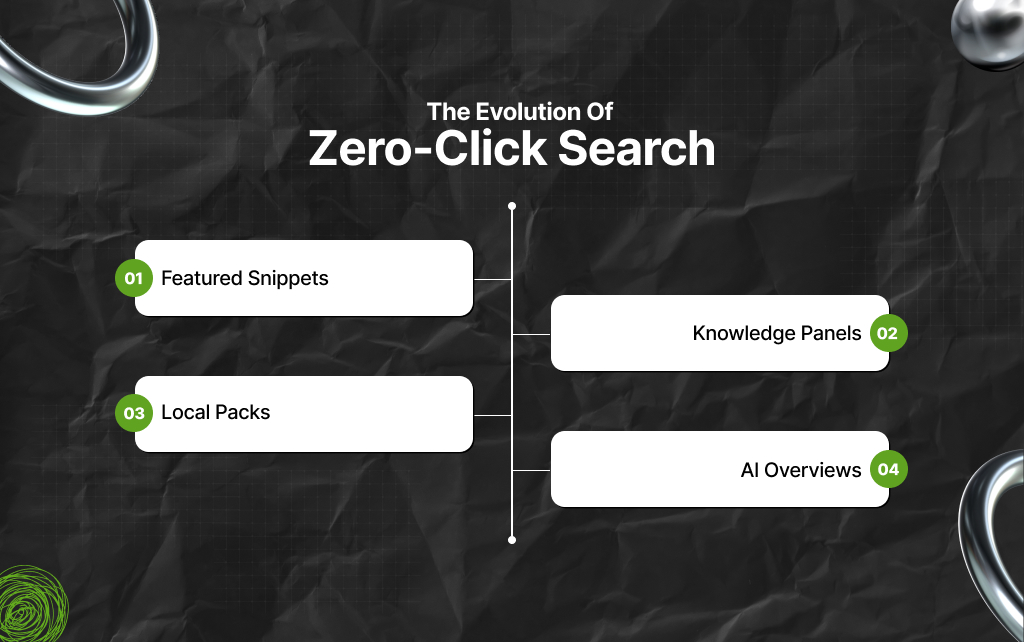
Featured snippets were one of the earliest large-scale examples.
When a user searches for a question, Google extracts a short answer from a webpage and displays it at the top of the results.
As a result, users often get enough information without clicking further.
Naturally, for some publishers, featured snippets increased visibility. But for others, they reduced traffic.
Knowledge panels changed how users interact with informational searches.
So, when you search for a celebrity, company, movie, or historical event, Google often displays a large information box instantly.
Again, users may never need to visit another website.
Local search changed, too.
Many users searching for restaurants, cafes, hotels, gyms, and salons make decisions directly from Google Maps and local listings.
Moreover, they only view ratings, reviews, photos, phone numbers, directions, and opening hours without clicking through to a business website.
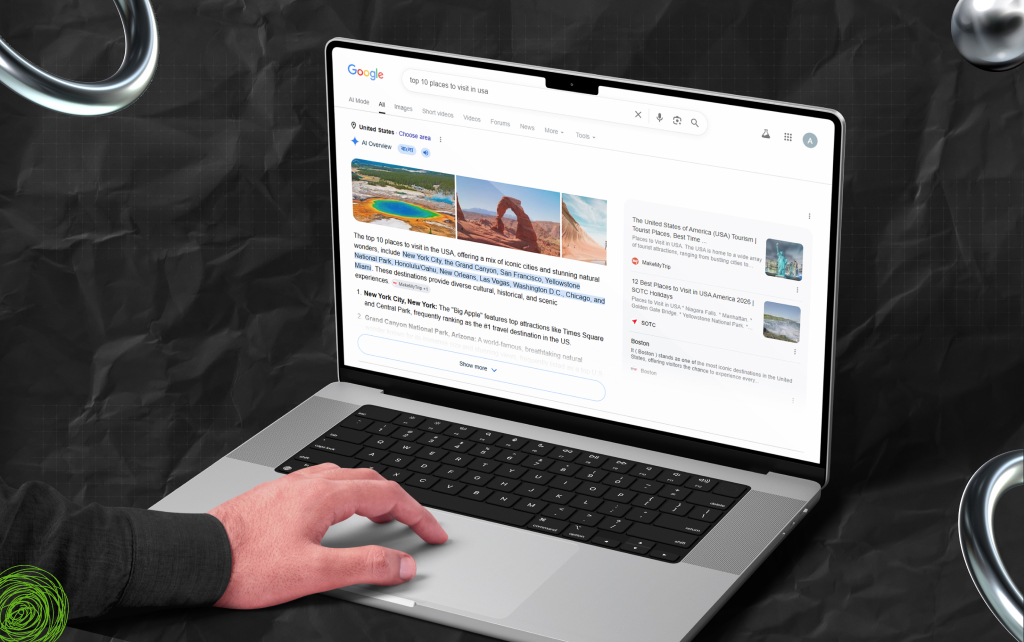
AI Overviews may become the biggest shift yet.
Instead of showing only links, Google increasingly attempts to synthesize information into a conversational summary.
This changes the role of organic listings.
The search engine is no longer only organizing the web. Instead, it is increasingly trying to become the answer itself.
That changes SEO fundamentally.
For many websites, organic traffic is the business model.
As a result, publishers rely on clicks for:
When searches stop generating clicks, revenue opportunities shrink. This is especially damaging for websites built around high-volume informational content.
For example, a website ranking for “What is intermittent fasting?” may once have received thousands of monthly visits.
But if Google now summarizes the answer directly, fewer users may visit the site.
Also, multiply that across thousands of keywords, and traffic losses become significant. This is why many publishers see zero-click search as a major threat.
And honestly, for some business models, it is.
Not all content is affected equally.
Some searches naturally lend themselves to direct answers, while others still require deeper exploration.
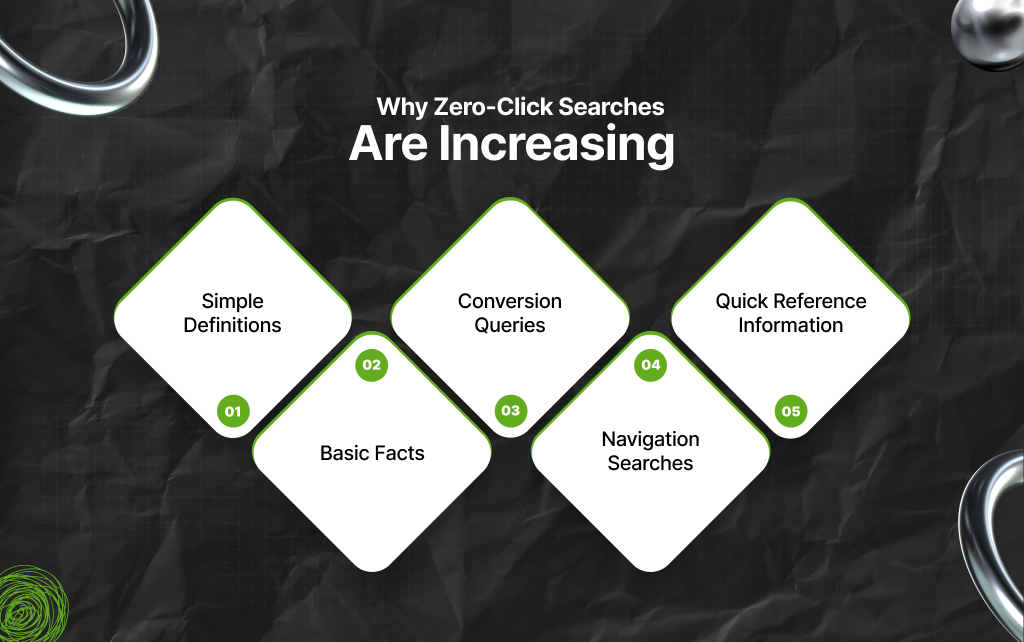
These types of queries often experience strong zero-click behavior:
So, if the answer fits inside a short summary, Google can often display it directly. That reduces click motivation.
Some content still requires deeper engagement. And in this context, the top examples include:
Additionally, users still click when they want:
That distinction matters.
Also, the future of SEO increasingly favors content that cannot easily be summarized into one paragraph.
For years, many SEO strategies focused heavily on traffic volume.
As a result, publishers would target thousands of informational keywords because more traffic usually meant more revenue.
But traffic alone is becoming a weaker metric. Why? Because not all traffic has the same value anymore.
For instance, a website receiving 500,000 low-intent visits from shallow informational queries may struggle more than a site attracting 50,000 highly engaged users.
That changes how successful SEO should be measured.
So, the future is moving towards brand visibility, audience trust, topic authority, user loyalty, conversion quality, and direct audience relationships.
Having said that, of course, traffic still matters. But relying only on search volume is becoming increasingly risky.
Another major shift is happening alongside zero-click search. People are no longer using only Google to find information.
As a result, search behavior is fragmenting.
TBH, users now search through:
Moreover, for younger audiences, especially, traditional search habits are changing. So, someone looking for restaurant recommendations may trust TikTok more than Google.
Similarly, someone researching software may search Reddit first, or someone learning SEO may prefer YouTube walkthroughs.
This means publishers can no longer depend entirely on classic Google traffic. Audience diversification is becoming essential.
Zero click searches expose a major weakness in modern content marketing: A huge amount of content online is generic.
Moreove, many articles simply repeat the same information already available elsewhere.
That type of content is easy for search engines to summarize. So, if twenty websites say the same thing, Google has little reason to send users to every version.
This is exactly why original insight matters more now.
In my experience, I’ve seen that content needs to provide something beyond surface-level information.
Otherwise, it risks becoming replaceable. And replaceable content is the most vulnerable to AI summaries and zero-click behavior.
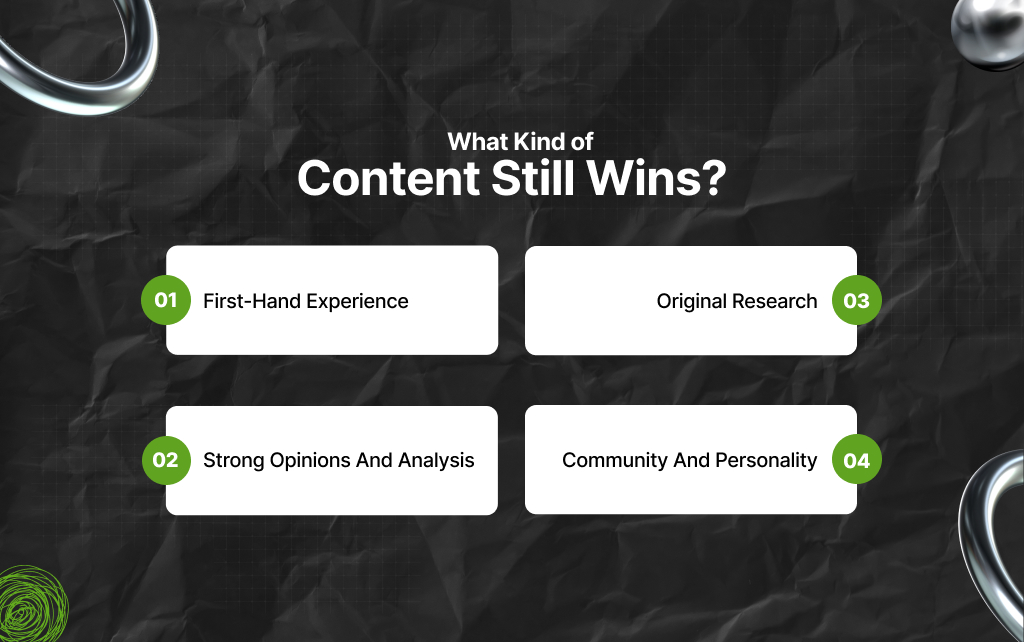
The strongest content today usually has qualities AI summaries struggle to replicate fully.
And this includes first-hand experiences, strongly opinionated pieces, and content that aims at community building.
Real experiences create uniqueness – and Google significantly rewards such content.
In this context, the examples include product testing, travel experiences, SEO case studies, business lessons, experiment results, and personal workflows.
Also, experience adds depth and credibility.
People still want perspectives, especially in industries like marketing, technology, finance, business, and culture.
Also, users click when they want interpretation, not just information.
Research-driven content remains powerful. This can include surveys, data studies, industry reports, benchmark analysis, and trend tracking.
Remember, original data creates unique value. Also, it attracts backlinks naturally.
Brands with personality tend to survive platform changes better. Moreover, people follow creators and websites they trust.
That relationship matters more than ever. Because audiences increasingly seek a human perspective, not just answers.
Many SEO strategies were built around exploiting informational search demand. That model worked for years.
But the environment is changing quickly.
Today, SEO is moving closer to:
The websites likely to survive long term are the ones building real audience trust. Not just ranking pages.
This is why EEAT has become so important.
Also, Google increasingly wants signals that:
In addition, thin content strategies are becoming harder to sustain.
The worst response is panic.
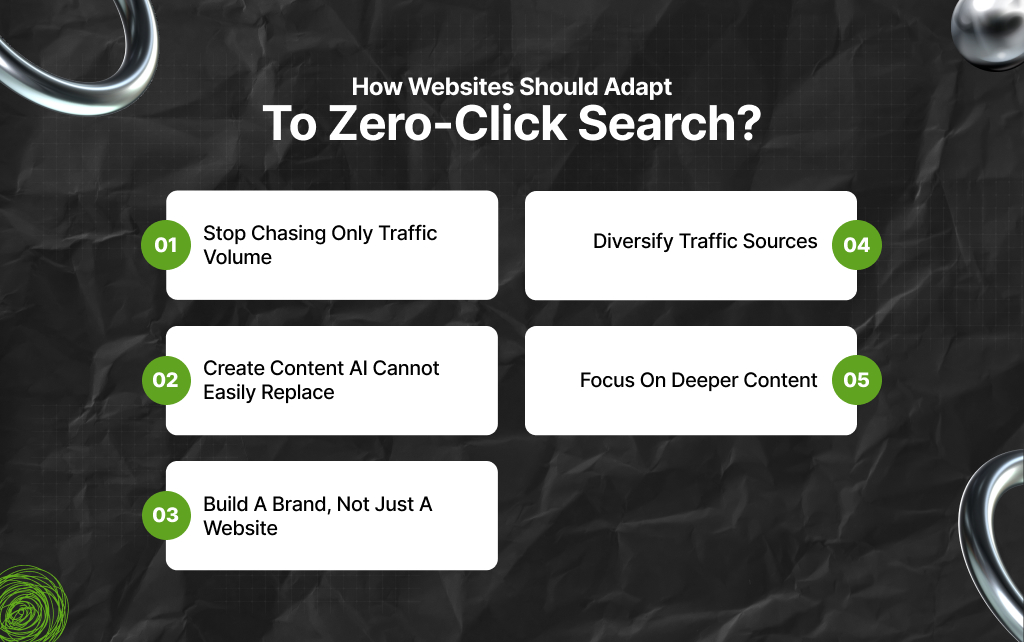
Zero click searches does not mean SEO is dead. But it does mean websites need stronger strategies.
Traffic alone is becoming a vanity metric.
Focus more on:
A smaller loyal audience can outperform massive low-intent traffic.
The more generic your content feels, the easier it becomes to summarize.
Focus on:
Depth matters more now.
Brands survive algorithm shifts better.
Moreover, users search directly for brands they trust. That reduces dependence on generic search traffic.
This is why:
Also, direct audience relationships are becoming increasingly valuable.
Relying entirely on Google is risky. As a result, strong publishers now build audiences across multiple platforms.
This may include:
Also, diversification improves long-term stability.
Quick-answer articles are the most vulnerable. In contrast, long-form, experience-driven content still performs well because users want depth.
As a result, you will see that people still click when they need:
That is where strong content opportunities still exist.
Probably not, but it will reshape SEO significantly.
Search engines still need publishers. Without websites creating original information, there is nothing meaningful to summarize.
The relationship between Google and publishers may become more tense. But high-quality content still matters.
What is changing is the type of content that succeeds. Moreover, if you have noticed, generic informational articles are becoming weaker assets.
Unique expertise and original insight are becoming stronger assets. That shift is already visible. And it will likely accelerate over the next few years.
Zero click searches are not just another SEO trend. Instead, they reflect a much larger transformation happening across the internet.
Search engines are evolving from discovery tools into answer engines. That changes how traffic flows.
It changes how content performs. And it changes what publishers need to prioritize. Also, the websites most at risk are the ones creating interchangeable content.
In contrast, the websites most likely to survive are the ones building:
Because in a world where answers are increasingly summarized instantly, depth becomes more valuable.
Perspective becomes more valuable. Similarly, experience becomes more valuable. And genuinely useful content becomes harder to replace.
Barsha is a seasoned digital marketing writer with a focus on SEO, content marketing, and conversion-driven copy. With 8+ years of experience in crafting high-performing content for startups, agencies, and established brands, Barsha brings strategic insight and storytelling together to drive online growth. When not writing, Barsha spends time obsessing over conspiracy theories, the latest Google algorithm changes, and content trends.
View all Posts

The Keyword With 10 Searches That Sent Ahrefs...
Sep 24, 2026
Paying Freelance Writers In Ten Countries: An...
Sep 24, 2026
GroomPanel Vs Other SMM Panels: What Makes It...
Sep 24, 2026
The Traffic-to-Revenue Gap: Why More Website ...
Sep 17, 2026
The Volatility Trap: What Crypto Position Siz...
Sep 17, 2026