
Glean AI Pricing For Enterprise Search 2026: The Comprehensive Buyer’s Guide
Oct 31, 2026

Enterprise search has undergone a complete shift. Gone are the days of basic keyword searches in shared drives.
Instead, we have a complete ecosystem powered by generative AI, knowledge graphs, and multi-step agent systems.
As organizations bring together knowledge from sources such as Slack, Salesforce, Google Drive, and databases, one key question CIOs and Procurement teams ask is: how much will I actually pay to scale my AI search?
Glean AI is one of the leading horizontal AI platforms for enterprise.
However, with pricing completely hidden and quotes only, this can create budgeting challenges.
This guide will help finance and tech leaders understand Glean AI pricing for enterprise search 2026.
This will draw on real data from deployments, minimum contract values, and consumption models.
We will also compare it with the main competitors by reviewing the pricing models for Claude and the overall cost of Copilot to understand the TCO of these solutions for your business.
For quick alignment, the table below provides a normalized cost comparison based on the latest 2026 market intelligence, verified buyer contracts, and public vendor documentation.
| Platform | Estimated Base Price (Per User / Month) | Core Billing Mechanism | Minimum Commitments / Seat Requirements | Ideal Use Case |
| Glean AI | $50 to $75 | Per-user seat subscription + usage-based FlexCredits for premium models/agents. | Typically a 100 to 250 seat minimum (50K–60K ACV base floor). | Unifying highly fragmented data across dozens of disparate third-party enterprise apps. |
| Microsoft 365 Copilot | $30 (Enterprise add-on) | Flat per-user add-on fee stacked on top of existing M365 E3/E5 licenses. | Annual commitment; no explicit seat minimum for Enterprise tier. | Environments deeply entrenched in the Microsoft ecosystem (Teams, Outlook, Word). |
| Claude Enterprise | $20 (Base seat fee) | Fixed per-seat platform fee plus active token consumption billed at standard API rates. | 20 seats (Self-Serve) or 50 seats (Sales-Assisted). | Development-heavy teams requiring massive context windows (200k+ tokens) and advanced reasoning. |
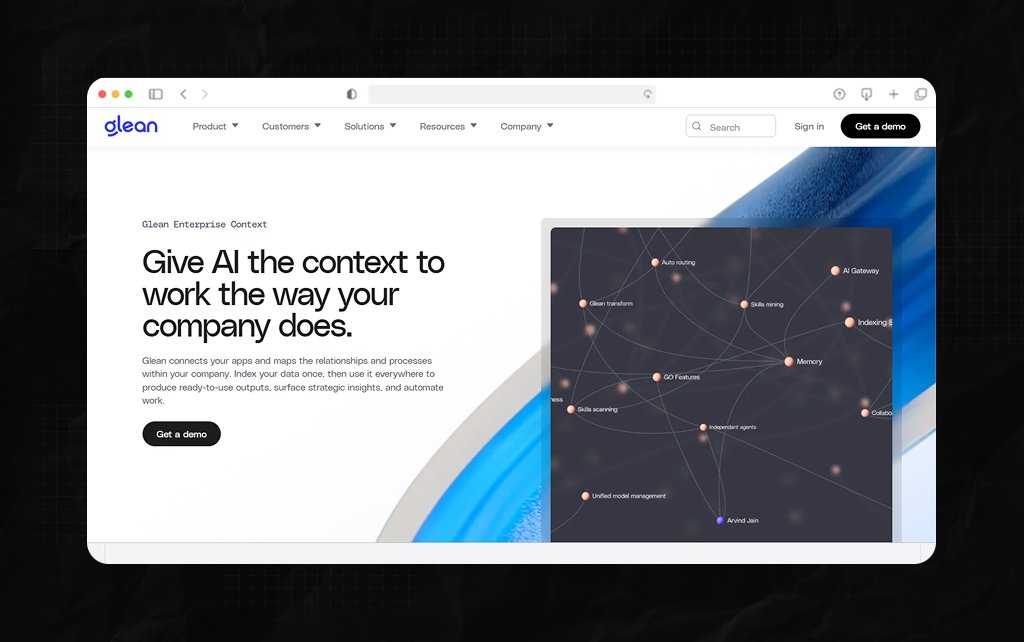
Glean doesn’t have a standard public price point. They use the Glean Enterprise Flex model.
This lets customers pay for standard seats and pay-as-you-go for high compute usage.
Moreover, using aggregated data from IT procurement platforms like Vendr, Glean’s average contract value (ACV) is $98,890, with contracts ranging from $29,880 to well over $200k for mid- to large deployments.
To get a realistic budget, you need to look into each of the price points:
This is a simple user license price with cost per seat per month. The price varies depending on the size of the organization:
This gives unlimited standard search, access to browser extension, desktop and mobile applications, and unlimited standard Glean Assistant Fast Mode.
Previously, Glean added a flat rate of $15 per user per month for advanced AI features.
This was completely changed in 2026 to a pay-as-you-go model using FlexCredits.
Moreover, all your base seats will come with a set amount of credits per week. As long as your employees don’t go above average usage, you won’t see any overage charges.
If they are doing special high compute activities, they will need to purchase extra credit packages. The different types of usage are:
Glean is designed to scale to large organizations. Buyers have reported it being difficult to get into:
While the license itself is a cost, companies often deploy Glean using a BYOC (Bring Your Own Cloud) model to ensure data sovereignty.
This means there will be extra charges:
To index the data, you will need ongoing cloud compute and storage.
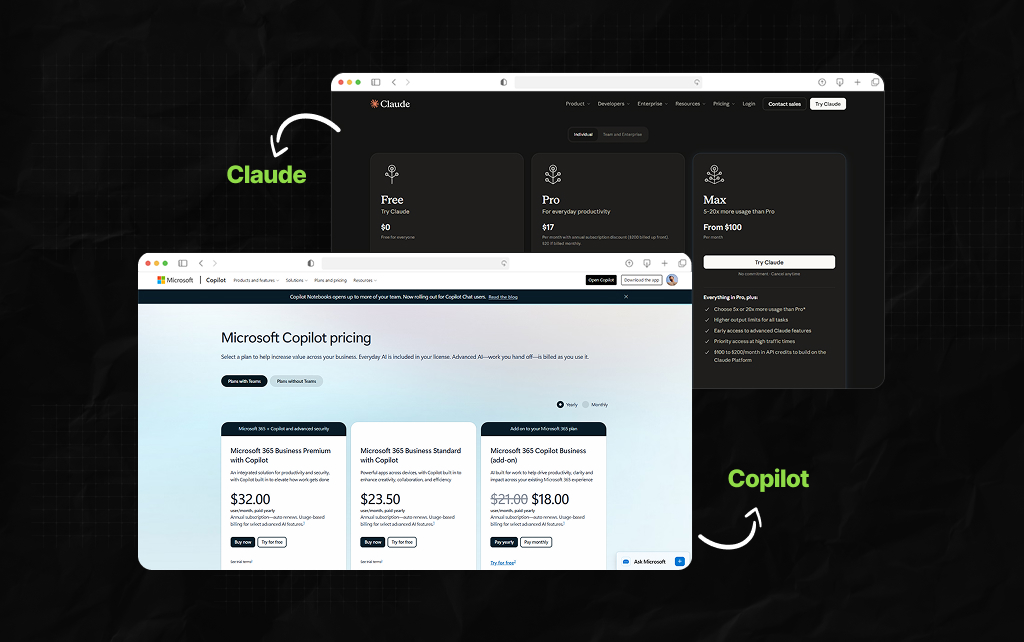
To ensure you are making a sound investment, you need to understand how Glean AI pricing for enterprise search 2026 compares with the broader productivity and language model ecosystem within your enterprise.
Below is a summary of the pricing, limitations, and constraints of the main alternatives.
| Criteria | Microsoft Copilot Ecosystem | Anthropic Claude Enterprise |
| Base Pricing | $30 per user, per month as an add-on layer. | Fixed $20 per seat, per month (billed annually). |
| Prerequisites | Requires active underlying licenses (M365 E3, E5, Business Standard/Premium). | Mandates a 20-seat minimum for self-serve or a 50-seat minimum for sales-assisted corporate contracts. |
| Primary Strength | Excels at executing contextual actions within native Office apps (Teams, Outlook, Excel). | Delivers raw cognitive horsepower and secure collaboration over massive files. |
| Hidden Variable Costs | Copilot cost scales if indexing non-Microsoft apps (Jira, HubSpot, Notion); requires premium connectors or Copilot Studio starting at $200/month per tenant. | Claude pricing does not bundle unlimited consumption; dynamic prompts draw against API developer rates, often pushing real costs to 25–35 per user, per month. |
| Search Integration Effort | Universal search depends heavily on data living natively inside SharePoint or OneDrive. | Building a true cross-application search experience requires internal engineers to manually build and maintain ingestion pipelines. |

Consider the following factors to determine if you want to invest 6 figures in a niche solution like Glean or use generic offerings like Claude and Copilot
No management required: Glean has native, intelligent connectors for hundreds of enterprise apps.
Moreover, Glean automatically maintains identity permissions and ACLs. No management is needed, as Glean automatically updates third-party APIs and permissions.
Furthermore, building semantic search on top of LLMs or APIs requires on-site engineering resources to build, secure, and manage complex data pipelines.
However, your finance team may face unpredictable costs. If you choose a flat-fee-per-seat SaaS solution, you’ll have predictable costs.
Moreover, you will not have access to advanced agentic capabilities.
Investing in Glean AI is worth it if siloed information across multiple disparate SaaS tools (Slack, Jira, Salesforce, Google Workspace) is your central pain point, because it saves time on data engineering and security setup.
However, if you highly centralise your workflows in the Microsoft 365 environment, you need to extend your infrastructure with M365 Copilot
This is a much more predictable solution.
Moreover, if your team needs high volumes of coding and text interpretation, Claude Enterprise with a bespoke pipeline would be best going forward.
Additional Resource: Perchance AI: Is This AI-Character Generator Worth The Hype?
Piyasa is a search engine marketing strategist who has spent the last six years decoding Google's ever-changing mind. From corporate giants to neighborhood storefronts, she helps businesses cut through the digital noise and actually get noticed online. When she isn’t building SEO strategies or writing the latest search industry breakdowns for Search Engine Magazine, you can usually find her hanging out with friends - and gently reminding them that no, she cannot personally fix the latest algorithm update for them.
View all Posts