How Corda Turns Authority Data Into Campaigns
Oct 01, 2026

Backlink exchange is perhaps one of the simplest and easiest methods for building links. Still, there is a correct way to go about it – and then there are all kinds of shady ways to do this.
And after spending eight years in the digital marketing landscape, I’ve seen and done all of it – from getting penalized by the 2024 Google March update to working hard on my site and taking it to 27K, I’ve done it all!
In my guide on exchanging backlinks, I’ll break down how it works, when it is safe to do it, and when it can get risky.
Also, I will discuss standard reciprocal link swaps and the ABC link exchange method in detail.
Stay tuned.
Backlink exchange literally means exchanging backlinks. When two websites agree to swap links, with the aim of each website benefiting from the external authority the other website offers.
It does sound simple when explained well. But like most aspects of SEO, it’s somewhat more complex than it sounds.
And that is why I am here to help you take a closer look at how these exchanges actually work and when they can go horribly wrong.
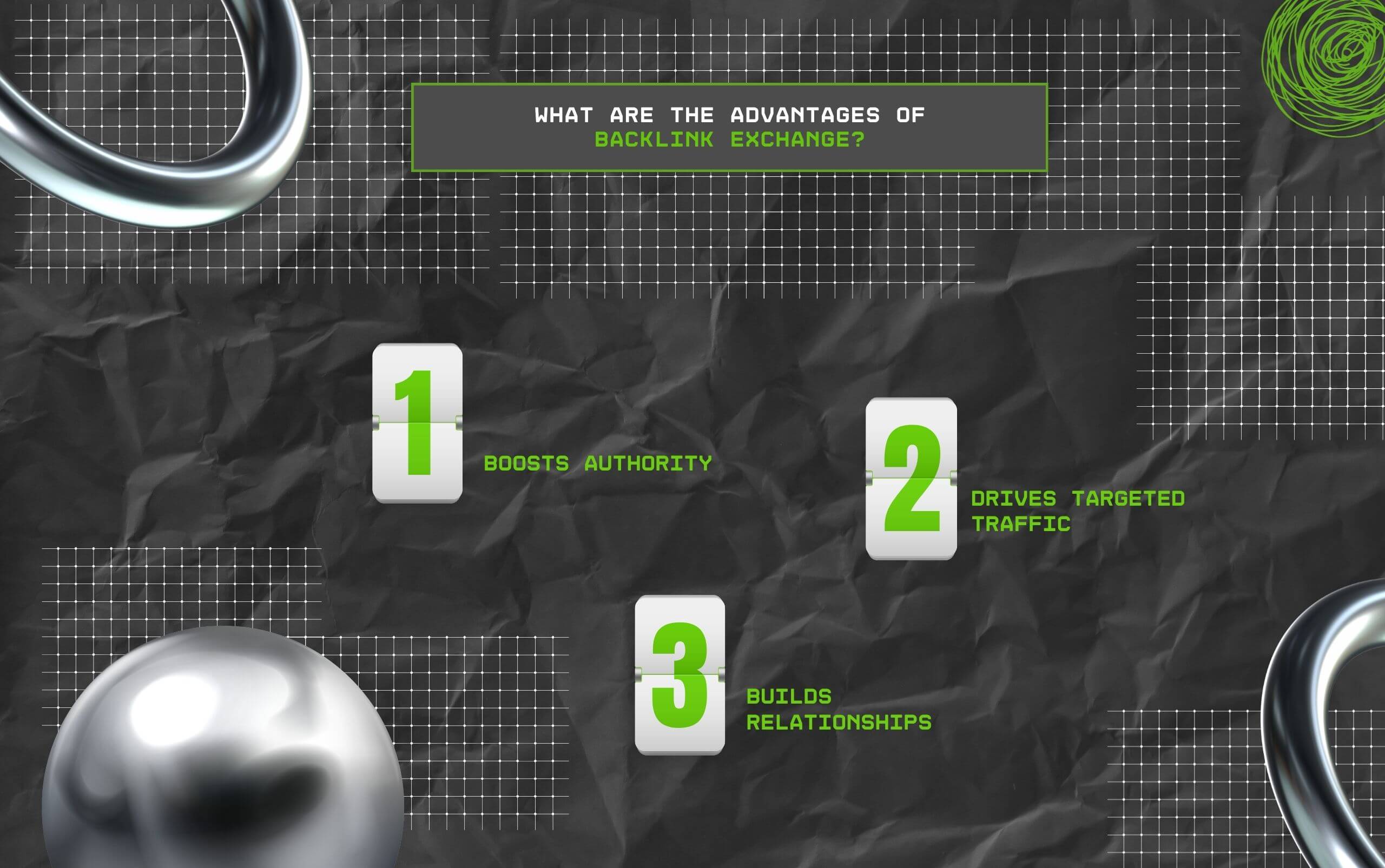
When done correctly, backlink exchange can benefit your entire digital marketing strategy significantly.
How? I’ve laid out the three primary ways in which exchanging backlinks with other websites can benefit you.
When you exchange links with a relevant and high-quality website, it can benefit your domain authority significantly.
As long as this exchange feels organic and your content is entirely relevant, you are actually nailing it.
Let’s assume you are running a digital marketing organization, and you decide to exchange links with a tech blog.
Audiences for both websites will benefit by learning about the services of both businesses – and boom! You will have targeted organic traffic on your plate!
Backlink exchanges are not just about your SEO. Instead, they are also an excellent way of building sustainable relationships with others within your niche.
Also, a link exchange you are doing today can lead to a great collaboration tomorrow.
If you have been in the SEO industry for some time, you have definitely heard about the ABC link exchange method.
It is an excellent link swapping method designed in a way to minimize any detectable pattern of reciprocal links.
Why? Because if not done in moderation, it can raise several red flags meant for search engines – remember the 2024 March Update and 2025 Spam Update?
Moreover, with this method, your backlinks look natural while delivering the traditional benefits of conventional link swap.
So, here’s how it actually works: Instead of going for a direct link swap, you can add a third site into the swap mix.
In that case, while Site A will link to Site B, Site B will link to Site C, and Site C will link to Site A. So, it’s a sort of backlink triangle to make it look more natural.
While this kind of link swapping is natural, it is crucial to understand that relevancy is super important here.
You cannot just exchange links with random websites – the sites have to be within your niche and should add value to the audience of all involved websites.
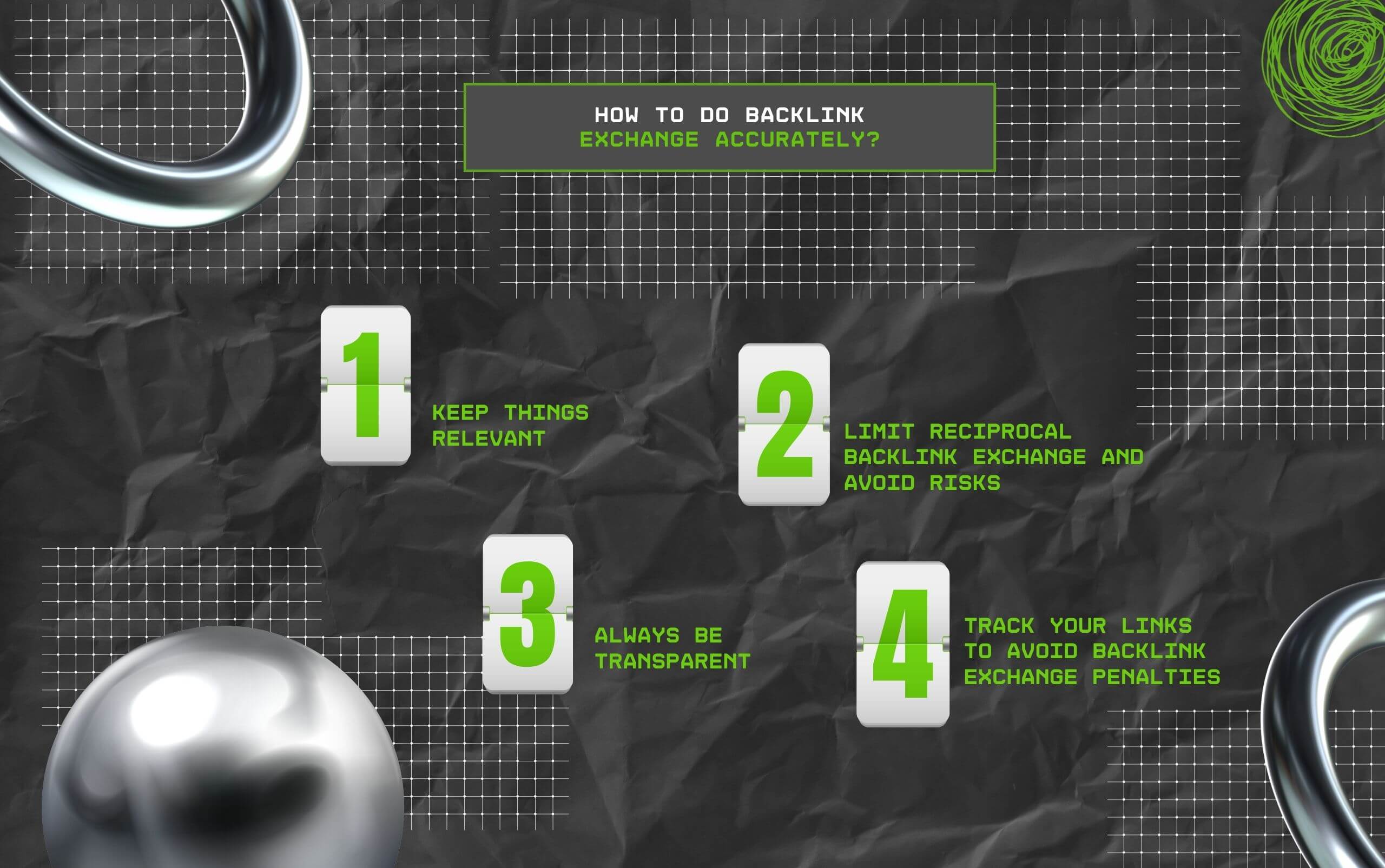
When you do backlink exchange thoughtfully, backlink exchange can easily support your overall SEO strategy. And that too without putting any website at risk.
After covering all fundamentals, it is time to show you practically how you can do backlink exchange successfully.
Swap links with websites that are relevant to your niche.
So, if you are a technology company, then linking to a travel blog doesn’t make sense – it won’t impact your SEO, no matter how much people ask.
Also, Google prioritizes relevancy in SEO – and you should do the same.
It might sound very tempting, but don’t depend solely on backlink exchange as the only strategy for results.
Instead, you should try to mix things up with editorial links, earned mentions, and guest posts.
On that note, here are a few options to try out:
When you are reaching out to website owners and asking for a link swap, be transparent and honest about your actual intentions.
After all, nobody likes getting tricked, and honesty will always help you to win people’s trust, especially if you are new to this industry.
Use credible SEO tools such as Semrush, Ahrefs, or Google Search Console to ensure you are keeping an eye on your links.
That way, you can monitor the impact of backlinks on your website’s traffic and rankings. Also, if a website you have swapped links with turns shady, do not hesitate to remove it.
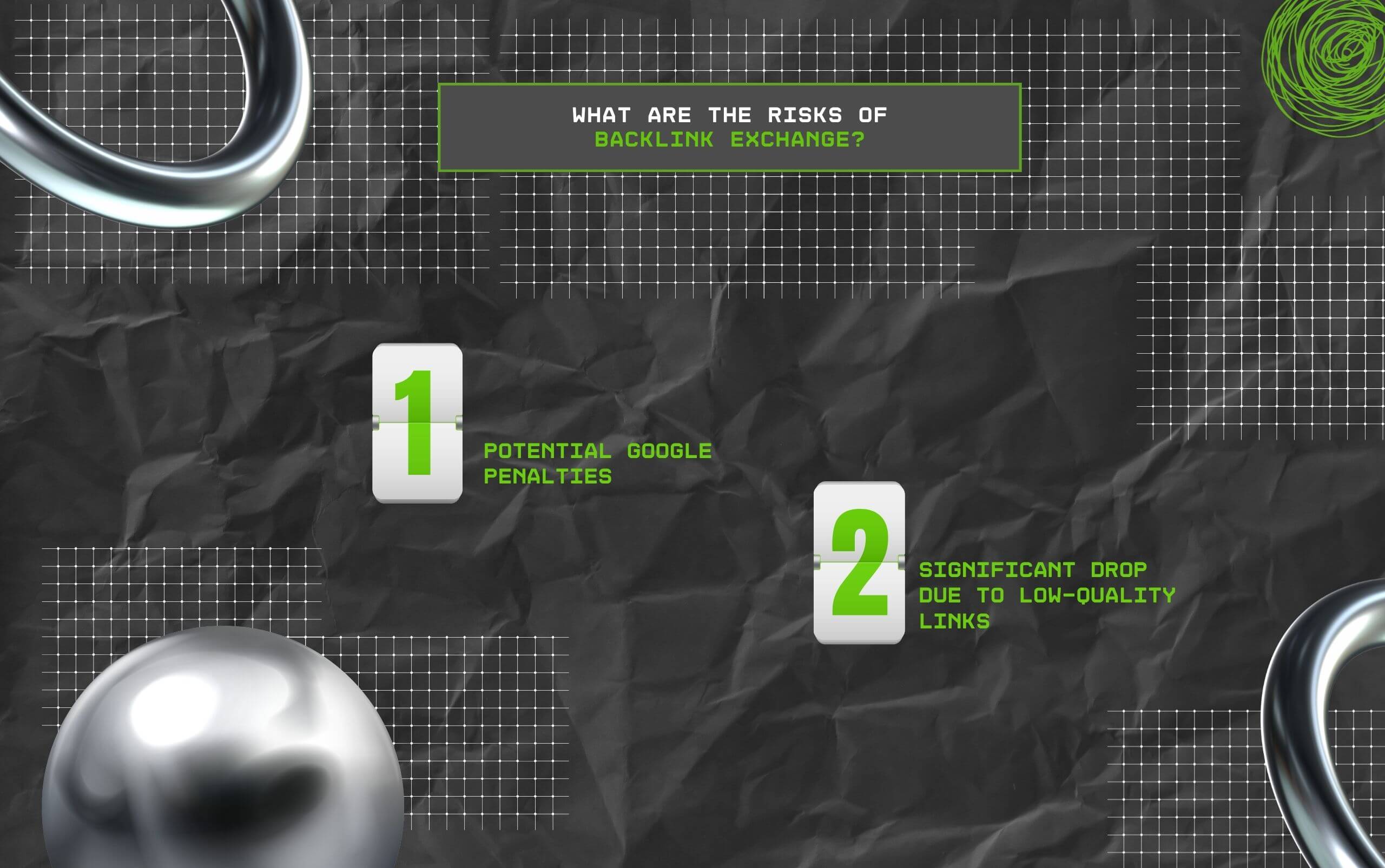
While link swapping is an excellent way of doing free link building, it is crucial to understand all the risks involved.
This is because not all link swapping is safe – some links can directly harm your website’s search rankings. On that note, let’s look closely at the potential risks of backlink exchange.
The biggest problem with doing backlink exchange is not following Google’s strict content guidelines. Also, Google has always shared a love-hate relationship with backlink exchange.
While swapping links is not technically against Google’s rules, it is an issue when it is overdone or done in some shady way.
In this context, Google’s former Head of Webspam, Matt Cutts, once said, “It’s natural for some sites to reciprocally link to each other, but large-scale reciprocal link programs can be considered part of a link scheme and violate Google’s guidelines.”
As a result, if your website’s link profile seems too ‘swappy,’ then it is possible to get an algorithmic penalty.
Obviously, nobody wants to tell their boss that their site’s DA and traffic tanked overnight.
In short, just refrain from overdoing it – instead, keep things natural.
Of course, not all backlinks are the same. So, if you are exchanging links with a spammy or low-quality website, then you are risking more than a Google penalty.
You are harming your website’s credibility and driving your own link-building metrics down.
Also, there are cases when you can avoid doing backlink exchange:
The truth is, backlink exchange is an excellent way of driving organic traffic and building authority – but only when done properly.
Moreover, the key is to prioritize moderation, relevancy, and quality. As a result, by being ethical about doing it and following Google’s guidelines, you can make the most of link swapping.
So, what are you waiting for? Go ahead and start exchanging backlinks. Just ensure that you are playing a long game and building sustainable relationships with other site owners.
Barsha is a seasoned digital marketing writer with a focus on SEO, content marketing, and conversion-driven copy. With 8+ years of experience in crafting high-performing content for startups, agencies, and established brands, Barsha brings strategic insight and storytelling together to drive online growth. When not writing, Barsha spends time obsessing over conspiracy theories, the latest Google algorithm changes, and content trends.
View all Posts

How Corda Turns Authority Data Into Campaigns
Oct 01, 2026
How To Audit Your Search Visibility In 2026: ...
Sep 30, 2026
What Is Google Lighthouse? A Practical Guide ...
Sep 30, 2026
When Can You Save A Public Instagram Story?
Sep 30, 2026
Google Looker Studio: What It Is, How It Work...
Sep 30, 2026