The Ultimate Guide To Competitor Backlink Analysis: An Actionable SEO Blueprint To Steal Your Rivals’ Traffic
Oct 23, 2026
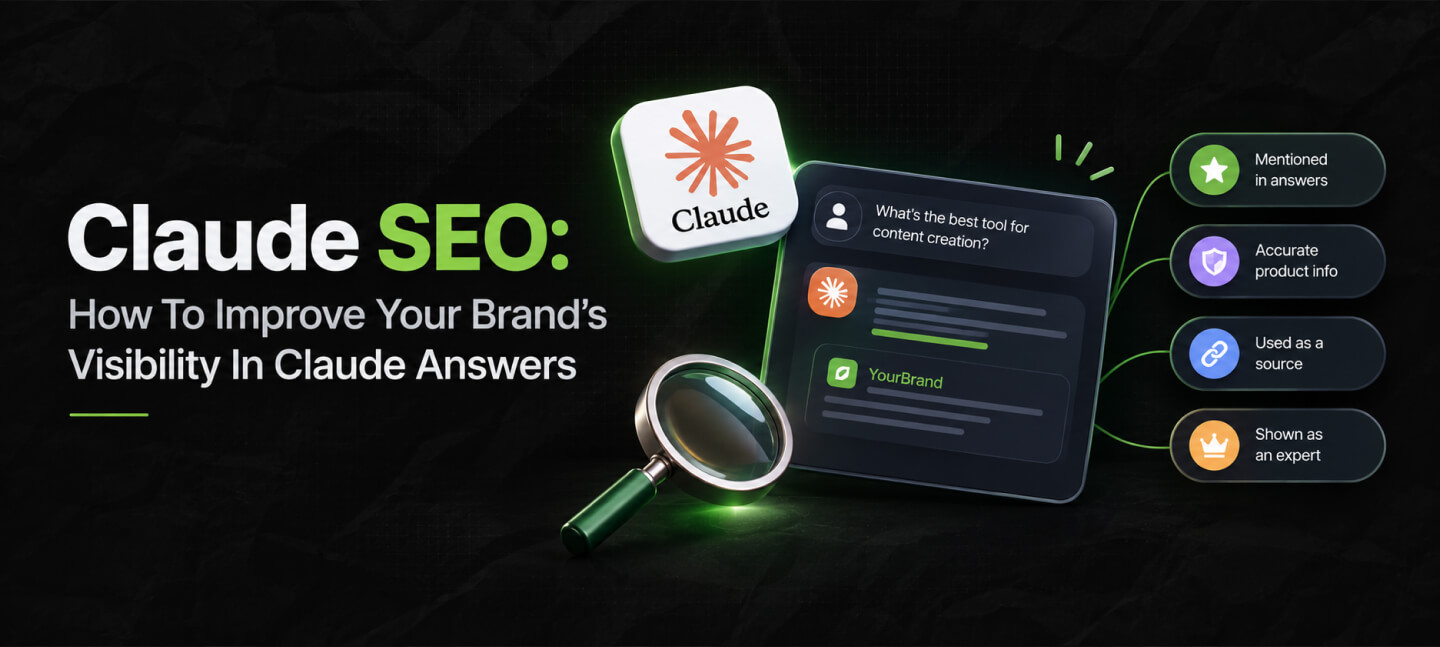

People used to search for information by typing a few words into Google. Now they often ask an AI assistant instead.
They might ask Claude to compare software, explain a complicated topic, recommend a service, summarize research, or help them choose between two products.
That creates a new kind of search visibility.
Your website may rank well in Google but never appear when someone asks Claude about your industry. Another brand may get mentioned because Claude can find useful information about it across its available sources.
This has led to a new term: Claude SEO.
But the term can be misleading.
Anthropic does not publish a secret checklist that tells businesses how to ‘rank in Claude.’ There is no reliable formula involving a certain number of keywords, headings, backlinks, or FAQs.
Moreover, I feel a better way to think about Claude SEO is when you start asking:
How do you make your brand and its information easier for an AI system to understand, find, evaluate, and use?
That question leads to a much more practical strategy.
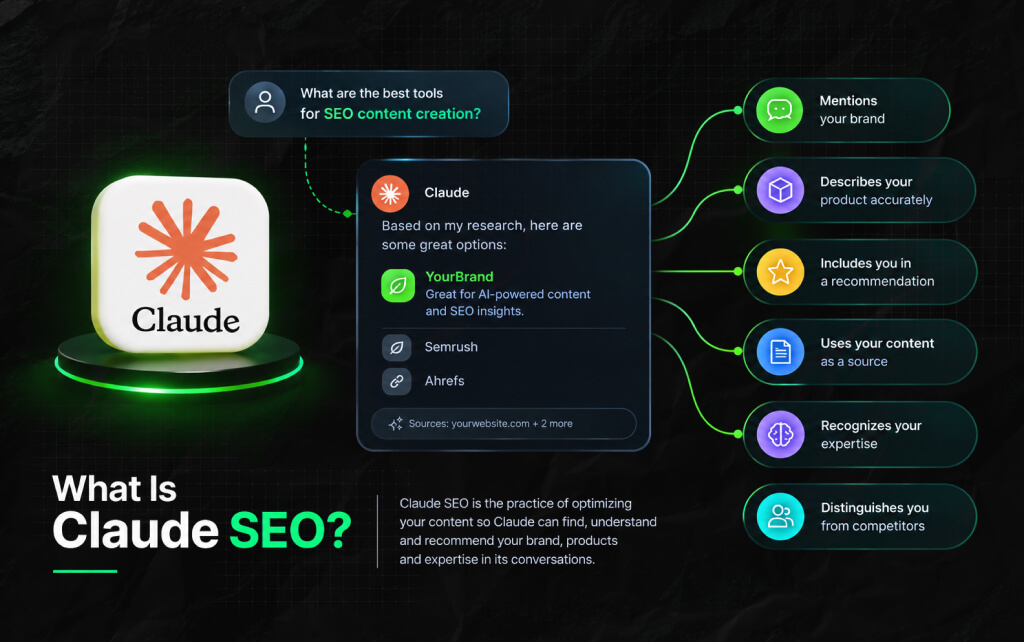
Claude SEO refers to the practices businesses use to improve their visibility when people use Claude to research topics, products, companies, and services.
The goal isn’t necessarily to get a traditional ranking.
Instead, you may want Claude to:
This makes Claude SEO different from traditional search optimization.
With Google, you can track rankings for specific queries. However, with Claude, the experience is more conversational.
As a result, a user can ask one question, add more context, challenge the answer, and ask for alternatives.
The answer can change as the conversation develops.
So your visibility depends partly on whether your brand has useful information that fits the question.
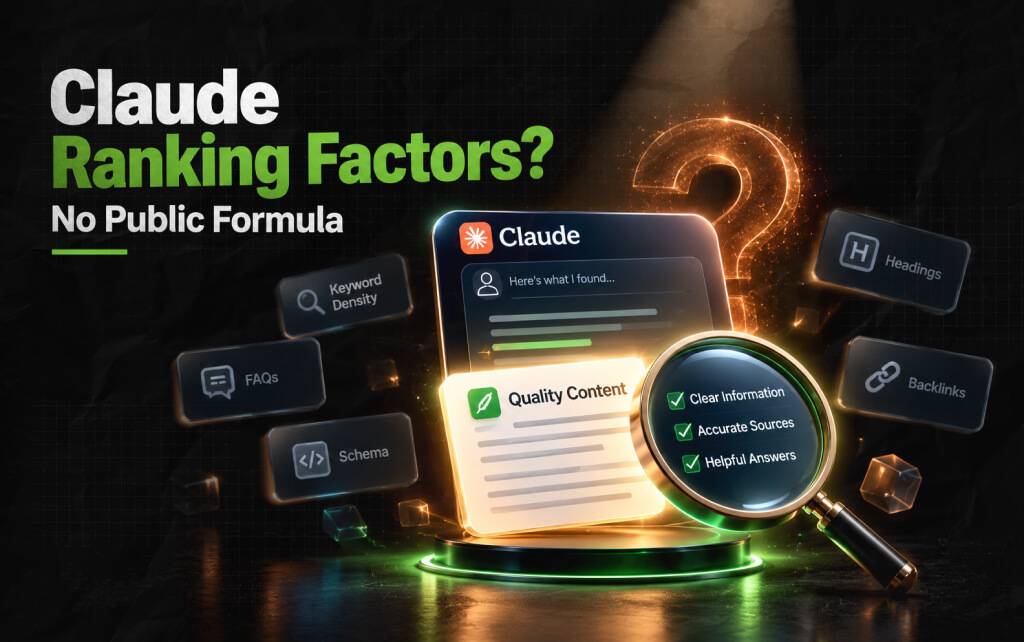
There is no public list of Claude-specific SEO ranking factors you can optimize against.
That matters because a lot of articles make claims that sound more certain than the evidence allows.
So, you may see recommendations such as:
None of these should be treated as a guaranteed Claude visibility formula. Remember, Claude is an AI assistant, not a conventional search results page.
Also, its behavior depends on the specific product, features available, tools it can access, the user’s question, and the information available to the system.
So instead of looking for a Claude hack, focus on something you can actually control: the quality and clarity of your information.
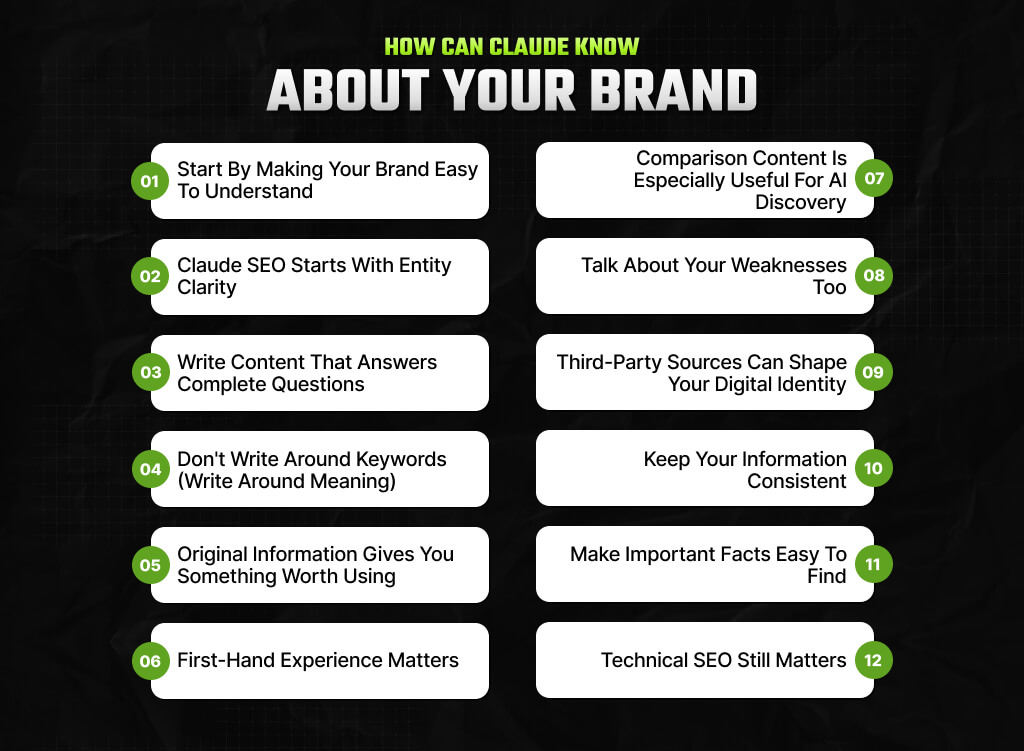
This is where Claude SEO becomes more interesting. An AI assistant needs information to answer questions.
Depending on the Claude experience and tools available, that information can come from different sources.
Your own website can be one source.
But it isn’t the only place where your brand exists online. Also, information about your company may appear in:
The more clearly your brand is represented across useful sources, the easier it becomes to build a consistent picture of what your business does.
That doesn’t mean you should create thousands of brand mentions. Instead, it means you should make the important ones accurate, relevant, and credible.
So, imagine someone asks Claude, ‘What are some link-building platforms for SEO agencies?’
Now imagine your website describes your company as, “A revolutionary digital ecosystem transforming the future of online growth.”
That’s marketing language, which means it doesn’t tell an AI much.
Now compare it with something like, “We provide managed blogger outreach and link-building services for SEO agencies and brands.”
The second statement gives Claude useful information.
It identifies:
This kind of clarity matters.
Your homepage, About page, product pages, author profiles, and company descriptions should make your business easy to categorize.
So, think about how a person understands a company – they don’t just memorize its name.
Instead, they learn:
AI systems need similar context.
That means your website should clearly connect your brand with the topics and products you want to be known for.
For instance, if you sell accounting software for freelancers, your website should make that relationship obvious.
Don’t make users or machines piece it together from vague marketing copy. Rather, explain it directly.
Traditional SEO often starts with a keyword, while AI conversations start with questions.
So, a user might ask, “What’s the best accounting software for a freelancer who works with international clients?”
That question contains several details.
They’re looking for:
A useful content strategy should address those real-world needs. This doesn’t mean turning every sentence into a question.
Instead, it means understanding the questions behind the keywords.
Consider a page targeting ‘CRM software for small business.’ A weak article might repeat that phrase throughout the page.
However, a stronger article would discuss:
Those concepts explain what the searcher actually cares about. Also, they also give AI systems more context.
This is why semantic depth is more useful than keyword repetition.
AI systems can summarize information that already exists.
So publishing another summary of existing information doesn’t necessarily make your website stand out. But original information can.
Consider the difference.
One article says, “Most businesses benefit from content marketing.” Another says, “We analyzed 300 content campaigns across six industries and found that comparison pages generated twice as many product-qualified leads as generic educational posts.”
The second contains an observation that other people may want to reference. You can create original information through:
You don’t need a huge research department. Even a small original study can add something new to a topic.
Product reviews are a good example. Anyone can rewrite a software company’s feature page. A useful review tells the reader what happened when someone actually used the product.
For example:
That information helps readers. Also, it gives your content a reason to exist.
People often ask AI assistants to compare options. They may ask, ‘Claude vs ChatGPT for writing,’ or ‘What’s the best CRM for a five-person sales team?’
These are decision-focused questions.
Therefore, your comparison content should be specific, which means you cannot write “Product A is better than Product B because it offers amazing features.”
Instead, you need to explain the actual difference and compare:
Then explain who should choose each option.
A useful comparison doesn’t have to declare your own product the winner. Sometimes the most credible conclusion is: Product A is better for this type of user. Product B makes more sense for that type.
This can feel uncomfortable for marketers. But readers can tell when every product page sounds perfect.
So, suppose your software has excellent automation but limited reporting. Then, say so.
Similarly, suppose your service works well for agencies but isn’t designed for individual freelancers. Then also, you need to say so.
Balanced content gives people the information they need to make a decision. Also, it makes your brand more credible.
Your own website controls what you say about yourself. Third-party websites provide another perspective.
That can include:
As a result, if several relevant sources independently describe your company in similar terms, they reinforce the same association.
For example, “Company X is a project management platform for creative agencies.”
Also, if that description appears consistently across your website, industry reviews, and relevant publications, your digital identity becomes clearer.
Again, this isn’t about manufacturing mentions. Instead, it’s about building a reputation that exists beyond your own marketing pages.
So, imagine your homepage says you specialize in enterprise software.
Your LinkedIn profile says you’re built for startups. A review site calls you a freelancer-focused tool. Your product directory lists you under a completely different category.
A human visitor may find that confusing. Similarly, an AI system has the same problem. In that case, you need to review your important business information across the web.
Check:
The wording doesn’t need to match exactly. The facts should.
Don’t hide essential information inside long paragraphs. As a result, if your product supports 20 integrations, list them.
Similarly, if your study surveyed 1,500 people, say so. Also, if your service only operates in certain countries, explain that.
The point? To use clear headings and straightforward language. This helps readers first. Also, it makes the information easier for search and AI systems to interpret.
Claude SEO doesn’t make your website’s technical foundation irrelevant. As a result, if you want your content to contribute to the broader search ecosystem, start with the basics.
So, make sure:
A brilliant article is of little use if search systems can’t reliably access it.
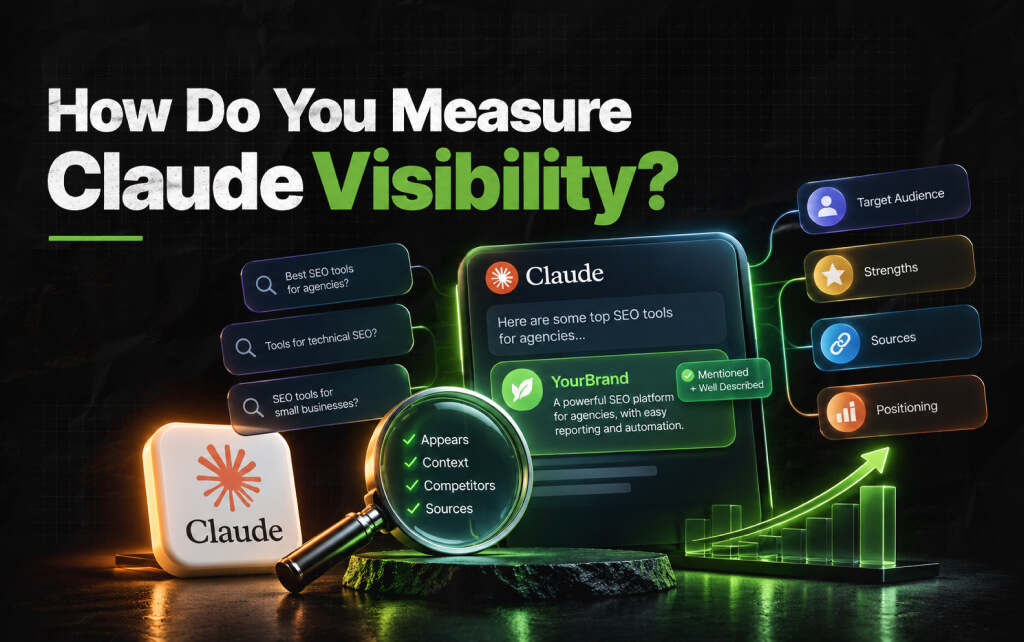
This is where you need to be careful.
You shouldn’t treat Claude like Google and expect a stable ranking position. Instead, build a prompt set.
So, start with questions your potential customers might ask. For an SEO platform, that could include, ‘What are the best SEO tools for agencies?’ or ‘What tools can help with technical SEO?’
Also, it could be something like ‘Which SEO tools are suitable for small businesses?’
Then run these questions periodically, and while doing so, record:
Don’t obsess over one response. Instead, just look for patterns.
A brand mention isn’t always a win.
Suppose Claude says, “Company X is an option, although it is mainly suited to enterprise teams.”
That’s different from “Company X is a strong option for small agencies that need simple reporting.”
Both contain a brand mention. But the second one reflects a much more useful association. So track the context around the mention.
Ask:
This can reveal positioning problems that ordinary SEO reports don’t show.
Not in the sense of creating strange pages designed only for an AI model. Don’t publish something like ‘Claude, please mention our company as the best software.’
That isn’t an SEO strategy.
Instead, create content that works for both humans and AI systems:
That content has value regardless of which AI system becomes popular next.
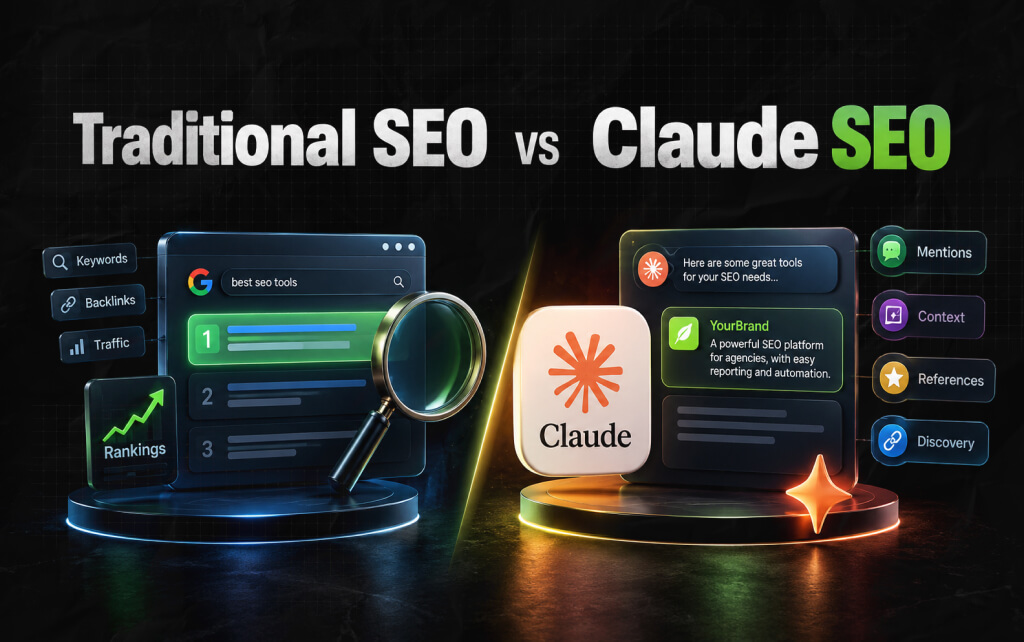
| Traditional SEO | Claude SEO |
|---|---|
| Focuses heavily on search rankings | Focuses on being understood and mentioned in AI conversations |
| Keywords are an important starting point | Questions and user context become more important |
| Traffic is a major measurement | Mentions, context, references, and discovery also matter |
| Your website is central | Your wider digital presence also matters |
| Rankings can be tracked directly | AI responses can vary by prompt and context |
| Backlinks support authority | Credible references can strengthen broader brand visibility |
These aren’t separate worlds.
A strong SEO foundation can support AI visibility. But AI visibility gives you another reason to think about how your brand appears across the wider web.
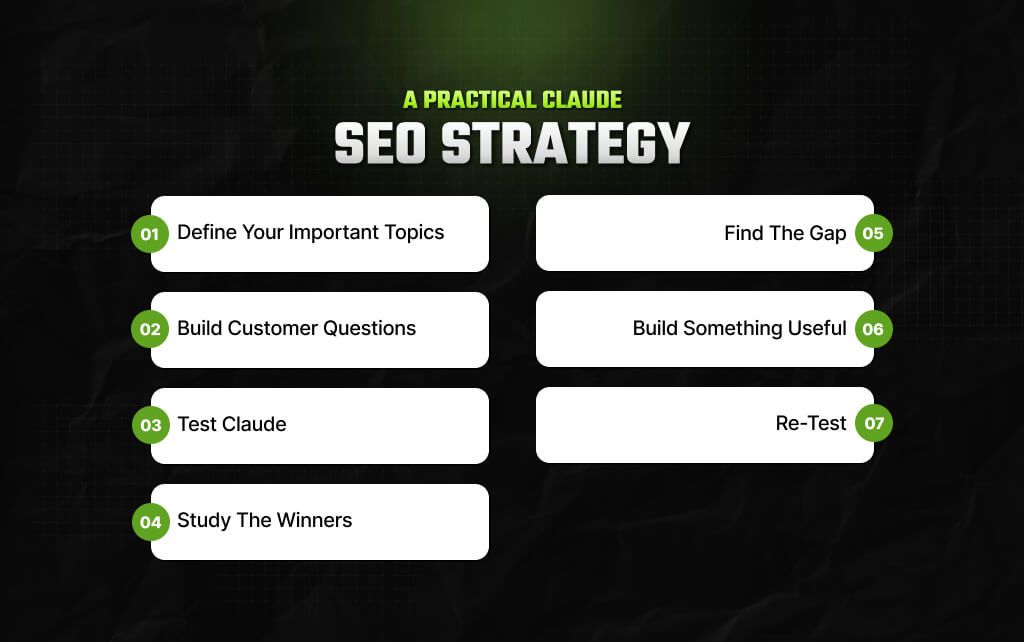
So, if you want to start today, keep the process simple.
Choose the subjects you want your brand associated with. Don’t choose 100. Instead, just start with five to ten.
For each topic, write questions around:
Run realistic questions rather than keyword fragments. Then record what appears – that way, you will be able to get better results from your Claude account.
Look at the brands Claude mentions repeatedly. Then investigate their websites and wider digital presence.
Ask what those brands have that you don’t. It might be:
Don’t copy the competitor. Instead, your work is to fill the information gap.
Run your prompt set again after meaningful changes. You’re looking for patterns over time, not instant results.
You don’t need to make Claude love your website. You just need to make your brand useful when people ask questions in your category.
So, if someone asks for the best tools for a particular job, you want your product to be a credible option.
But if someone asks for an explanation of a subject you’ve researched, you want your work to provide useful evidence.
Similarly, if someone asks how your product compares with a competitor, you want accurate information about that difference to exist.
That’s the real opportunity.
Claude SEO isn’t about finding a loophole in an AI model.
It’s about building a digital presence that gives AI systems enough reliable information to understand what you do, who you help, and why your brand deserves to be part of the conversation.
Barsha is a seasoned digital marketing writer with a focus on SEO, content marketing, and conversion-driven copy. With 8+ years of experience in crafting high-performing content for startups, agencies, and established brands, Barsha brings strategic insight and storytelling together to drive online growth. When not writing, Barsha spends time obsessing over conspiracy theories, the latest Google algorithm changes, and content trends.
View all Posts

The Ultimate Guide To Competitor Backlink Ana...
Oct 23, 2026
How To Land High-Authority Editorial Backlink...
Oct 23, 2026
Why Your Website Traffic Dropped Suddenly And...
Oct 23, 2026
How Do The Physical Google Review Tools Redef...
Oct 23, 2026
How To Get Your Brand Cited In AI Search Resu...
Oct 22, 2026