
SEO Content Audit: A Practical Framework For Creating Helpful Content That Google Wants To Rank
Jul 25, 2026


Shadows and reflections determine the sense of realism of a digital image. Lighting can make a difference if it is inadequate, lowering the trust and depth perception.
Today, an efficient AI Image generator can physically mimic light behavior with greater accuracy.
Creators can easily make and edit these types of visuals with Pippit.
It offers the latest in image processing technology, such as natural illumination, to deliver high-quality images with accurate environmental interactions and greater realism for a variety of creative uses.
Visual depth in digital scenes is based on shadows and reflections.
They assist in discriminating objects from backgrounds and in spatial understanding.
Additionally, they make images look flat and inauthentic and engage less.
Also, you must know that shadow location is used to determine the size and location of objects in a scene.
Furthermore, to add realism and connect objects to the surrounding surfaces, reflections are included.
This is essential for product, architecture, and lifestyle photography.
In addition, good lighting can also help with storytelling and engage the audience.
Pippit enables creators to manage lighting uniformly throughout the generation process.
Ensures that light source placement and object positioning are in perspective across a variety of environments to improve visual credibility in all output.
It’s crucial to learn how to decipher the light to produce realistic images using AI.
Current models reproduce natural light by considering the scene’s structure.
Additionally, they consider the object geometry to be very important. Also, they put separate emphasis on the environmental context.
This is where Seedream comes in to enhance this process, improving the AI’s understanding of intricate lighting interactions in dynamic scenes.
Ensures shadows are cast in the correct direction with respect to the virtual lighting direction.
The reflections are more correctly adjusted to the type of surface (glass, metal, water, etc.).
This helps maintain consistency in multi-object compositions, where light behavior should be uniform.
Creators can fine-tune lighting outputs in Pippit without getting bogged down in the technical detAIls.
Brightness distribution and shadow falloff are automatically adjusted for more physically accurate images.
Additionally, it comes across as seemingly grounded in real-world physics and environmental logic.

One of the key areas in modern AI rendering systems is the emphasis on improving lighting accuracy.
In fact, the recent AI image generators are also focusing on harmonizing the environment.
Additionally, soft shadows are now more natural and have smooth edges, rather than hard shadows.
Environmental mapping is more prominent on reflective surfaces, making polished surfaces more realistic.
Moreover, balanced diffusion is good for indoor lighting to prevent over-exposed highlights and unnatural contrast.
Improved outdoor scene lighting using the correct sky that reacts properly to terrAIn/objects.
Cinematic compositions for mood and atmosphere improve light layering. Seedance improves the scene’s coherence and interaction between multiple light sources in complex scenes.
Reduces artifacts such as floating shadows or reflections that vary from scene to scene.
These advances all contribute to the visual realism and ensure more immersive output in creative processes.

A proper prompt can greatly help get the lighting and setting of a scene right.
Clear instructions help AI models to understand and interpret the environment better.
Light direction, surface type, and environmental conditions are important to the quality of the final rendering.
The structured lighting detAIls will give more predictable visual results.
These structured inputs help Pippit to better focus on generating images.
Better prompting results in more consistent, higher-quality visual storytelling across a wide variety of creative uses.
Creating visuals with believable lighting effects becomes easier with Seedream-powered models in Pippit. Sign up for a Pippit account and follow this simple guide:


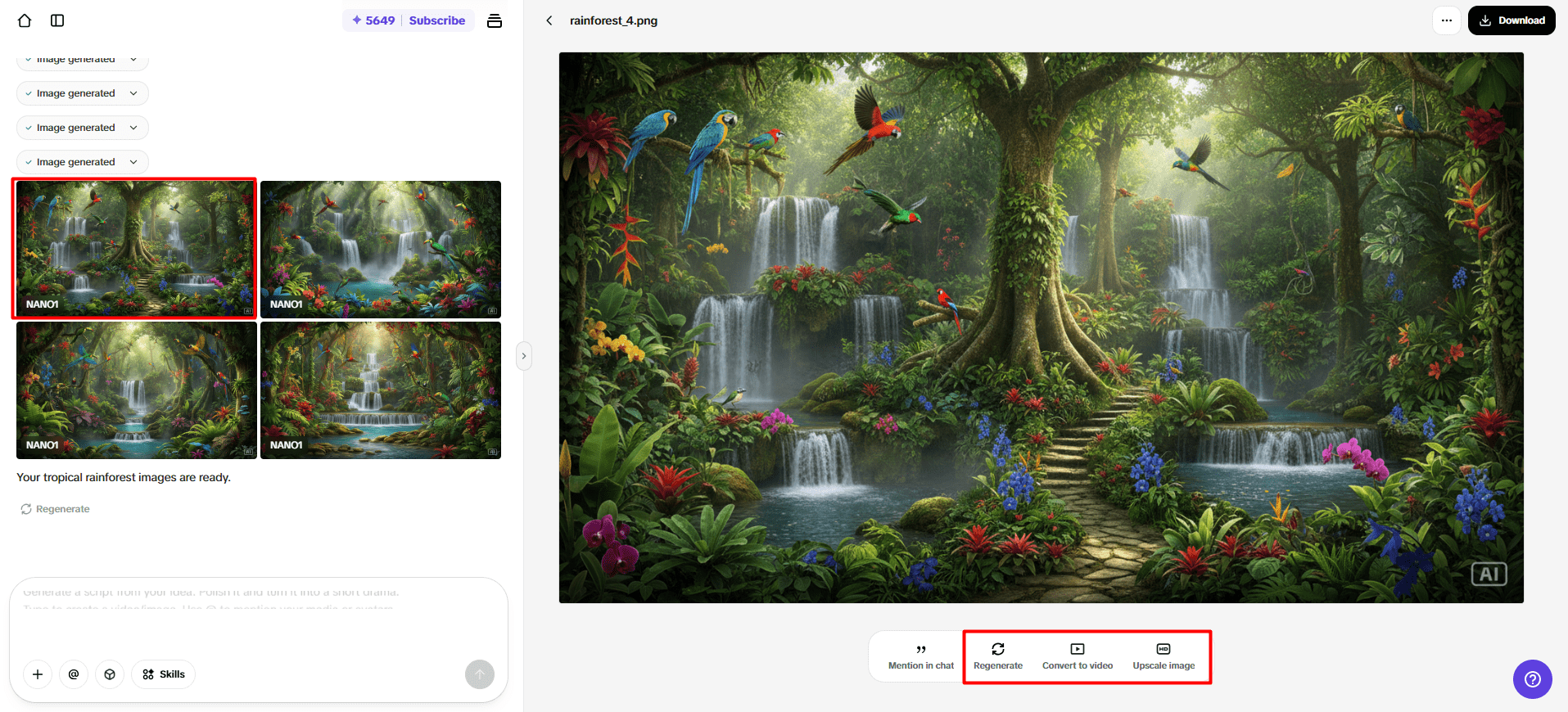
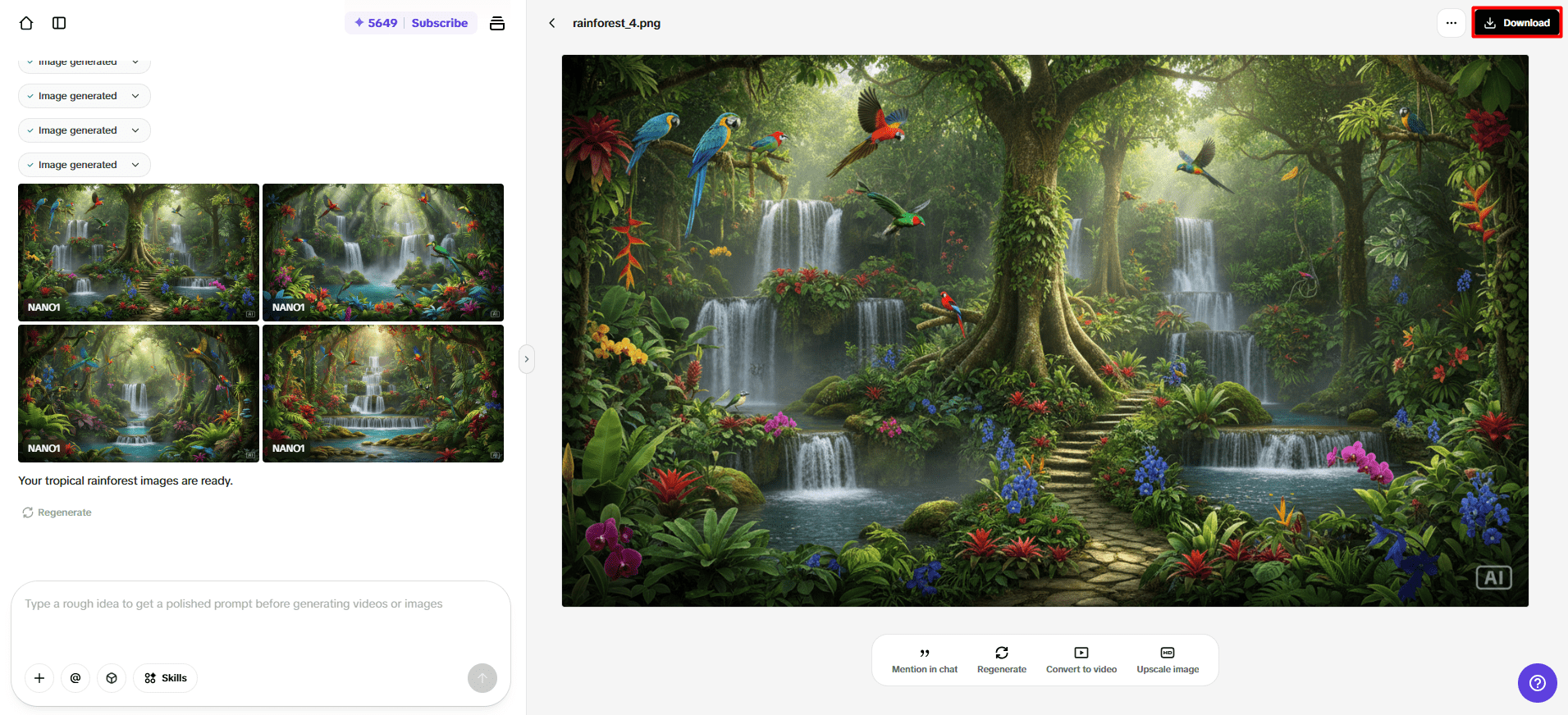
Pippit’s integrated editing and regeneration capabilities significantly add to the realism of the lighting.
Moreover, users can easily tweak the levels of shadows and reflections, and even enhance the depth of the scene without needing to rerun the generation.
Consequently, complex compositions can be seamlessly corrected with AI-powered tools that effectively address lighting inconsistencies.
In addition, expanded visuals with lighting continuity are achieved through background extension features.
Furthermore, object removal tools are designed to preserve the natural light flow after the removal process.
Additionally, the image-to-video conversion ensures uniform lighting across motion sequences, thereby improving the overall quality of the cinematic output.
Overall, these workflow tools not only help to maintain realism but also reduce manual editing time.
Ultimately, when combined with sophisticated AI models, Pippit enables effortless creative production and ensures greater accuracy in visual storytelling.
The realism in AI-generated visuals is characterized by its shadows and reflections.
Well-lit scenes can aid in depth, immersion, and environmental believability.
Improved AI models improve the interaction of light with surfaces and objects. Pippit’s integrated platform is designed to efficiently create and develop these visuals.
It allows creators to achieve professional-level realism, and its intelligent features and seamless workflows enhance the image production process.
Barsha is a seasoned digital marketing writer with a focus on SEO, content marketing, and conversion-driven copy. With 8+ years of experience in crafting high-performing content for startups, agencies, and established brands, Barsha brings strategic insight and storytelling together to drive online growth. When not writing, Barsha spends time obsessing over conspiracy theories, the latest Google algorithm changes, and content trends.
View all Posts

SEO Content Audit: A Practical Framework For ...
Jul 25, 2026
The Complete Guide To Free Rank Tracking
Jul 25, 2026
Maximizing B2B Reach: SEO for LED Power Suppl...
Jul 25, 2026
How Clinical And Reference Labs Should Choose...
Jul 24, 2026
Why MIB Browsers Are Valuable For Network Tro...
Jul 24, 2026