How To Audit Your Search Visibility In 2026: Google Rankings, AI Overviews, And Where Your Traffic Really Comes From
Sep 30, 2026

Google Search stopped being ten blue links a long time ago.
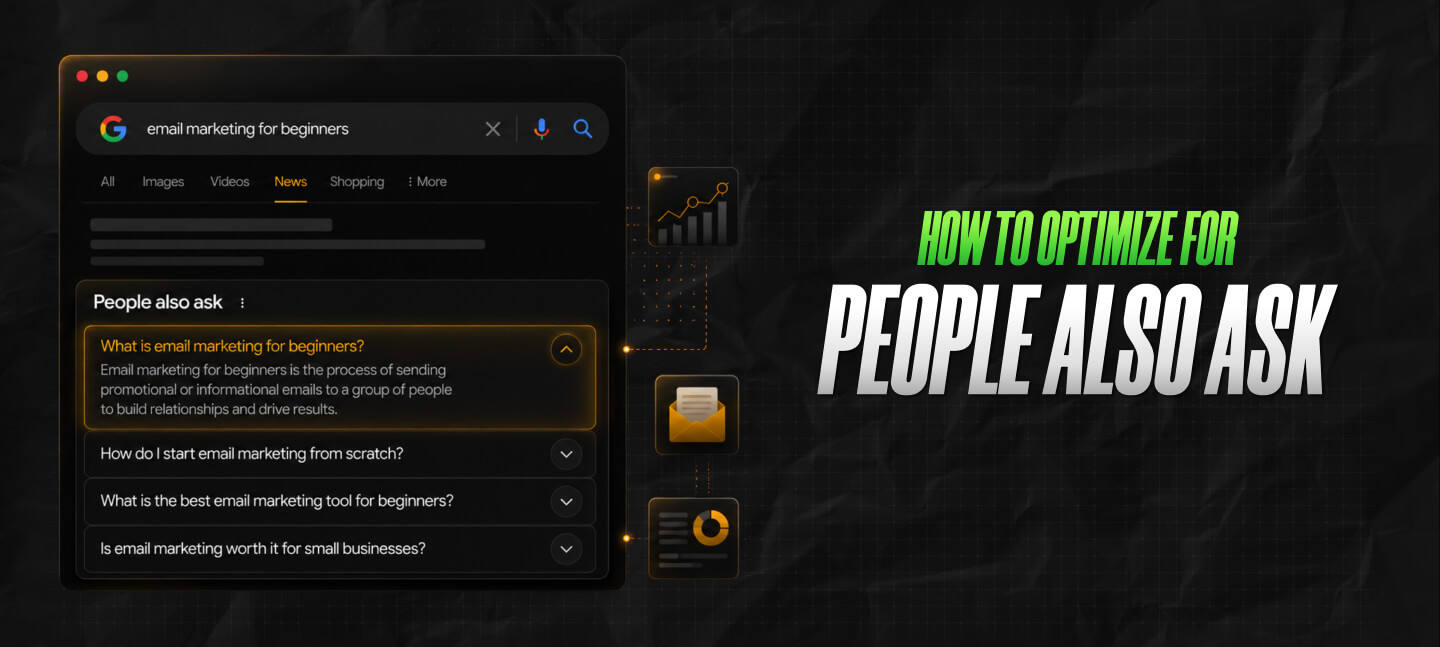
Open any results page now, and you’re looking at a crowded competition for attention: featured snippets, AI Overviews, video carousels, image packs, local listings, forum discussions, and the one feature that still quietly sends qualified people to real websites: People Also Ask, or PAA.
So, when someone searches for something like “how to start a podcast” or “best CRM for small businesses,” you’ve seen it.
A box of related questions sits partway down the page – click one open, another appears underneath. Expand a few, and the list just keeps unfolding.
None of that is accidental. The PAA box is Google’s read on how people actually explore a subject. It’s not the single thing they typed, but the chain of questions that usually follows.
Rather than sending you back to the search bar four times, it strings those follow-ups together in one place.
A page that shows up across several PAA questions tends to pull more visibility, more relevant traffic, and more topical authority, even when it never cracks the number one organic spot.
In 2026, that matters more than it used to. AI summaries now handle the basic stuff before a user clicks anything, so people have gotten pickier about which links they open.
The pages that still earn the click are the ones giving clear, trustworthy, complete answers to the follow-up questions, which is exactly the space People Also Ask lives in.
In this guide, I have broken down how Google decides what goes in the PAA box, why the feature deserves your attention right now, and the practical moves that improve your odds of landing there.
Stay tuned.
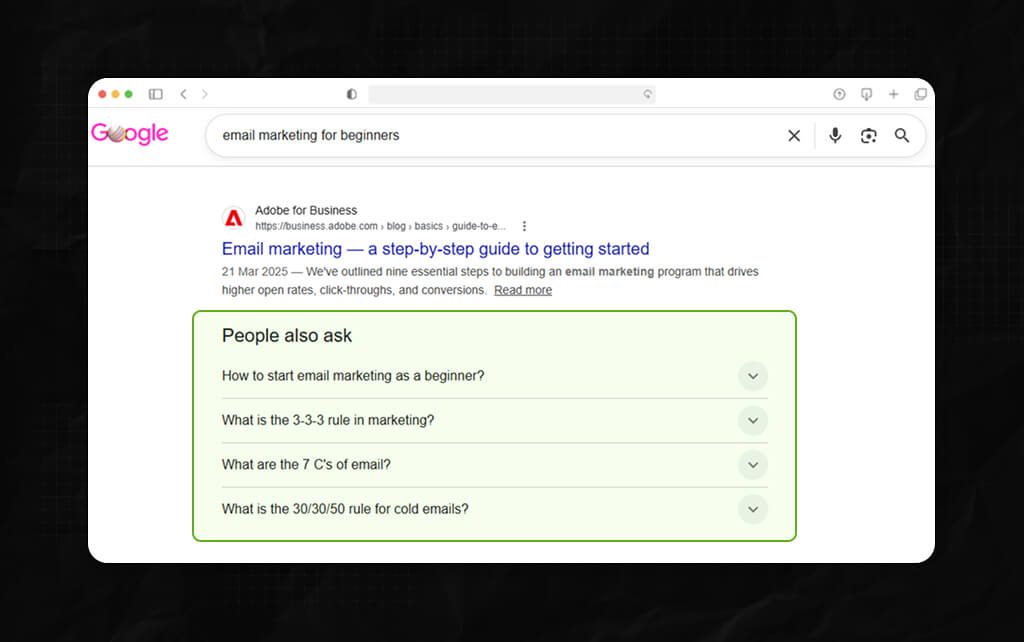
The People Also Ask box is a search feature that surfaces questions related to whatever you originally typed. Each one opens into a short answer pulled from a webpage, with a link back to the source.
Just open a question, and Google frequently loads a few more beneath it, building out the list based on what it thinks you’re trying to figure out.
For instance, if you search “email marketing for beginners,” you might get:
None of those are just reworded versions of the main keyword.
They are the next things a curious person actually wonders about. That distinction is the whole point: PAA rewards content that covers a topic, not content that hammers a single phrase.
Google assembles those questions from a mix of signals: related searches, historical user behavior, semantic relationships between topics, search intent, natural language processing, and Knowledge Graph connections.
When it notices people routinely searching a follow-up right after the original query, that follow-up becomes a candidate for the box.
So optimizing for PAA isn’t a keyword-stuffing exercise. It’s about understanding how people actually think their way through a subject.
As a result, someone searching “best project management software” doesn’t only want a list of tools. Odds are they are also wondering:
Answer those naturally inside one article, and you have dramatically widened the number of PAA results you might appear in.
The search landscape has shifted hard over the past couple of years.
AI-generated answers now field a lot of the straightforward questions, which has thinned out clicks for pages offering nothing more than a definition or a tidy list of tips.
As a result, if your content stops at the surface, the AI got there first.
That’s precisely where PAA earns its keep. Instead of answering one isolated question, it pushes you to build content mirroring the full decision-making process a searcher moves through.
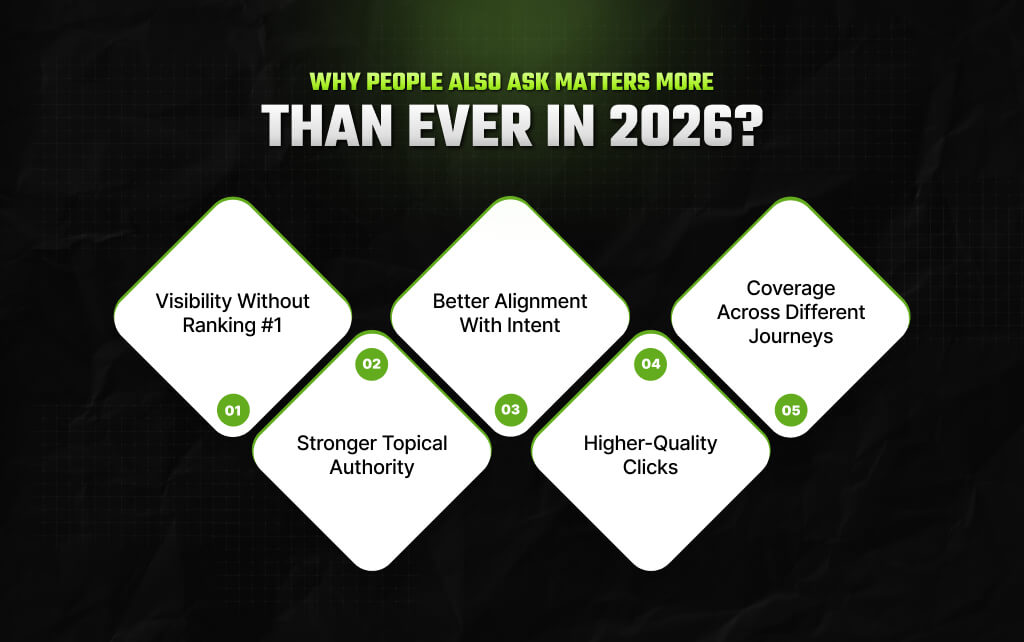
A few reasons that pay off:
One of SEO’s stubbornest myths is that only the top result gets seen.
It doesn’t hold up anymore. In fact, plenty of pages appear inside People Also Ask while sitting lower on the page organically.
Give a tight, relevant answer to a specific question, and Google may feature it regardless of your organic position, which hands smaller sites a real shot at competing with the big brands.
Google weighs depth over isolated keywords more heavily every year.
So, a page that thoroughly answers the related questions signals genuine expertise and helps search engines grasp the wider context.
Ten thin articles chasing slight keyword variations rarely beat one resource that covers the whole thing.
Modern SEO isn’t about ranking for words; it’s about solving problems.
PAA is a direct window into what people want to know next. Treat it as free audience research; every question is another piece of the search journey you can build around.
Someone who expands a PAA question has already tipped their hand; they’re curious.
So, if your answer is clear and on point, there’s a solid chance they follow the link. That traffic tends to be well-qualified, because visitors already know what they’re after.
Two people researching the same topic rarely ask identical questions. One person planning for retirement worries about taxes, while another cares about investment options.
As a result, you need to cover the related questions and your content stays relevant across all three paths, showing up in a wider spread of PAA boxes.
Google has never published a formula for this.
But years of research and picking apart search results reveal patterns consistent enough to work with. And knowing them makes your optimization far more deliberate.
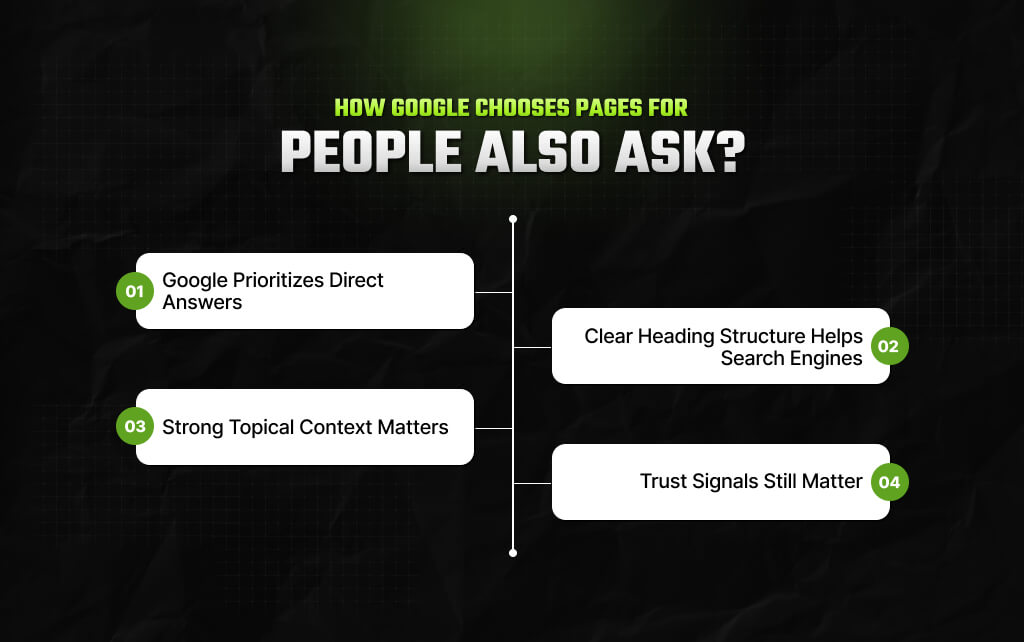
The most obvious trait of PAA results is how quickly they get to the point.
Most featured answers respond inside the first sentence or two, skipping the throat-clearing intros and background nobody asked for.
So, let’s assume the question is: how long does SEO take to work?
A weak answer opens like this: “SEO is an important part of digital marketing that businesses use to improve online visibility…”
But a strong one gets straight in: “Most websites begin seeing measurable SEO improvements within three to six months, though highly competitive industries often take longer.”
Google favors the second because it removes friction. The faster someone finds what they came for, the better the experience.
Google rarely pulls answers from pages that treat a question in a vacuum. The pages that win usually cover the surrounding territory in real depth.
An article on technical SEO, for example, would naturally touch on crawl budget, XML sitemaps, robots.txt, indexing, canonical tags, and Core Web Vitals.
Taken together, those signals tell Google the page has actual command of the subject rather than targeting one keyword and calling it a day.
Organized content is easier for readers and crawlers to move through.
A lot of PAA answers sit beneath question-style headings like “What is topical authority?” or “How do canonical tags work?” which make it simple for Google to pinpoint where a given question gets answered.
Also, you don’t need every heading phrased as a question (that gets tedious fast), but working natural question-based subheads in where they fit improves your match rate.
Credibility factors in too.
Content backed by firsthand experience, original examples, expert insight, reputable sources, and accurate information beats thin, keyword-only writing nearly every time.
That’s Google’s E-E-A-T emphasis — Experience, Expertise, Authoritativeness, and Trust — in action.
The practical takeaway: don’t set out to “write for People Also Ask.” Write the most genuinely helpful page on the topic, then structure it so Google can find and lift the answers cleanly.
If you think optimizing for PAA means scattering a few questions through your draft, think again. The pages that show up consistently are built around topics, not keywords. They see what a reader will ask next and answer it before that reader goes hunting.
That’s the mindset to carry into 2026. Here’s how it works in practice.
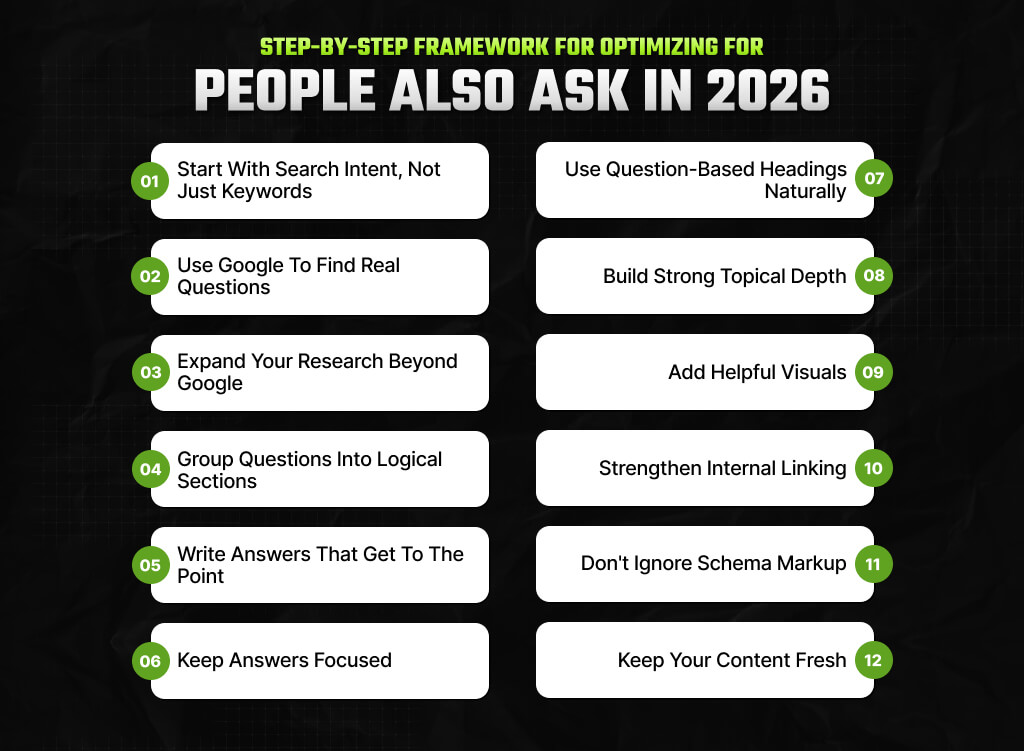
Every good PAA strategy starts with why someone is searching.
Take the keyword “CRM software.” It looks simple. But the intent behind it splits wildly: one person wants a definition, another wants recommendations, someone else is comparing two tools, and a business owner just wants to know if a CRM is worth the money.
Google knows this, which is why the PAA box tends to serve up things like:
Those aren’t arbitrary. Each maps to a different stage of the journey. Rather than spinning up a separate thin article for every one, fold them into a single comprehensive resource.
Pro tip: Before writing a word, ask yourself what you’d want to know next if you were reading this. More often than not, those follow-ups line up with what Google is already displaying.
One of the best research tools is also the most overlooked: Google itself.
Search your primary keyword and watch four things: the People Also Ask box, Related Searches, AI Overviews where they appear, and Autocomplete suggestions. Each reveals how Google links related concepts.
So, if you are writing about content marketing, don’t stop at the head term. Instead, look at what people are actually asking: “What is content marketing?”, “What are the four types of content marketing?”, “Does content marketing still work?”, “How long does content marketing take?” — and let that shape your structure.
Just don’t copy them in blindly; check that each one earns its place for your audience.
Google is a starting point. The rest of the internet fills in the picture.
Some of the richest sources for real questions: Reddit threads, Quora, industry forums, YouTube comments, customer reviews, support docs, and your own sales calls or customer emails.
These show you the language people actually use.
Writing in the words your audience naturally reaches for makes your content more relatable and lines it up better with conversational queries.
A common mistake is dumping every question into one long FAQ at the bottom. FAQs have their place, but they shouldn’t carry the whole load.
So, organize into clear topic clusters instead.
For an email marketing piece, don’t stack ten unrelated questions at the end. Structure it so the questions live where they belong:
Each section builds on the one before it, which makes the article easier to read and easier for Google to parse.
This is where a lot of articles blow their shot. Google isn’t hunting for a dramatic wind-up; it wants the answer.
Suppose the heading is: How long does SEO take? A weak version burns three paragraphs defining SEO first.
A strong version opens with: “Most websites begin seeing meaningful results within three to six months. Competitive industries may take longer, while sites with strong authority can move faster.”
That’s the answer. Then you unpack why timelines vary — competition, backlinks, content quality. Answer first, expand second. That one habit makes your content friendlier to readers and crawlers alike.
Most PAA answers are short. You don’t owe every question a 500-word essay. Answer it directly, add a supporting detail or two, and move on.
So, if a topic genuinely warrants a deeper dig, do it beneath the initial answer.
That layered approach works because the quick reader gets what they need immediately while the curious one keeps going.
You don’t need every heading in question form; it gets repetitive quickly. Mix descriptive heads with the occasional natural question:
Also, the variety keeps the article readable while still handing Google clear signals.
Part of why Google trusts certain pages is that they don’t quit after the obvious question; they explain everything around it.
A shallow piece on Core Web Vitals defines the term and lists the three metrics. A strong one goes further: why the metrics matter, how Google measures them, common problems and fixes, recommended tools, mistakes to sidestep, and the likely impact on ranking.
That’s topical depth, and the more thoroughly you cover a subject, the more related questions your page can match.
People tend to think of PAA as pure text, but Google regularly pulls answers from pages carrying supporting visuals.
Worth considering: process diagrams, comparison tables, infographics, annotated screenshots, flowcharts, original illustrations.
They improve comprehension, keep people on the page longer, and pull readers deeper in. One rule: every image should reinforce the text, never stand in for it.
Internal links show Google how a page fits the bigger picture.
If your site already covers keyword research, topical authority, content clusters, search intent, and semantic SEO, link your PAA guide to those naturally.
Also, Google picks up extra context about your expertise, and readers get to keep exploring without bouncing back to the results page, which is a positive engagement signal in its own right.
Schema won’t guarantee a PAA slot, but it helps search engines read your content more clearly.
Depending on the page, look at FAQ schema, Article schema, How-To schema where it fits, and Breadcrumb schema.
The aim isn’t to game the algorithm. Instead, it’s to strip out ambiguity so your content is easier to interpret.
PAA questions shift over time. A guide from 2023 may not answer what people are asking in 2026, which is why updates matter.
Every few months, work through a short maintenance pass: revisit the PAA box for your target queries, check whether new questions have surfaced, update any outdated statistics, refresh screenshots, add new examples, and expand sections that no longer feel complete.
Also, fresh content signals to Google that your page is still relevant, and the process usually turns up new openings to capture emerging PAA queries you hadn’t targeted before.
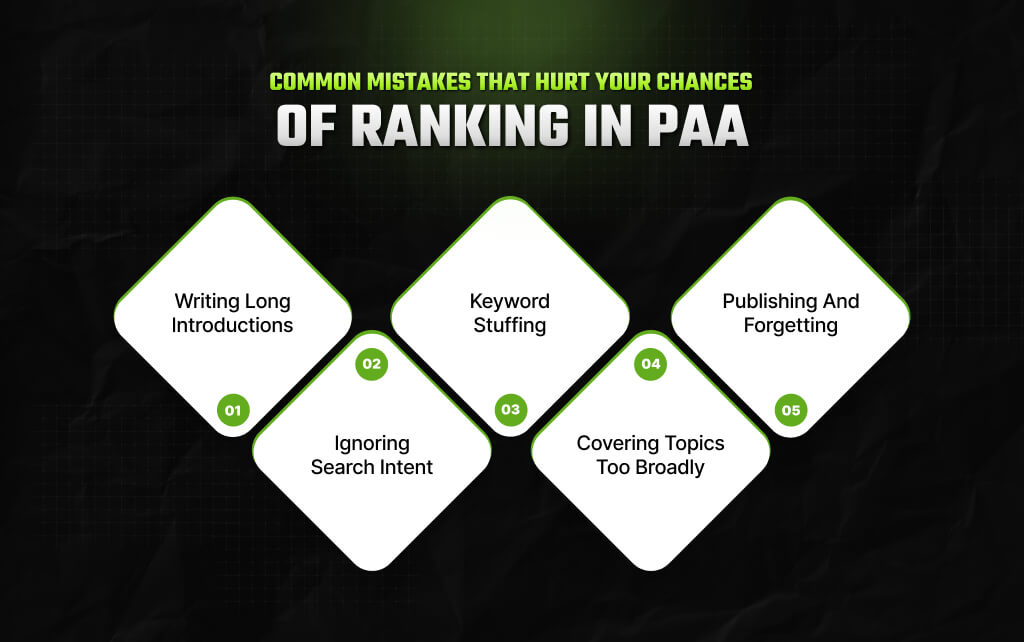
Plenty of articles miss PAA opportunities, not because they’re badly written, but because Google struggles to interpret them.
On that note, the recurring culprits are:
So, before you hit publish, run your content through this quick pass:
Also, ensure you are checking every box with confidence, and your article is in strong shape to compete for PAA visibility.
People Also Ask isn’t just one more feature cluttering the results page.
It’s a window into how people actually think. Every question inside that box is a small moment of curiosity – a follow-up, a clarification, the next step in someone working toward a decision.
The sites that keep landing there aren’t gaming an algorithm. They are anticipating those moments and answering them clearly, before the reader has to go looking.
As search keeps evolving through 2026, that instinct matters more than ever.
Moreover, AI summaries can settle the simple questions, but people still click through when they need context, examples, comparisons, and guidance they can trust, and that’s where well-structured, experience-driven content pulls ahead.
So treat PAA less as a shortcut to extra visibility and more as a standard to hold your work against.
If your article genuinely carries a reader from one question to the next without leaving them confused or back in the search bar, you’re already aligned with what Google is trying to reward.
Optimizing for People Also Ask was never really about writing for a search feature. It’s about producing content that answers real questions, solves real problems, and earns its visibility because it deserves it.
Barsha is a seasoned digital marketing writer with a focus on SEO, content marketing, and conversion-driven copy. With 8+ years of experience in crafting high-performing content for startups, agencies, and established brands, Barsha brings strategic insight and storytelling together to drive online growth. When not writing, Barsha spends time obsessing over conspiracy theories, the latest Google algorithm changes, and content trends.
View all Posts

How To Audit Your Search Visibility In 2026: ...
Sep 30, 2026
What Is Google Lighthouse? A Practical Guide ...
Sep 30, 2026
When Can You Save A Public Instagram Story?
Sep 30, 2026
Google Looker Studio: What It Is, How It Work...
Sep 30, 2026
What Is Google Tag Manager? A Practical Guide...
Sep 30, 2026