
How Corda Turns Authority Data Into Campaigns
Oct 01, 2026
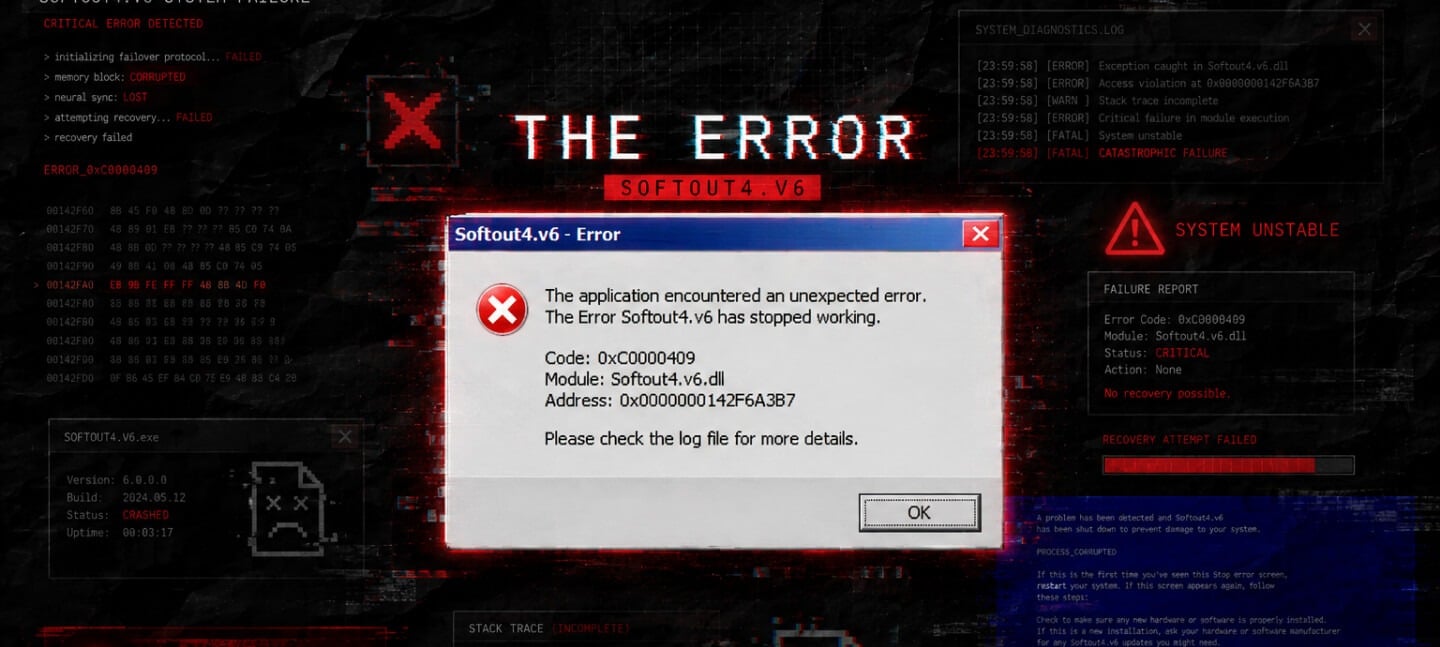

Nothing disrupts your workflow quite like an unexpected error message.
One moment, your software is running normally. Next, you’re staring at a message that seems to make little sense.
The Error Softout4.v6 falls into that category. It’s not a widely recognized Windows error code, nor is it among the common application errors most users encounter daily.
That creates a unique challenge.
When well-known errors appear, finding a solution is usually straightforward. A quick search often reveals dozens of guides, forum discussions, and official support articles.
With lesser-known errors such as Softout4.v6, users are often left piecing together information on their own.
The good news is that obscure errors typically follow familiar patterns.
Whether the issue stems from damaged software files, installation problems, missing dependencies, system conflicts, or update failures, the troubleshooting process is often similar.
By taking a methodical approach, you can identify the root cause and restore normal operation.
This guide explains what the Error Softout4.v6 may indicate, the most common causes behind it, and the practical steps you can take to resolve the issue.
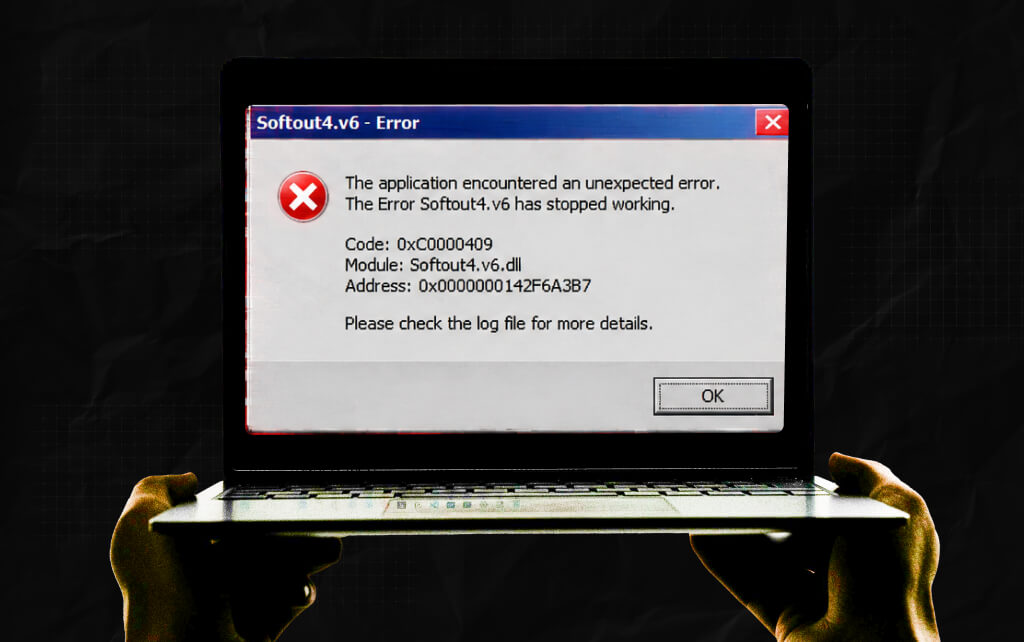
The Error Softout4.v6 appears to be a software-related error rather than a standard operating system error.
In most reported situations involving similar error naming conventions, the issue typically occurs during one of the following scenarios:
Also, it is my prerogative to highlight that this error has not been broadly covered and documented yet.
So, it is essential that we look at this error as a symptom, and not a diagnosis.
The error message in itself actually indicates that a process has failed to run properly. The actual cause often lies elsewhere within the software environment.
That’s why troubleshooting requires looking beyond the error name itself.
Users experiencing the Error Softout4.v6 often report one or more of the following issues:
| Symptoms | What Does It Mean? |
|---|---|
| Application Crashes | The software launches but unexpectedly closes shortly afterward. |
| Installation Failures | The installation process stops midway and generates an error notification. |
| Update Problems | Software updates may fail to complete correctly, leaving applications partially updated. |
| Performance Issues | In some situations, affected systems become slower while the software attempts to recover from repeated failures. |
| Startup Errors | The message may appear immediately after launching a program. |
| Missing Features | Certain functions within the application may stop working while others continue operating normally. |
Frankly, if you understand these symptoms well, then it will become easy for you to narrow down all potential causes.
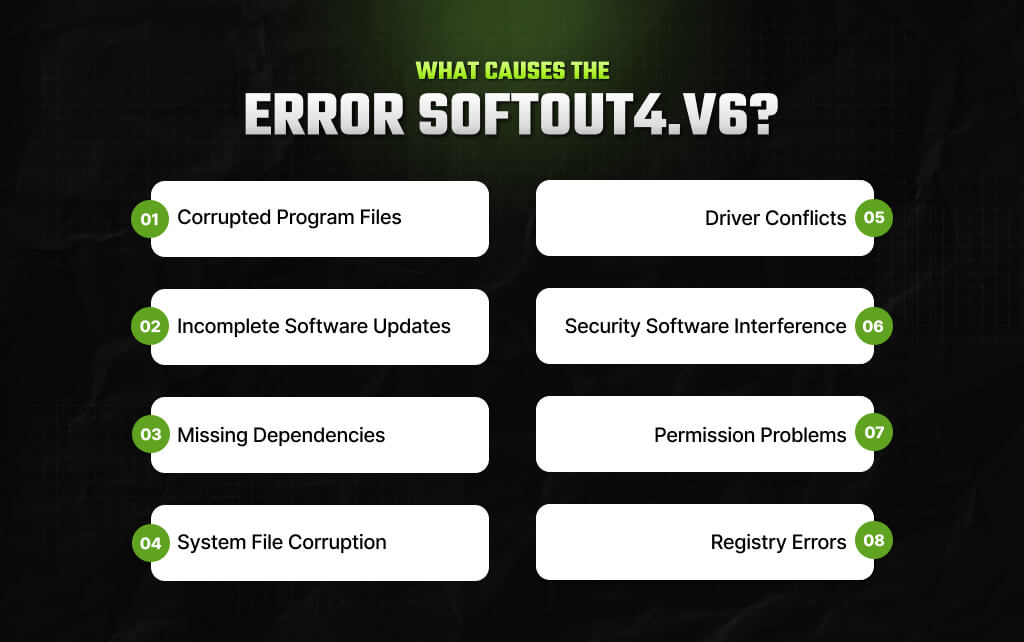
Several factors can trigger software-related errors of this nature. Let’s examine the most common possibilities.
One of the leading causes of application errors is file corruption. Program files can become damaged for several reasons:
So, the thing is, if your critical files get corrupted, then your applications will struggle to load all your essential resources.
And this, in turn, can lead to error messages.
Updates occasionally fail before completion.
A network interruption, system restart, or compatibility issue can leave software caught between versions.
This creates conflicts that prevent the application from functioning correctly.
Modern software often relies on supporting components such as:
If these dependencies are missing or damaged, applications may generate unexpected errors.
At times, it is possible that the issue is not software-related.
So, your Windows system files can also get corrupted due to failed updates, hardware problems, or even software conflicts.
Naturally, when your essential system components stop running properly, application-level errors often follow.
I was hinting at this in my previous point. Any incompatible or outdated drivers can easily interfere with software operations.
Also, multimedia tools, graphic-heavy apps, and niche business software are very vulnerable to driver-related problems.
Another issue I’ve seen a few times is how both your endpoint protection and antivirus tools flag credible files as shady and suspicious.
In case something similar happens to you, then the software might lose access to the necessary resources.
And when this happens, the software ends up generating errors during the implementation stage.
Some applications actually work with advanced permissions for accessing system settings, folders, and even normal files.
Any case of insufficient permission can also interfere with some task completion activities, triggering the error message.
In 2026, registry errors are not very common. But if you are using an outdated Windows version, then invalid registry entries can also lead to software conflicts and instabilities.
Also, applications that rely heavily on configuration settings may experience issues when registry values become corrupted.
As a tech noob when I was starting out, it was certainly difficult to carve out a space for myself in an industry dominated by algorithm changes, Google updates, and technical challenges.
And I’ve spent over eight years in the industry. Looking back, I can tell you errors are easier to fix than you think.
In fact, you will be surprised with the simple fixes I’ve suggested below for dealing with this error – and trust me, they will work.
Also, if these don’t work, I’ve covered advanced troubleshooting in the next section.
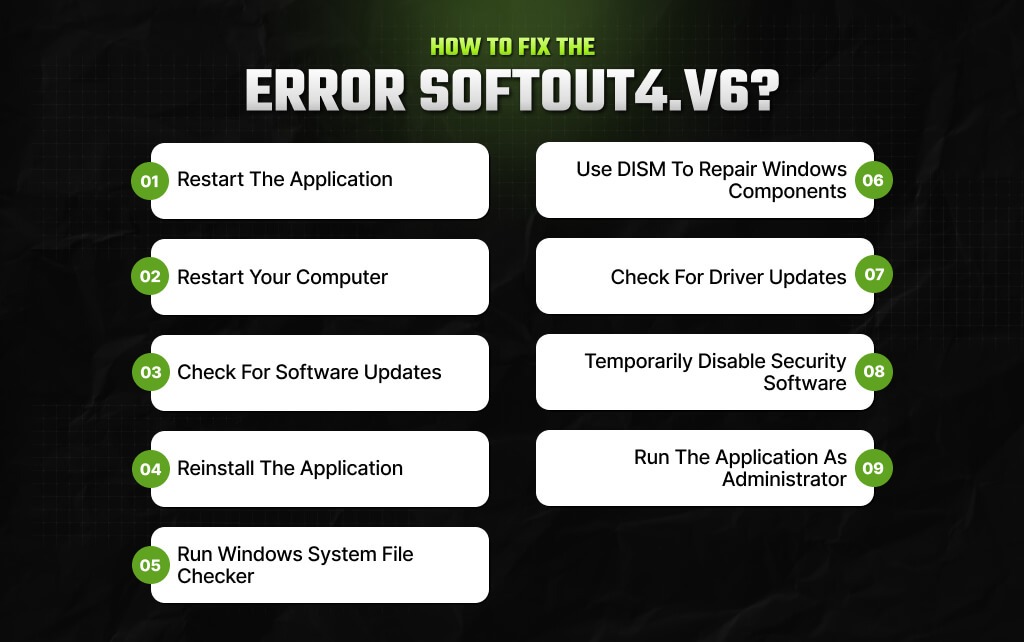
Yes, yes, it sounds conventional and outdated. But surprisingly, it works too often to be ignored as a quick fix.
So, the thing is, temporary glitches can lead to unnecessary disruptions. In that case, just close the application and relaunch it.
In most cases, the problem will disappear when you restart the application.
Again, an outdated fix in most people’s opinion, but in reality, it has always worked for me (just millennial things!)
So, when you restart your device, it clears all temporary files and resets the system for you. Also, many software conflicts disappear after a reboot.
This one’s pretty annoying, but it’s true that developers do release updates frequently. The purpose? Usually, to deal with bugs and compatibility issues.
In that case, just go to the website of the software vendor and confirm that you are running the latest version.
Plus, it is possible that any outdated version is incompatible with the latest system updates.
If corrupted program files are causing the issue, reinstalling the software often resolves the problem.
In that case, I can help you out – just follow the steps below:
This process replaces damaged files and restores default configurations.
If system corruption is involved, Windows provides built-in repair tools. In that case, just open Command Prompt as Administrator and run: sfc /scannow
The System File Checker scans Windows files and attempts to repair any damaged components.
Also, allow the process to complete before restarting your computer.
If SFC cannot repair all detected issues, try the Deployment Image Servicing and Management tool.
In that case, just run: DISM /Online /Cleanup-Image /RestoreHealth
This utility repairs underlying Windows image files that support system operations. Once finished, run SFC again for the best results.
Drivers act as translators between software and hardware. Outdated drivers can create unexpected compatibility problems.
As a result, you should particularly focus on:
Updating these components can eliminate software conflicts.
Security tools occasionally block legitimate application processes. As a diagnostic step, temporarily disable antivirus protection and test the application.
So, if the error disappears, create an exception for the affected software. Remember to re-enable security protection immediately after testing.
Permission-related issues can sometimes trigger application failures. Right-click the program shortcut and select: Run as Administrator
Now, if the application works correctly afterward, you may need to adjust its permission settings.
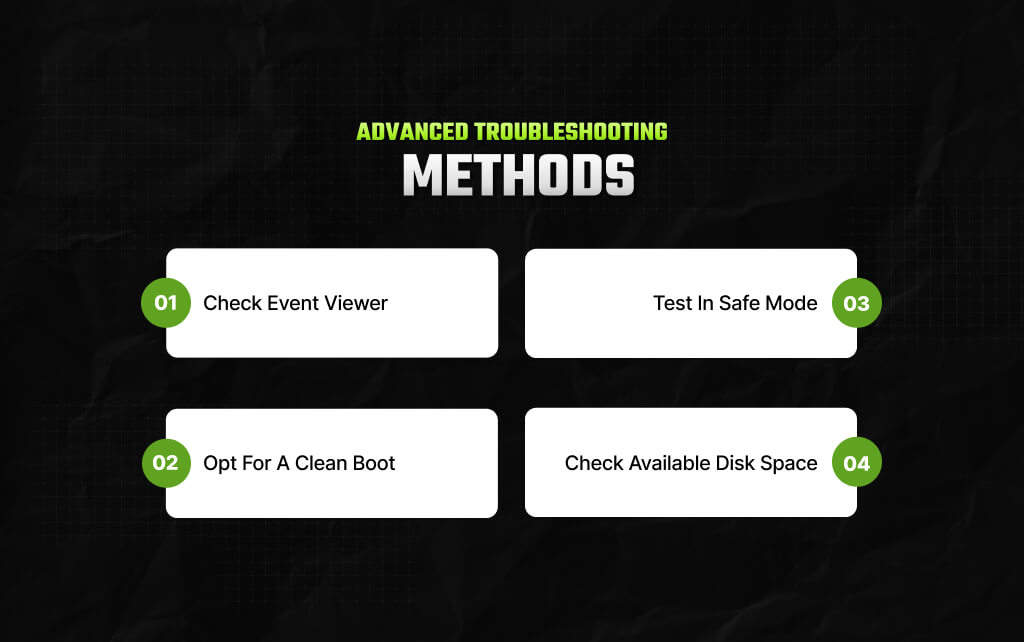
Of course, standard fixes work. But in some specific cases, those fixes might not work – in that case, a deep dive becomes essential.
Windows Event Viewer records detailed system events.
To access it:
Look for entries that correspond to the time the error occurred, considering these records can reveal some underlying problem that you hadn’t noticed so far.
FYI, a Clean Boot will start Windows with fewer startup programs and services. This helps identify software conflicts.
If Softout4.v6 disappears during a Clean Boot, another application may be interfering with normal operation.
For anyone who didn’t know, Safe Mode loads only essential Windows components.
In that case, you can try running the impacted software in Safe Mode, since it can help people find out whether any third-party software is triggering the issue.
I’ve seen so many professionals forget about this basic point. Insufficient storage can lead to interruptions during updates, installation failures, and even application conflicts.
So, it’s best to check that there is enough free space in your system drive. Many applications require temporary storage during operation.
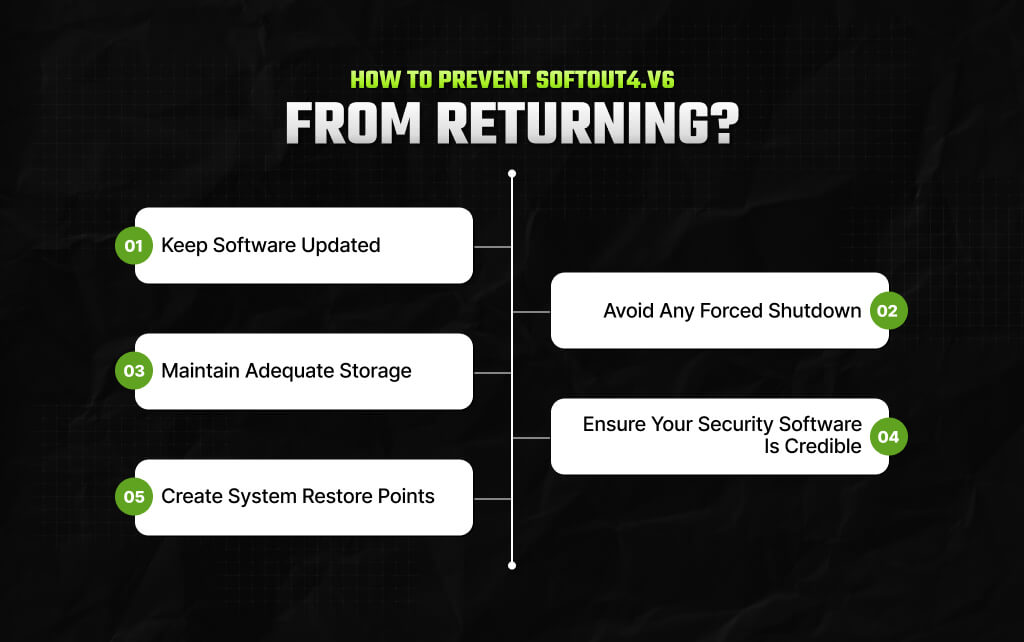
Of course, knowing how to fix errors is essential. But if you think about it, just fixing a problem isn’t going to help alone – you need to ensure that the problem doesn’t come back later.
And this is precisely why I have discussed how you can prevent this error from returning in the section below – check it out!
Install updates regularly. Developers continuously release fixes that improve stability and security.
Improper shutdowns are common – you are running late, and force-shut your system, hurrying out of work.
While it appears to be a harmless action, it does put you at risk of file corruption. So, it’s best to shut down your device and applications normally.
If you don’t have enough space on your disk, you should take it seriously because low storage can lead to multiple software-related issues.
Monitor available storage and remove unnecessary files periodically.
A reputable security solution helps protect against malware-related corruption without unnecessarily interfering with legitimate programs.
Restore points provide a safety net when software installations or updates create unexpected problems.
They can significantly reduce recovery time.
This is simple, really.
Even after completing all standard troubleshooting steps, if the error message continues to appear, then in that case, you need to get in touch with someone who can professionally help you with technical support.
So, contact support when:
Also, to speed up the entire troubleshooting procedure, ensure you are offering the right screenshots, descriptions, and even log files if necessary.
Read Also:
Barsha is a seasoned digital marketing writer with a focus on SEO, content marketing, and conversion-driven copy. With 8+ years of experience in crafting high-performing content for startups, agencies, and established brands, Barsha brings strategic insight and storytelling together to drive online growth. When not writing, Barsha spends time obsessing over conspiracy theories, the latest Google algorithm changes, and content trends.
View all Posts

How Corda Turns Authority Data Into Campaigns
Oct 01, 2026
How To Audit Your Search Visibility In 2026: ...
Sep 30, 2026
What Is Google Lighthouse? A Practical Guide ...
Sep 30, 2026
When Can You Save A Public Instagram Story?
Sep 30, 2026
Google Looker Studio: What It Is, How It Work...
Sep 30, 2026