
The Ultimate Guide To Competitor Backlink Analysis: An Actionable SEO Blueprint To Steal Your Rivals’ Traffic
Oct 23, 2026
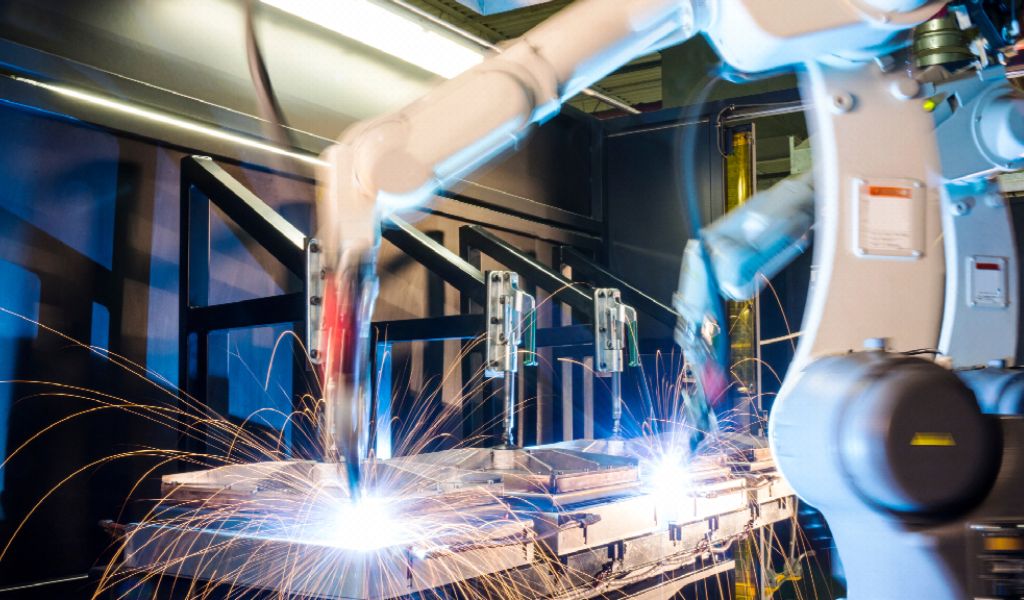

Core tech companies need agility, speed, and precision to operate. Today, the product-customer fit matters more than ever. Given that, core tech brands are trying to upgrade their product stack.
But at the same time, product manufacturers need parts that fit the end product. For instance, the respective durability, quality, and QA process of the parts’ manufacturers matter a lot!
As a result, many manufacturers are now focusing on purchasing custom parts. However, some industry standards are non-negotiable here. For instance, material QC, uiue design, and build quality testing.
Other necessities include smart prototype development and deployment. If companies follow the processes diligently, they can easily set industry benchmarks. If your manufacturing agency is new to business, you might need SEO for tech companies.
Most product teams don’t switch suppliers or rethink parts just because they’re bored on a Tuesday afternoon. They do it because timelines are tighter, product cycles are shorter, and quality expectations keep rising.
Manufacturers are investing heavily to upgrade production capacity. As of July 2026, annual construction spending in manufacturing stands at US$185.7 billion, representing a strong year-over-year increase.
However, they should also think about brand growth and invest in SEO for tech companies. You can start with affordable SEO tools.
That number says a lot. Old production habits are being tested. Companies need faster methods, better materials, and more practical ways to solve design problems before they become production headaches.
Hard tooling takes forever. If you manufacture plastic housings, covers, trays, or precision panels, thermoforming bridges the gap between initial CAD drafts and physical parts you can actually test.
You avoid multi-month vendor delays, tweak dimensions mid-stream, test different resin blends, and run small batches without taking a bath on upfront costs.
If you’ve ever sat through a status meeting watching launch dates slip while a mold maker goes completely dark, you get the headache. Nobody wants their prototype testing held hostage by a missing quote.
Stock enclosures are a compromise. They rarely sit flush, add useless bulk, mess with seal lines, and force engineering to redesign surrounding hardware just to make things fit.
What starts as a minor trade-off early on quickly turns into cracked housings in field tests, unexpected warranty claims, assembly bottlenecks, or emergency rework right before production.
Tailored geometry isn’t about luxury. It’s about making sure your hardware performs when it counts.
Once your team sees where standard parts limit a design, custom components stop feeling like a luxury. They become a practical way to improve speed, function, and even brand identity.
Custom parts make rapid prototyping more useful because engineers can test the real geometry, material behavior, and assembly fit earlier. That means fewer late-stage surprises. And honestly, late-stage surprises are rarely the fun kind.
When teams can touch, mount, bend, clean, inspect, or stress-test a part early, decisions get clearer. You stop guessing and start learning.
Forget off-the-shelf catalog hardware. Custom fabrication, using CNC milling, additive builds, or thermoforming, hits tight tolerances and complex geometries stock components just can’t touch.
You get lighter, better-fitting enclosures that drop straight into assembly. No weird hacks required.
That’s critical when tolerance stack-up threatens a build. A missing millimeter of clearance, minor thermal bottlenecks, cramped wiring, or bad mounting points will wreck performance fast.
Silos destroy hardware timelines. The best builds happen when engineers and shop techs talk early, way before cutting material.
A brief DFM review catches design flaws fast. For instance, thin walls, sharp internal corners that invite stress fractures, impossible fastener angles, or pricey cosmetic specs that drain budget without adding function.
Fixing fit and lead times handles half the battle; next comes dodging supply chain risk. Custom builds help there, too.
Once performance improves, the business case becomes easier to see. The strongest benefits of custom components usually show up in innovation, protection, integration, and flexibility.
However, you need good manufacturing clients. SEO for tech companies will help you to reach them.
A proprietary component can make a product harder to copy. That matters in wearables, aerospace hardware, medical tools, robotics, and connected devices, where tiny design details can carry serious business value.
Sometimes the advantage is not one dramatic invention. It is a thoughtful combination of shape, material, fit, and function that competitors can’t easily duplicate.
In electronics, custom electronic components can combine sensing, shielding, power routing, and packaging in tighter spaces.
As IT and OT converge, adoption of converged technologies for greenfield projects will pick up speed. From ~10% today to ~50% within the next five years.
That shift puts more pressure on components to do more in less space.
Smaller devices, denser assemblies, and connected systems all need parts that are designed around the actual product, not borrowed from a catalog and forced into place.
Low-volume and high-mix production gives companies room to test demand before committing to full-scale tooling.
That can be especially helpful when customers change their minds, regulations shift, or early field feedback points to a better design.
Next, let’s look at the materials and processes that make this practical.
Modern custom component manufacturing depends on matching the material and process to the job. The point is not to make things complicated. The point is to control performance.
Advanced polymers, composites, metals, and ceramics can improve heat resistance, stiffness, biocompatibility, electrical safety, or chemical durability. The right material can be the difference between passing validation and starting over with a slightly panicked project meeting.
Material choice also affects feel, finish, weight, cleaning requirements, lifespan, and compliance. In other words, it is not just an engineering checkbox.
Additive methods are useful for complex shapes and quick design iterations. CNC machining supports tight tolerances and repeatable precision.
Plastics thermoforming works well for enclosures, trays, covers, and housings where size, finish, and cost all matter.
Each method has tradeoffs. A good supplier should be able to explain those tradeoffs clearly, not bury you in jargon.
| Manufacturing path | Best fit | Main value |
|---|---|---|
| Additive manufacturing | Complex prototypes | Fast design testing |
| CNC machining | Precision parts | Tight fit and repeatability |
| Formed plastics | Housings and covers | Flexible production and finish options |
With the process options clearer, real-world use cases show where the payoff becomes visible.
Across high-tech industries, the biggest wins often come from solving one very specific problem. That is where custom components earn their keep.
Lightweight brackets, protective covers, precision housings, and high-strength fixtures can reduce weight and improve reliability. In harsh environments, the part has to match the mission. You can’t ask the mission to be gentler.
A small improvement in weight, durability, or access can make a meaningful difference across a larger system.
Patient-specific tools, biocompatible housings, microfluidic parts, and test-ready prototypes help teams improve fit and safety. Digital validation can also make review cycles less painful.
In healthcare, confidence matters. Components may need to survive cleaning, handling, inspection, and repeated use while meeting strict safety expectations.
Robotics and automation teams use custom circuit boards, guards, mounts, and actuators for specialized motion and sensing. Automotive teams use custom parts for EV battery modules, lightweight interiors, and safety-focused assemblies.
In these fields, layout and reliability are everything. A custom mount, guard, or housing might look ordinary, but it can protect sensitive systems and simplify assembly in a big way.
Those wins are real, but sourcing has to be handled carefully.
Once a company commits to custom parts, supplier choice becomes critical. A strong partner can reduce cost, risk, and delay. A weak one can create all three before you realize what happened.
Look for proven engineering review, material guidance, prototyping support, finishing options, and inspection reports. If a supplier can’t explain tradeoffs in plain language, treat that as a warning sign.
You want a partner who can challenge assumptions respectfully and help you avoid problems before money is spent.
Custom designs often include sensitive details. Teams should confirm confidentiality practices, revision control, inspection methods, and traceability before sending complete files.
Good documentation is not glamorous, but it saves people later. When a revision changes, everyone needs to know what changed, why it changed, and which version is approved.
The lowest unit price is not always the lowest cost. Rework, slow communication, poor fit, missed tests, and inconsistent quality can erase early savings quickly.
A cheaper part that causes a launch delay is not cheap anymore.
With sourcing handled properly, teams can focus on getting more value from every custom decision.
Custom work pays off when it is planned early. Waiting until late-stage testing can turn a smart investment into a rushed repair job.
Early design-for-manufacturing checks can catch avoidable issues before tooling begins. It is much cheaper to adjust a model than to remake a mold or scrap finished parts.
These reviews also help teams compare process options while there is still time to make smart changes.
Physical prototypes help teams test assembly, feel, durability, and service access. Even a rough prototype can reveal problems that drawings hide.
Sometimes one person holding the part for ten seconds will spot what five meetings missed. It happens.
Heat spikes, constant vibration, harsh solvents, moisture, and daily shop-floor abuse. Factor those in from day one. In high-stakes hardware, a part that seems “good enough” usually fails at the worst possible moment.
Don’t rely on clean lab benches. Put prototypes through the actual grind they’ll face out in the field.
Nail those testing habits, and justifying the upfront ROI becomes trivial.
Custom parts pay off by eliminating design hacks, speeding up validation, and boosting real-world reliability.
For engineering leads, going custom locks down IP, tightens system integration, and cuts operational risk when specs get tough.
The blueprint isn’t complicated: spot your constraints early, pick the right manufacturing process, and partner with vendors who actually know production inside out. To make your brand stand out, invest in SEO for tech companies.
When builds need to be lighter, tougher, safer, or faster to market, custom components aren’t an afterthought. They are what keeps the product running right.
Read Also:
Barsha is a seasoned digital marketing writer with a focus on SEO, content marketing, and conversion-driven copy. With 8+ years of experience in crafting high-performing content for startups, agencies, and established brands, Barsha brings strategic insight and storytelling together to drive online growth. When not writing, Barsha spends time obsessing over conspiracy theories, the latest Google algorithm changes, and content trends.
View all Posts

The Ultimate Guide To Competitor Backlink Ana...
Oct 23, 2026
How To Land High-Authority Editorial Backlink...
Oct 23, 2026
Why Your Website Traffic Dropped Suddenly And...
Oct 23, 2026
How Do The Physical Google Review Tools Redef...
Oct 23, 2026
How To Get Your Brand Cited In AI Search Resu...
Oct 22, 2026