
KeywordStat Review: Keyword Research, Clustering & SEO Data Compared
Oct 03, 2026
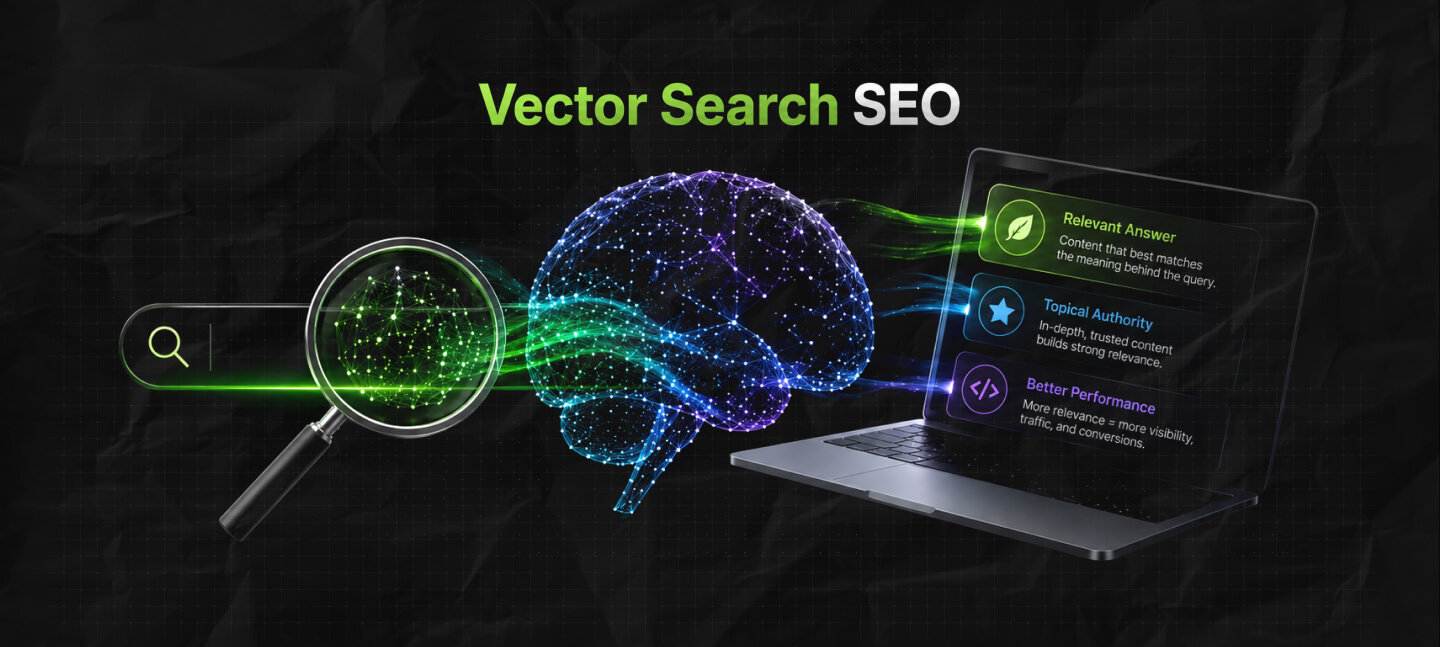

Today’s topic: Vector Search SEO.
Search is becoming better at understanding meaning. While that does sound simple, it does change how people tend to look at SEO.
For so many years, SEO primarily focused on one thing only: matching words and phrases. For example, if someone looks up ‘best track pants for new athletes,’ then the pages containing those words will get an obvious advantage.
However, things have changed for real – modern search algorithms go beyond exact words and phrases, often connecting related concepts. Also, they put more emphasis on understanding context and identifying people-first, helpful content that can actually add value.
And this is precisely where vector search SEO becomes relevant.
FYI, vector search helps search algorithms move beyond matching words, comparing the meaning of available information instead.
Currently, vector search is used widely in semantic search, AI-backed applications, and even modern retrieval systems.
And today, I’ll do a comprehensive deep dive into vector search SEO, breaking down what it means for search and, more importantly, how to optimize for it.
Stay tuned.
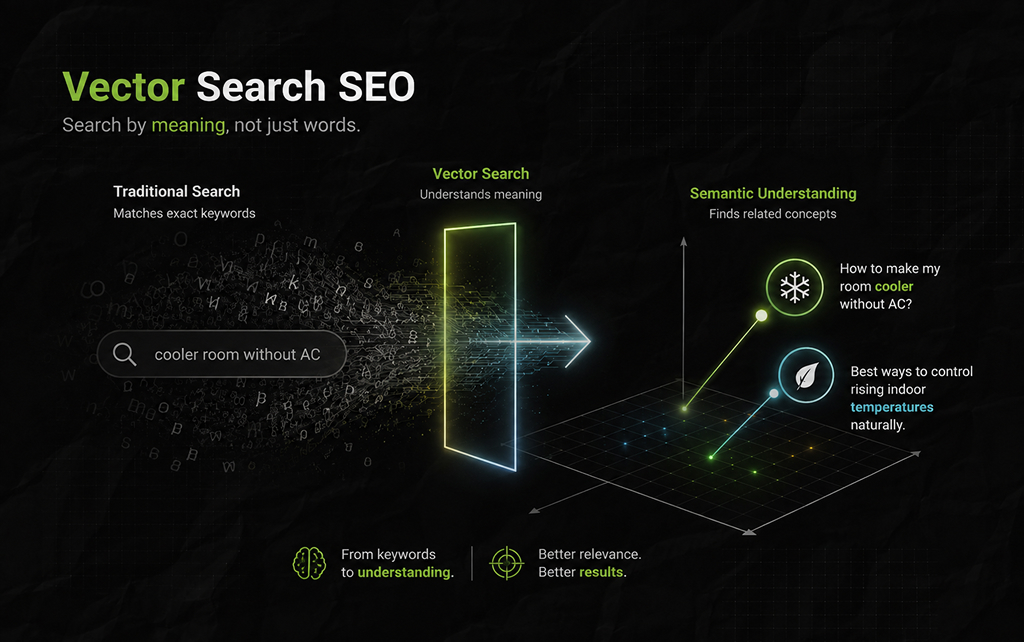
Vector search is somewhat different from your typical search that finds information depending on context, meaning, and even relationships between different concepts.
Instead of representing a piece of text only as words, a machine-learning model can convert it into a numerical representation called a vector or embedding.
As a result, you will see that similar content often ends up having vectors that are closer together within the representation space of the model.
For instance, you come across two pieces of content:
Of course, the titles are different – the words are different. But the underlying need is similar. And a vector-based retrieval system can potentially recognize that relationship.
That is the key difference between lexical matching and semantic retrieval.
While traditional keyword matching looks for overlapping words, vector search compares representations of meaning.
Neither approach is automatically better for every search.
Also, modern systems can use multiple retrieval methods together.
But vector search gives search engines and AI systems another way to identify relevant information.
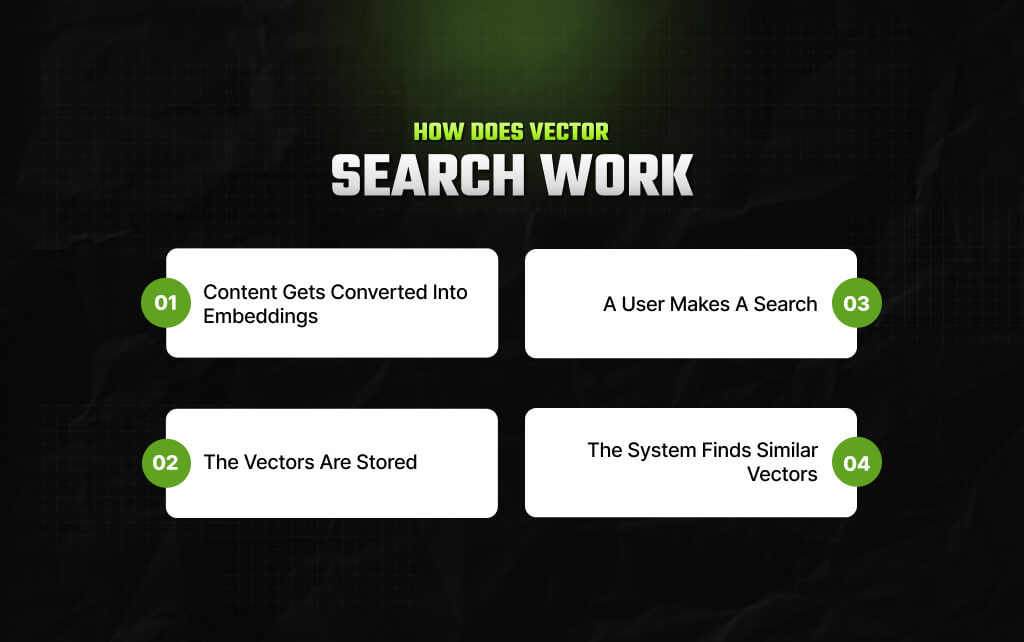
The process usually involves several stages.
A model processes text and generates an embedding. The embedding represents the text mathematically.
So, a paragraph, document, product description, or search query can all be converted into vectors.
Large collections of vectors can be stored in a vector database or search infrastructure designed to retrieve them efficiently.
The search query can also be converted into a vector.
The system compares the query representation with the available content representations. It then retrieves content that appears semantically relevant.
This is one reason vector search is useful for large collections of unstructured information.
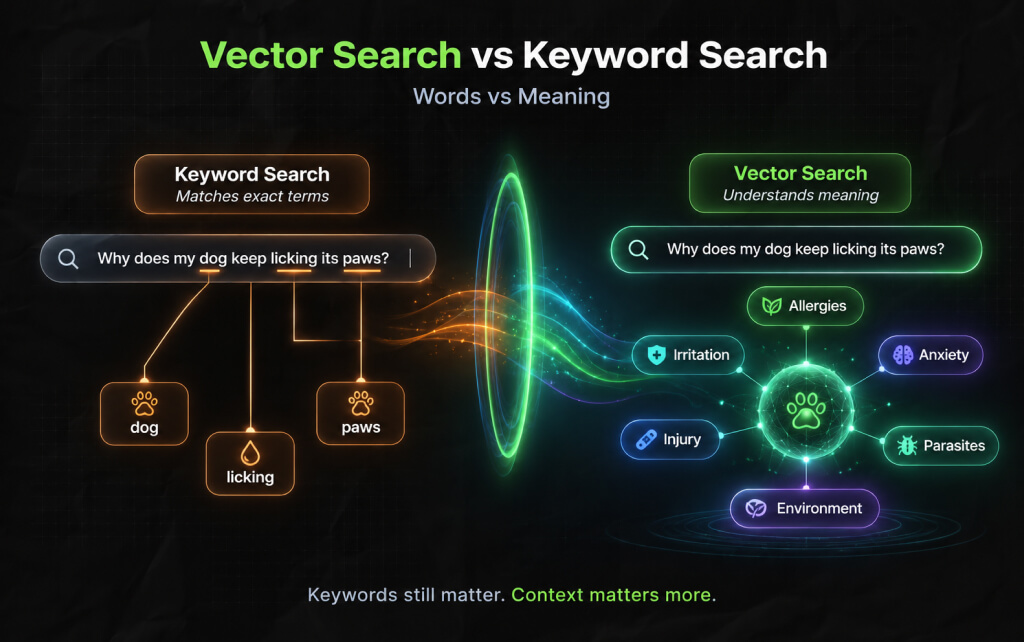
This is the distinction SEO professionals need to understand. So, imagine someone searches, “Why does my dog keep licking its paws?”
A keyword-based system can identify pages containing:
However, a semantic retrieval system can potentially connect the query with content discussing:
And that too, even when the page does not use the exact phrase “dog keeps licking its paws.”
That does not mean keywords have become irrelevant. TBH, they have not. Rather, it means keyword matching is no longer the entire picture.
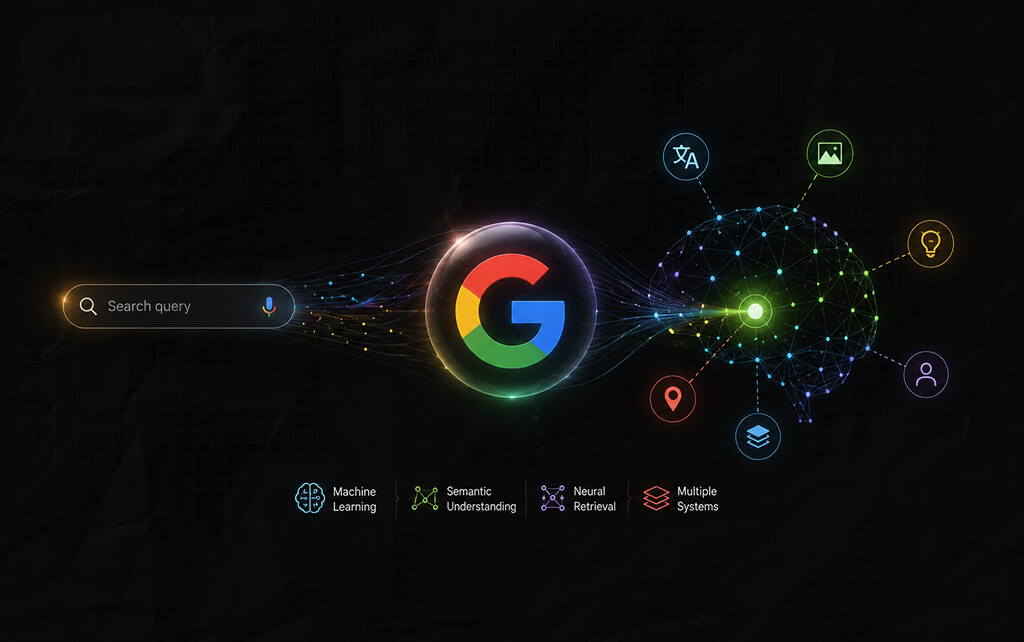
Google has long used machine learning and semantic understanding in its search systems.
Systems such as BERT and MUM have helped Google better understand language and search intent.
Also, Google has publicly discussed neural retrieval and vector representations in its research.
However, it would be misleading to say that Google Search simply “uses vector search” as one single ranking system.
Google Search is made up of many systems working together. Its ranking and retrieval processes are far more complicated than a basic vector database.
So when people say, “Google uses vector search,” the more accurate interpretation is:
Modern search systems use machine-learning-based representations and retrieval techniques that can understand relationships between concepts, alongside many other systems.
That distinction is important when writing about SEO.
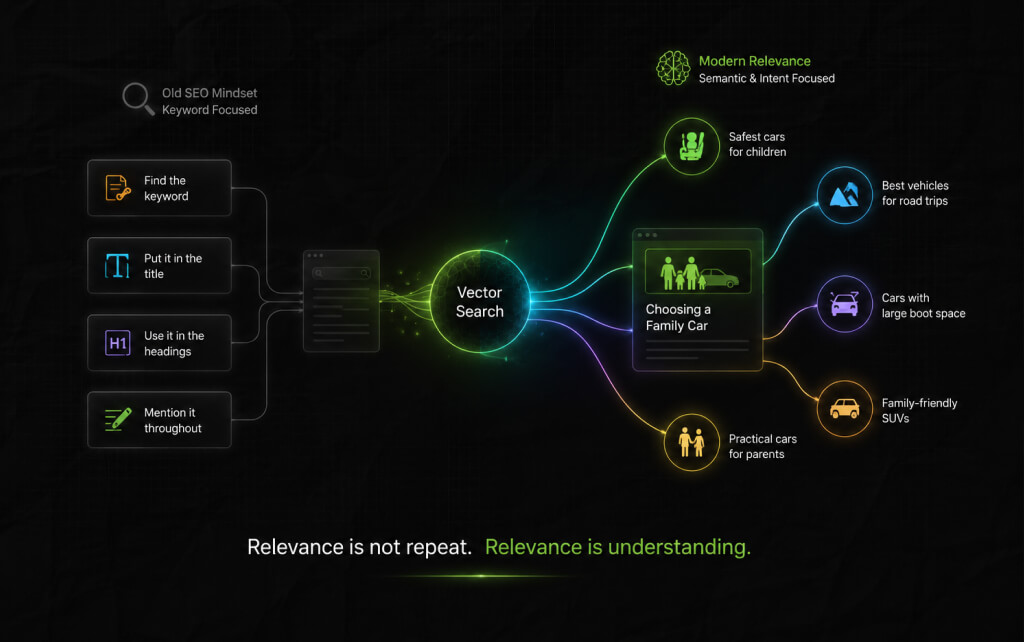
Because it changes what relevance can mean. Older SEO advice often sounded like this:
Those elements can still matter. But they do not guarantee that your content answers the searcher’s actual question.
Vector-based retrieval makes semantic relationships more important. As a result, a page about “choosing a family car” could be relevant to searches involving:
The page does not need to repeat every phrase unnaturally. It needs to cover the underlying subject properly.
There is no special ‘vector search SEO tag.’ Also, you cannot add a meta tag that tells a search engine: Please rank this page for semantic similarity.
Instead, focus on making the content genuinely useful and easy for retrieval systems to understand.
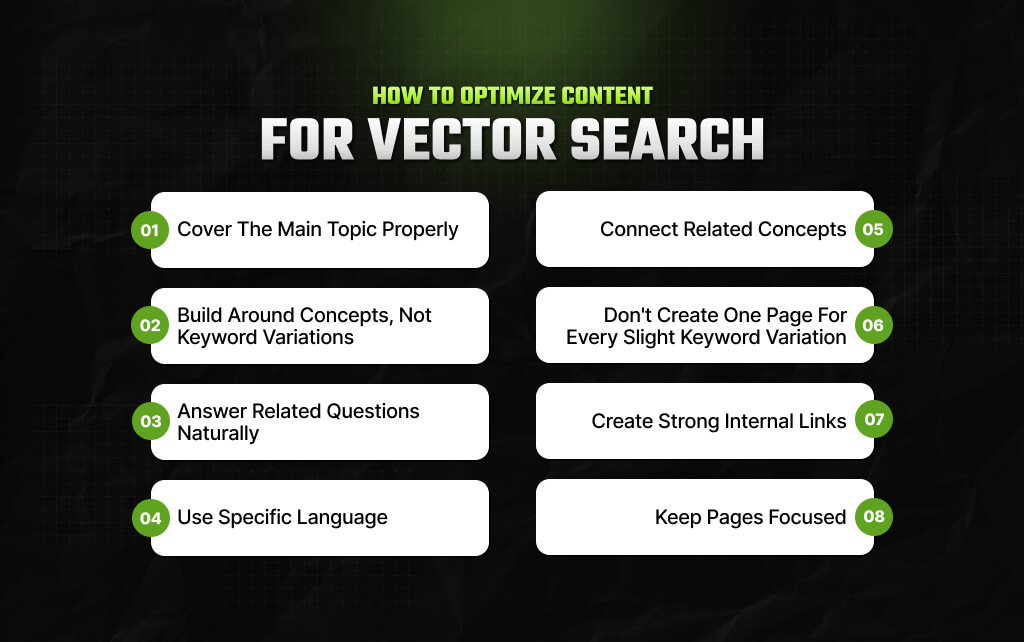
Based on my experience in the search landscape for eight years, here’s how you can optimize content for vector search.
Do not stop after answering the obvious question. Start by asking, “What would the reader need to know next?”
For instance, if your article is about choosing a CRM, then readers may need information about:
Of course, you do not need to include every possible subtopic. But you should cover the ones that genuinely affect the decision.
Instead of creating separate paragraphs for ‘ best CRM,’ ‘top CRM,’ ‘CRM software,’ and ‘best CRM software,’ think about the concepts behind the topic.
This includes answering questions like:
That naturally creates semantic depth without keyword stuffing.
Good content often creates its own follow-up questions.
For example, my topic is ‘What is vector search SEO?’ Then, my content will come with follow-up questions like:
This creates a logical information structure. Also, the reader gets a complete explanation rather than isolated keyword-targeted sections.
Semantic systems need meaningful information.
So, compare “This tool offers many useful features for businesses,” with “The platform automatically groups customer enquiries by topic and sends high-priority requests to the sales team.”
The second sentence communicates much more. Why? Because it tells the reader:
Specificity improves the quality of the content regardless of how a search engine retrieves it.
Strong content naturally creates relationships between ideas.
For example, an article about technical SEO could connect: crawlability → internal linking → URL structure → canonicalisation → indexing
Those concepts belong together.
You are helping the reader understand the subject as a system. Also, you are giving retrieval systems more context about what the page actually covers.
This is one of the biggest implications for SEO strategy.
Suppose you have these keywords:
You probably do not need four articles. One strong page can answer all four. The same principle applies to many keyword variations.
Instead of producing multiple thin pages targeting nearly identical searches, create one useful resource that covers the concept properly.
Internal linking helps connect related content across your website.
Suppose you publish: What Is Vector Search SEO? In that case, you could connect it with:
Those relationships create a clearer topical structure. Also, they help users discover the next piece of information they need.
Semantic relevance does not mean writing everything you know about a subject.
A page can become less useful when it wanders into unrelated topics.
So, if you’re writing about vector search SEO, stay focused on: vector search → retrieval → semantic relevance → SEO implications → practical optimization
Do not turn it into a general article about artificial intelligence. Also, remember depth is useful, whereas irrelevance is not.
Yes.
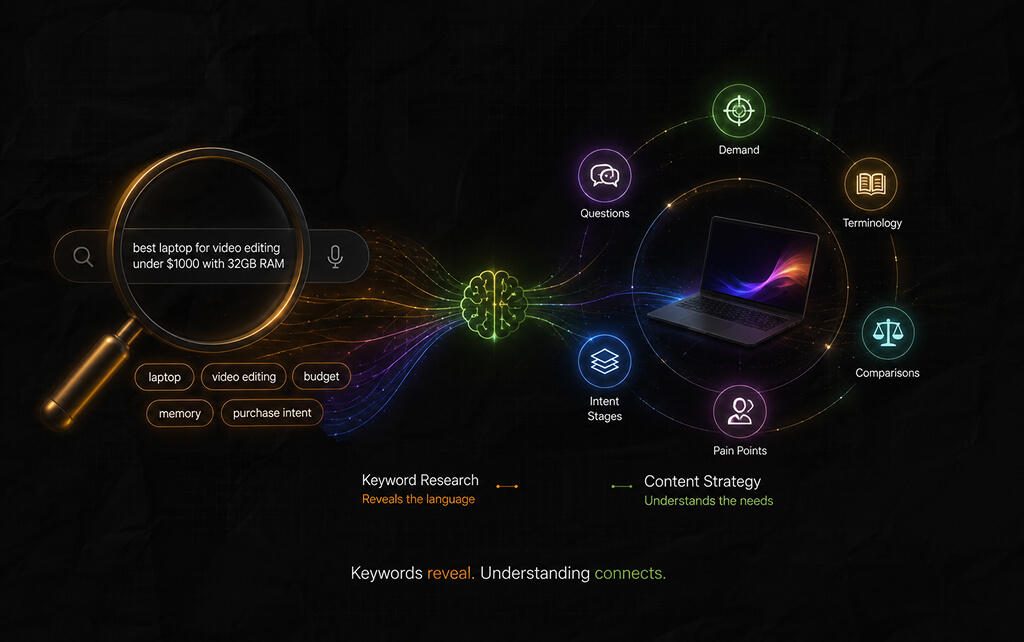
Vector search does not mean you should throw keyword research away. Keywords still reveal how people describe their problems.
Moreover, keywords can help you identify:
The difference is what you do with that information.
Instead of treating every keyword as a separate content assignment, use keyword research to understand the language and needs surrounding a topic.
That is a much stronger content strategy.
Long-tail searches are particularly interesting here.
For instance, your keyword is ‘best laptop for video editing under $1000 with 32GB RAM.’ Now, this particular query contains several concepts:
Any useful page needs to address those concepts together. Also, simply repeating the entire long-tail keyword does not make the content useful.
Rather, understanding the relationships between those concepts does.
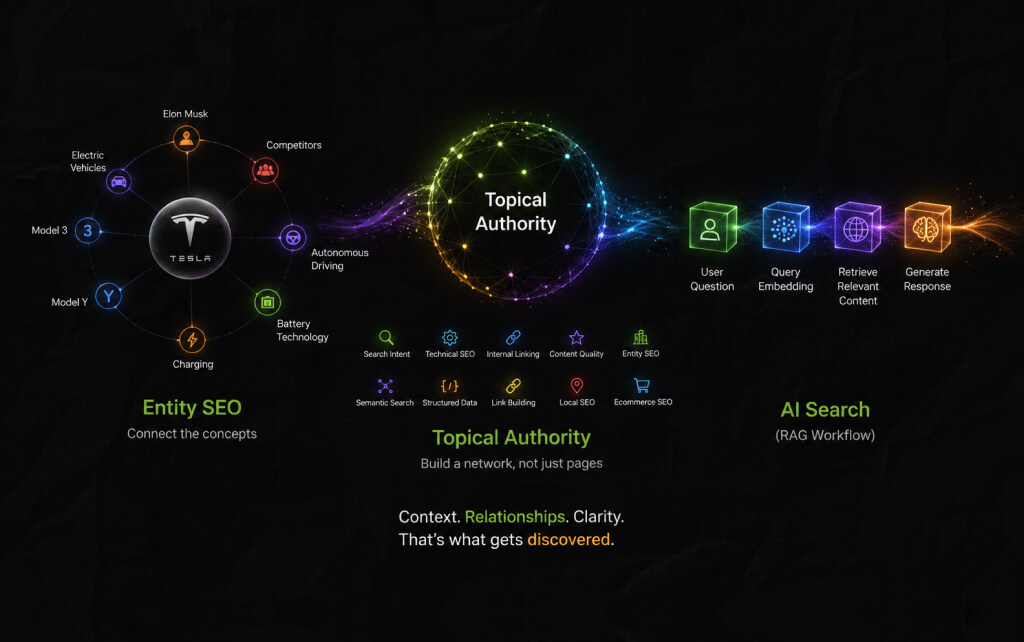
Vector search also makes entities and relationships worth thinking about. So, consider a page about Tesla. A useful page may naturally discuss:
Those relationships provide context. But don’t add entities simply because an SEO tool says they are related.
As a result, you have to add them when they genuinely help explain the topic.
This is where vector search becomes particularly interesting for content strategy.
So, imagine a website publishing one article about “What Is SEO?” Then another website has 30 useful resources covering:
The second website has built a much broader information environment around SEO. That does not automatically mean Google will reward it.
But it gives users and retrieval systems substantially more context about what the site covers.
This is one reason topical authority should not be reduced to publishing large numbers of articles. The relationships between those articles matter.
Vector retrieval is particularly relevant to AI-powered search systems. AI applications often need to retrieve relevant information before generating an answer.
A simplified workflow can look like this: User question → query embedding → retrieve relevant content → generate response
This is often discussed in the context of retrieval-augmented generation, or RAG.
For publishers, that creates another reason to focus on content that clearly explains concepts.
As a result, if an AI system needs to retrieve information about a subject, vague content provides little useful context.
Also, understand that specific, well-structured information gives retrieval systems more to work with.
Yes, but probably not in the way some SEO advice suggests. You do not need to start writing for machines. Instead, write for humans first, and that means:
Interestingly, those practices also produce content that is easier for machines to understand.
That is not a coincidence – Clear writing creates clear meaning.
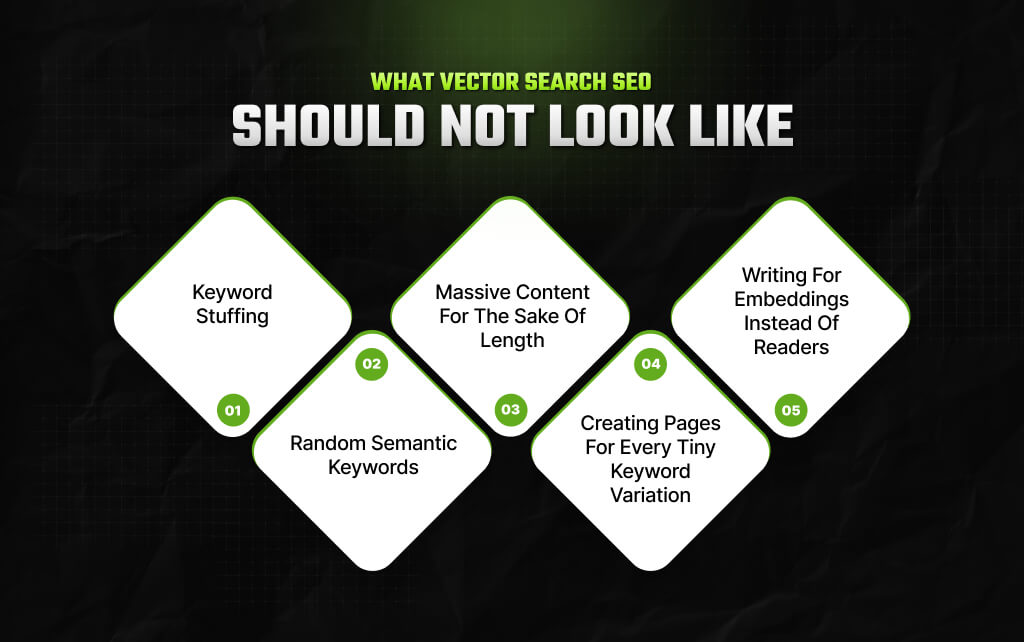
Avoid these tactics:
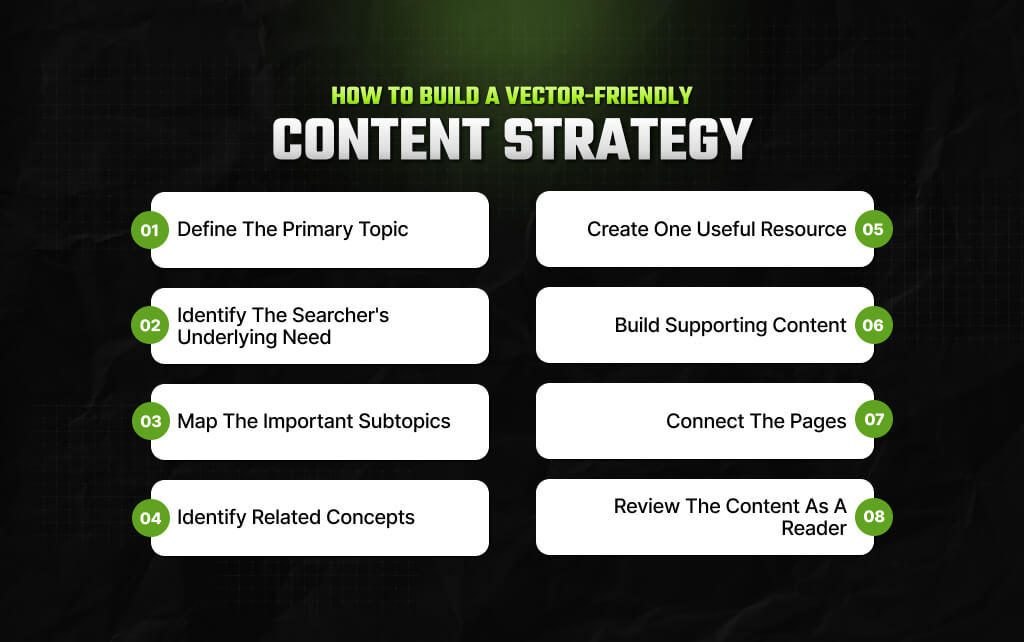
Instead of starting with, “What keywords should we target?” try this process.
Before publishing a page, ask:
As a result, if you can answer yes to these questions, you’re already doing many of the things that make content semantically useful.
Vector search does not mean SEO has suddenly become a completely different discipline. However, it does reinforce an important shift.
Search is becoming less dependent on exact wording and more capable of understanding relationships between ideas.
That means the strongest content strategy is not, “How many times can I use this keyword?” Rather, it is “How completely can I answer the need behind this search?”
That changes how you research topics. And not just that; it changes how you structure content or how you build content clusters.
Also, it changes how you think about keyword research.
Of course, you still need keywords. You still need technical SEO. And you still definitely need links, strong site architecture, and good user experience.
But the content itself needs to do more than match a phrase. Instead, it needs to make sense as a complete piece of information.
And that is probably the most useful way to think about Vector Search SEO: Don’t optimize your content for a vector.
Rather, build content that contains clear, useful meaning for the person searching and enough context for modern retrieval systems to understand what that content actually provides.
Additional Resources:
Barsha is a seasoned digital marketing writer with a focus on SEO, content marketing, and conversion-driven copy. With 8+ years of experience in crafting high-performing content for startups, agencies, and established brands, Barsha brings strategic insight and storytelling together to drive online growth. When not writing, Barsha spends time obsessing over conspiracy theories, the latest Google algorithm changes, and content trends.
View all Posts

KeywordStat Review: Keyword Research, Cluster...
Oct 03, 2026
How Corda Turns Authority Data Into Campaigns
Oct 01, 2026
How To Audit Your Search Visibility In 2026: ...
Sep 30, 2026
What Is Google Lighthouse? A Practical Guide ...
Sep 30, 2026
When Can You Save A Public Instagram Story?
Sep 30, 2026