Structured Data SEO: How Schema Markup Helps Search Engines Understand Your Website
Sep 12, 2026
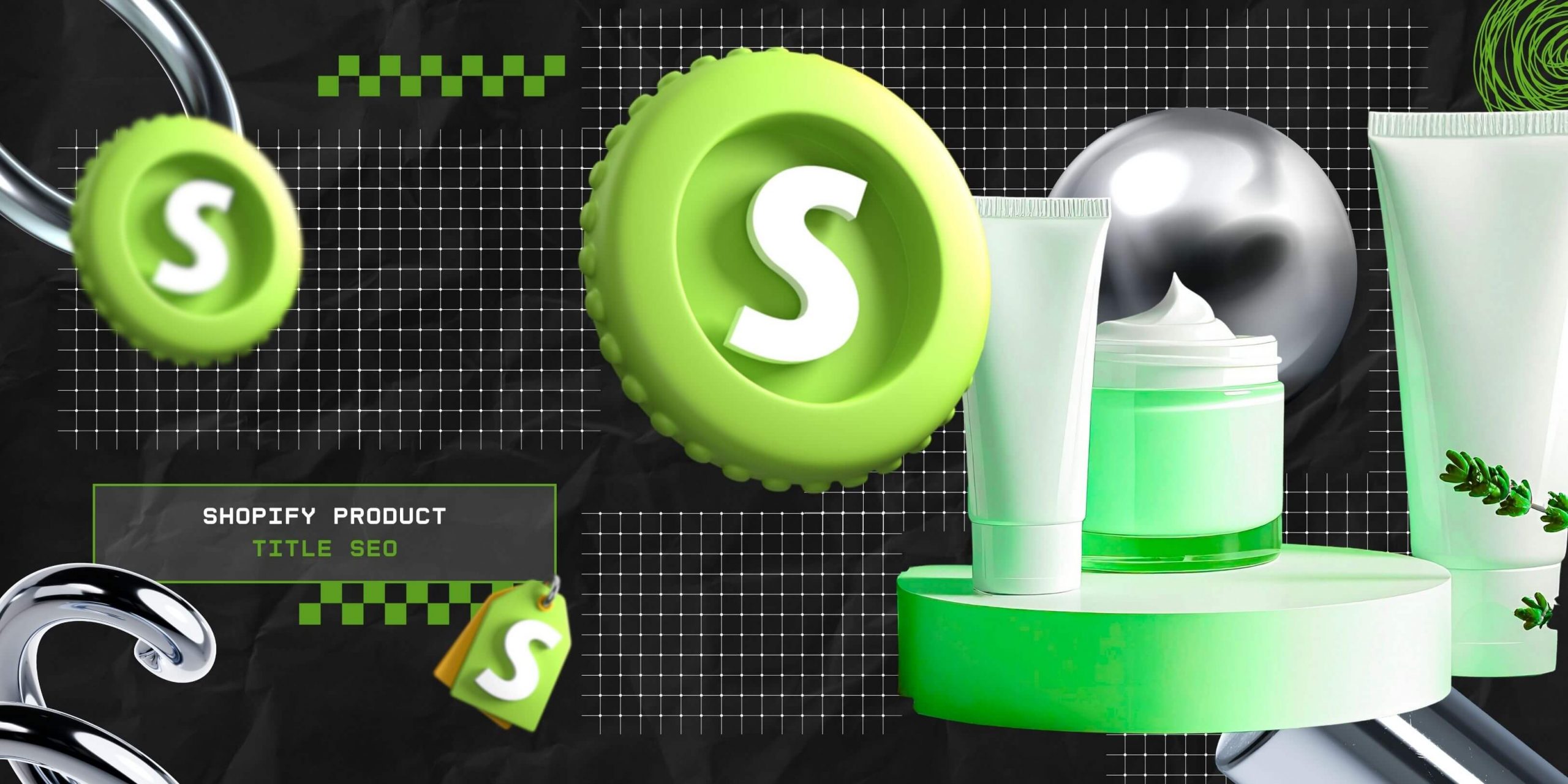

In the digital marketing landscape, title tags play a vital role. Apart from signaling the search engines about the content relevance, they introduce the product to the customers.
Given that a customer first interacts with the product title on Shopify before making a purchase decision, optimizing it is the key to success.
In addition to this, in the E-commerce market, SEO optimized title tags drive more audience engagement, visibility, and discoverability.
But the real question is— “How to improve these Shopify product title SEO?” Well, I have got the perfect guide to boost the ranking and discoverability of the products on Shopify.
In this blog, I will delve into the diverse aspects of the SEO title tags optimization by focusing on—
Stay tuned!

To explain in simple terms, a product title acts as the concise description of the product. That is, it highlights the product’s key elements, features, and vital aspects to indicate its relevance.
Moreover, these product title tags help brands rank their products on Google SERPs, boosting the discoverability of their Shopify product line. So, Google can easily index the pages.
In addition to this, the titles are the first thing a customer notices about a Shopify product. So, the more attention-grabbing they are, the more sales they will drive.
Now, it is no news that a good and compelling title tag for Shopify products can boost the search rankings and increase the overall CTRs. Making the product engage more audience.
Moreover, the tags help search engine algorithms to understand the context and relevance of the content.
So, when there is a search query for the keywords, they pull up the Shopify product page. Making it easier to boost visibility and online discoverability.
Even though most users confuse the SEO title with the headline, they are not the same. That is, they target different audiences and come with different functionalities.
So, here is a breakdown of the key differences between the SEO title and headline—
| SEO Title | Blog Headline |
|---|---|
| 1. Refers to the short title tag used to boost rankings and discoverability on search engine results. | 1. Refers to the long title that generally describes the context of the page and engages the audience. |
| 2. Appears on browser tabs, SERPs, and social media previews. | 2. Usually, appears at the top of the web content page. |
| 3. Uses the exact keyword at the beginning of the title to target search audiences. | 3. Uses variations of the keyword to describe the context of the product page. |
| 4. Character limitation ranges from 50 to 60 characters per title. | 4. No limitations on the characters for the headline titles. |
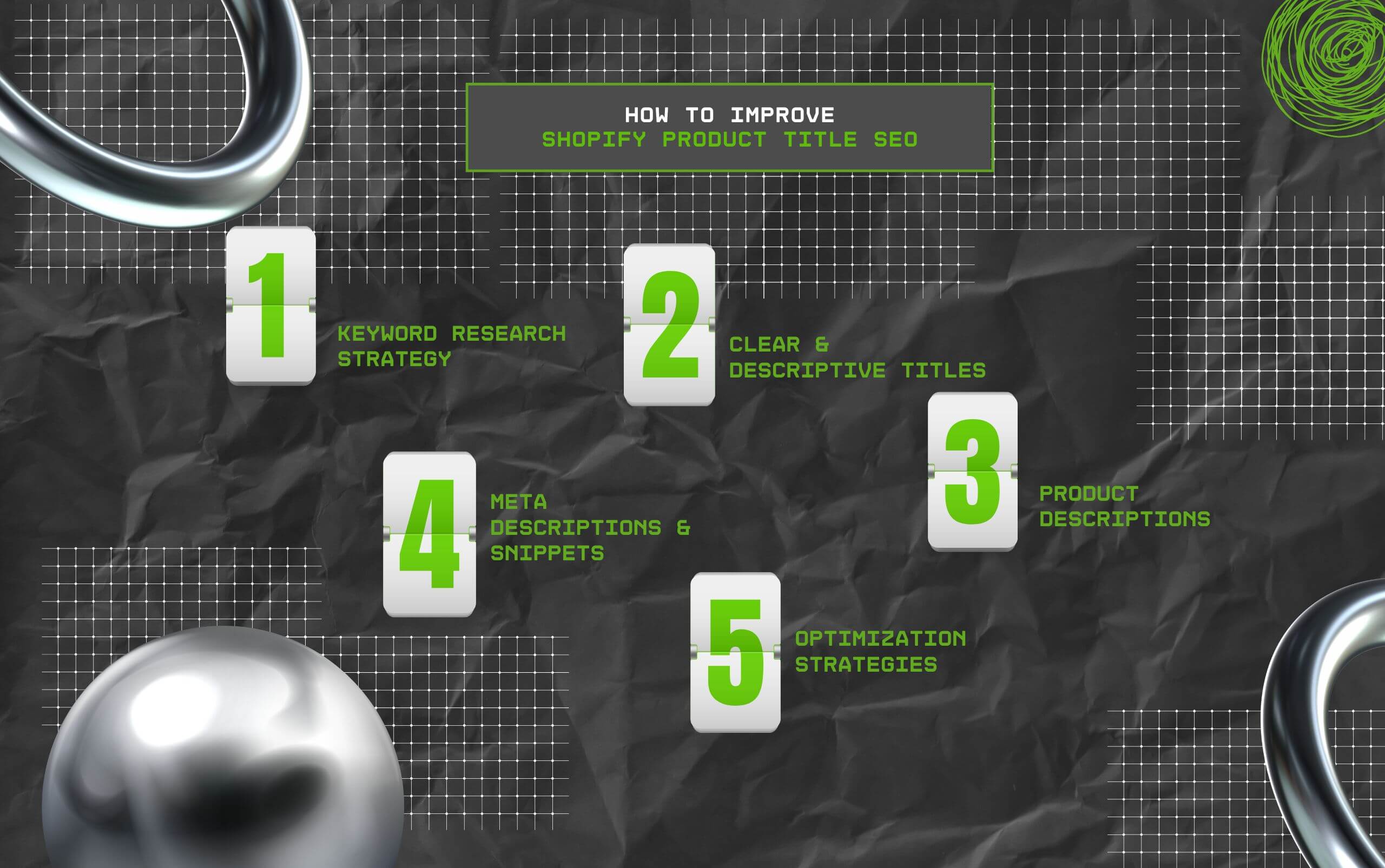
Now, given that the Shopify product titles affect SEO massively, here is how to optimize them to improve the overall SEO performance.
Firstly, finding relevant keywords is the first step to creating an SEO optimized title tag. So, users need to conduct research to find long-tail keywords based on the search volumes.
Moreover, they should identify the primary and variations of the keywords for secondary uses. This way, they can optimize the title with the right variations and relevant keywords.
In addition to this, the placement matters. That is, when the relevant keyword is placed at the beginning of the title, it signals to the users and search engines the context.
Now, a short title doesn’t mean an incomplete or irrelevant juxtaposition of words. That is, the short title should concisely describe the context of the Shopify product.
So, brands need to include the core elements in the titles. That is, they should include the brand, product type, qualities, and more. So, users can understand the product context instantly.
Apart from the title, the product description should not be neglected. That is, the description should sufficiently disclose the details about the products.
For instance, these descriptions should include key features, benefits, and details of the product model. So, it is easier for users to understand the product specifications before making the buying decision.
Unlike the SEO title tags, the meta description adds a little more context to the Shopify product line. That is, it explains the context in clear terms for the understanding of search engines.
Now, the meta description is usually a snippet of the entire product details. So, it is limited within the range of 150 to 160 characters.
So, the brands need to provide a short, simple, and contextual meta description for the products. Making it easier for search engines to understand and rank the product on SERPs.
Finally, brands can use some of the proven SEO optimization strategies to create compelling title tags, meta descriptions, and blog snippets.
Moreover, they can apply A/B testing for experimenting with the SEO titles before deciding on the final one.
This way, it becomes easier to choose the most engaging one.
Additionally, they can track the performance of the product pages on Google Search Console and Shopify analytics to gain insights.
Then, based on the insights, they can modify the strategies, practices, and fix the issues to improve the visibility with top-notch SEO performance.
Now, creating a compelling SEO title for Shopify products is not that difficult. That is, when you follow through the steps, improving the SEO rankings is like child’s play.
So, here are some more tips to ensure your SEO game is invincible—
So, by keeping these few things in mind, brands can easily develop a striking SEO title tag that attracts millions of audience engagements.
Now, if you are still stuck with the generic SEO titles, it is time to amp up your game with unique and relevant titles for Shopify products.
Here, I have curated some common questions around the Shopify product title SEO that most users look for.
Yes, absolutely. Since keywords help improve the discoverability of brands on various digital platforms, they play a vital role in boosting SEO performance.
Moreover, relevant keywords help search engines to understand the product details, so they can pull up the products when customers are looking for them online.
This way, brands can build their digital presence and improve their visibility using the right keywords for the Shopify products.
Generally, an SEO title should have around 50 to 60 characters. Moreover, the title should be within the 600 pixel width, so that it can be properly viewed on Google.
Now, even though the character limit for the title is small, the title should be descriptive to elucidate the context of the webpage. So, focus on including keywords and core information only.
Given the best SEO practices of 2026, the keyword should be placed at the beginning of the SEO title. This way, it instantly signals the search engines to identify the page for the keyword searches.
Moreover, with respect to the users, the keywords at the beginning of the title attract attention and encourage them to click on the page. So, it improves the audience engagement.
Yes, absolutely. Unlike a single title tag, duplicate titles often confuse the search engines and the readers. Moreover, duplicate pages reduce the brand authority in the niche field.
So, it is better to use a unique and distinct title to signal the search engines with specific, valuable content that aligns with the users’ search intent.
Yes, at times, Shopify can automatically generate the SEO title for the products. That is, it creates generic title tags and meta descriptions for the products.
So, it is vital to customize these generic titles manually to add the human touch to the basic title. This way, it can be given a distinct touch to make the title unique.
Generally, Google shows the custom SEO titles. But in some cases, these titles might not pop up due to some underlying reasons. So, some of these reasons include—
• Technical glitches on Google SERPs,
• Google chooses a better title from the content,
• Missing titles and outdated caches,
• Long or irrelevant titles to the content.
Chandrima is a seasoned digital marketing professional who works with multiple brands and agencies to create compelling web content for boosting digital presence. With 3 years of experience in SEO, content marketing, and ROI-driven content, she brings effective strategies to life. Outside blogging, you can find her scrolling Instagram, obsessing over Google's algorithm changes, and keeping up with current content trends.
View all Posts

Structured Data SEO: How Schema Markup Helps ...
Sep 12, 2026
TikTok Downloader For Content Marketing Resea...
Sep 12, 2026
AI Content Optimization: How To Make Your Con...
Sep 11, 2026
AI Citations: How To Get Your Content Referen...
Sep 10, 2026
Top Enterprise AI Cloud Platforms for RAG, AI...
Sep 08, 2026