PRNEWS Rewards Adds Rankfor.AI To Track How Brands Show Up In AI Assistants
Oct 10, 2026
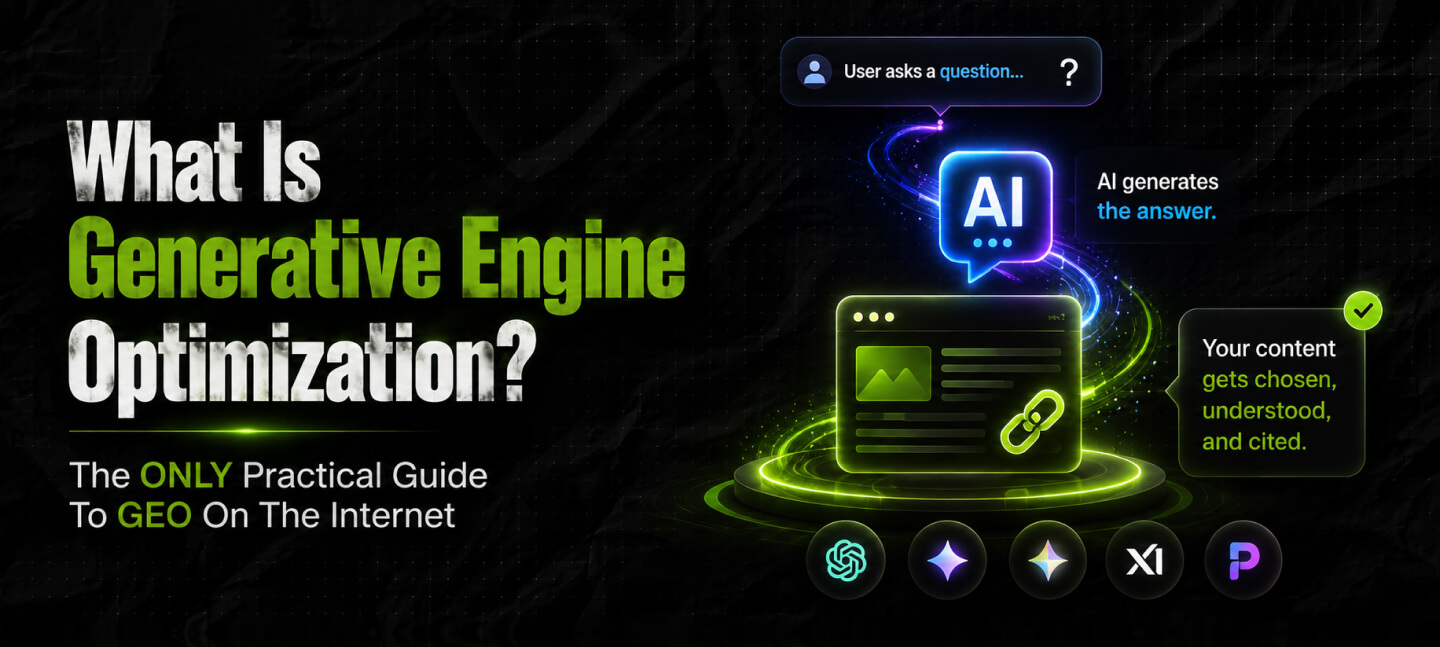

Search is changing from a list of links into something more conversational.
A person can now ask a detailed question and receive a synthesized answer instead of ten blue links. They can ask follow-up questions, compare products, challenge an answer, and request recommendations.
That shift has created a new area of search marketing called Generative Engine Optimization, or GEO.
You may already know SEO and AEO – GEO sits close to both.
But it focuses on a slightly different problem: How can you make your content useful to generative AI systems when they create answers for users?
The answer isn’t to stuff your articles with keywords or write awkward sentences designed for machines.
GEO starts with something more useful: Create information that is accurate, specific, original, easy to understand, and worth referencing.
But how can you use GEO to create content that truly matters – how can you make GEO a part of your existing content strategy? Knowing that makes all the difference.
In this context, I’ll help you understand what generative engine optimization is and, more importantly, how you can create GEO-backed content on your site in 2026.
Stay tuned.
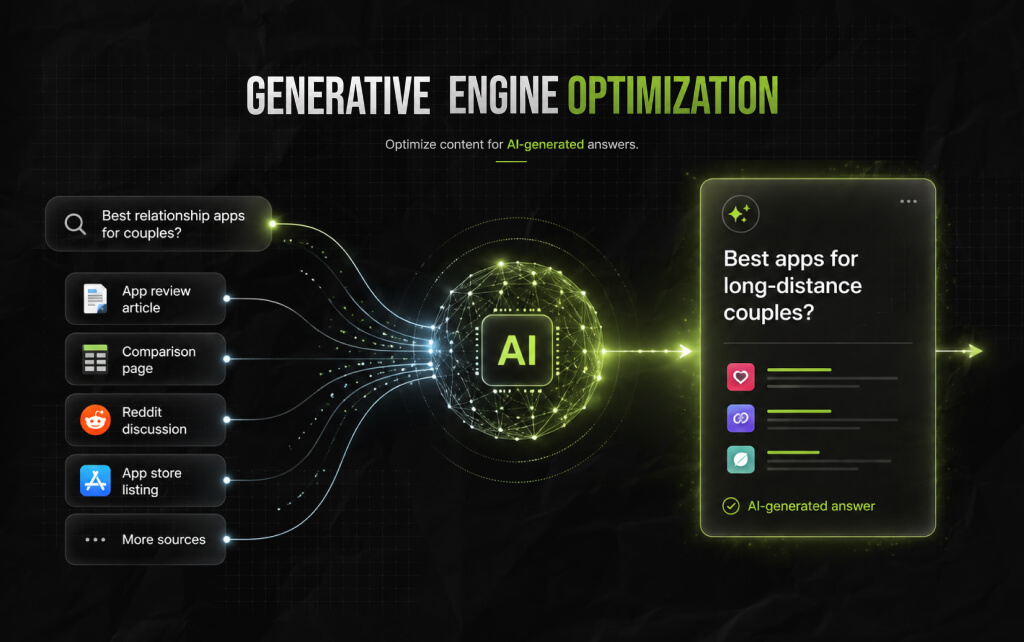
Generative Engine Optimization is the practice of improving content so generative AI and AI-powered search systems can understand, retrieve, and potentially use it when generating answers.
Traditional SEO focuses heavily on search visibility.
However, GEO focuses on visibility within generated answers and AI-assisted search experiences.
For example, someone might ask, “What are the best relationship apps for couples in a long-distance relationship?”
A traditional search experience may return:
But a generative search system may instead provide a summary comparing several options.
As a result, if your website contains useful information about one of those apps, the question becomes: Can the system understand that information well enough to consider it when generating the answer?
And that’s the problem GEO attempts to address.
The two aren’t opposites. In fact, they overlap considerably.
| SEO | GEO |
|---|---|
| Optimizes for search visibility | Optimizes content for generative search experiences |
| Focuses on organic search results | Focuses on generated answers and AI-assisted discovery |
| Often measures rankings and clicks | May also consider mentions, citations, and AI visibility |
| Targets search intent | Targets questions, context, and information needs |
| Optimizes websites and pages | Places strong emphasis on useful, retrievable information |
| Includes technical SEO | Still depends on technical accessibility |
The important point is this: GEO doesn’t replace SEO. A page still needs to be accessible, relevant, and useful.
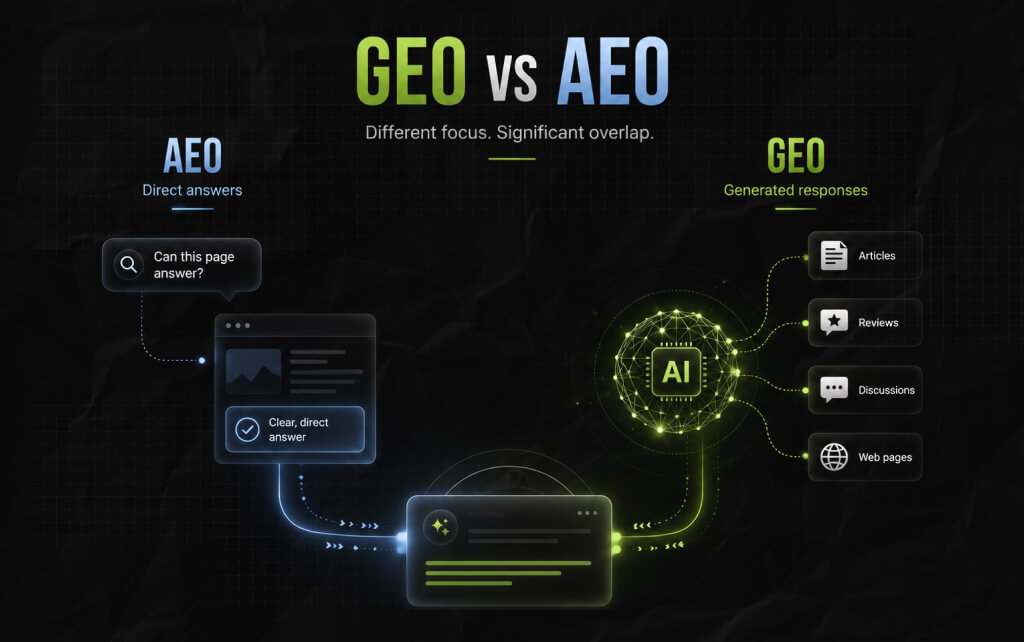
This is where the terminology gets confusing.
Both focus on search experiences that provide answers instead of simply displaying links. The distinction is mainly about the type of system and output you’re optimizing for.
AEO often emphasizes: Can this page clearly answer a user’s question?
GEO places more emphasis on: Can this information be understood, retrieved, and incorporated into a generated response?
There is substantial overlap.
As a result, you don’t need separate articles for every acronym – a well-researched, clearly structured article can support SEO, AEO, and GEO at the same time.
Traditional SEO has always involved keywords. But good modern SEO goes beyond exact-match phrases.
GEO makes this even more obvious.
So, imagine you’re writing about ‘Vector search.’ You could repeat the phrase 20 times, or you could explain:
Of course, the second article gives a much clearer picture of the subject. It creates relationships between concepts. And that’s far more useful than repeating one keyword.
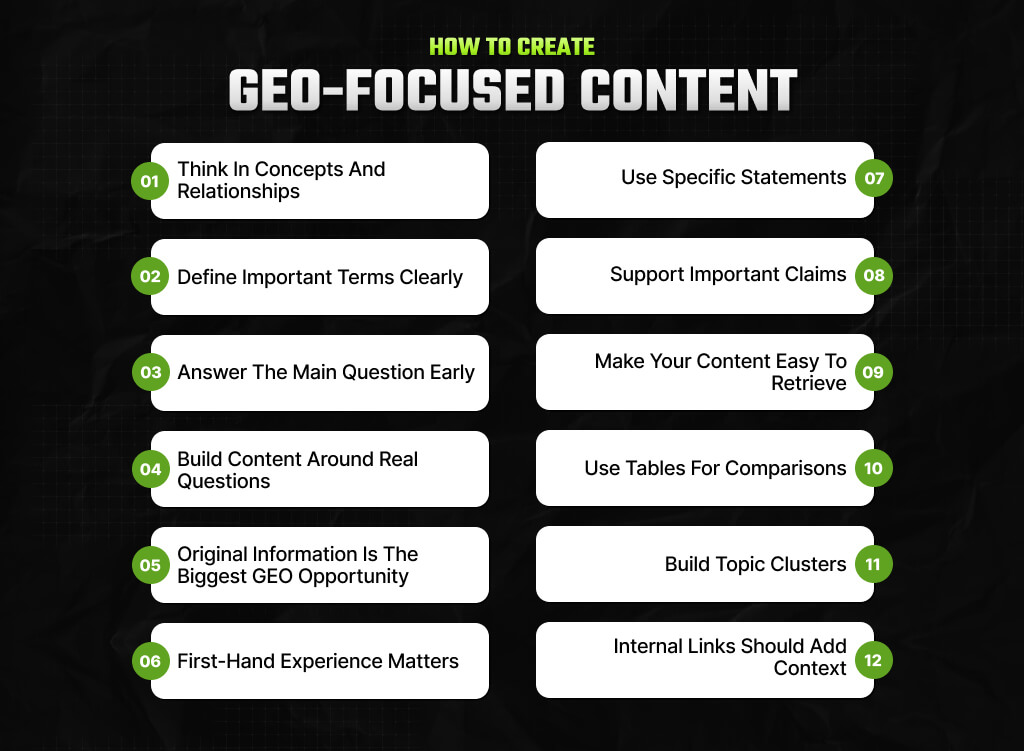
In this section, I’ll exclusively focus on creating GEO-backed content for Google and other search engines – the point? To help you integrate GEO into your existing content strategy.
Generative systems need context. So, suppose you write, “Between is a relationship app.” That’s useful but limited.
Now consider: “Between is a private relationship app designed for couples. It gives partners a shared space for messaging, photos, memories, and other relationship-focused interactions.”
The second description establishes several relationships:
That additional context helps explain what the product actually is. Also, this is useful for humans as well.
Don’t assume your reader understands every industry term. So, if you’re writing about ‘Generative Engine Optimization,’ define it early.
Similarly, if you’re discussing ‘retrieval-augmented generation,’ explain what RAG means before diving into technical details.
And if you’re discussing ‘vector search,’ explain what makes it different from traditional keyword matching.
Clear definitions help readers build a mental model of the topic. Also, they make the content easier to interpret.
Don’t make readers work through 600 words of introduction before reaching the definition.
So, if the heading says, ‘What Is Generative Engine Optimization?’ then give the answer immediately.
For example:
Generative Engine Optimization is the practice of creating and improving content so generative AI systems can understand, retrieve, and potentially use it when producing answers.
Then explain the concept. This structure works for both readers and search systems. But don’t make every answer tiny.
GEO doesn’t mean turning every article into a collection of 50-word answers. Some questions need depth.
For example, ‘What is GEO?’ can be answered relatively quickly. But ‘How should an ecommerce company prepare its content for AI-powered search?’ requires much more explanation.
The goal isn’t brevity. Rather, the goal is clarity without unnecessary filler.
One of the best ways to approach GEO is to start with the questions your audience actually asks.
These can come from:
So, suppose you’re selling project management software. In that case, your audience might ask:
These questions reveal the information people need to make decisions.
This is particularly important as generative AI becomes better at summarizing common information.
So, let’s imagine 100 websites publish the same content along the lines of ‘GEO is important because AI search is growing.’ Well, that’s easy to summarize.
Now imagine one website publishes:
That information is harder to replace with generic summaries. And this is why non-commodity content matters so much.
Frankly, it almost always depends on the topic.
As a result, for a product review, original value is related to:
Similarly, for an SEO article:
Also, for a travel guide:
The key is simple: Don’t claim experience you don’t have.
Google has long emphasized the importance of experience where experience is relevant. That principle becomes particularly useful for reviews.
Compare ‘The app is easy to use’ with ‘The main navigation keeps the core features within two taps, but the settings menu is harder to find.’
The second statement gives the reader an actual observation. Moreover, it explains the basis for the assessment, and that’s much more useful than generic praise.
Vague writing doesn’t help anyone. As a result, consider: ‘The platform offers several useful features for businesses.’
Now, what features really?
But when you compare this with ‘The platform provides automated reporting, team permissions, and client dashboards,’ you will see that the second sentence gives the reader concrete information.
Also, specificity helps distinguish your content from generic summaries.
If a statement could influence someone’s decision, support it appropriately. For example: ‘The platform has more than 10 million users.’
Where did that number come from?
Or how about ‘This treatment is the safest option.’ What evidence supports that claim? This becomes especially important for:
Use credible sources. Also, when possible, go directly to the primary source.
You don’t control exactly how an AI system retrieves information. But you can make your content easier to understand.
As a result, consider using:
For example:
“Does GEO Replace SEO?
No. GEO does not replace SEO. Instead, it complements traditional SEO by addressing how content may be discovered and used in generative search experiences.”
Then explain the relationship – the answer is immediately visible.
Comparison questions are particularly common in AI search. For example, here’s a table comparing SEO, AEO, and GEO.
| Aspect | SEO | AEO | GEO |
|---|---|---|---|
| Main focus | Search visibility | Direct answers | Generative search |
| Typical output | Search results | Answers | Generated responses |
| Core goal | Discovery | Answerability | Useful representation in AI-generated answers |
| Key emphasis | Relevance and accessibility | Clear answers | Context, originality, retrievability |
Then explain where the concepts overlap. Also, don’t rely on the table alone because the analysis is what makes the comparison useful.
A single article about GEO isn’t enough to establish deep coverage. So, you could build a broader cluster around AI search:
Then connect these pages naturally since this creates a useful information ecosystem.
Don’t add internal links just because an SEO checklist says you need them. Instead, make the relationship obvious.
For example, “Many RAG systems use retrieval methods such as vector search to find semantically similar information.”
The link works because the surrounding sentence explains why vector search matters. This helps readers move naturally through related concepts.
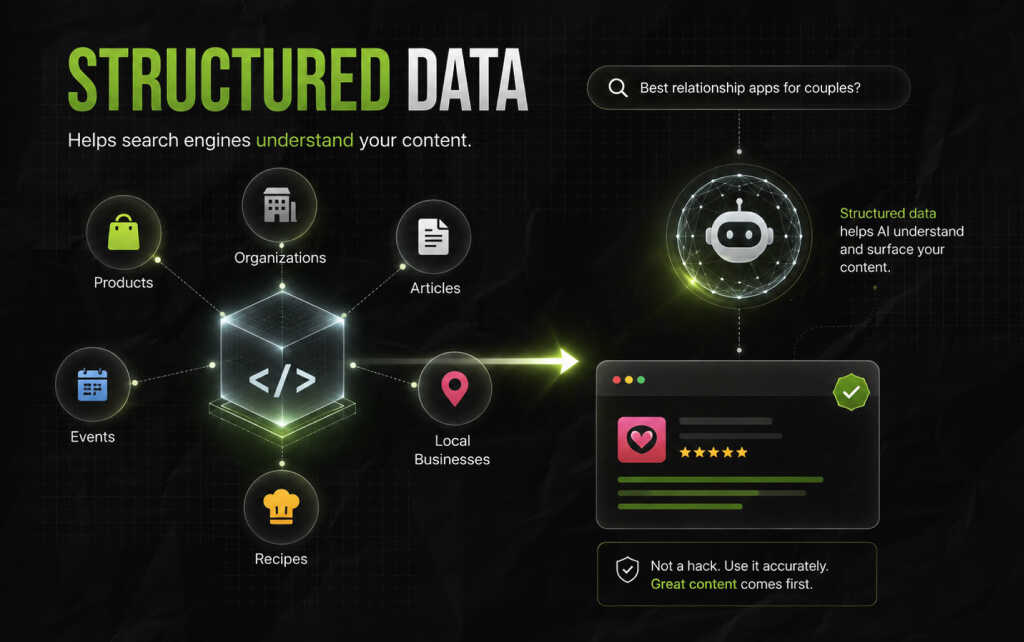
Structured data can help search engines interpret certain types of information. Depending on the page, this might include:
But structured data isn’t a GEO hack, and adding schema doesn’t guarantee an AI citation.
So, it’s best to use structured data when it accurately describes the content and follows the relevant guidelines. Your actual content still needs to be useful.
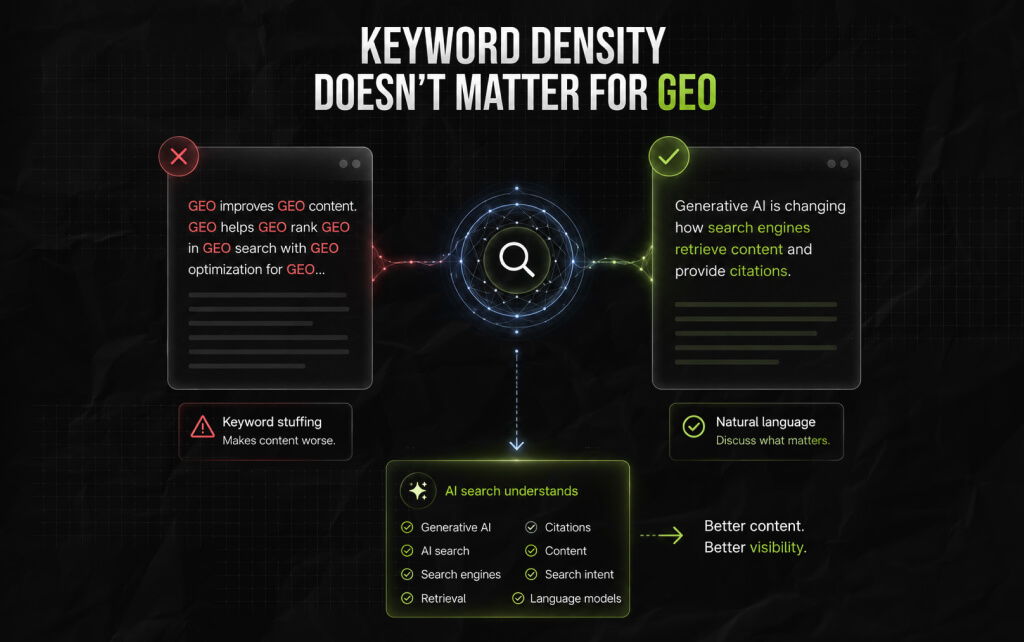
There is no magic GEO keyword density.
So, please don’t write ‘Generative Engine Optimization helps Generative Engine Optimization content rank in Generative Engine Optimization…’
That makes the article worse.
Instead, use natural language and discuss the concepts the reader needs. As a result, if you’re writing about GEO, you’ll naturally use terms such as:
The vocabulary emerges from the subject.
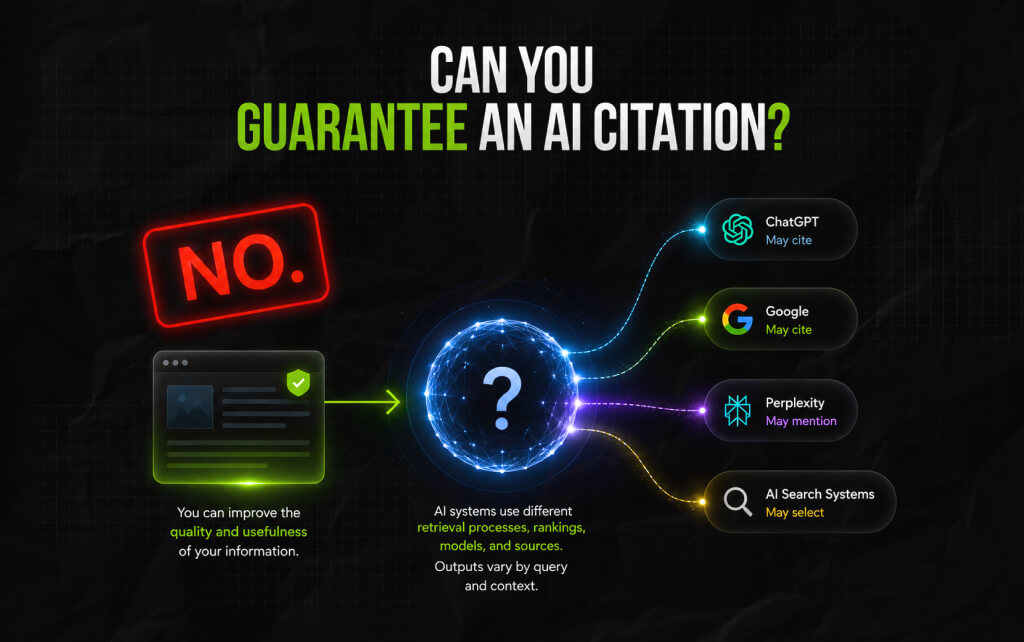
No.
This is one of the most important things to understand about GEO. You can improve the quality and usefulness of your information.
However, you cannot guarantee that:
Also, AI systems can use different retrieval processes, ranking systems, models, and sources – and naturally their outputs can also vary by query and context.
So avoid anyone promising a guaranteed AI citation through a particular content formula.
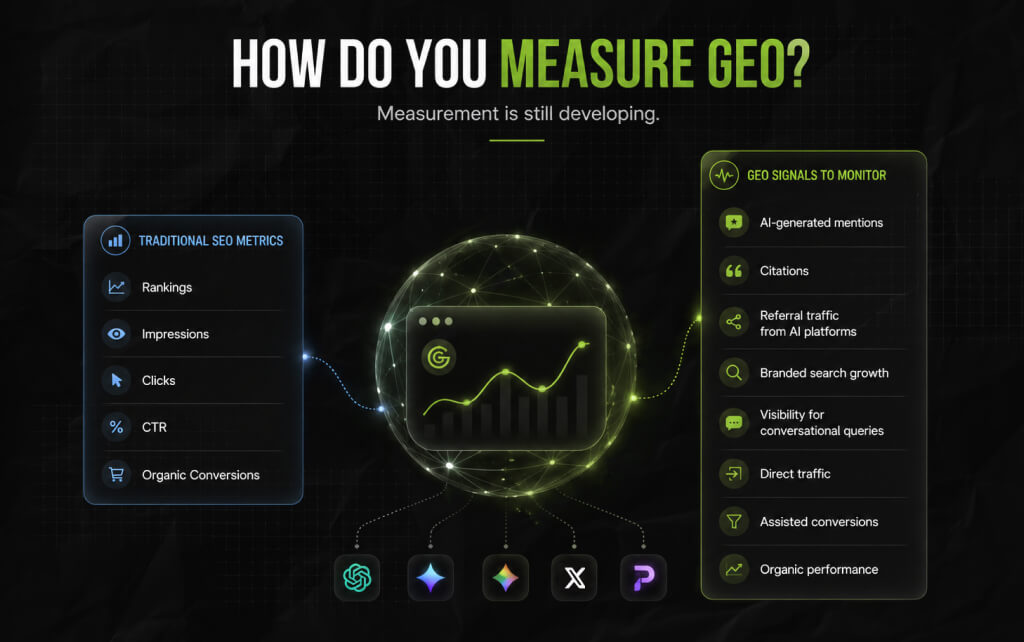
Measurement is still developing.
Traditional SEO provides familiar metrics such as:
GEO introduces additional signals that will help you monitor:
But don’t reduce GEO to one visibility score because different platforms expose different data, and some AI interactions won’t produce a website visit.
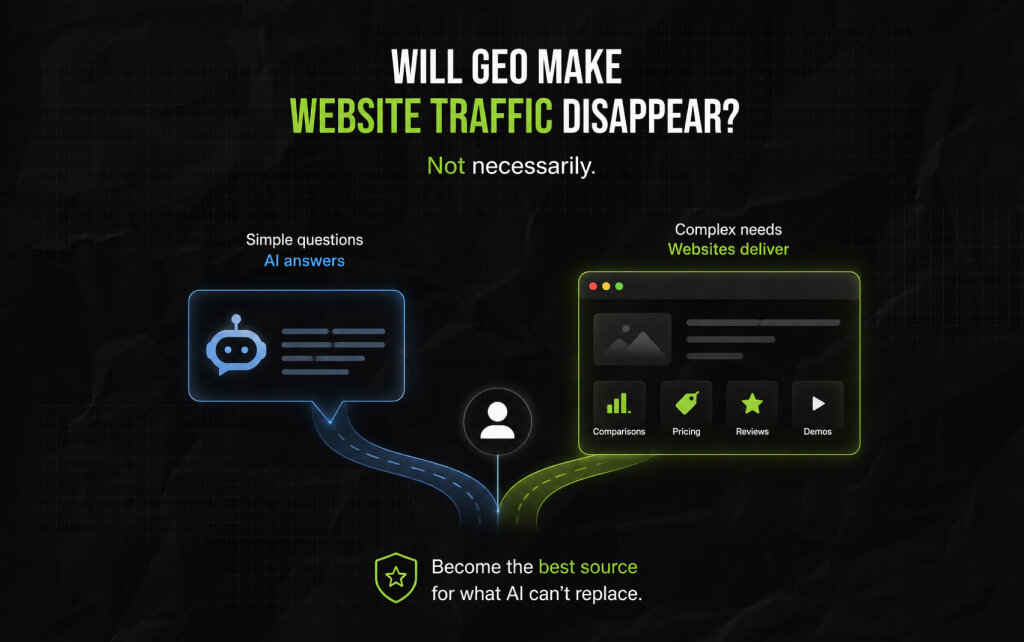
Not necessarily.
AI-generated answers may satisfy some informational searches without a click. But websites still provide things an AI answer often cannot fully replace:
The impact will also differ by search intent.
Someone asking ‘What is a canonical tag?’ may be satisfied with a short answer.
Similarly, someone asking, ‘Which SEO platform should I buy for my agency?’ may want detailed comparisons, pricing, screenshots, product demos, and independent reviews.
So the question isn’t simply, ‘Will AI reduce traffic?’
A better question is ‘Which types of searches still need a website, and how can my site become the best source for those needs?’
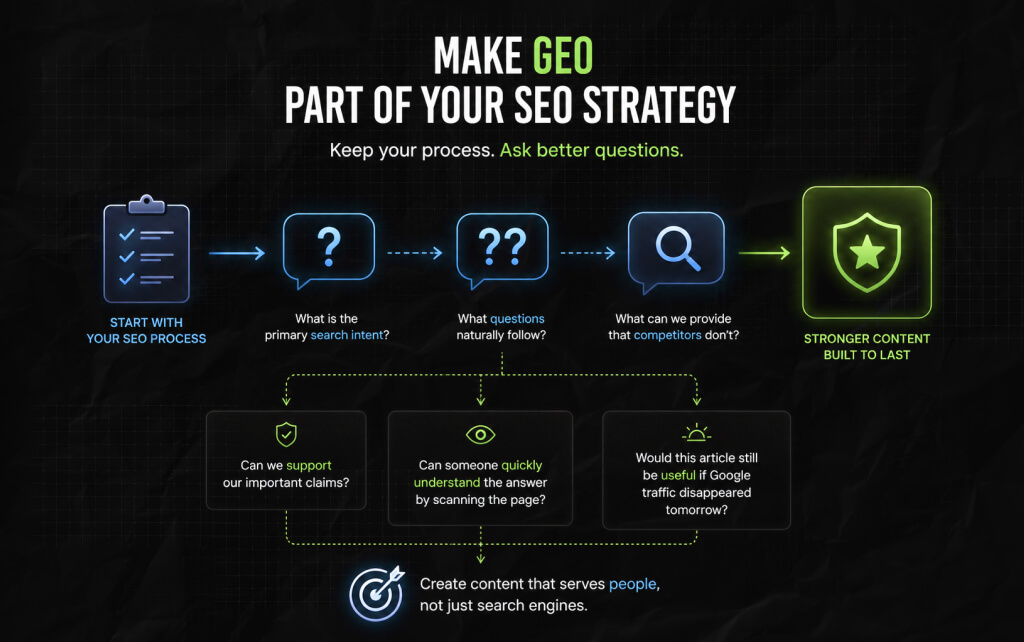
You don’t need a completely separate content department.
Instead, start with your existing SEO process.
When planning an article, ask, ‘What is the primary search intent?’ Then follow up with ‘What questions naturally follow?’ and ‘What information can we provide that competitors don’t?’
Also, you can further enhance your content by asking three more follow-up questions:
That last question is surprisingly powerful. If the answer is no, your content may be too dependent on search mechanics.
GEO isn’t a magic formula for getting your brand into ChatGPT or another AI search system. It isn’t a replacement for SEO.
And it isn’t an excuse to fill your website with machine-written content.
A stronger GEO strategy looks much simpler:
Most importantly, create something worth referencing because generative search can make ordinary information easier to summarize.
Your competitive advantage is the information that isn’t ordinary.
Barsha is a seasoned digital marketing writer with a focus on SEO, content marketing, and conversion-driven copy. With 8+ years of experience in crafting high-performing content for startups, agencies, and established brands, Barsha brings strategic insight and storytelling together to drive online growth. When not writing, Barsha spends time obsessing over conspiracy theories, the latest Google algorithm changes, and content trends.
View all Posts

PRNEWS Rewards Adds Rankfor.AI To Track How B...
Oct 10, 2026
Is Serpstat Worth It? A Deep Dive Into Pricin...
Oct 09, 2026
How To Use Screaming Frog: The Definitive Tec...
Oct 09, 2026
Master The Rich Result Test: Fix Your Broken ...
Oct 08, 2026
Does vnROM Bypass Still Work? A Realistic 202...
Oct 08, 2026