SEO Dashboard: What To Track, What To Ignore, And How To Make It Useful
Sep 25, 2026
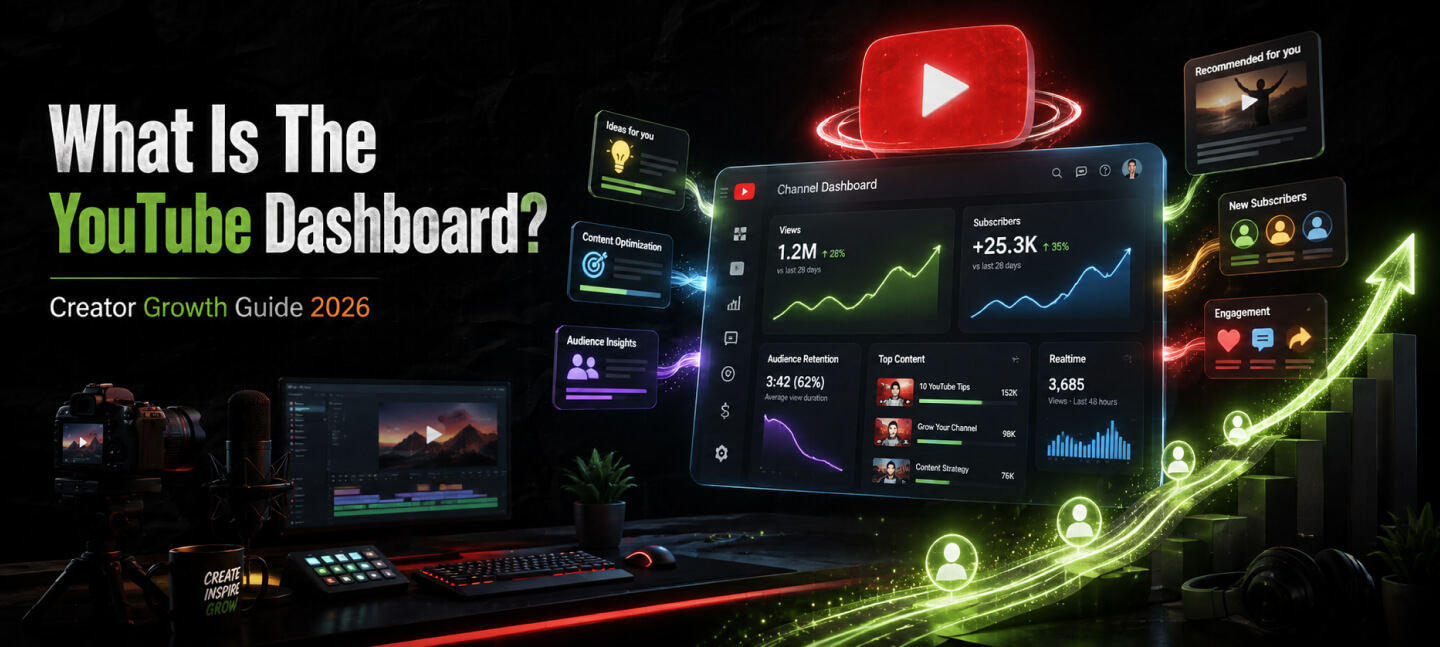

Over my eight years in digital marketing, I constantly see creators treating the “YouTube Dashboard” and “YouTube Studio” as two completely different platforms. Let’s clear up that confusion right away.
YouTube Studio is the entire backend creator suite where you handle video editing, monetization, and deep channel settings. The Dashboard is specifically the first screen you land on when you log into Studio.
Think of it as your channel’s command center. It serves as a rapid health check, not a deep-dive investigative tool. Let’s look at exactly how to use it to optimize your strategy.
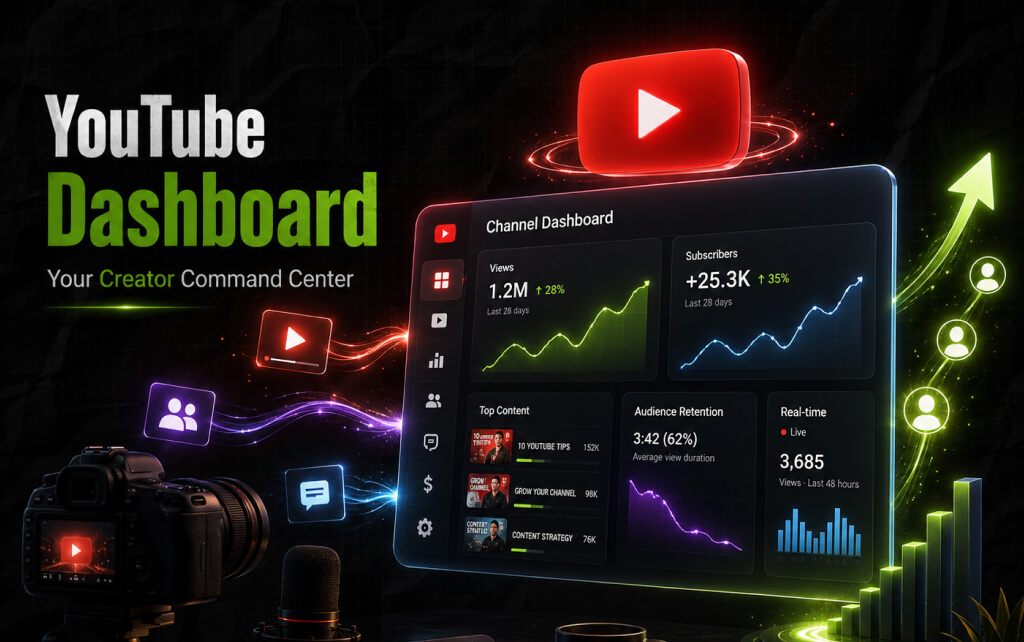
The YouTube Dashboard is the landing page you see when you open YouTube Studio – a snapshot of your channel’s recent performance, comments, subscribers, and platform news.
It’s the front door to YouTube Studio, not a separate tool. From there, you branch out into Analytics, Content, Monetization, and Customization to actually run your channel.
| YouTube Dashboard vs. Studio: Here’s the distinction that most guides skip. YouTube Studio is the full creator platform – uploading, editing, analytics, monetization, everything.The Dashboard is specifically the first screen you land on inside Studio: your channel’s command center for a quick health check, not a deep-dive tool. |
Go to studio.youtube.com directly, or click your profile photo on YouTube and select “YouTube Studio” from the dropdown. Either route drops you on the Dashboard.
It’s free for every channel, and it’s accessible from both the web app and a dedicated mobile app – though I’d steer you toward the web version for anything beyond a quick check-in, since features like A/B testing and advanced filters are only available there.
This is where I see the most confusion, so let’s go card by card. YouTube doesn’t show every card to every channel – what appears depends on your recent activity – but here’s what you can expect:
Apart from that, you also get to see the following things:
Once you’re past the landing page, everything else you’d associate with “running a channel” lives in the sidebar:
One limitation worth knowing: YouTube Studio only shows you YouTube data. If you’re running a channel as part of a broader content or marketing strategy, it operates as an isolated silo, disconnected from your other marketing metrics – so don’t expect it to tell you how YouTube fits into your overall funnel.
After years of doing this for clients across niches, my routine looks less like “check everything daily” and more like this:
The mistake I’d flag for anyone newer to this: don’t let the Dashboard become the whole job. The goal isn’t to spend all day inside YouTube Studio – it’s to use what you find there to make better decisions about your next video.
A quick bit of history that puts today’s interface in context: this consolidated dashboard replaced the old Creator Studio Classic entirely, with the rollout going from 1% of channels in January 2020 to 100% by April 2020 – so if you’re used to an older layout, that’s why it looks different now.
Want to know the bottom line? You see, the Dashboard itself won’t grow your channel. But used right – as a fast daily check paired with a real weekly Analytics review – it’s the difference between reacting to your numbers and actually steering them.
This specific card highlights your active Community Guidelines warnings, copyright strikes, and crucial appeal updates. Ignore this layout element at your own peril.
Furthermore, you must keep in mind a critical structural change implemented by YouTube’s backend compliance team.
The platform now officially applies strict Community Guidelines directly to your custom channel descriptions. It no longer just scans your primary video uploads or interactive comments sections.
As a seasoned marketer, I cannot stress this policy update enough.
If your “About Me” profile blurb contains broken external hyperlinks, deceptive spam text, unverified payment gateways, or hidden affiliate redirects, YouTube will flag your main dashboard instantly.
In fact, their newly deployed automated moderation bots actively crawl all channel metadata bios to catch subtle policy evasions.
Therefore, you must act reactively right now to protect your assets.
Cleaning up your layout description helps you completely avoid sudden demonetization surprises or algorithmic channel restrictions.
Do not let a poorly optimized bio break your creator revenue pipeline completely today and tomorrow.
Read Also:
Barsha is a seasoned digital marketing writer with a focus on SEO, content marketing, and conversion-driven copy. With 8+ years of experience in crafting high-performing content for startups, agencies, and established brands, Barsha brings strategic insight and storytelling together to drive online growth. When not writing, Barsha spends time obsessing over conspiracy theories, the latest Google algorithm changes, and content trends.
View all Posts

SEO Dashboard: What To Track, What To Ignore,...
Sep 25, 2026
Analytics SEO: How To Turn Search Data Into B...
Sep 25, 2026
AI Search Tools: What They Actually Measure A...
Sep 25, 2026
FAQ Schema: When It Still Makes Sense And Whe...
Sep 25, 2026
The Keyword With 10 Searches That Sent Ahrefs...
Sep 24, 2026