AI Search Optimization: What It Is, How It Works, And How To Prepare Your Content
Aug 28, 2026

I remember sitting with Sarah, a small-firm financial advisor. She had built a gorgeous website, targeted classic keywords, and ticked every technical box. Yet, over coffee, she looked at her phone and sighed.
“My article on compound interest ranks number three on Google,” she said. “But my traffic completely dropped off. Nobody is clicking anymore.”
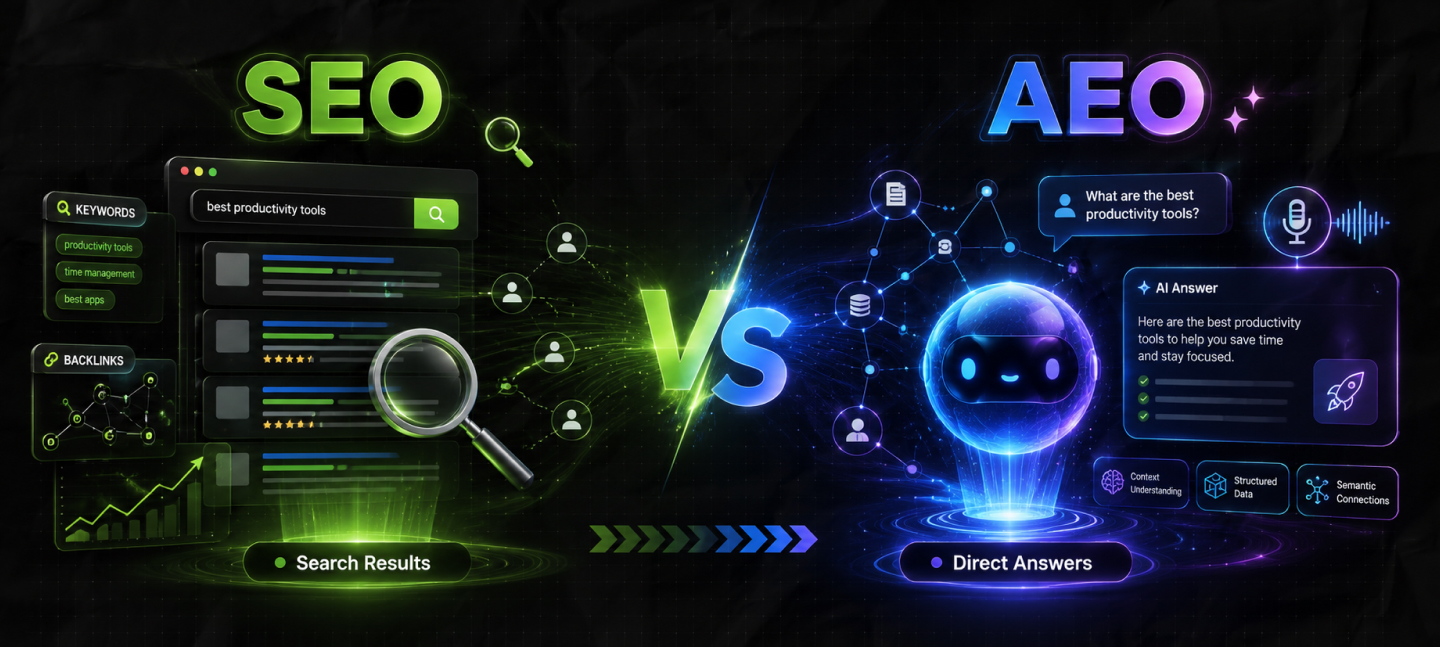
I took her phone, typed the phrase, and saw the problem. Above her link sat a massive, automated AI answer. The user didn’t need to click; they already had the info. That answers the question: what is the difference between aeo vs seo?
That was Sarah’s first brutal introduction to the massive rift between traditional search engines and what we now call answer engines.
Her site was perfectly optimized for the old way of searching. It was completely unprepared for a world that demands instant answers without a click.
If you run a website, you are likely living through this exact scenario right now. The landscape is shifting beneath our feet.
For two decades, the game was simple: rank high, get the click, and win the visitor. Today, that playbook is broken. Now people are querying: what is the difference between aeo vs seo?
Let’s look under the hood of how search engines evaluate your pages today, and why you must shift your focus from merely ranking to becoming the direct answer.
To fix a problem, you first have to understand how the machine evaluates your content. Let’s break down traditional Search Engine Optimization (SEO) and Answer Engine Optimization (AEO) using a simple, real-world comparison.
Imagine you walk into a massive library.
Traditional SEO is like a highly organized librarian. You walk up and ask, “What are the best low-risk investment options for a thirty-year-old?” The librarian doesn’t answer you directly.
Instead, they hand you a stack of five books, neatly ranked by how authoritative they are. They say, “Here, read these chapters. The answers are in there.” You have to take the books, sit down at a desk, open them, and find the specific sentences you need.
What is the difference between aeo vs seo? AEO is completely different. It is like having a private financial concierge standing right next to you. When you ask that same question, the concierge doesn’t hand you a book.
They look through all the library’s data in a millisecond, synthesize the information, and speak directly to you: “For a thirty-year-old, the top three low-risk options are Treasury bonds, high-yield savings accounts, and index funds. Here is why.”
**The Core Difference: Traditional SEO focuses on helping humans find your web page among a list of links. AEO focuses on helping machines extract your exact sentences, so they can present them directly to the user inside an AI overview, a chat screen, or a voice assistant reply.**
Why does this matter so much right now? Because user behavior has permanently shifted.
When people search for information, they want speed. They do not want to click through three different websites, reject cookie banners, dodge pop-up newsletters, and scroll past giant introductory paragraphs just to find a single number or definition.
When an AI system or an answer box provides them with a clear summary, they stop searching. They get their answer and close the tab.
This creates what the industry calls a zero-click search. Your rankings might look great in your tracking software, but your actual visitor count may be declining.
If your website relies entirely on traffic from basic, top-of-the-funnel questions like “What is an index fund?” or “How do I start investing?”, you are competing against the search engine itself. To survive, your content strategy has to adapt to both worlds.
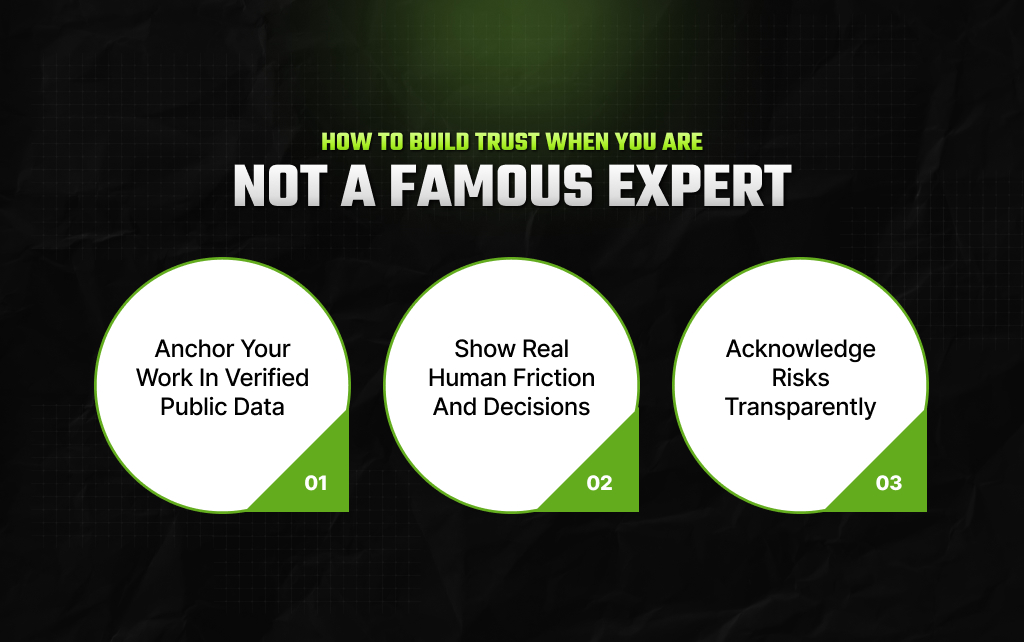
This brings us to a major challenge that every website owner faces, especially in critical niches like finance, health, or business.
Google and other answer engines use strict guidelines to evaluate who they can trust. They look for Experience, Expertise, Authoritativeness, and Trustworthiness. The industry calls this EEAT.
But what if you are a regular business owner, a marketer, or an independent writer who doesn’t have a wall full of Ivy League diplomas or a massive public profile? How do you show high EEAT in a complex topic like investing?
You don’t need a PhD to show authority. You need a rigorous approach to your content. Let’s look at how we can solve this using a practical scenario.
Imagine you are writing a guide on how everyday folks can start investing in index funds. Instead of just writing generic advice that reads like a textbook, you need to structure your content like a well-researched journalist.
Here is the exact blueprint to demonstrate undeniable trust and satisfy the algorithm’s hunger for authority:
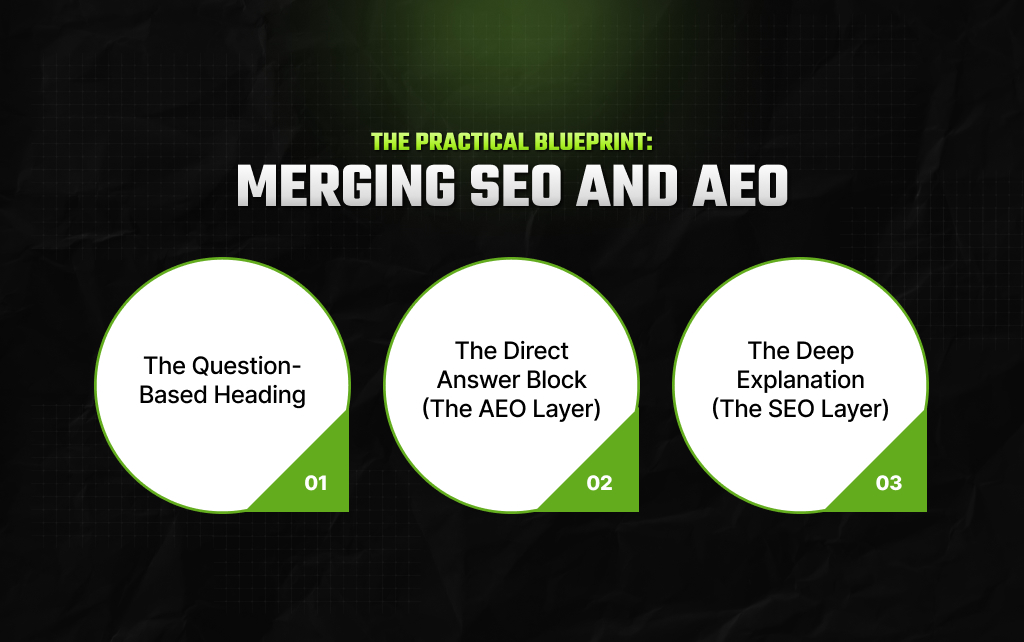
You do not have to choose between traditional search and answer engine optimization. In fact, they work best when they run together.
The best technical foundation helps your site get indexed by traditional search bots, while your writing structure allows AI bots to easily pull your answers. That explains what is the difference between aeo vs seo?
Here is how you can write a section of an article so that it satisfies both traditional rankings and instant AI answers:
Instead of using a vague, clever heading like “The Growth Machine,” use a direct question that a real human would type or speak into their phone.
Immediately beneath that heading, write a concise, factual answer. Keep it under fifty words. Do not use fluff, filler words, or introductory phrases like “In this section, we will explore…” Go straight to the point so an AI crawler can easily clip it.
Once you have provided the quick answer for the AI engine, dive deep into the context for the human reader who decides to click through.
Provide a clear table comparing different decades, analyze the impact of fees, and tell a story about how an everyday investor named Marcus used this exact strategy to steady his savings after making bad stock picks.
By structuring your pages this way, you win twice. If the user wants a quick answer, the AI pulls your text and cites your brand as the trusted source. If the user wants the full story, your deep, well-researched content ranks beautifully in the traditional links below.
So what is the difference between aeo vs seo? Now you know that! The search landscape is no longer a simple game of matching keywords. It is an ongoing evaluation of clarity, structure, and real human depth.
As search engines continue their shift toward answer engines, the websites that survive will be the ones that stop hoarding information behind walls of text. Be direct.
Give the answer clearly and quickly to anyone who asks. Then, provide the unmatched, real-world depth that makes them want to stay and read the rest of your story.
Barsha is a seasoned digital marketing writer with a focus on SEO, content marketing, and conversion-driven copy. With 8+ years of experience in crafting high-performing content for startups, agencies, and established brands, Barsha brings strategic insight and storytelling together to drive online growth. When not writing, Barsha spends time obsessing over conspiracy theories, the latest Google algorithm changes, and content trends.
View all Posts

AI Search Optimization: What It Is, How It Wo...
Aug 28, 2026
How Does Trade Show Visibility Connect Physic...
Aug 28, 2026
How to Turn Multiple Ideas Into One Creative ...
Aug 28, 2026
What Is Generative Engine Optimization? The O...
Aug 27, 2026
From One Source Clip To Multiple Campaign Ass...
Aug 27, 2026