GroomPanel Vs Other SMM Panels: What Makes It Different In 2026
Sep 24, 2026


Ranking on SERPs can help e-commerce sites gain visitors and customers. So, naturally, businesses apply various SEO tactics and strategies to rank.
But what if the ranking is not improved? That’s when businesses need to conduct an e-commerce SEO audit.
This simple analysis of the SEO performance of the e-commerce sites can help businesses identify the issues early on.
Enabling them to address the issues and take proper measures for their resolution.
So, if you are also stuck in the loop and can’t comprehend how to conduct an e-commerce SEO audit, I have got you covered. In this blog, I will delve into—
Stay tuned!

First things first, an e-commerce SEO audit refers to the comprehensive analysis of the SEO performance of the online store’s website.
That is, it evaluates how the e-commerce site is performing on SERPs. So, it becomes easier to identify the issues that are affecting the SEO performance and address them with the right tactics.
This way, businesses can improve the website’s ranking on the SERPs. So, the businesses get more organic visits and attract customers.
Now, e-commerce SEO audits are quite different compared to the regular SEO audits. So, here are some of the key differences between them—
| E-Commerce SEO Audit | Regular SEO Audit |
|---|---|
| 1. Focuses on evaluating the conversion rates and sales on the sites. | 1. Focuses on the organic traffic and brand authority in the industry. |
| 2. Offers keywords that are specific to the e-commerce products and transactional contexts. | 2. Offers a broader range of keywords that provide informational context for the webpages. |
| 3. Analyzes category and product pages of the online store’s websites. | 3. Evaluates the landing pages and blog articles of the websites. |
| 4. Focuses on analyzing the product schema and customer reviews on the sites. | 4. Prioritizes the schema markup for the content understanding. |
Even though conducting an SEO audit for the e-commerce sites can sound difficult, following the right guide can make the process easy.
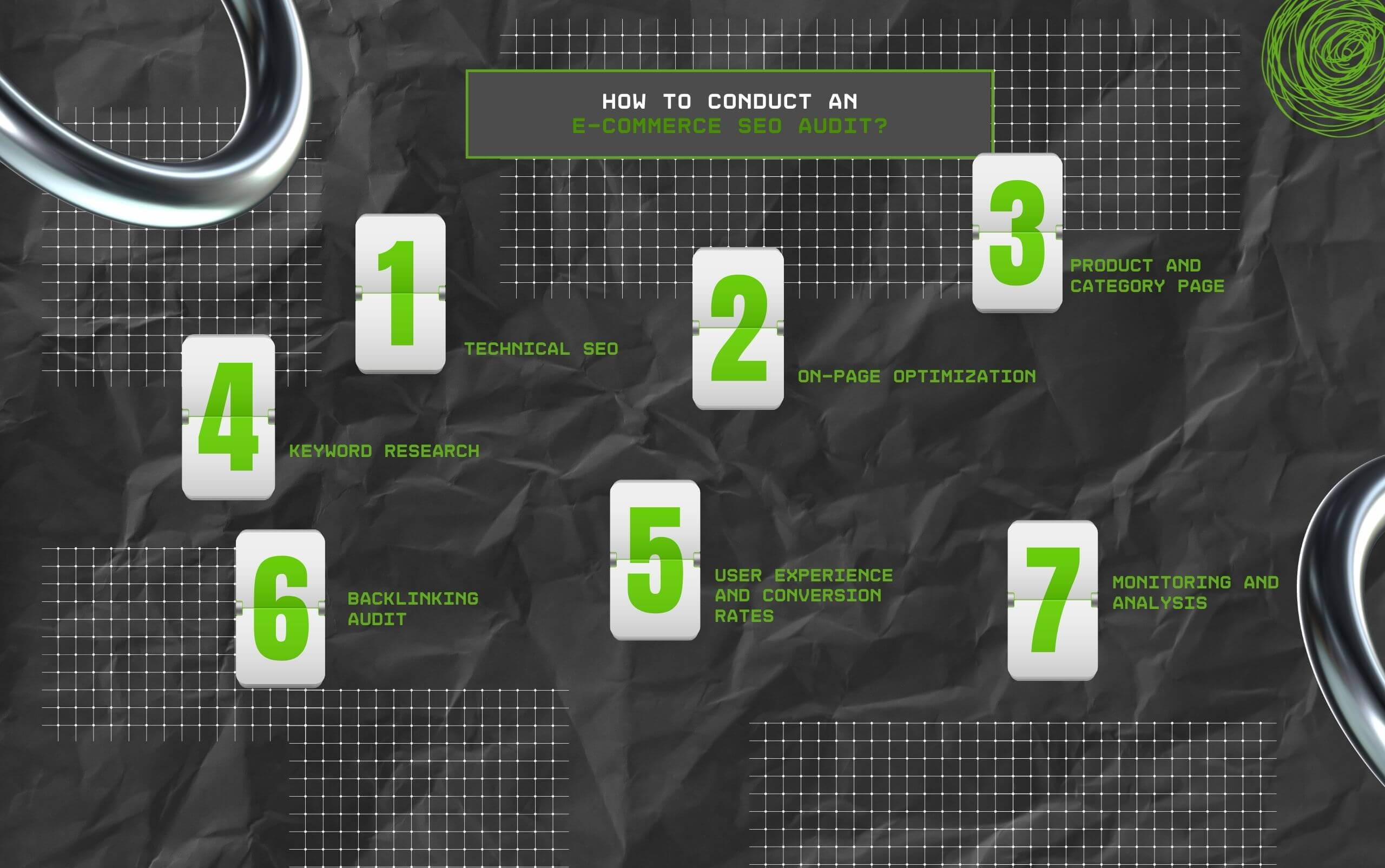
So, here are the key steps that businesses and marketers need to take to conduct a proper e-commerce audit—
Firstly, they need to check the technical SEO aspects of the e-commerce sites. That is, analyzing their crawlability and indexability.
Moreover, customers don’t spend much time on an e-commerce site, so the loading speed needs to be fast with optimized core web vitals.
In addition to this, the sites should be mobile-friendly with a proper XML sitemap for the site structure. Making it easier for bots to understand the context of the site and index it.
So, the businesses need to identify the issues and resolve them early on. This way, the technical SEO can be optimized.
On-page SEO optimization plays a key role in improving the ranking of websites. So, analyzing the on-page performance can help identify the strengths and weaknesses of the page.
That is, the analysis can help optimize the titles, meta descriptions, and headings. Also, it can help avoid duplicate content, optimize keywords, and link internal pages.
So, the overall on-page optimization can improve the SEO performance of the e-commerce sites.
Moreover, for an e-commerce audit, not all pages are evaluated. That is, only the product and category pages are analyzed.
So, businesses can audit the product descriptions, schema markup for customer reviews, pagination SEO, and internal linking on category pages.
This way, they can optimize the e-commerce sites and ensure that the conversion rates are increased with proper engagement metrics.
Similar to regular webpages, e-commerce pages also need to incorporate specific keywords to rank on SERPs.
So, businesses need to conduct keyword research to find relevant and high-performing keywords for specific products and e-commerce items.
Moreover, the businesses can find the ranking keywords for the competitors. So, they can optimize the pages with the relevant keywords and compete in the online market.
In addition to this, the audit can help in analyzing how the users are experiencing the websites and the accurate conversion rates.
That is, it can help businesses measure whether the sites are mobile-friendly, fast-loading, and have simple navigation features.
So, the businesses can ensure that the sites have a high on-site search usability.
Apart from the on-page SEO, the audit also looks into the off-page SEO elements. That is, it ensures that the backlinks used are credible, reliable, and help with building authority.
So, businesses can ensure that they are not missing out on any backlinking opportunities and are able to avoid toxic backlinking. Boosting the site authority.
Finally, conducting the SEO audit for the e-commerce sites is not enough. That is, businesses and marketers need to regularly monitor the metrics and modify the tactics.
So, they can use various digital tools and auditing tactics to ensure that the e-commerce site is ranking and has relevance in the field.

Now, I have seen many e-commerce sites crash even after an SEO audit. That’s because of the mistakes they committed during the audit sessions.
So, here are some of the common mistakes that businesses should avoid in auditing the SEO of the e-commerce—
When businesses avoid these mistakes, they can easily rank and amp up their SEO performance. So, if you have been looking for ways to audit your e-commerce site, use this guide.
Take this chance to identify the strengths and weaknesses of your e-commerce site and take measures that actually benefit your online store in the long run.
Here are some of the common questions around e-commerce SEO audit that most users frequently look for.
Generally, conducting the e-commerce SEO audit regularly can help in monitoring the performance and modifying the strategies.
So, it is better to conduct the e-commerce audit every 3 to 6 months. This way, businesses can identify the issues at an early stage and address them properly.
Given that an e-commerce SEO audit analyzes the diverse aspects of the e-commerce websites, auditing their SEO performance can take quite some time.
That is, auditing the diverse elements can take up to 6 weeks. But if the audit is conducting surface-level analysis, then it can get done within 2 weeks.
So, based on the depth of the audit, the time can range from 2 to 6 weeks.
Even though there are countless reliable SEO audit tools in the market for e-commerce sites, you can choose the one that best suits your needs.
So, here are some of the major tools that can be used in an e-commerce SEO audit—
• Google Search Console — Allows users to identify the technical SEO, indexation, and crawl issues with the search performance scores.
• Google Analytics (GA4) — Provides a proper analysis of the conversion rates, traffic, and helps with monitoring the customer behavior.
• Netpeak Spider — Offers advanced tools for identifying the major technical issues, URL errors, and other structural issues with the e-commerce sites.
• Helium10 — Provides a specialized platform for e-commerce websites to find specific keywords and product page optimization features.
Yes, absolutely. Schema markup is an essential part of any e-commerce website. So, auditing the schema markup is vital to check the overall SEO performance of the site.
Moreover, the right schema can help in structuring the data on the page. So, search bots can crawl through the structure to understand the context and index the pages.
Chandrima is a seasoned digital marketing professional who works with multiple brands and agencies to create compelling web content for boosting digital presence. With 3 years of experience in SEO, content marketing, and ROI-driven content, she brings effective strategies to life. Outside blogging, you can find her scrolling Instagram, obsessing over Google's algorithm changes, and keeping up with current content trends.
View all Posts

GroomPanel Vs Other SMM Panels: What Makes It...
Sep 24, 2026
The Traffic-to-Revenue Gap: Why More Website ...
Sep 17, 2026
The Volatility Trap: What Crypto Position Siz...
Sep 17, 2026
Schema Markup: How To Use It Without Turning ...
Sep 17, 2026
Turn A Search Question Into A Watchable Expla...
Sep 16, 2026