SEO Dashboard: What To Track, What To Ignore, And How To Make It Useful
Sep 25, 2026


Today’s topic: Digital marketing and SEO during a recession.
The U.S. economy is clearly slowing with high inflation and fears of a recession looming large across the globe.
Advertising spending is highly dependent on consumer habits, and when a recession hits, consumers tend to focus on necessities such as groceries. In general, ad spending often decreases due to consumers’ lower amount of disposable income and lack of faith in the economy.
However, this doesn’t mean that you should cut your marketing budget entirely; it just means that you should be more selective about where and how you advertise. Recessions can provide opportunities if you know how to take advantage of them.
To better understand what marketers are planning during this recession, my company, Fraud Blocker, sent out a survey to nearly 200 advertising media buyers, and we share those results in this article. We also outline several strategies you can use to help you outperform the market.
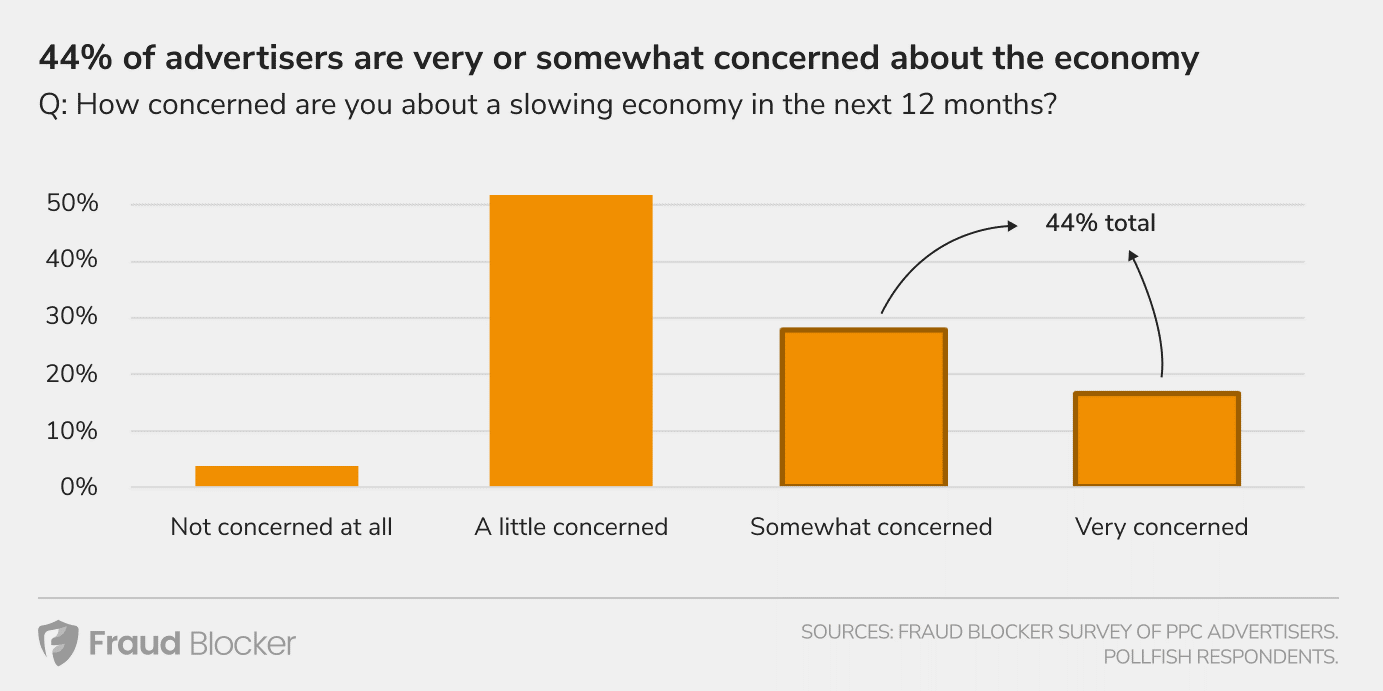
In the first question, nearly half of the respondents, 44%, stated they were somewhat or very concerned about a slowing economy in the next 12 months.
This is very significant, and smart marketers should be planning now in the event the economy turns over.
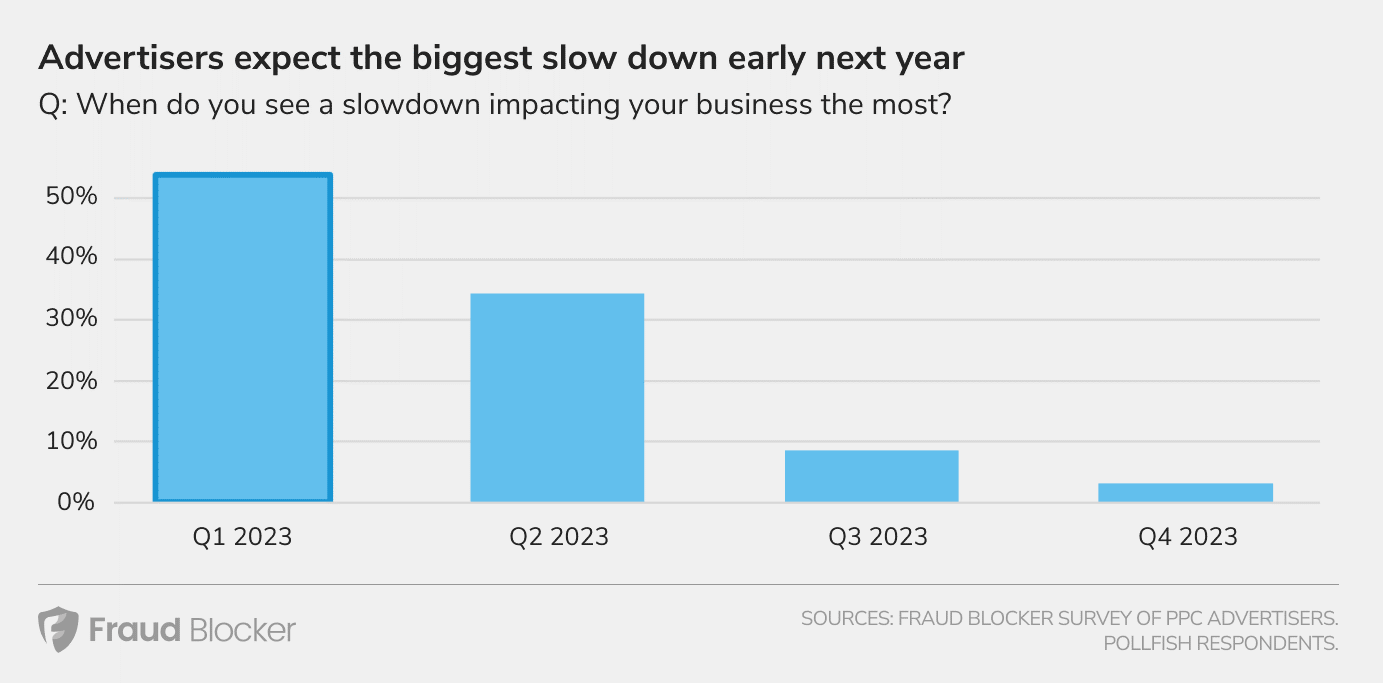
Let’s go back a little in time. The vast majority, 54%, believed the recession would harm their business the most in the first quarter of 2023.
It’s also important to note that a typical recession in the modern era lasts about 10 months. The Great Financial Crisis in 2008 lasted 18 months, so marketers should put in place strategies that can last over an extended period of time.
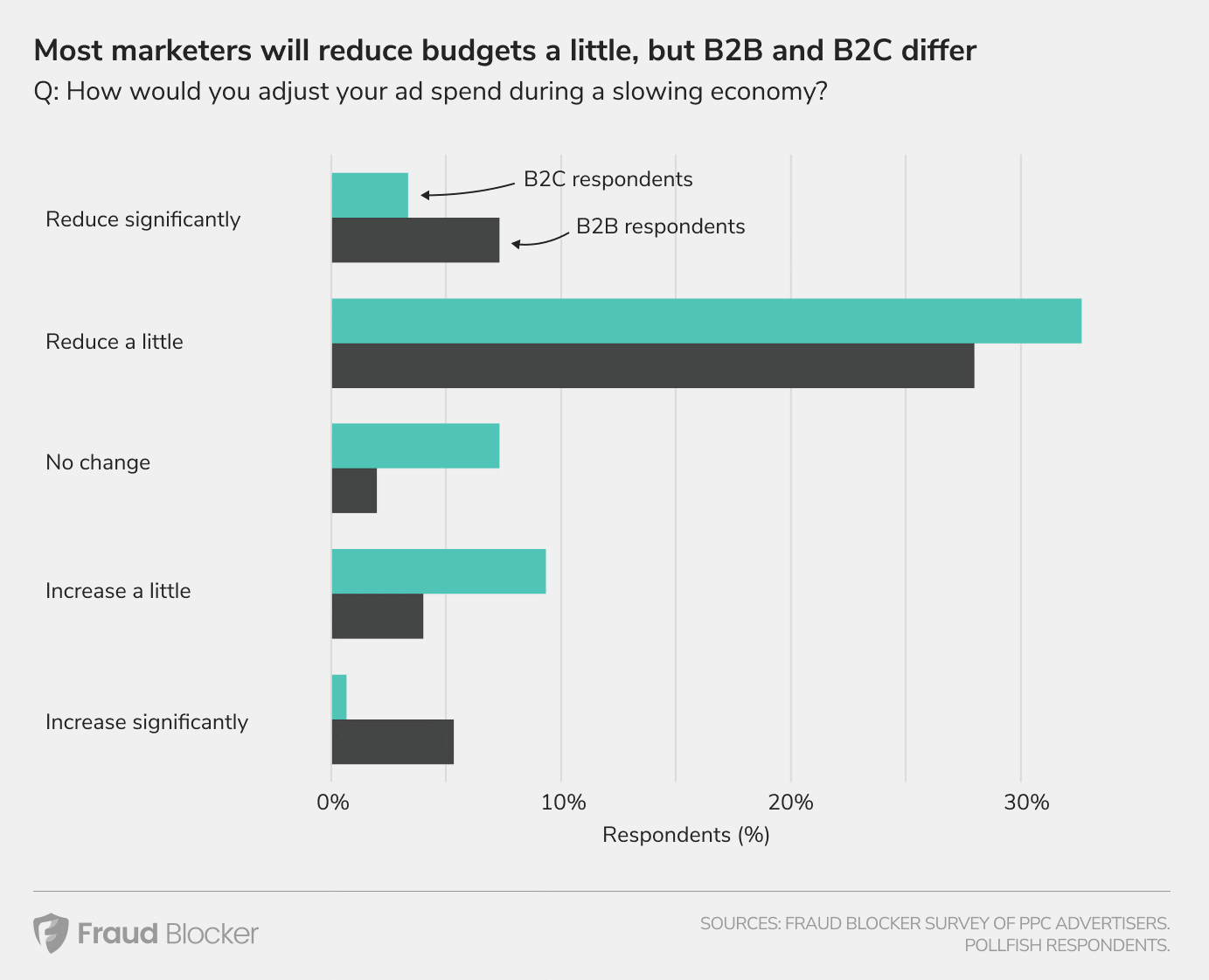
This was a critical part of the survey, and we started by asking advertisers how they would adjust their ad spending during a recession.
Most respondents said they would reduce their budgets a little. However, there was some slight variation among Business-to-Consumer (B2C) and Business-to-Business (B2B) marketers.
Some B2C respondents said they would increase their spending during a recession. These particular users generally worked in consumer staple industries – such as groceries, home goods, and alcohol.
B2B marketers had a more varying spread, with some reporting they’d reduce their ad spend significantly while others said they’d increase it significantly.
For the marketing mix, responses varied widely, but advertisers reported pulling back most on traditional media (e.g., TV, radio, print), SEO, and affiliate marketing.
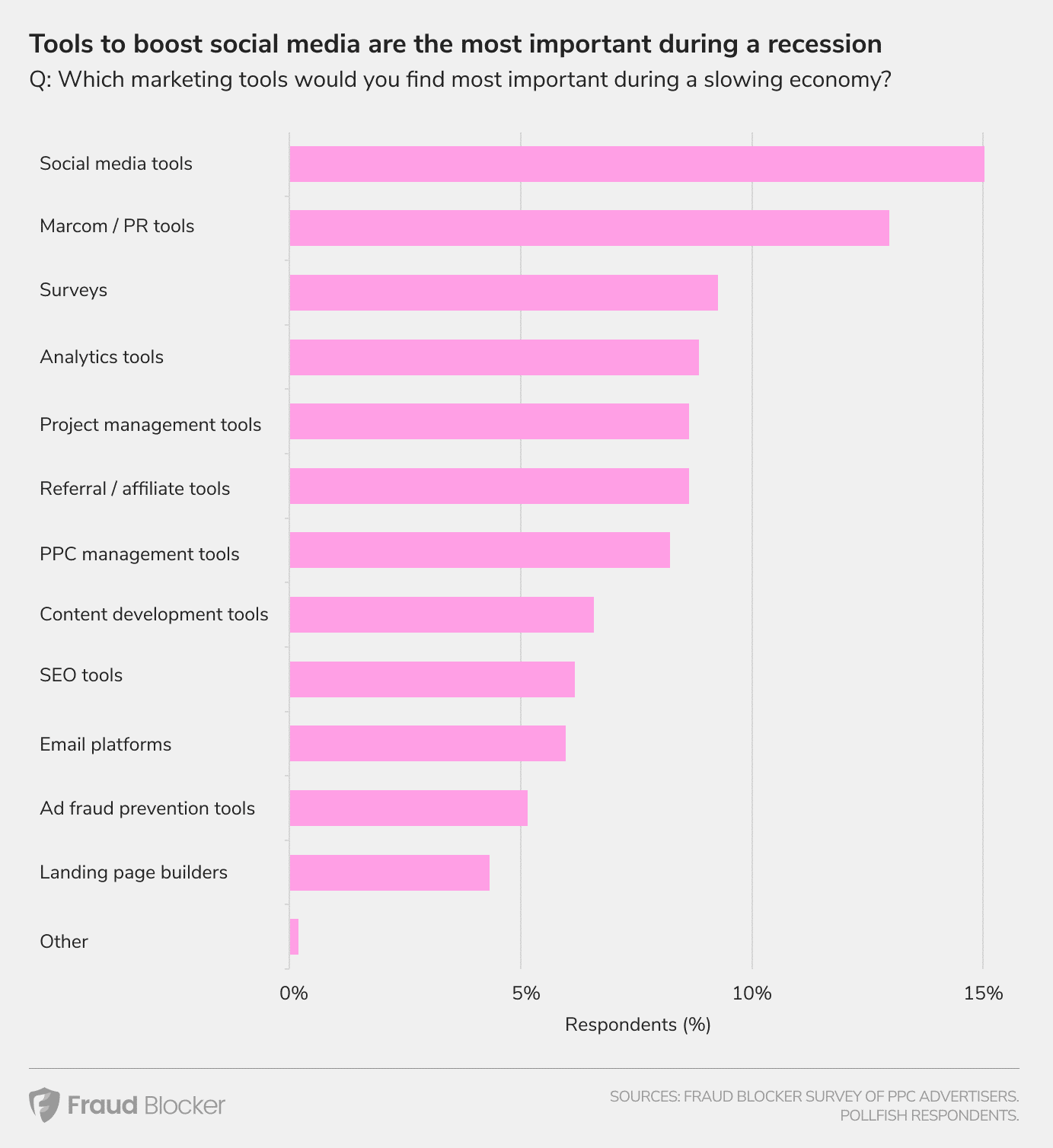
Conversely, they would increase their spending on social media, digital marketing, and content marketing. Advertisers also use many advertising tools and software, but they may need to prioritize them if budgets shrink or performance declines.
Results showed that social media and PR were the convincing favorites for this question.
While our survey reveals that many brands plan to pull back on SEO during a recession, doing so creates a massive strategic misstep – and a major opportunity for your brand.
Unlike paid ads, which stop generating traffic the second you turn off the budget, SEO has a compounding lifecycle.
When your competitors pause their organic content production and link-building efforts, they create an organic ranking vacuum.
By maintaining or slightly increasing your investment in SEO during a recession, you can claim historically difficult keyword rankings at a much lower competitive cost.
When the economy recovers, your brand will sit securely at the top of search results, capturing the lion’s share of market demand while your competitors are forced to pay premium ad rates to win back their visibility.
Here are some advertising strategies for you to consider to help you take advantage of an economic downturn.
If you’re cutting back on your paid marketing efforts, consider increasing them on your “owned” media.
Owned, earned, and paid are different types of advertising promotions. Owned media refers to the channels that a company owns and has complete control over, such as its website, social media accounts, and email newsletters.
Earned media refers to the coverage and exposure a company receives through word-of-mouth, customer reviews, and other unpaid mentions. Paid media, on the other hand, refers to the channels that a company pays for, such as paid search, display ads, and sponsored content.
By focusing on your owned media, you can increase the engagement of your existing users while saving on the often high cost of paid media.
Your loyal customers are your best customers, as they’re the ones that keep coming back, even during tough economic times.
Loyal customers also convert at much higher rates, exceeding 60%, while new customers are expensive to acquire and convert at only a 5-20% rate.
A little gratitude can go a long way. So consider thanking them with special perks such as exclusive access to new products, early access to sales and promotions, or personalized gifts. Ask for feedback and prioritize their phone calls.
Every little bit can go a long way.
As we saw in our survey results above, most advertisers are planning on reducing their budgets during a recession. Less ad spend reduces demand for inventory and can reduce the costs of advertising.
For example, if there are fewer businesses competing for a search term on Google Ads, then the cost-per-click (CPC) will be lower. Similarly, less demand for outdoor billboard space will reduce the cost per unit.
A recession provides a great time to reduce waste and inefficiencies in your ad and SEO campaigns. It also allows you to understand your customers’ buying behavior better. These can often be neglected during growth periods.
Here are a few areas to review:
During a recession, every company is looking for ways to save money. As an SEO advertiser, you need to review your budget to see where you can cut costs. You may need to reallocate your budget to more efficient channels or reduce your overall spending.
Salsify collected global consumer data. Their research shows up to 68% of shoppers will explicitly pay higher prices. These consumers choose products from brands they know and trust.
Brand trust refers to the extent to which consumers trust a particular brand. Consumers have confidence in a brand’s ability to provide high-quality products or services. It forms an important aspect of a brand’s reputation. This trust can significantly impact a company’s success. Ultimately, it helps improve sales and reduce churn.
During a recession, brand trust becomes more important than ever. Hence, SEO becomes a crucial tool. You can build this trust through consistent, high-quality experiences. You must also maintain honesty and transparent communication with consumers.
Our survey results show that advertisers can find good opportunities during a recession. But whether or not to advertise is a complex decision that depends on a variety of factors, including your industry, target audience, and advertising goals. In general, it is important to carefully consider the potential risks and benefits of advertising during a recession.
Pollfish conducted the Fraud Blocker survey and concluded it on November 25, 2022. It was sent to a randomized group of PPC marketers and media buyers in the US, Canada, and the UK who purchased or managed digital advertising. 161 respondents completed the survey.
Pollfish operates as a leading survey company. The platform maintains a pool of over 480 million mobile audience members worldwide. These members actively participate in their surveys.
Barsha is a seasoned digital marketing writer with a focus on SEO, content marketing, and conversion-driven copy. With 8+ years of experience in crafting high-performing content for startups, agencies, and established brands, Barsha brings strategic insight and storytelling together to drive online growth. When not writing, Barsha spends time obsessing over conspiracy theories, the latest Google algorithm changes, and content trends.
View all Posts

SEO Dashboard: What To Track, What To Ignore,...
Sep 25, 2026
Analytics SEO: How To Turn Search Data Into B...
Sep 25, 2026
AI Search Tools: What They Actually Measure A...
Sep 25, 2026
FAQ Schema: When It Still Makes Sense And Whe...
Sep 25, 2026
The Keyword With 10 Searches That Sent Ahrefs...
Sep 24, 2026